
I recently saw the movie “Oppenheimer,” a movie and history I was so excited to see. Growing up in Santa Fe meant I knew about the man who invented “the bomb,” Trinity Site, and of course Los Alamos. The town was right up the mountain from Santa Fe and we used to tease that seeing its lights at night meant it was “glowing.” Los Alamos had a mystery about it and not until I was older did it open up so-to-speak. The Lab is still there and I will say, the town is definitely worth a visit.
I think we all pretty much know how the Oppenheimer story ends, and thankfully that kind of “ending” hasn’t happened since. War is brutal and WWII was especially so. The U.S. kinda watched from afar but on December 7, 1941 we watched “the day of infamy” unfold. News of Japan’s attack on Pearl Harbor set in motion our entry into WWII. The country rallied behind our troops and our efforts.

A book I’ve had for many years
Growing up in Santa Fe also meant I’d heard about another WWII legend, the Code Talkers. Perhaps not as well-known or famous as Oppenheimer, Code Talkers are nonetheless credited with helping us win the war. Who were they and what did they do?
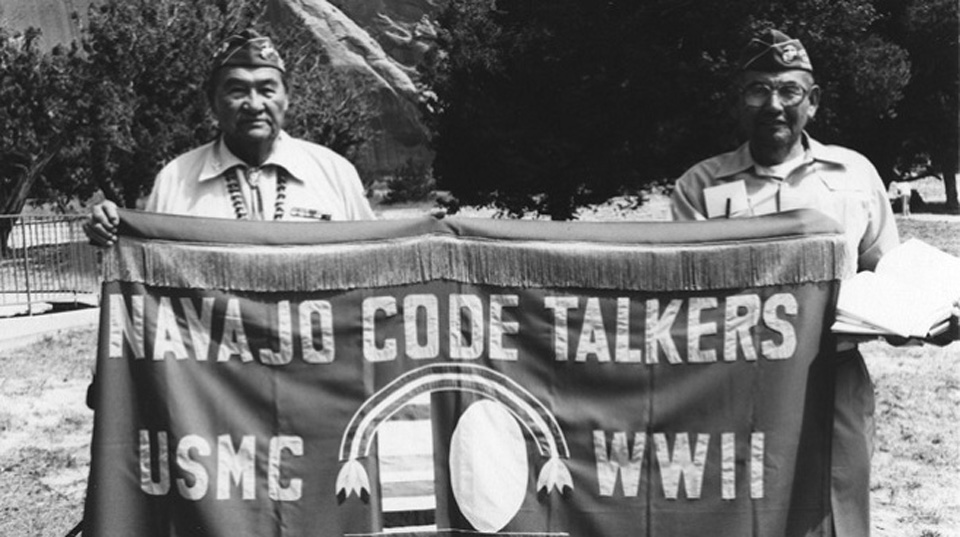
According to the National WWII Museum in New Orleans, a “code talker” was the name given to American Indians who used their native tribal language to relay encoded messages for the U.S. Marines. The timing of their enlistment was critical, as the Japanese had broken all previous codes sent over radio waves and our Marines were desperate to find a secure way to communicate critical information. With new Code Talkers on board, they were in good hands.
Code Talkers actually had a hand in every major Marine operation the in the Pacific theater and were never successfully decoded by Japanese codebreakers. At the critical and famous battle of Iwo Jima, it is estimated that 800 messages were transmitted and received by the Code Talkers without error. So essential were they to our military efforts, that Major Howard Connor, a Marine officer of the signal division at Iwo Jima, once said, “Were it not for the Navajos, the Marines would have never taken Iwo Jima.”
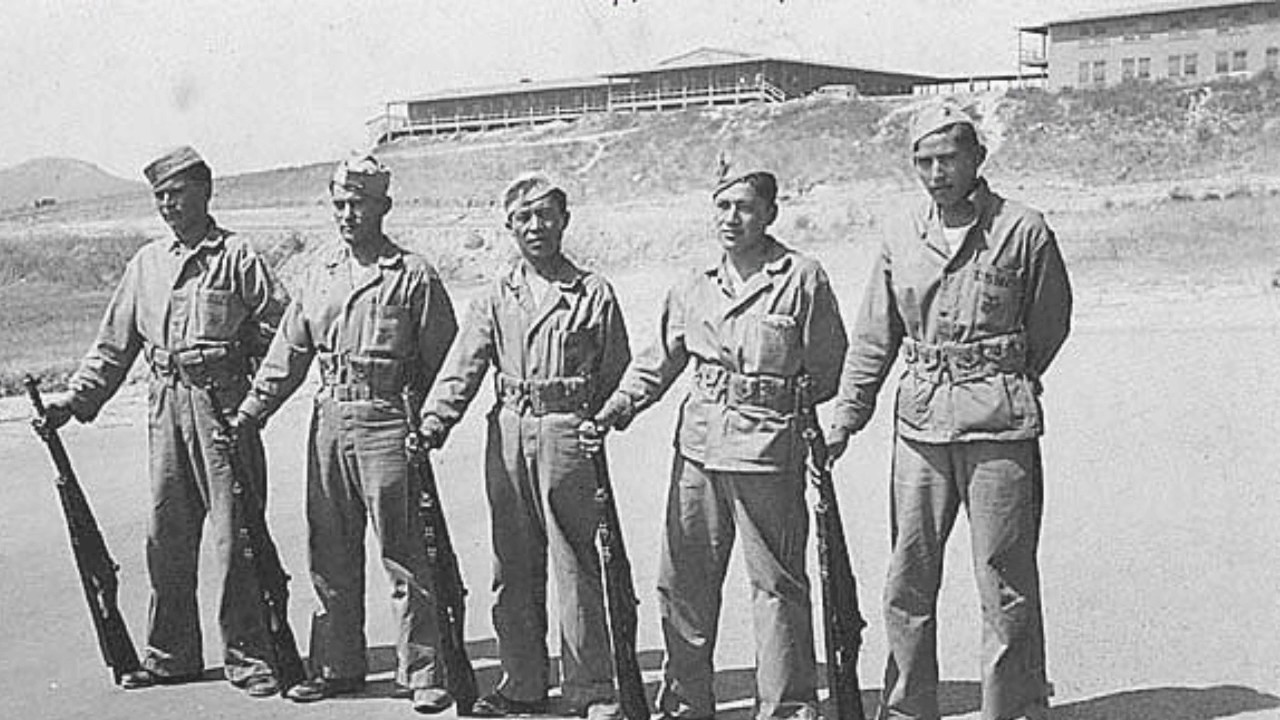
Author Laura Tohe’s father was a Code Talker and she gives an inside view of their journey. President Roosevelt’s announcement of America’s entry into the war was heard coast-to-coast, including in many parts of the Navajo Nation homeland in Arizona, New Mexico, and Utah. Known for their collectible blankets and jewelry, young Navajo men were moved to enlist and being that they came from reservations, rural backgrounds, and military-style boarding schools, they were well-prepared for harsh military life. What they didn’t know and maybe weren’t as prepared for was that they would be asked to develop and us their native Navajo language…a language they were often forbidden to speak in government schools…as a secret weapon.
The idea of using American Indians fluent in both their traditional tribal language and English to send secret messages in battle was first put to the test in WWI. It wasn’t until WWII however, that the U.S. military developed a specific policy to recruit and train American Indian speakers to become Code Talkers.

The U.S. Army was the first branch to begin recruiting Code Talkers from places like Oklahoma in 1940. Other branches, including the Marines and Navy, followed suit and the first class of 29 Navajo Code Talkers begin training for the Marines in 1942. Navajos made up the majority of Code Talkers, but there were at least 14 other Native nations, including Cherokee and Comanche, who served as Code Talkers in both the Pacific and Europe during the war. It’s estimated that around 400 Native Americans served their country and served it in a most unique and valuable way.
As the war progressed, the military shifted to using just Navajo. It was chosen mainly because it wasn’t spoken outside of the U.S., was at the time unwritten, and is the most spoken indigenous language in the country, meaning finding native Navajo speakers proved easier than finding those from a mix of smaller groups. But why a native language and why Navajo?

For one, it was spoken almost exclusively by Navajos and is a mostly oral language with no written alphabet. There was no published dictionary on it and grammar was deliberately complicated with metaphors, tricks, and obscure references. In short, it is a very complex language and its tonal qualities and dialect make it very hard to learn. Some actually believe the code devised and carried out by the Navajos may have been the only unbreakable code is military history.
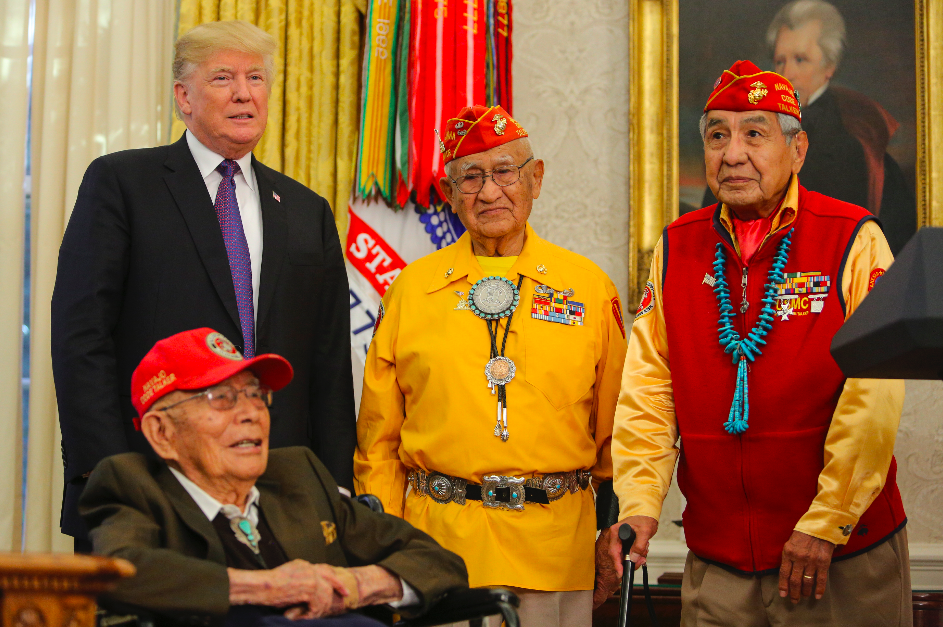
So, what happened to these war heroes after victory? Most went back to their homes without any fanfare. In fact, upon discharge they swore to never reveal their role as it wasn’t known if they and their codes would be needed in future battles. The code was declassified in 1968 and the Code Talkers have since been honored by Presidents Nixon, Reagan, and Trump. In 1992, a special exhibit at the Pentagon revealed a permanent display of photos, equipment, the original code, and explanation of how the code worked. It was a long time coming and deserving honor for their loyalty, bravery, resilience, and ingenuity. As Tohe writes, “A language once forbidden became a weapon that was quick, accurate, and never deciphered. Most important, it saved many American lives.”

Congressional Silver Medal that reads “The Navajo language defeated the enemy.”
Thank you Code Talkers and God Bless America.
Discover more from Beyond Words
Subscribe to get the latest posts sent to your email.


 Beyond Words
Nice bit of history. Thanks, Carla! M
Sent from Yahoo Mail for iPhone