
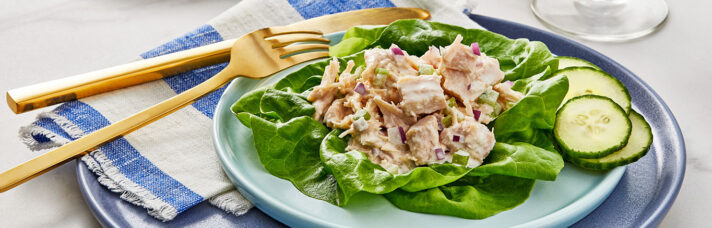
If there’s one thing I love, I love chicken salad. I had some for lunch today and would eat it regularly if it were around. Store-bought is good stuff but not always healthy stuff so I prefer to make my own. I kinda improvise with whatever I have on hand but, in addition to the requisite chicken, I like adding grapes, celery, and hard-boiled eggs. I stir it all up with mayonnaise.
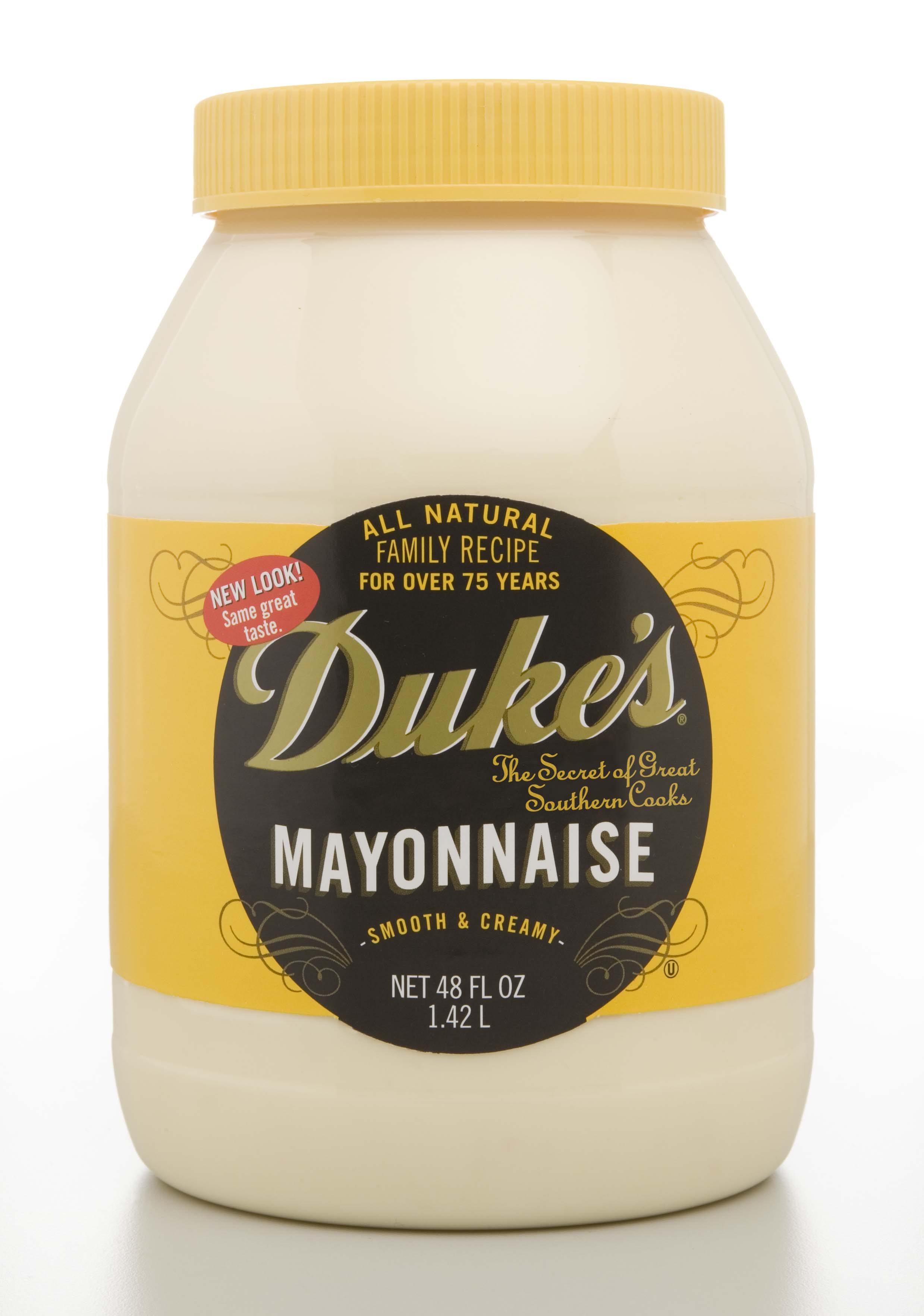
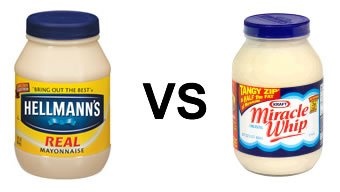
 Good ole mayo. What would we do without it, right? Well growing up I did without it because we were a solid Miracle Whip house. My mom used it for everything: potato salad, sandwiches, and certain sauces. My husband, on the other hand, grew up in a mayo house. So, what’s the difference between the two and can you use them interchangeably? I guess it depends on who you ask as preferring one or the other is a near religious experience.
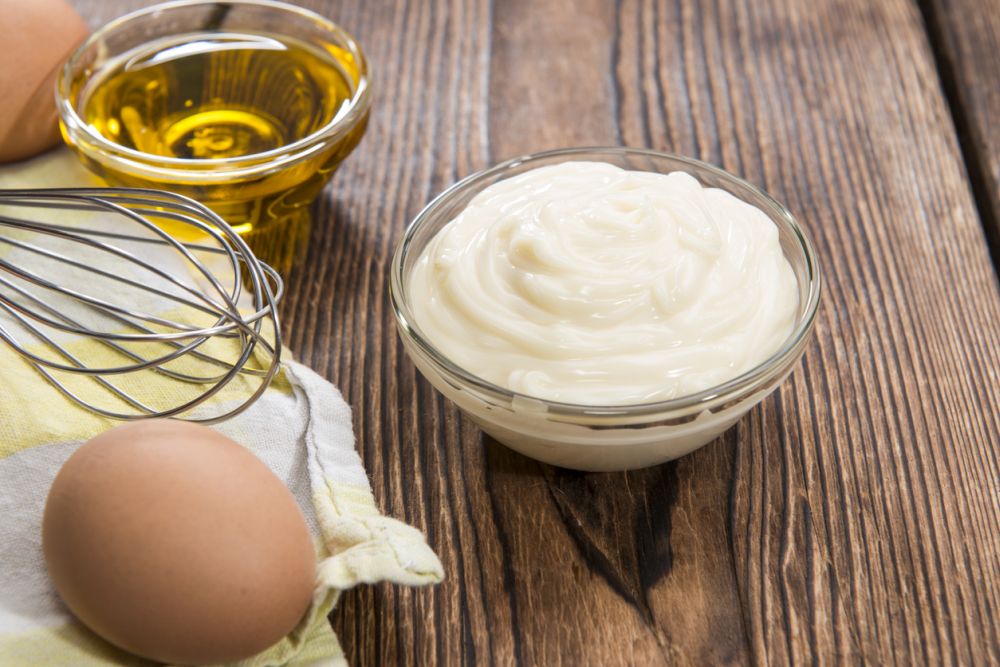
Mayonnaise is often called the planet’s most versatile condiment; and with good reason. It’s a staple in salad dressings, on sandwiches, in everything from chicken salad to macaroni salad, and in the moistest of chocolate cakes. It also forms the base for various sauces such as tartar sauce, remoulade, ranch dressing, and rouille. But what is it and what is it that makes it so legendary?
Mayonnaise may have its origins in the ancient remoulade and another hypothesis is that it was derived from aioli. Where it came from is up for culinary debate, with both Spain and France laying claim to its creation.
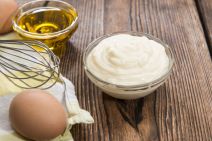 What was created by whoever is a combination of oil, water, vinegar, and egg. The key is that, unlike salad dressings that separate, the egg in mayonnaise emulsifies, creating a thick and spreadable, well, spread. Many people make their own mayo and I’ve heard it’s fairly easy to do, but if you want to sell your ware and label it “mayonnaise,” there are rules. FDA regulations state that anything labeled as “mayonnaise” must contain 65 percent vegetable oil by weight. This, my friends, is what separates the mayo from the Miracle Whip.
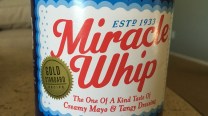
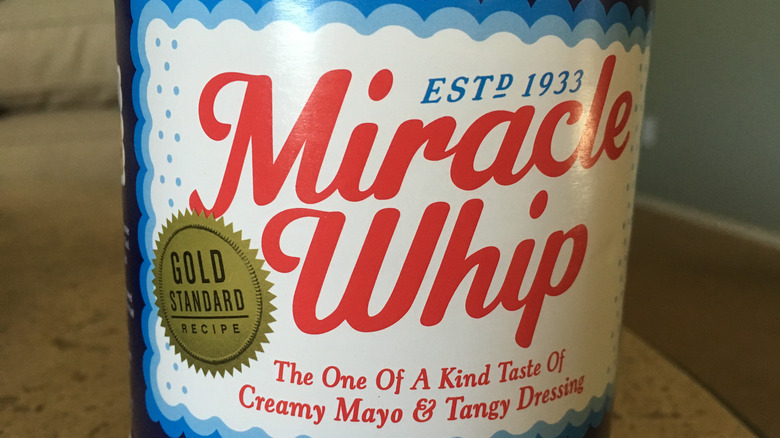
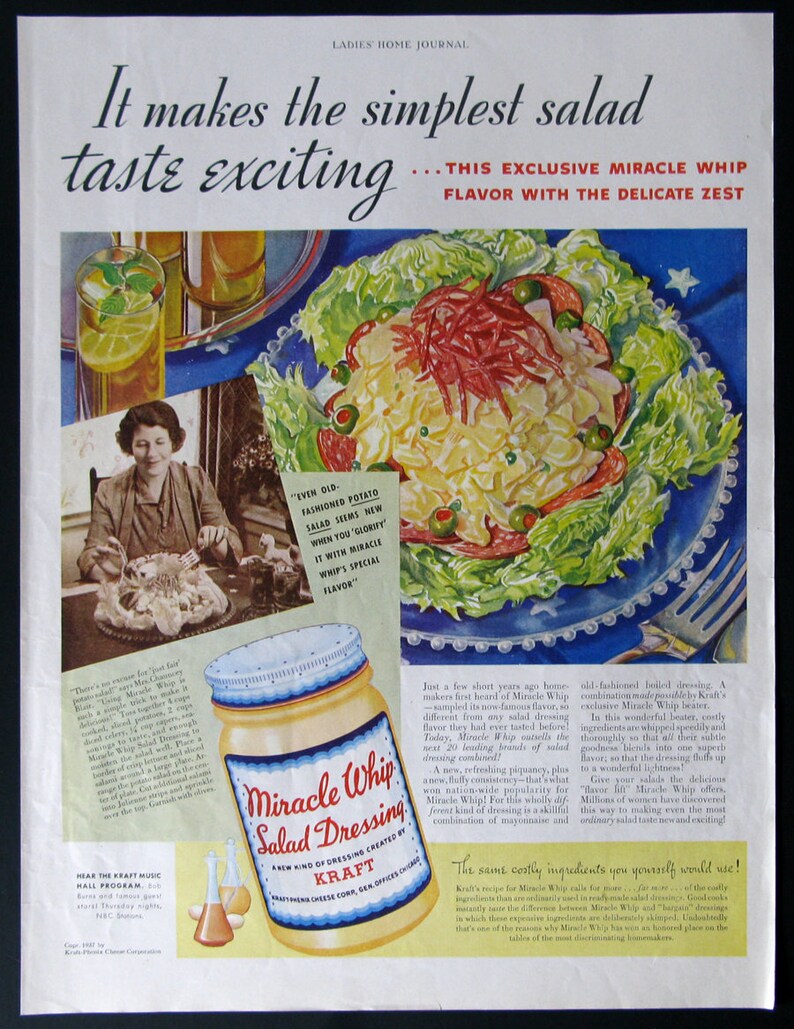
Described as “the one-of-a-kind taste of creamy mayo and tangy dressing” on its labels, Miracle Whip was developed as a cheaper alternative to mayonnaise during the Great Depression. Launched in 1933 at the Chicago World’s Fair, it’s not just a brand name but a completely different product then mayonnaise. Yes, it also contains oil, water, vinegar, and egg, but water, sugar, and spices as well. The added sugar makes it perfect for dishes like macaroni salad and tangy cucumber salads. It’s technically not considered a mayonnaise at all but rather a “dressing” by the FDA. This explains why generic or store brands are called “salad dressing.”
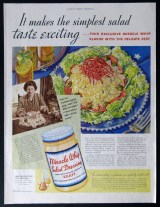 How it got its name is equally interesting. According to Kraft archivist Becky Haglund Tousey, Kraft developed the product using a patented “emulsifying machine” invented by Charles Chapman. The goal was to create a product that blended mayonnaise with less expensive salad dressing and the machine used to do so was dubbed “Miracle Whip” by Chapman.
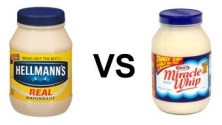 In general, mayonnaise is described as richer and with a lightly sour taste and eggy aroma while Miracle Whip is considered sweeter and spicier. Texture-wise they are very similar and either can work the same in most recipes. For baking however, it’s recommended you use full-fat mayo and know that anything other than full-fat mayo, including Miracle Whip, can separate and become greasy when exposed to heat.
When it comes to nutrition, Miracle Whip contains almost half the fat and caloires of mayonnaise but has more sugar than most brands of mayo.
So, there you have it; the answers to the burning questions regarding mayonnaise and Miracle Whip.
All this got me thinking of other “what’s the difference” ponderings, both in the kitchen and out. Let’s dive in…
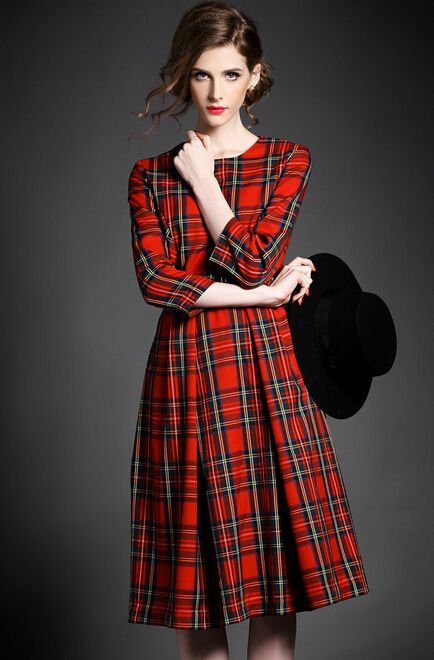
 What’s the Difference Between Tartan and Plaid?
I love them both but did not know that all tartans are plaid but not all plaids are tartans. Here’s why: all plaids and tartans are comprised of stripes that meet at a 90-degree angle. Tartans only have a geometry in their pattern with the stripes running vertically being exactly duplicated on the horizontal axis too. When looking at a simple plaid, you’ll notice the stripes in color, size, or pattern aren’t the same in both directions.

Bria Hammel Interiors
What’s the Difference Between a Farmhouse and Apron Sink?
You see them everywhere as they are the sinks of choice of late, but are they the same? The answer is no.
A farmhouse sink is always an apron sink but an apron sink is only a farmhouse depending on the material it’s made from. Though a farmhouse sink is often referred to as an apron or apron front sink, an apron sink is never called a farmhouse sink.

Historically, farmhouse sinks were constructed from cast iron or porcelain. Both sinks share similar characteristics, namely their deep basins, large size, and exposed fronts, but purists will argue that it isn’t a true farmhouse sink unless it’s made from a certain materials like porcelain and has an integrated workstation. The basic identifying feature of a farmhouse sink is its appearance and it’s traditionally installed to look like a seamless part of the countertop.

As opposed to the drop in style of farmhouse sinks, an apron sink’s primary identifying feature is its design. You have to slide an apron sink in from the front and it is installed under the countertop. Both farmhouse and apron sinks also stand apart from other sinks because they have an exposed front (also known as the apron). In general, apron sink hardware is drilled into the countertop behind the sink, while farmhouse sinks come with holes pre-drilled into the deck or backsplash.
When all is said and done, apron-front sinks are merely a contemporary farmhouse sink: they share the telltale exposed front-facing panel that farmhouse sinks have as well as a single and large tub, but are constructed from updated materials like stainless steel, cast iron, and natural stone.
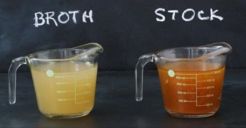
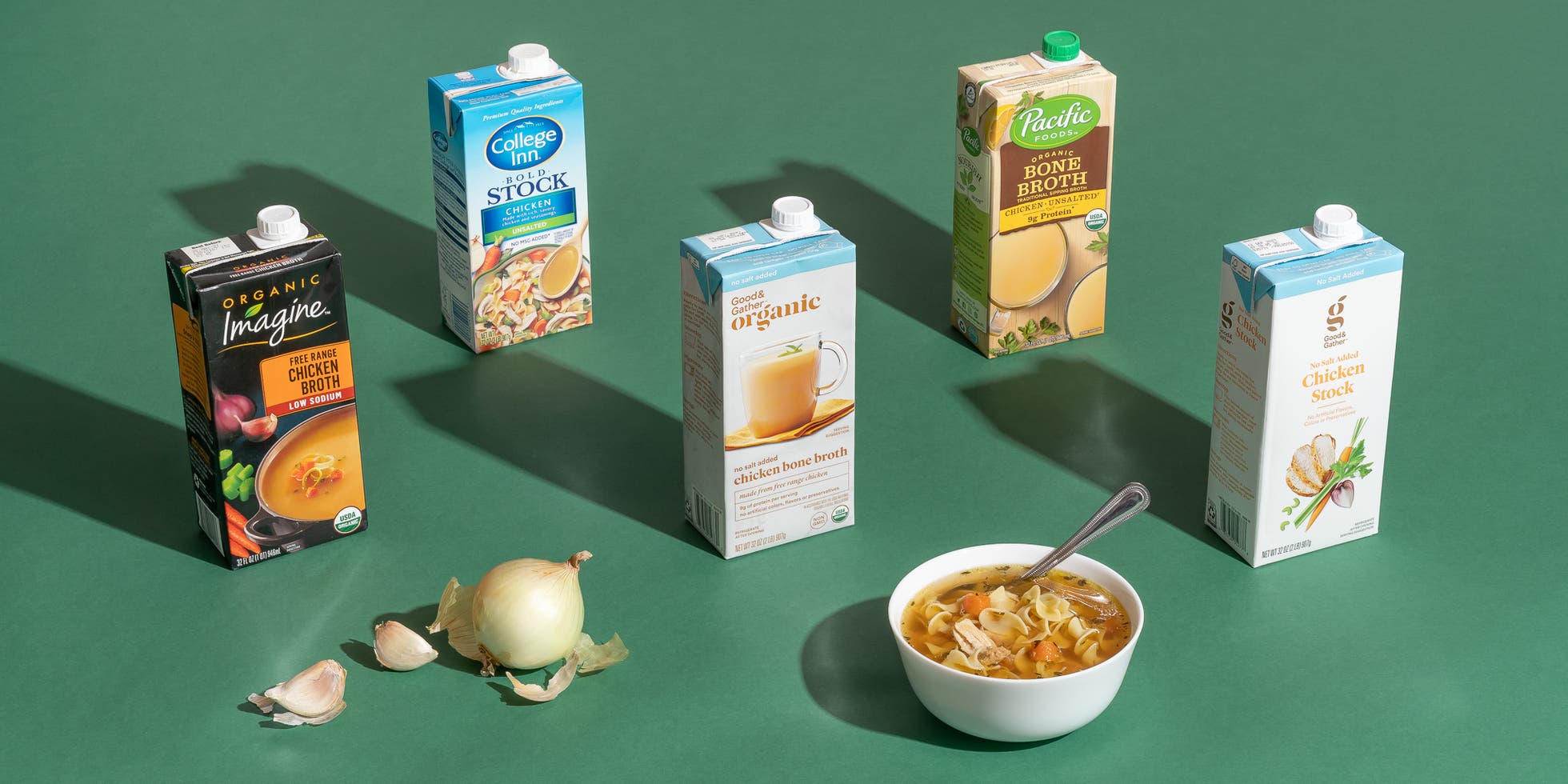
What’s the Difference Between Chicken Broth and Stock? And What About Boullion?
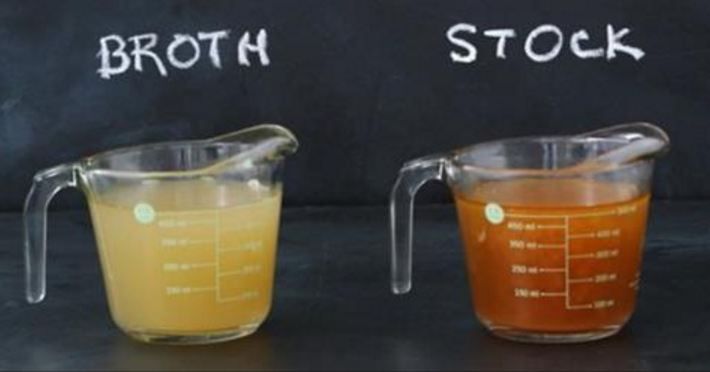
Technically, stock is not the same as broth. Stock and broth differ in terms of their thickness and ingredients as broth is made from meat and vegetables while stock is made with bones. While both are flavorful, broth tends to be thinner.
Stock, typically thick and gelatinous, is made from animal bones like chicken, beef, and even fish and is generally unseasoned and unsalted. It is rarely recommended for consuming as is and is more often used as an ingredient. It makes a good base for gravy, rich sauces, and soups and is useful for de-glazing a pan for a quick sauce.
Broth, generally thinner in texture, is made with animal meat and is always seasoned. When chilled, broth doesn’t gel the way stock does. Light, thin, and full of flavor, broth tastes good on its own or as a base for all kinds of soup.

In most cases, stock and broth are interchangeable and wither will do for making soup, gravy, or a flavorful pot of rice or grains. When substituting stock for broth in a recipe, however, you might want to add a little salt and cut back on it or water it down when using broth instead of stock.
In general…
- Stock and broth are equally great for thinning out sauces, making risotto, or as a base for quick soups.
- Broth is better for consuming as is because it has seasoning that makes it tastier on its own.
- Broth may be preferred as a flavor enhancer for cooking plain white rice or grains.
- Stock may be better to use in a recipe with a complex flavor profile that you don’t want to tamper with.
- Stock contains more calories, fat and carbohydrates than broth. But it also contains more protein, vitamins and minerals.
And now for bouillon. One bouillon cube or 1 teaspoon of granules dissolved in 1 cup of boiling water may be substituted for 1 cup of broth in any recipe. It is a condensed cube or powder derived from dehydrated broth and can be added as a burst of flavor to many recipes. Ultimately it is the same as broth and stock but with key notable differences in taste and texture. Bouillon cubes or powder also have significantly more amounts of sodium.

What’s the Difference Between Metaphors, Similes, Idioms, and Aphorisms?
Metaphors & Similes
A metaphor is a word or phrase typically used to describe one thing but unexpectedly used to describe something different. Metaphors make us aware of connections that we may not have thought of before. “He was drowning in paperwork” is a metaphor that makes a connection between having to deal with a lot of paperwork and drowning in water.
A simile is figure of speech in which two essentially unlike things are compared using the words like or as. Examples are “hard as a rock,” “clear as mud,” “like the back of my hand,” and “he stood out like a sore thumb.” While a simile makes comparisons with help from like or as, a metaphor states outright that one thing is another thing.
To compare these forms of comparisons, here are some examples:
Life is like a box of chocolates. (Simile)
My life is an open book. (Metaphor)
That baby is as cute as a button! (Simile)
Baby, you’re a firework. (Metaphor)
Fun fact: Because they both make figurative comparisons, all similes are metaphors, but not all metaphors are similes.
Idioms
An idiom is an expression that conveys something different from its literal meaning and that can’t be guess from the meanings of each word in it. Examples are “between a rock and a hard place” and “butterlies in my stomach.”
Aphorisms
memorable expression of a general truth or principle. Aphorisms are often handed down by tradition from generation to generation. They are pithy observations with a general truth and a flowery opinion that’s true such as “If it ain’t broke, don’t fix it.”
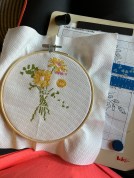
What’s the Difference Between Cross-Stitch, Embroidery, and Needlepoint?
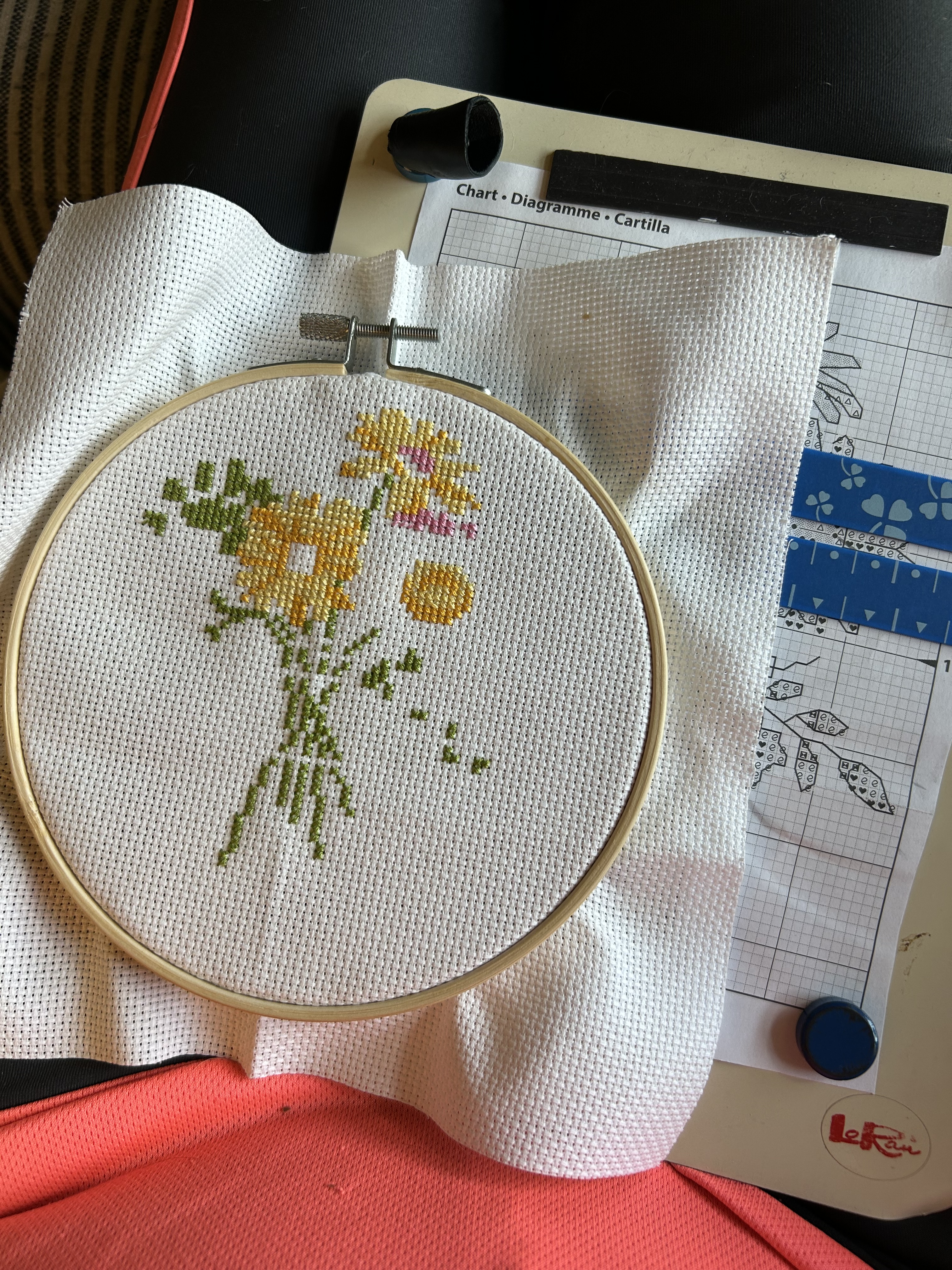
This one caught my eye because I love to cross-stitch but have never needlepointed. As I watch shows like “The Gilded Age” and “Belgravia” I often see the women stitching something and am thinking it’s probably needlepoint. Let’s look deeper…
Embroidery refers to hand-stitching a design onto fabric with embroidery floss or perle cotton. Needlepoint is a technique in which thick fibers like yar ae stitched onto a stiff canvas using a blunt needle to mimic the look of tapestry. Cross-stitch, as the name implies, is a simple X-shape stitch made with embroidery floss on many different kinds of fabrics but most frequently on Aida cloth, an open-weave fabric with a natural grid that helps keeps stitches even.

What’s the Difference Between a Hamster, Gerbil, and Guinea Pig?
Okay, full disclosure here, I am not a fan of any of the above and personally think everyone should instead opt for a dog as a pet but I am interested in learning what these popular critters are. I do know they’re all rodents and wonder why anyone would choose to have a rodent in their home, but here you go.
Gerbils apparently sleep in bursts but are generally active while Guinea pigs tend to have a bit more personality than either gerbils or hamsters. They do require a specific diet and daily vitamin C supplements though. The average lifespan of a Guinea pig is five-to-seven years as opposed to two years for hamsters and gerbils. Hamsters are super fragile, die more quickly, are nocturnal, and will be happy as a (Guinea) pig in mud living as a single pet while guineas and gerbils tend to thrive better in multiples.
How guinea pigs got their names is widely disputed, both the “guinea” part and the “pig” part. Despite their name, guinea pigs are not native to Guinea, nor are they closely related to pigs. Size-wise, they are much larger than hamsters and gerbils and don’t have tails whereas gerbils have long tails and hamsters have stubby little ones less than an inch long.
Guinea pigs love to squeal and tend to keep their eyes open while sleeping to protect themselves from predators that may attack them. They and hamsters don’t have good eyesight, but hamsters’ eyes are worse than guinea pigs. They can see clearly during the night but come morning they see very poorly.
So, did you learn anything interesting or fun here? I hope so. I sure did!


 As the saying goes, you build trust, and faith without trust is no faith at all. Faith always has an object. The object of Christian faith is Jesus. In fact, the biblical definition of faith requires trust and Webster defines faith as “belief and trust in…” name your object here. In that skydiving example, you need to trust the pilot and the equipment before having faith that all will go as planned.
 The third critical aspect of faith is hope: the belief in a positive outcome despite present circumstances. Hope provides us with the strength to endure difficult circumstances and persevere through trials. Christians center their hope around the promises of God and have hope in Him that we can endure any hardship because we have faith that He is in control and has a plan for our lives. We are not alone.
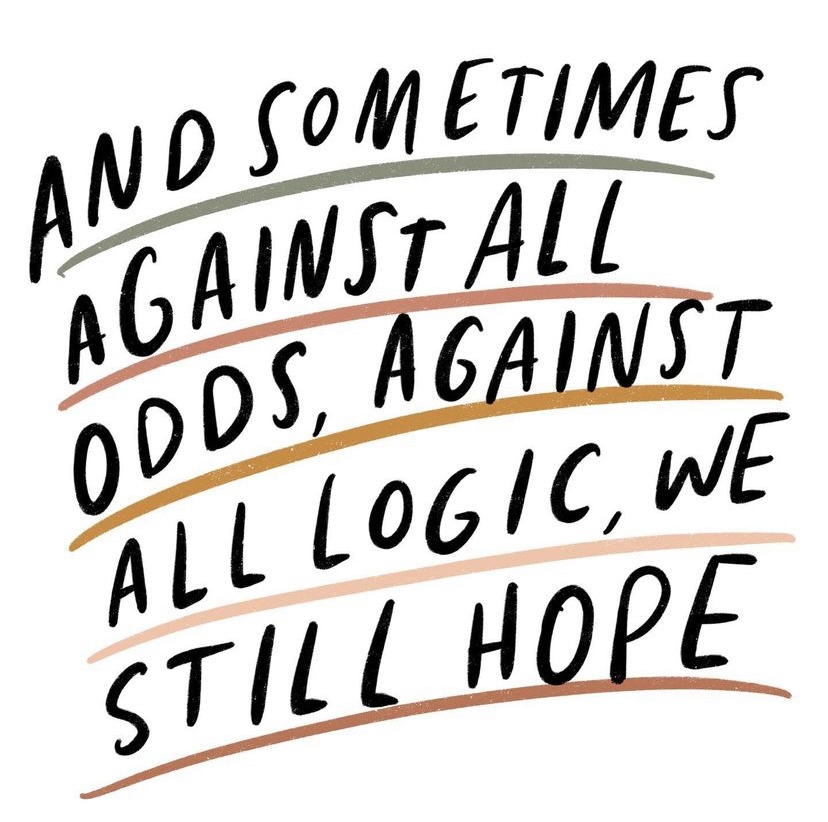 And who can blame them as their history is full of reasons to be hopeful, even in the darkest of times. They’ve been forced into exile, lost their homeland, have historically been oppressed, are told they as a country should not exist (even to this day and even though it existed in the Bible), and of course, the Holocaust. You would think they’d give up hope, but they don’t.
 Christian, Jew, or otherwise, it’ll be a tough life if you give up hope. It all begins with belief and trust that work together to build the foundation of faith and give us hope. Are you ready to jump? Do you believe, trust, and have faith that God will catch you? I sure hope so.



















 So why a quieted down luxury and why now? Many credit the current economic challenges many are facing with trend forecasters dubbing it “recession core.” The state of our country and world the past couple of years is heavily influencing how people are dressing. I prefer to think that those with money are also trying their hardest not to rub it in the noses of those gasping at gas pumps and grocery stores, paying mortgages that equal many a high-end purse, and otherwise wondering what’s next. Flaunting extreme wealth is not only tacky but tone-deaf as well.









 Beyond Words