Beyond Words

Words, Wit and Wisdom for Today's Style and Decision Makers

The Good in Good Friday March 29, 2024

Filed under: Uncategorized — carlawordsmithblog @ 3:08 pm

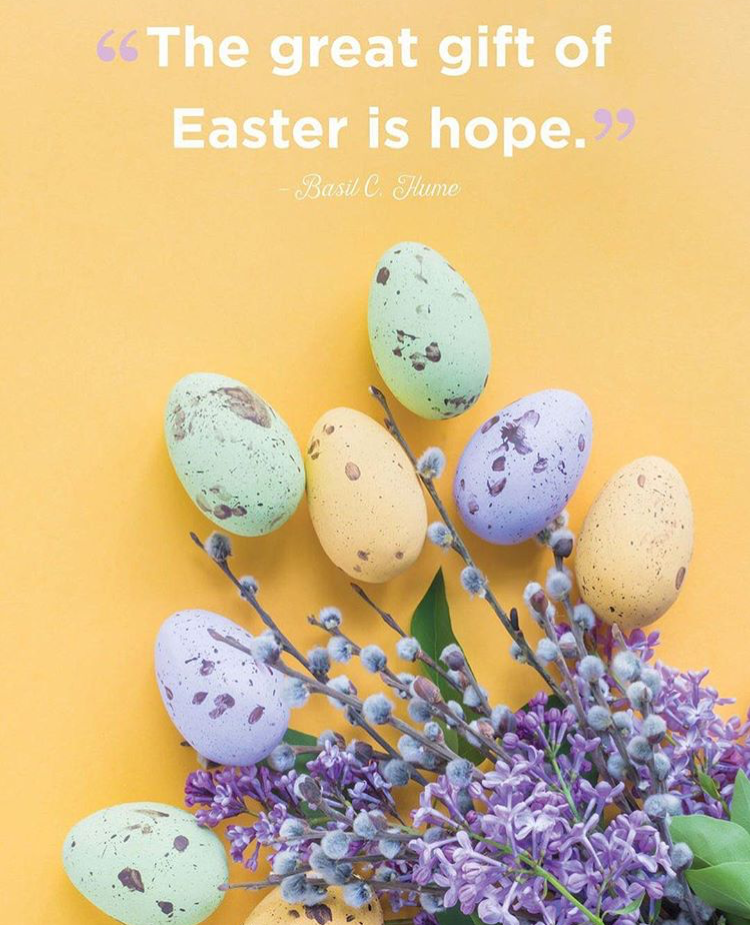
Have you ever wondered, like I did for so many years, why on earth today is called “Good Friday” when it feels like anything but good since it’s the day Jesus Christ was killed? I’ve heard it explained in various ways, but one of my favorites is perhaps that it’s called “good” because our Lord’s terrible death lead to the resurrection and salvation of the world and what is “more good” than that? Granted, there is so much evil in this world right now and more and more proof of unbelievers tooting their horns, but there is still good. There is still hope. And hope is what Easter is really all about.


The first time today was called good, or “guode” in Old English, was in a text from back in the 1200s…and I don’t mean a text on a phone. Later, in 1885, the Baltimore Catechism explained it as “good” because Jesus showed great love for mankind. And that is good.


There is no rainbow without a storm and we can’t have dawn without dark. That’s kinda how Good Friday relates to Easter Sunday. And yes, Sunday is all about joy and celebration but the sadness that came before it is unspeakable. So unspeakable in fact, that none of the four Gospel writers describe it. Matthew merely writes “after they crucified him…” That’s it. Five words to describe what is history like no other history.  Mark, Luke, and John don’t write much more about the actual crucifixion and perhaps for good reason. It was brutal. It was too awful to tell; even for them.


He was forced to carry an extremely heavy cross on the way to His own death by crucifixion. All the way mocked and, in today’s language “offended” and “bullied,” but protected by no one.


A crown of painful and sharp thorns was placed on His head.


He was thrown to the ground; kicked and spat on.


His arms were painfully stretched on the crossbeam of the cross and he was held down as they drove nails into his palms. Nails into His palms.


His feet were wrestled with and placed atop one another as nails were driven into them. Driven into them.


The cross was hoisted up with his body precariously nailed to it and writhing as He hung for all to see.


He must have wailed and screamed in pain right before He whispered, “Forgive them Father. They know not what they’ve done.”


Forgive them?


Would any of us ever be so forgiving?


This, my friends, was an incomprehensible act of love. Love for you and me. Love for all.


To show that love, Jesus died for us. To show our love; we live for Him.


Perhaps we’ve become all too familiar with and used to what happened on that cross and the cruelty that lead to His last breath. I remember the first time I saw the movie “The Passion of the Christ.” I could hardly watch parts of it as it was so graphic and real. I’d never witnessed it all like that and should probably watch it again. We all should.
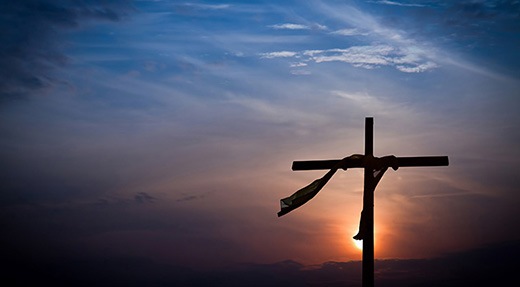


The fact that it all took place on a wooden cross should not go unnoticed. On that cross made from a tree, Christ reversed the curse Adam reaped on humanity by eating from the Tree of Knowledge of Good and Evil. By being lifted up on the cross, He prepared our way upward toward heaven and the cross stretched His body toward the four corners of the world.
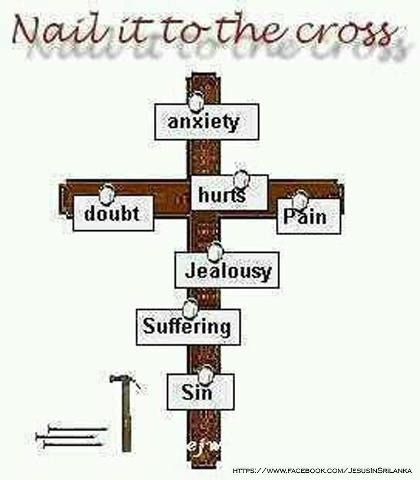


We all have crosses to bear but none as painful or humiliating as The Cross. Crucifixes are nothing new to Catholics as they adorn our churches, homes, and bodies. The word comes from the Latin “cruci fixus” meaning “one fixed to a cross” and serves as a symbol and a reminder of Christ’s journey to earth, His trials and death at the hands of humanity, and His victory over death. Plain crosses are equally popular among fellow Christians. (Why a crucifix for Catholics you ask? Because it’s not the cross that saved us.) But the cross is not the only example of Christ’s humility and undying love for us demonstrated during His passion. It is said that when we make the Sign of the Cross, the first two gestures form the letter I and the next two cross it out. It’s not about me. It’s not about you. It’s about Him.
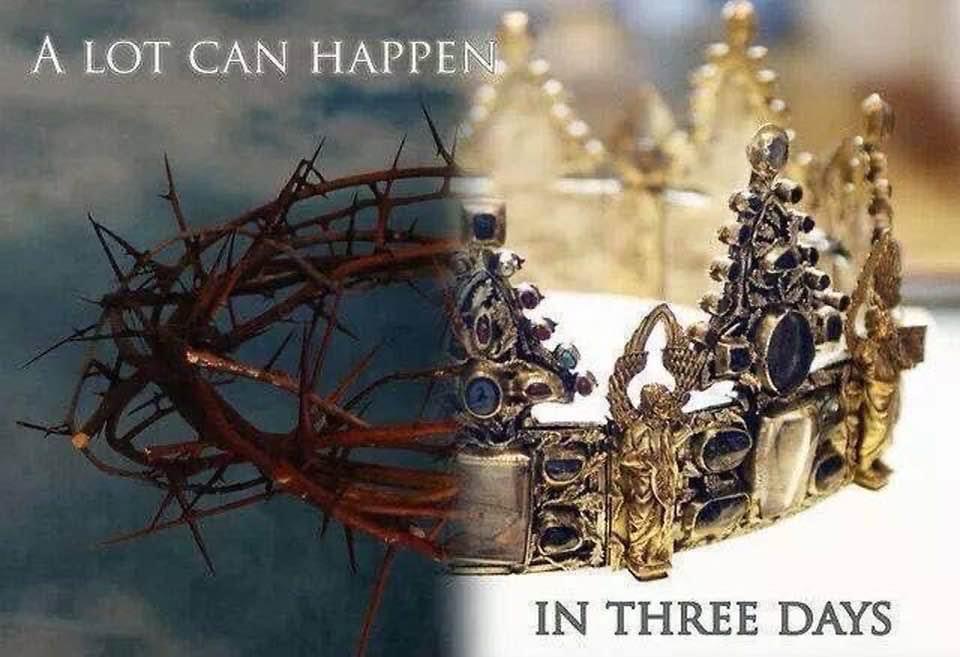


He is King, but the only crown He wore was one made of thorns. Instead of being seated on a throne, He was nailed to a cross. And instead of wearing a royal robe, He was cloaked in mockeries. And yes, He could have ended it all and saved Himself but instead chose to save us.
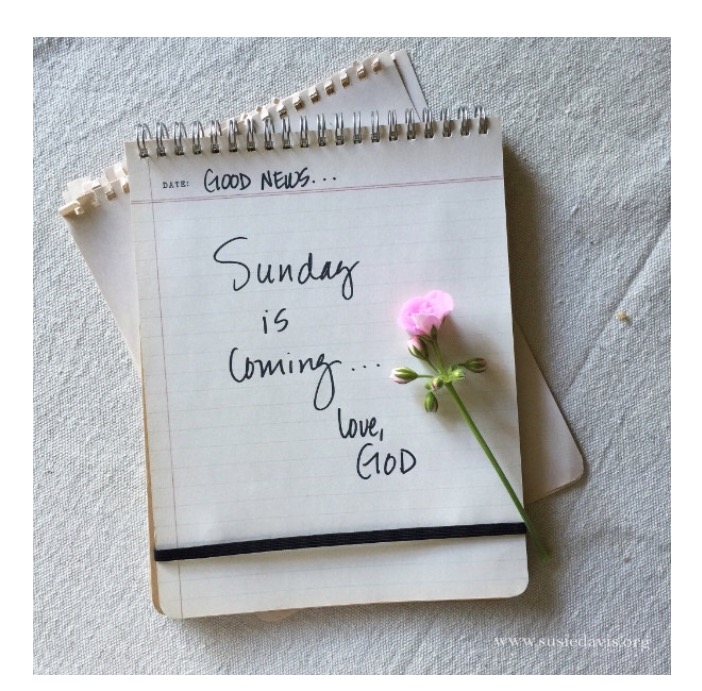


So, as we “celebrate” Good Friday today, let’s remind ourselves about what actually took place some 2000+ years ago. It wasn’t pretty and it wasn’t painless. But it wasn’t the end. We believe that death is not the period, but the comma. There’s more to come. Yes, we grieve but we grieve in hope knowing that like on Good Friday, sorrow does not get the last word or last laugh. Sunday is coming.


I’ll Be Back March 28, 2024

Filed under: Uncategorized — carlawordsmithblog @ 9:44 pm

Blessed Life Group

We all know, or should know, proper etiquette regarding napkins at a table. In brief, they are either folder under the knife and spoon to the left of a plate or creatively folded on top of the plate. Once seated, you are to immediately take the napkin and place it on your lap and it should stay on your lap for the entire meal. When done eating or if you need to get up during the meal, you’re to neatly fold it and place it either on the empty plate or next to it. So that’s etiquette, but have you heard the biblical folded napkin story?


According to Hebrew tradition during the time of Christ’s life and death, a folded napkin had everything to do with a master and a servant. Every Jewish servant boy knew that when he set a table for the master, he made sure it was exactly the way the master wanted it. Nothing new here, right? Yes, the table was properly set and then the servant would wait, just out of sight, for the master to finish the meal. The servant would not dare touch the table until the master was done. Here’s where the napkin comes into play.


If the master was done eating, he would rise from the table, wipe his fingers and mouth, and then wad up the napkin and throw it on the table. This was the servant’s sign to clear the table as a wadded up napkin signified “I’m done.” If, however, the master got up from the table and laid a folded up napkin beside his plate, it mean “I’m coming back” and the servant was not to touch the setting.


I’m coming back.


Hmmmm…any guess how this is biblically related now?


Think about it. The Gospel tells us that the clothes Jesus was wearing at death were thrown aside but a cloth was neatly placed over His head. When Simon Peter entered the tomb, he noticed the wrapping lying about but that the cloth that had covered Jesus’ head was folded up and laying neatly on the side.


I’m coming back.


Powerful, right? The power and meaning of a meal in Jesus’ life is equally significant.


What immediately comes to mind is likely the Last Supper, but it started way prior. From the very beginning, it could be said that Jesus’ own life and ministry was food and/or meal-centered. At birth He proved food for a hungry world and is the Bread of Life. His ministry often involved meals or food, including His first miracle in which He turned water in wine at Cana and much of His preaching and teaching involved bread and fish. What’s glorious about Jesus’ meals is that everyone was invited. Even those who would betray Him and sinners. It’s important to note here however, that He sat with sinners but not to celebrate them but to change them. Big diff.


The central observances of Holy Thursday today are two-fold: the Last Supper and Jesus washing feet. This last one never fails to amaze me. Here was the King of kings choosing to wash the feet of others. Think about it; if you had one day left to live, what would you do? Jesus knew and He washed feet. Chills.


The Last Supper has been the subject of art for centuries, including the famous Leonardo Da Vinci masterpiece. It’s also been celebrated for thousands of years at every Catholic mass. At every hour of every day, somewhere in the world, Mass is being said and the Last Supper is being re-enacted.


As we sit down for meals this Easter, let’s imagine for a minute a table full of those we’ve wronged, not forgiven, judged, or even deceived. Not very appetizing, is it? Yet, that’s the type of table Jesus set. Then, be grateful for the food on our plates and for even the napkins on our laps. No masters or servants needed to know and believe He’s coming back.


Springing for Easter Traditions March 24, 2024

Filed under: Uncategorized — carlawordsmithblog @ 4:38 pm

Spring has officially sprung and Easter is only one week away! Woohoo to both! But first today…and then some fun traditions.


Palm Sunday. The beginning of Holy Week and the Sunday when Catholics often think: “Oh dear, today’s gospel is the really long one!”


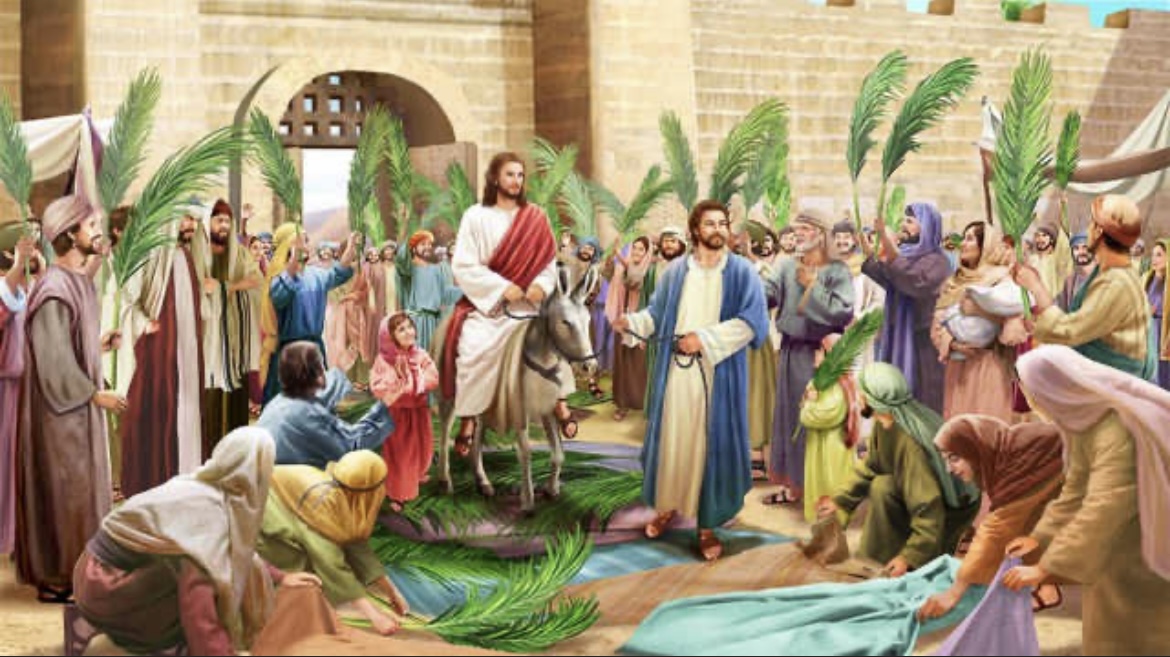
Yes, it’s the Passion of Christ, acted out from Jesus’ triumphal entrance into Jerusalem when palm branches were placed in His path, to His arrest on Holy Thursday and His Crucifixion on Good Friday. It also marks the beginning of Holy Week, the final week of Lent, and the week we can examine our promised Lenten sacrifices, maybe add a few tough ones just for Holy Week, and anxiously await His resurrection on Easter Sunday. Did you know the palm tree got its name from the way its open branches resemble a human hand?


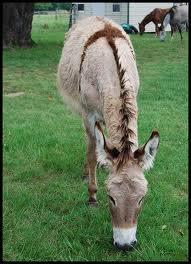
Another interesting legend related to Palm Sunday has to do with a donkey. Not just any donkey; the donkey that Christ rode on on Palm Sunday. It was unwanted donkey that reportedly wasn’t very strong and was actually given away rather than sold.


That little weak donkey not only carried Jesus but was also there when he died. The donkey followed Him to Calvary where it is said the shadow of the Cross fell on its back. To this day, donkeys are born with a cross on their back.


Cool, right?


Now for the fun stuff.


Easter Sunday is officially one week away and everywhere you look it’s all things Easter so I thought I’d share with you some fun tidbits on a few of the more popular things we think of when we think of Easter. From the Easter Bunny to Jelly Beans and more, have fun learning and sharing the stories behind each of them.


Let’s hop right to it with the beloved Easter rabbit, AKA the Easter Bunny. Much like Santa Claus and Christmas, rabbits have nothing to do with the real meaning of Easter, Jesus’ resurrection, but like other Easter favorites they do represent “new life,” which is what Easter is really all about.


Easter always occurs in spring and spring is when the weather gets warmer, flowers start to bloom, and animals come out of hiding after a long winter of hibernation. Lots of other animals like rabbits are born in the spring, which again brings up “new life.”


Courtesy Susie Davis

So, what about Easter eggs? Well, lots of animals like birds and lizards are born from eggs and many of them are born in the spring reminding us of new life once again. And if you think about it, Jelly Beans (one of my favorite candies) are oval-shaped just like eggs so it’s no coincidence they are an Easter basket tradition. Peeps are also a favorite Easter treat and are shaped like baby birds I, however, am not a Peeps fan although they are kinda cute.


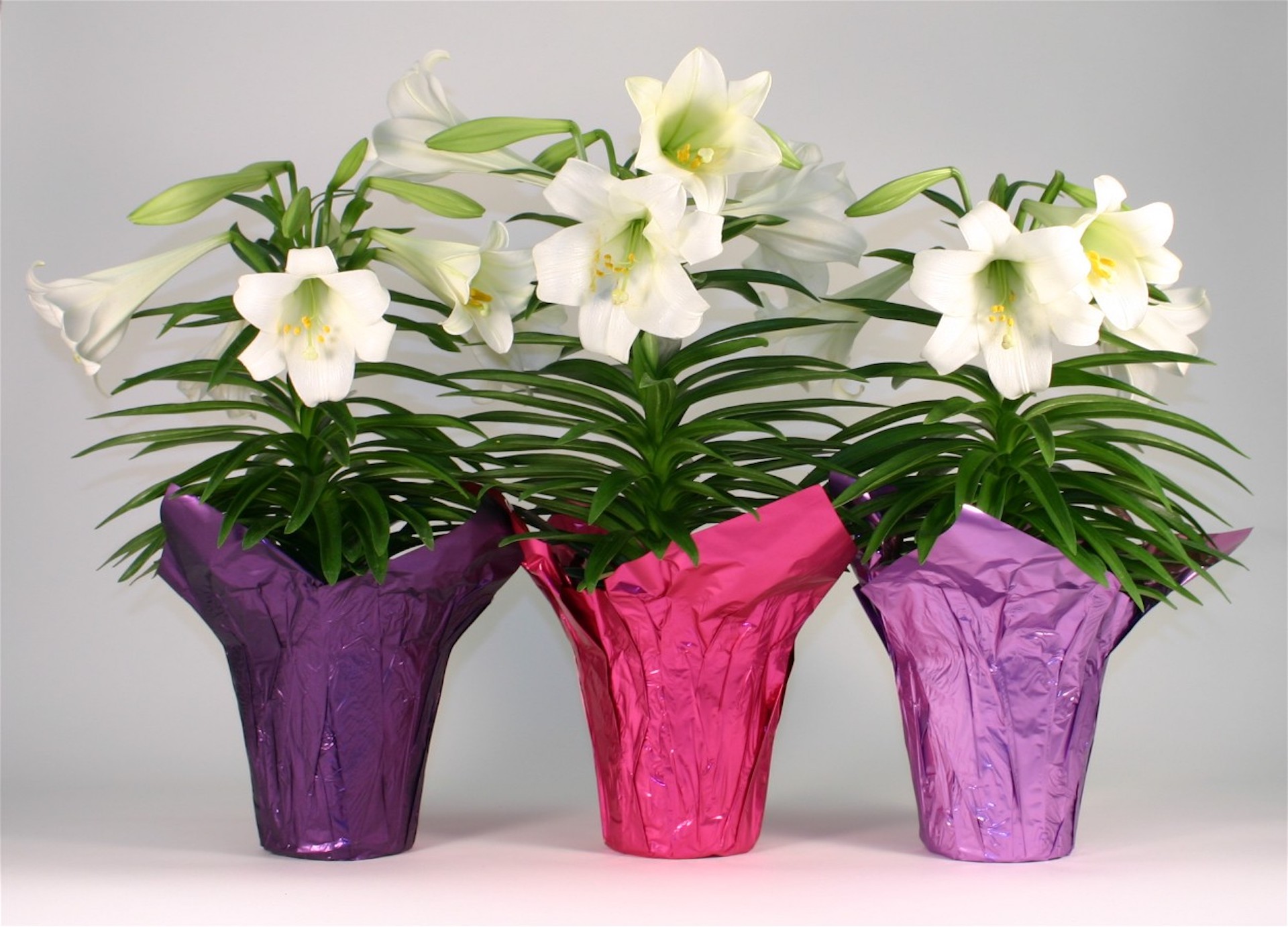
As I just mentioned, Jelly Beans are one of my favorite candies and another Easter custom is also a favorite of mine: the Easter Lily. In fact, it’s one of my favorite flowers right up there with daisies. Every year I buy myself one and even a grocery store variety is sufficient in that any lily smells divine and fills a room with its own heaven-sent scent. I can smell their fragrance just looking at the picture above. But why do we only enjoy them at Easter?


Traditionally, the trumpet-shaped white blooms symbolize purity, virtue, innocence, hope, and life…the very spiritual essences of Easter. They’re mentioned in both the Old and New Testaments of the Bible and are referenced several times in the Song of Solomon as well as in the Sermon on the Mount. Their religious tie-in goes even further.


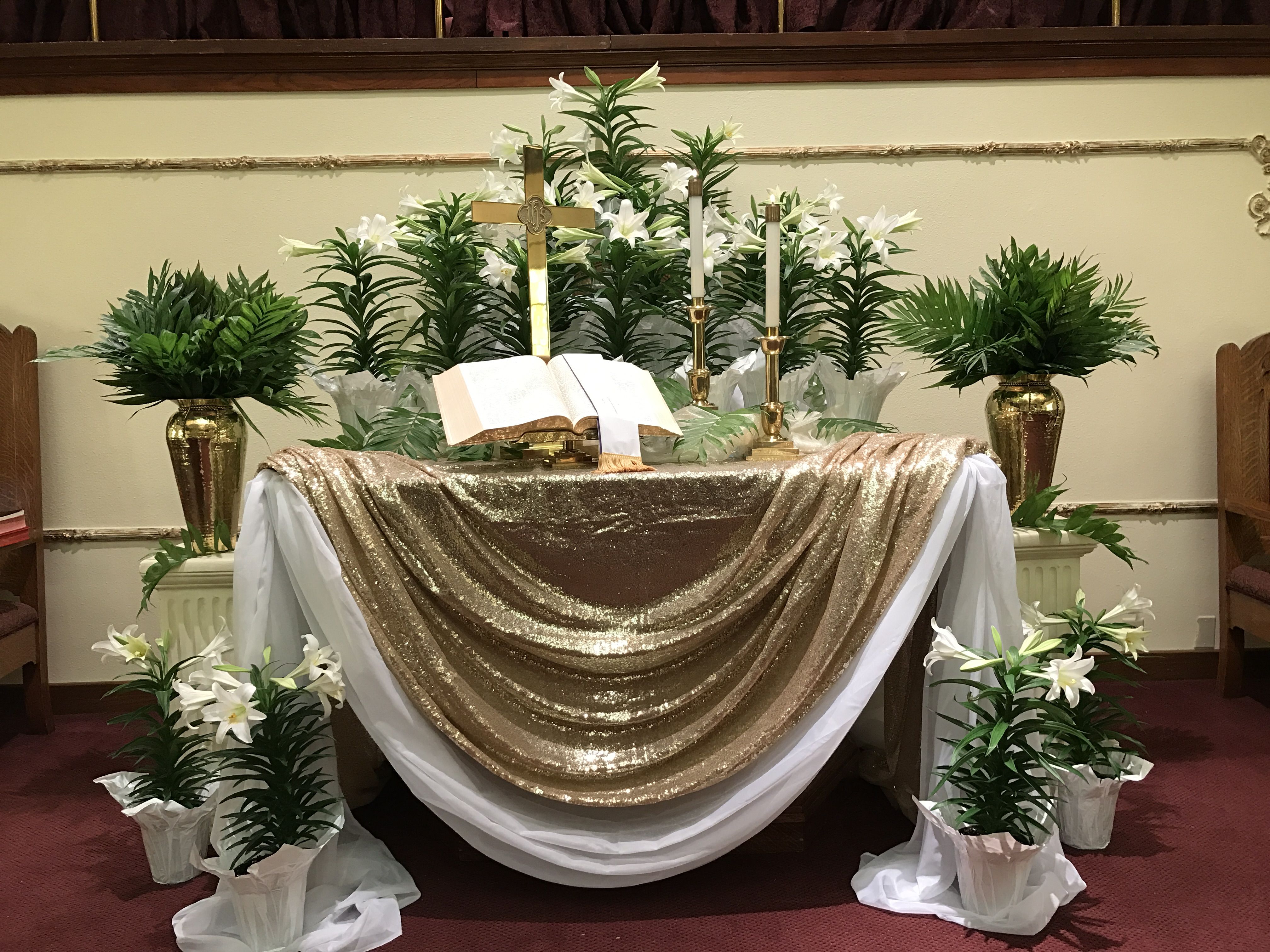
Often called “white-robed apostles of hope,” lilies were said to be found growing in the Garden of Gethsemane after Christ’s agony. Tradition has it beautiful white lilies sprung up where drops of Christ’s sweat fell to the ground in His final hours. Today churches commemorate this belief by filling altars and aisles with Easter Lilies. They embody joy and life and serve as beautiful reminders that Easter is truly a time of rejoicing and celebrating.


Easter Lilies can fill a room with their sweet aroma as can some of the traditional foods we eat at Easter. Like ham. But how exactly did it get to be the meat of choice on our Easter tables? It all goes back many, many years ago when hogs were slaughtered in the fall but due to lack of electric refrigeration; any meat that wasn’t eaten fresh in the cold months was cured so it would keep longer and be edible in the spring. It just so happened that, because curing takes a while, the first hams were ready right around Easter. Thankfully today we have the finest of refrigeration so hams of all sorts can be found year ‘round. Still, whether honey-baked or smoked, chances are ham will be on many an Easter table.


Lastly, one of my favorite Easter legends. I’m not sure how I never knew the story until fairly recently, especially since I grew up in the Rocky Mountains where there are many pine trees, but it was news to me when I came upon it. And I loved it.


Apparently, this time of year pine trees start their new growth. The tallest branch shoots forth and upward and forms the shape of a cross. If you look up and look around at certain pine trees you might see shoots developing making a familiar shape. The yellow shoots first form vertically followed by side buds, which eventually form branches and new growths that resemble a cross. They start slow and small, but as the days get closer to Easter, the tallest shoots branch off and form the familiar Christian symbol leading some believers to say “even trees know it’s Easter!”


The crosses are more prominent and more readily seen on Loblolly Pines in the southern U.S. and on Ponderosa Pines in the west but can also be found on a variety of other pines as well. The fact that this happens around the Easter season is likely pure coincidence, but who doesn’t love a little lore?


So, there you have it, all things Easter wrapped up nicely in a virtual basket of info. I hope you learned something, liked it, and have an Easter season filled with hope, love, and lots of Jelly Beans! May you open your palms to those colorful sweet gems and to the sweetness of mercy and redemption.