

Two events recently caught my eye…one the whole world was watching and the other was both watched and ridiculed. Both, however, involved a foreign language.
 The first one I mention was the Olympics in Paris (oui oui!) and the second one was sorority rush (or “recruitment” as it’s now called) held on college campuses. French and Greek. Bonjour and yia sas! My dream would be to speak multiple languages but come to find out we all do! Kind of. And as for those Greeks, stay with me here; this isn’t a blog about frats or the French a little of both and something interesting I didn’t know.
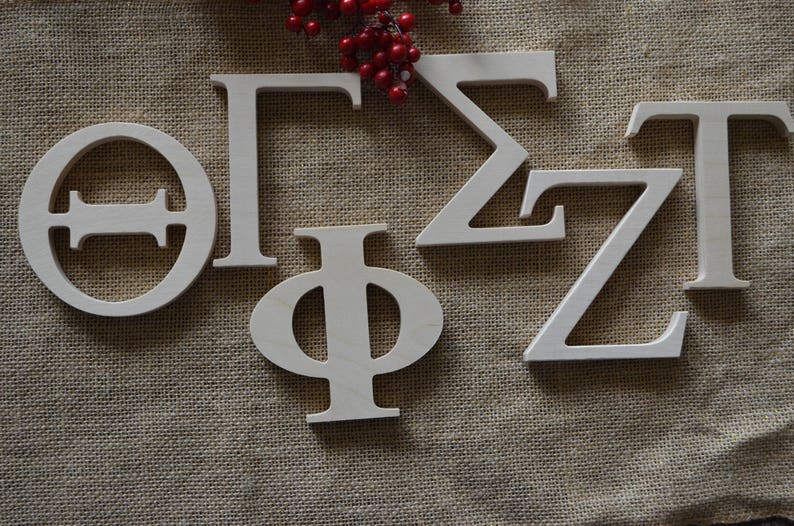 Why are sororities and fraternities named after Greek letters? Good question!
The first fraternities were formed in 1750 at the College of William and Mary and were originally debate clubs and literary societies. Boy, have they changed! LOL. Additionally, the groups generally went by Latin names but in 1776, a group of students started their own club and, as a way of avoiding association with their predecessors and those known for partying (again, boy have things changed!), they chose to go Greek rather than Latin. Their thought was also that they wanted to be associated with Greece’s rich cultural history of intellectual innovation. This next part may surprise you.
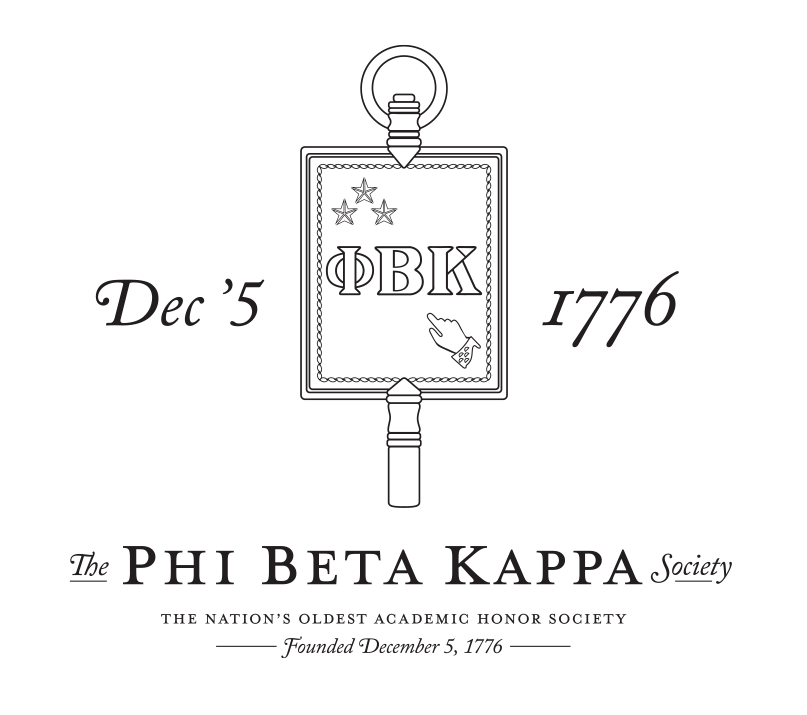 The group’s motto was “Philosophia Biou Kubernetes,” which means “Love of Learning is the Guide to Life.” They later became known as Phi Beta Kappa and spread to other universities. I’m pretty sure you’ve heard of them as they are the most respected honor society in America. From there, things took a slight turn.
Students who literally didn’t make the grade for Phi Beta Kappa formed their own groups, established their own rules and traditions, and originally lived in separate dorms. Over time, these sororities and fraternities began to buy houses for their exclusive use and if you’ve seen any of these today, they are not your average house. They are notoriously thought to be snobbish and ridiculous, but membership can pay off big time as “brothers and sisters” can become life-long friends as well as professional contacts and colleagues. Many presidents, corporate leaders, and Fortune 500 executives are members.

I know this first-hand as truth be told, I’m Greek. Yeah yeah, I’m really Spanish with a tiny bit of French, but in college I pledged a sorority. Upon arrival at the University of Oklahoma, I knew nothing about sororities, soon learned Greek life is HUGE there, and somehow ended up in a really good house. I still have four really good friends who I travel with annually and who I consider “my people.” One of my closest friends in college was even Phi Beta Kappa!
Okay, enough about me and enough about fraternities and sororities. As for French and Greek though, many words and phrases you and I use on sometimes a daily basis are actually foreign. We know what we think we mean when we use them, but do we know their real meanings? It’s all Greek to me and maybe you, but not anymore!
Let’s go!

Some of these phrases are used without really knowing what they mean and many are very useful. Let’s look at a few, starting with the one that Mr. Berra kinda misused.
Déjà vu. French for “already lived.” A feeling of having previously experienced something and the experience of thinking a new situation had occurred before.
Ad nauseam. Latin for “to nausea.” To a sickening or excessive degree.
Quid pro quo. Latin for “this for that.” An equal exchange. Something given in return for something else; a favor for a favor.
E.G. Abbreviation for “exempli gratia” or “for example” in Latin.
I.E. Abbreviation for “id est” or “in other words” in Latin.
Alumnus and alumni. Latin male nouns.
Alumna and alumnae. Latin female nouns.
Faux pas. French for “false step.” A social blunder. A violation of accepted social norms.
Schmooze. An English mangling of the Yiddish word shmues, which is apparently an adaptation of the Hebrew word shemuos for”tidings.” To talk casually, chat, network.
Vis-à-vis. French for “face-to-face.” Often also used as in comparison with and In relation to.
Shlep. Yiddish for “to tote.” To drag, carry with difficulty, or to travel slowly or awkwardly.
Je ne sais pas. French for “I don’t know.” “Je ne sais pas how the Olympic athletes do what they do but I loved watching most of them in Paris!”
Je ne sais quoi. French for a quality that cannot be described or named easily. Gotta admit, this is one of my favorites. I love using it when someone has a quality that is just hard to describe.
Persona non grata. Latin for “a person not welcome.” Unacceptable or unwelcome whether it’s someone at a party or someone walking on your lawn.
Piece de resistance. French for “a thing of strength or stamina.” A prized item in a collection.
A la carte. French for “according to the menu.” Individually priced items from a menu in a restaurant.
Coup de grace. French for “blow of mercy. “ A decisive finishing blow, act, or event such as an action that ends something that has been gradually getting worse. Example: My disastrous exam results dealt the coup de grâce to my university career.
RSVP. French. Short for “répondez s’il vous plaît” or “”respond if you please.” A phrase often used at the end of invitations meaning “please reply” as in please let us know if you’re coming or not.
Carte blanche. French for “blank document.” Unrestricted power to act at one’s discretion.
Status quo. Latin for “the state in which.” The current situation.
Mea culpa. Latin for “My guilt.” A formal acknowledgement of personal fault or error.
Carpe diem. Latin for “pluck the day.” Seize the day. Seize the moment.
C’est la vie. French for “this is the life.” Acceptance of a situation, often with a sense of resignation. Basically “that’s life!”
Et cetera. Latin for “and the rest.” And so forth, and other things, all the rest.
Per se. Latin for “by itself.” In English, we use it to indicate that something is thought of independently, without any additional factors or context, in essence, or inherently. Example: Karen’s new restaurant is not expensive per se, but the menu can be pretty pricey.
Per diem. Latin for “per day.” Used generally for paid or calculated by the day.
Al fresco. Italian for “in the fresh” as in fresh air. Outdoor dining, painting, or activities of any kind.
Bona fide. Latin for “in good faith.” Well-intentioned, fairly, genuinely, sincerely, authentic.
Ad hoc. Latin for “for this.” A solution designed for a specific purpose, problem, or task.
Hasta la vista. Spanish for “until we see (each other) again.”
And until we see each other again, have fun with these and let me know if I missed any!
Hasta la vista readers!















 Beyond Words