
 I’m a big lamp person. I have them everywhere in our home: end tables, nightstands, desks, kitchen counters, and consoles. I love the warm glow they lend a room and the various styles I can incorporate. I’m not a big overhead light person. We rarely use the ones we have in our home and I’m okay with that.
This might be why I was intrigued by a magazine (yes, I love magazines!) article I recently read on the Tiffany Lamp. They’re not my absolute design favorite but I do appreciate the artistry of them and their history.
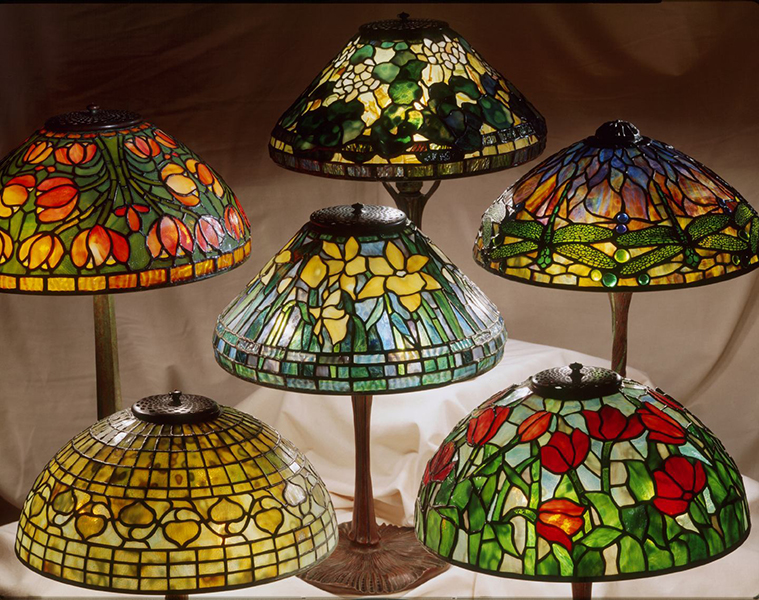 For more than 100 years, the Tiffany lamp has served a decorative art icon, known for its uniqueness, craftmanship, and stained-glass shade. They remain fixtures in homes and museums and their history is illuminating.
New York City native Louis Comfort Tiffany was born in 1848 and was the son of Charles Lewis Tiffany, founder of jewelry retailer Tiffany & Co. From an early age, he was exposed to decorative art and design and originally trained as a painter, but in his 20s he became interested in glassmaking after seeing a collection of Roman glass at the Victoria and Albert Museum in London. He was also influenced by a visit to the Universal Exhibition of 1889 in Paris and his work gained acclaim at the 1900 Paris Universal Exhibition.

Joaquin Sorolla “Louis Comfort Tiffany 1911 (Photo: Wiki Art Public Domain)
He was particularly interested in the rustic nature of ancient glass and eventually founded a glass factory in Queens, New York as well as an interior design studio, Louis Comfort Tiffany and Associated American Artists. He thrived as a decorator, proving popular with everyone from wealthy individuals to a president of the United States but eventually dissolved the studio and created the Tiffany Glass and Decorating Company in 1885.
In this new venture, Tiffany experimented with tone, texture, and method. He strived to create colorful pieces without using paint or enamel and developed two important innovations: farvrile glass and the copper foil technique.
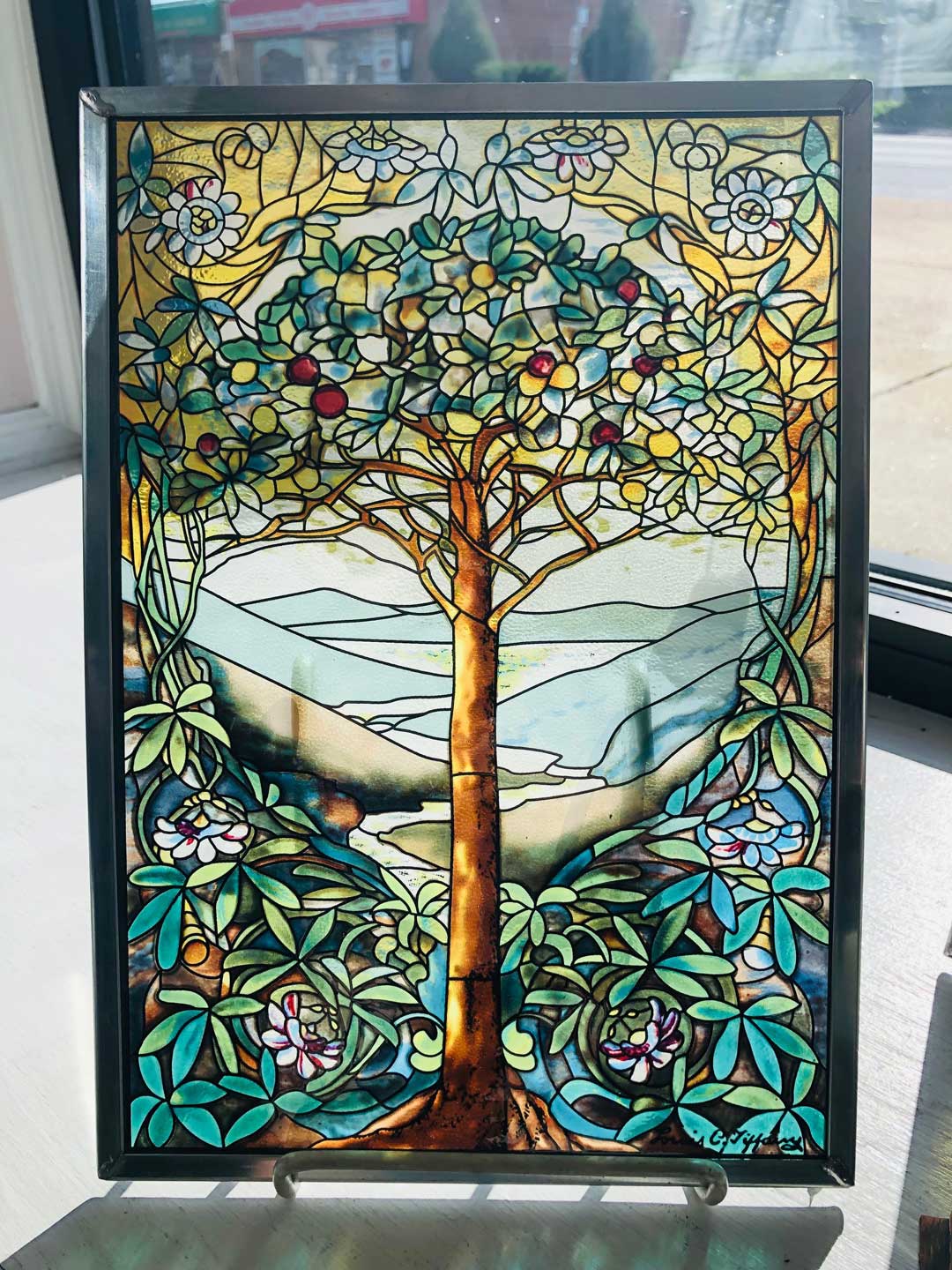 You could say popularity of Tiffany’s work exploded at the 1893 World’s Fair in Chicago when he debuted favrile glass. Achieved by mixing different colored hot glass together, Tiffany’s method held stained glass windows together by thick lead rods soldered without any visible joints. Still wanting to be paint-free, Tiffany created a thin, flexible foil that discreetly connects pieces of glass without line or joints. This is the method he used to create the trademark Tiffany Lamps with the help of artist Clara Driscoll who served as the brains behind the beauties.
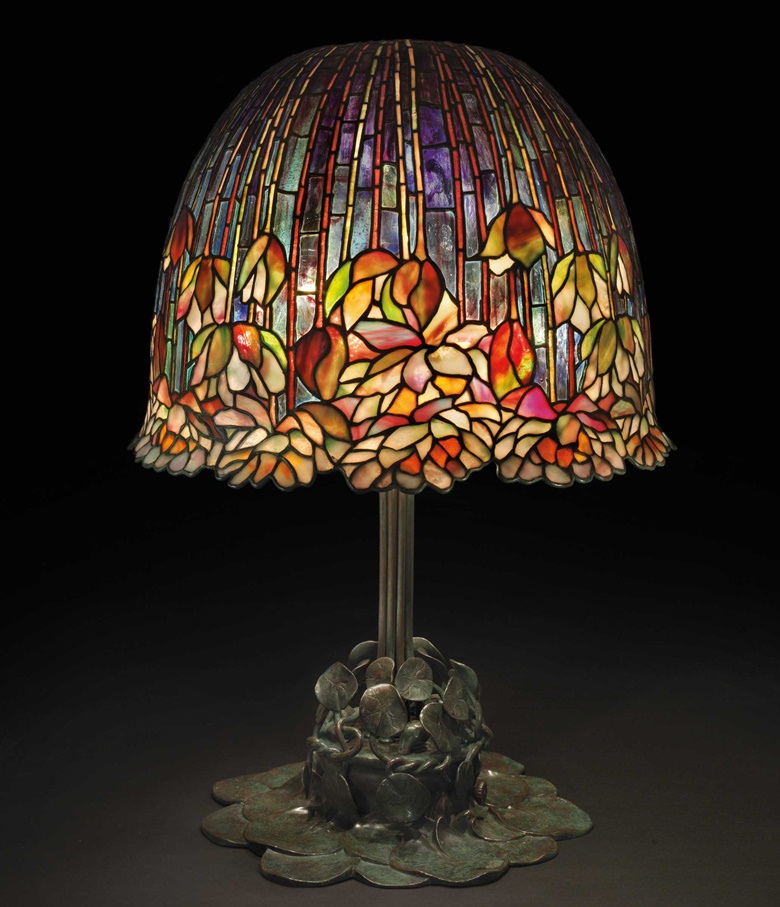 A typical Tiffany Lamp traditionally consists of a bronze stand topped by a stained-glass shade, and they soon became icons of the Art Nouveau movement. Tiffany loved nature so each shade included patterns inspired by flora and fauna with daisies and dragonflies being the most common. The icon’s most popular styles are also shaped like trees and many of the shades feature scalloped edges reminiscent of flower petals, butterfly wings, and other forms found in nature.
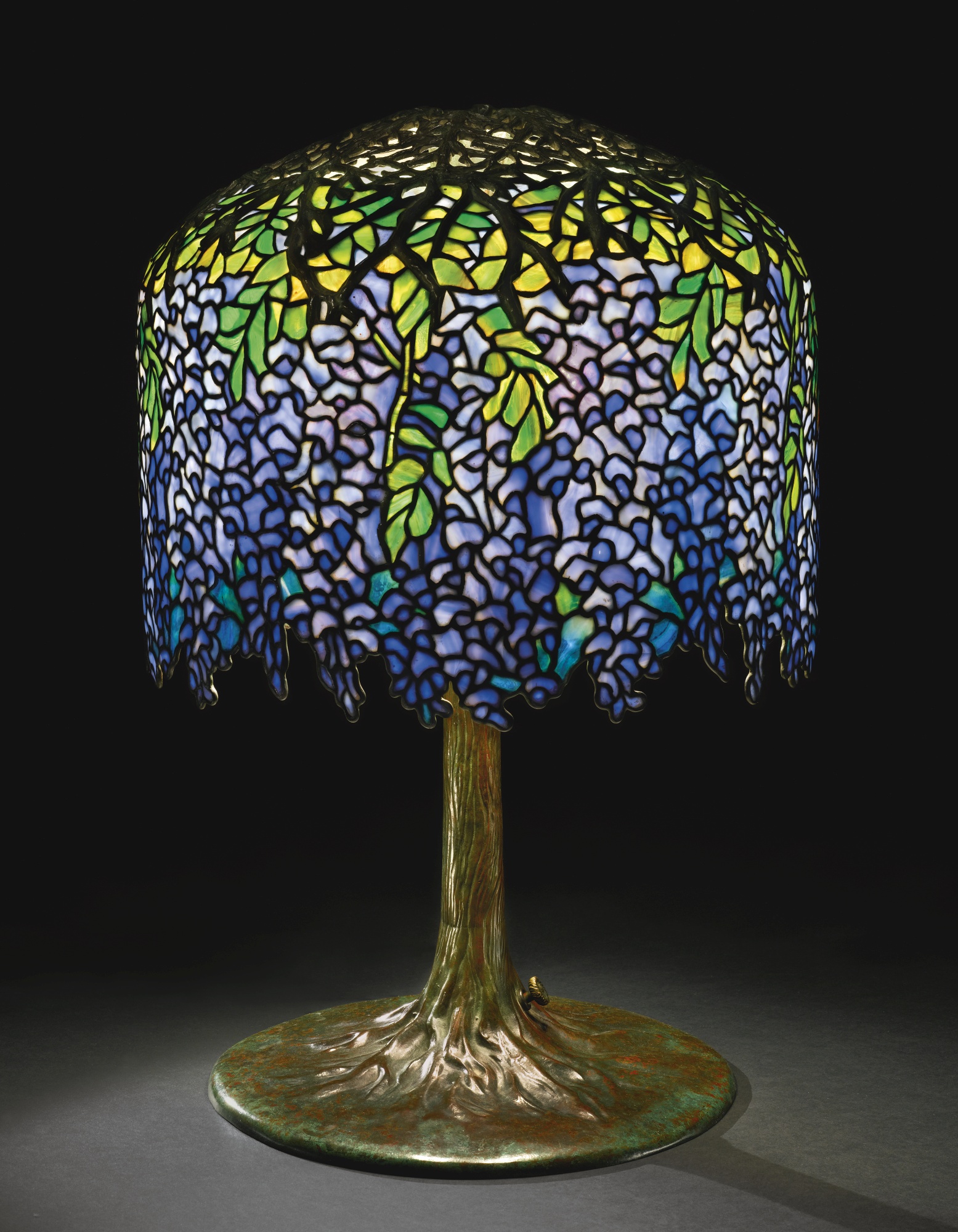 The lamps became collectibles also in the Arts and Crafts movement when Tiffany incorporated geometry into their creation but eventually fell out of fashion and weren’t produced after 1913. Like all great concepts though, they saw a resurgence in the 1950s and since then have become collector’s items and popular in auction houses, private collections, museums, and for the lucky thrifter: flea markets. Recent purchases have included the above Wisteria Lamp, which sold for more than $1 million. His works remain popular and many a knock-off can be found.
 So, let’s think about it. What do lamps do? They light up a room. They warm up a room. In short, they are light.
The Bible tells us many things about lamps and light. Psalm 119:105 declares “Your word is a lamp to my feet and a light to my path” as the writer declares to the Lord. Proverbs 6:23 similarly says “For this command is a lamp, this teaching is a light” while Luke 8:16-18 talks about the importance of letting your light shine and not holding it in or back.
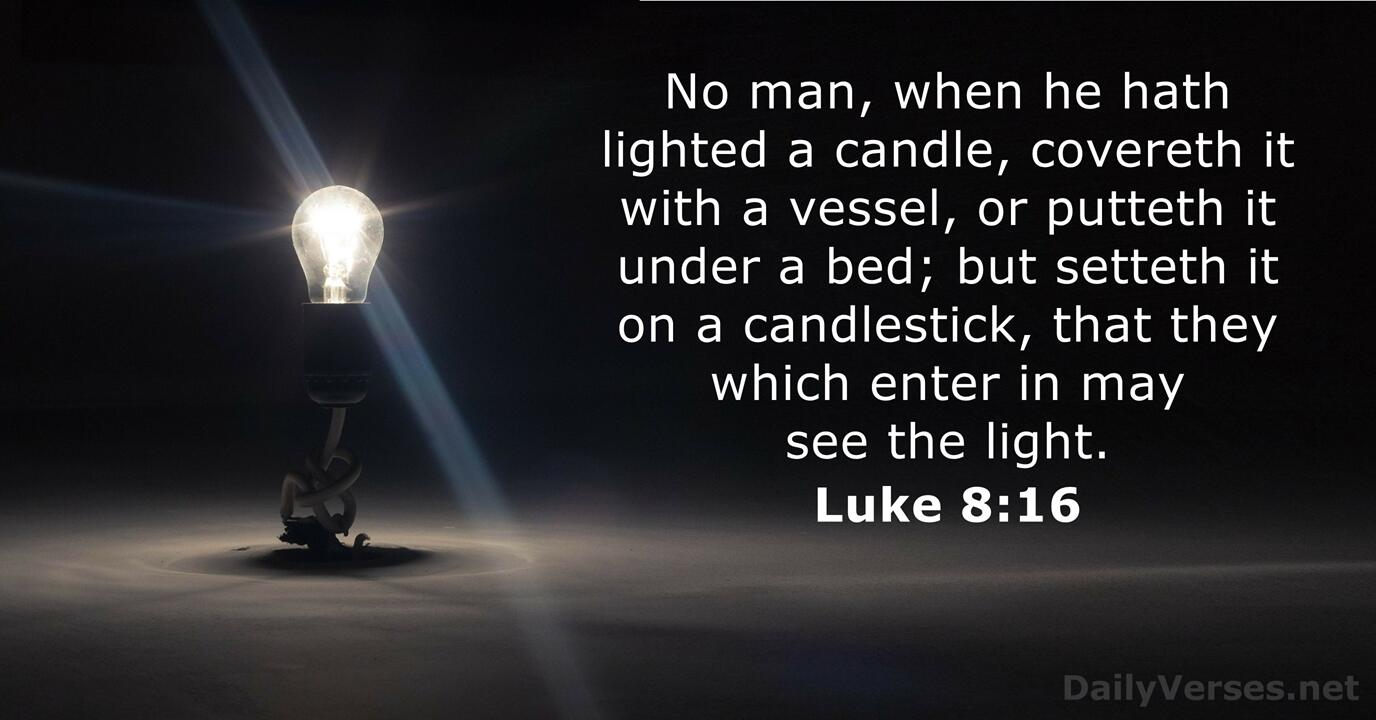 In this scripture, Jesus emphasizes the importance of not hiding the light of God’s truth and He urges His listeners (and us!) to pay attention to what they hear. Boy is this timely! In short, the verse reminds us of the importance of authenticity and integrity. Perhaps the reference to letting our light shine means being our true selves and living in an open, honest, and genuine way while radiating and shining positivity and goodness.
As to hidden things coming to light, Luke brings to light the concept of accountability and transparency and suggest secrets or deceitful actions can’t and won’t remain hidden forever. Eventually all will be exposed. In reading this, we should hear the message that we ought to act with sincerity and honesty as the truth will always eventually come to light.
 Going back to Psalm 119, the word “lamp” is “ner” in the original Hebrew and referred to a small clay lantern. The psalmist compared it to the Word of God being a lamp he could carry on his journey to keep him on the right path and not off course. We learn that just as a lamp brightens a path, the light of God’s word gives us the light and lit direction to traverse this world.
 Not only do these lamps and lanterns light our way, Proverbs reminds us that the advice we should be taking is not that of random counselors, viral podcasters, or out-of-touch celebrities but rather the rock solid truth of His word when it comes to navigating difficult moral choices in our dark and fallen word. Yes, counselors and podcasters can have positive and helpful advice, but the best advice comes from the Book.
 2 Peter 1:19 provides the direction we need and remind us that “we also have the prophetic message as something completely reliable and you will do well to pay attention to it as to a light shining in a dark place.”
All these scriptures and parables are messages that a lamp does indeed give light, but not just for itself. We see things with the shedding of light. By living with integrity and honor, we shed light on others and can illuminate what is beautiful and reveal what is ugly.
So, whether your lamp is Tiffany or TJ Maxx, be a beacon. A beacon of light in a world that so desperately needs it. Shine brightly my friends.
Discover more from Beyond Words
Subscribe to get the latest posts sent to your email.


 Beyond Words