
At a recent Christmas party, I was treated to a fun little game of trivia. One question was “what popular Christmas drink originated in England?” Our table debated between eggnog and wassail and ultimately went with wassail. We were wrong. Or were we?
The night’s correct answer was eggnog but come to find out both drinks originated in England. This all got me thinking of other traditional holiday drinks and eats so off we go…
I love egg nog. I know many don’t and it’s truly a “love/hate” relationship but during the holidays, I can’t get enough of it. How it started is a very tasty tale.
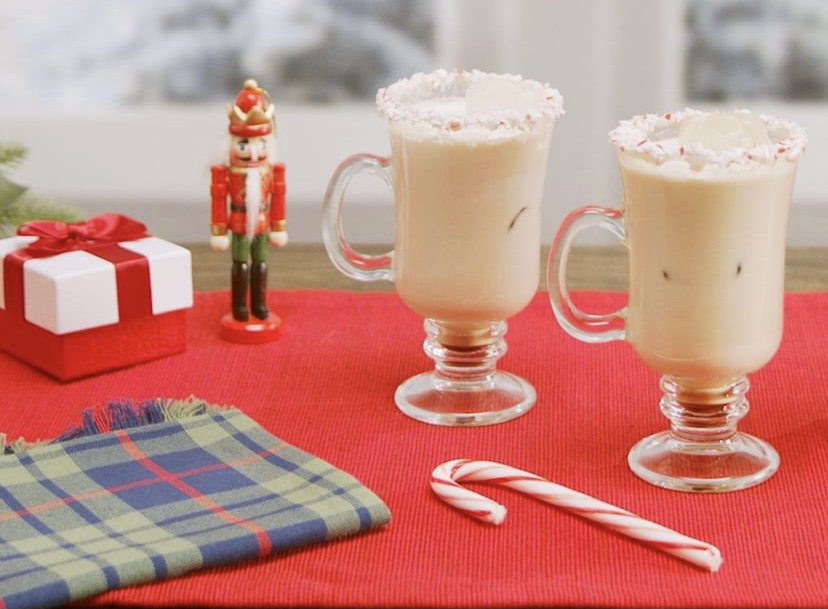 According to “Smithsonian” magazine, the creamy, spiced beverage is believed to have originated in medieval Britain as “posset,” a comforting mixture of hot milk or cream, wine or ale, and spices. In the 13th century, some monks began adding whipped eggs and figs to their possets—but the scarcity of the more expensive ingredients, including eggs and sherry, made this proto-eggnog a luxury reserved mainly for the British elite.
When the beloved drink crossed continents to North America in the mid-1700s, it became known as “egg-n-grog,” a term derived from the Scottish and Gaelic word noggin, which means cup, and grog, an English term for hard booze, often rum. The American colonists soon shortened that to “eggnog,” a term that first appeared in a poem by Maryland minister Jonathan Boucher around 1774.
George Washington was known to serve his own version to guests at Mount Vernon and the drink once sparked a riot at the United States Military Academy at West Point in 1826, when campus staff intervened after cadets, possibly including a young Jefferson Davis, served eggnog at a boisterous Christmas party despite the school’s ban on alcohol. The drink’s wintry spices, and the preference for serving it hot, made nog a Yuletide mainstay today.
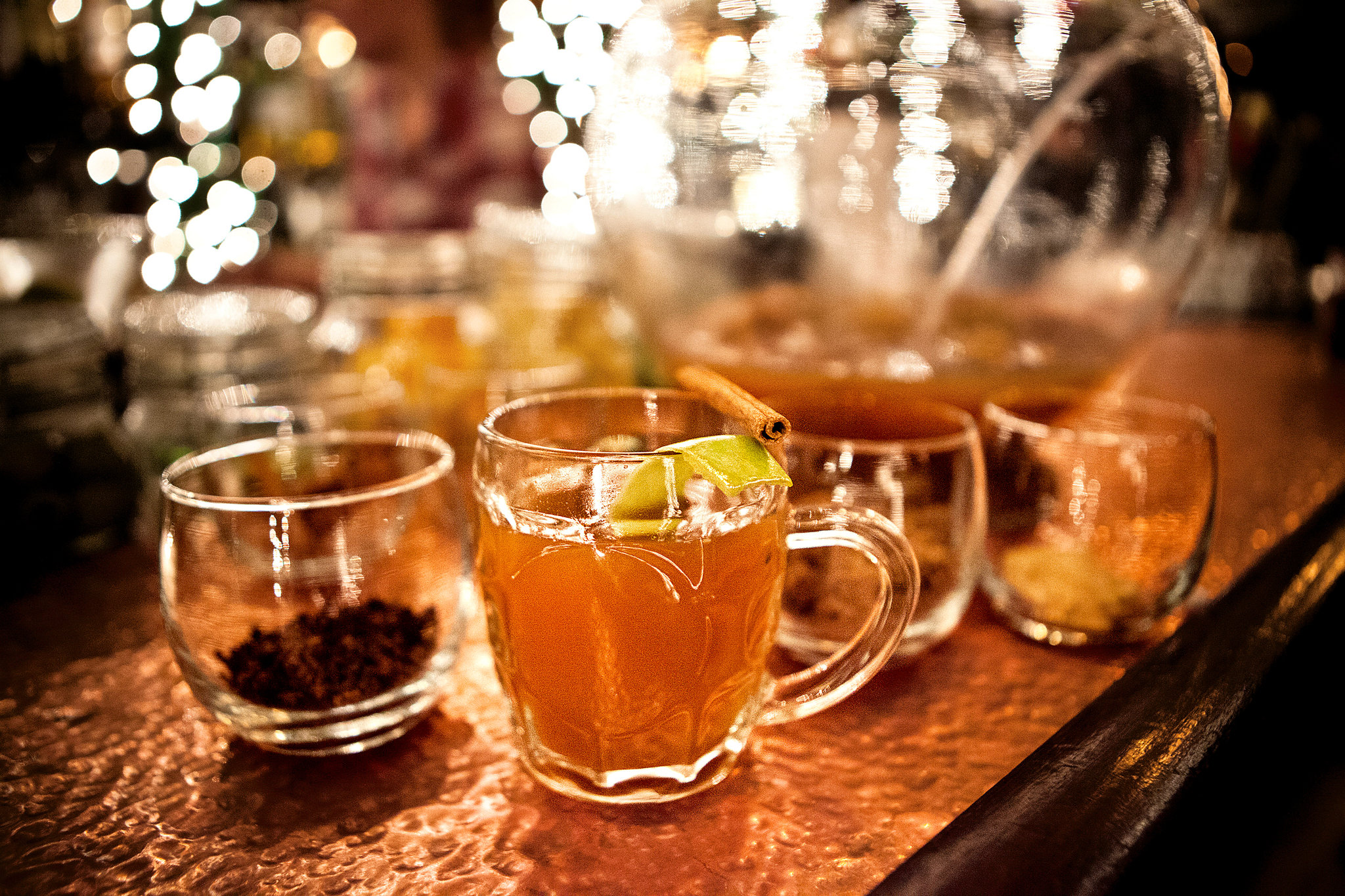 Wassail’s origins are equally interesting. The word ‘wassail’ comes from the Anglo-Saxon phrase ‘waes hael’, which means ‘good health’. Consisting of a beverage made from hot mulled cider, ale, or wine and spices and drunk traditionally as an integral part of wassailing. The ancient English Yuletide drinking ritual and salutation traditionally involves door-to-door charity-giving to ensure a good harvest the following year but sadly this ancient custom is rarely done today.
One of the most popular Wassailing Carols went like this:
Here we come a-wassailing
Among the leaves so green,
Here we come a-wassailing,
So fair to be seen:
Love and joy come to you,
And to you your wassail too,
And God bless you and send you,
A happy New Year,
And God send you,
A happy new year.
Now let’s turn to food for a bit.
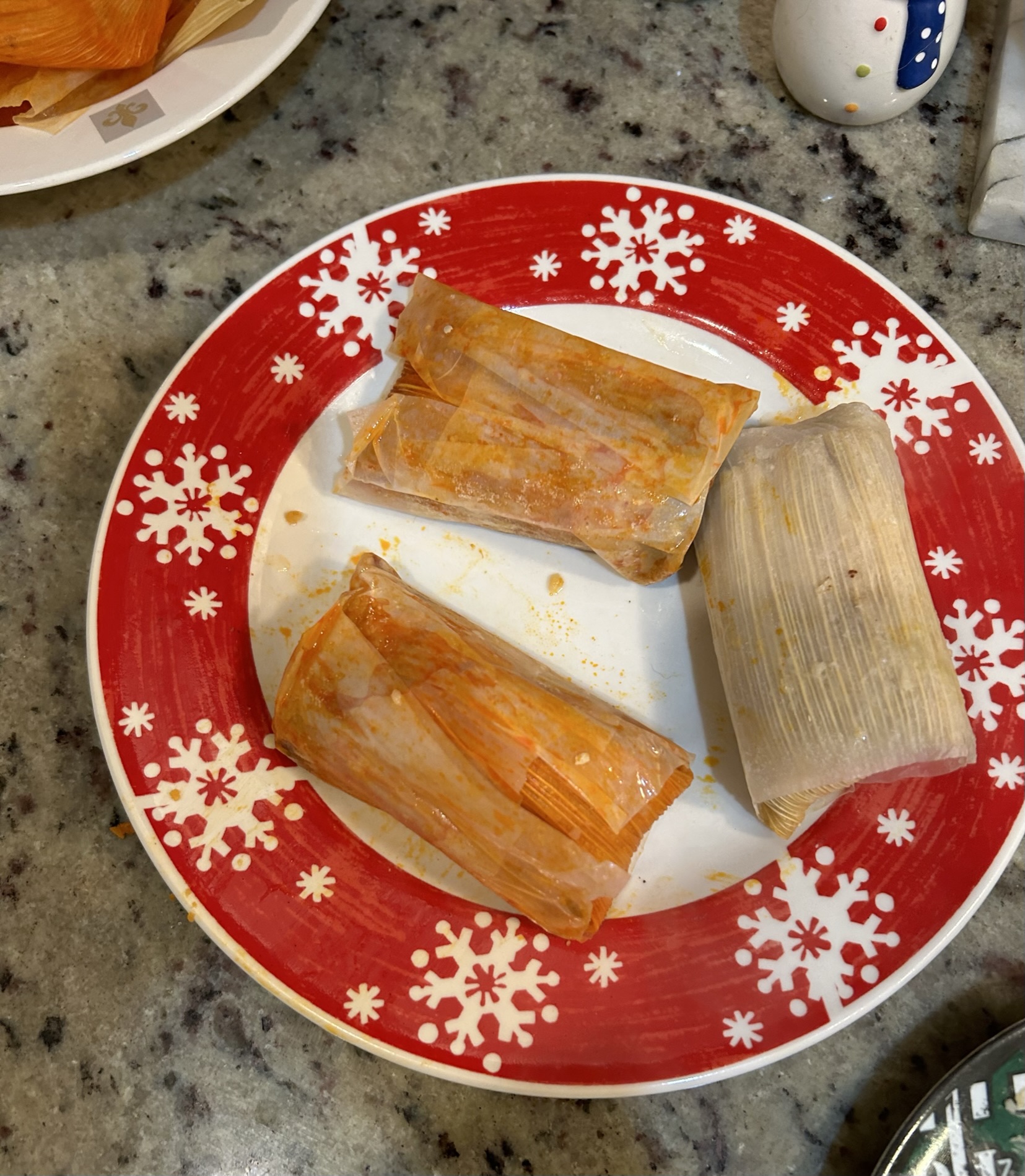
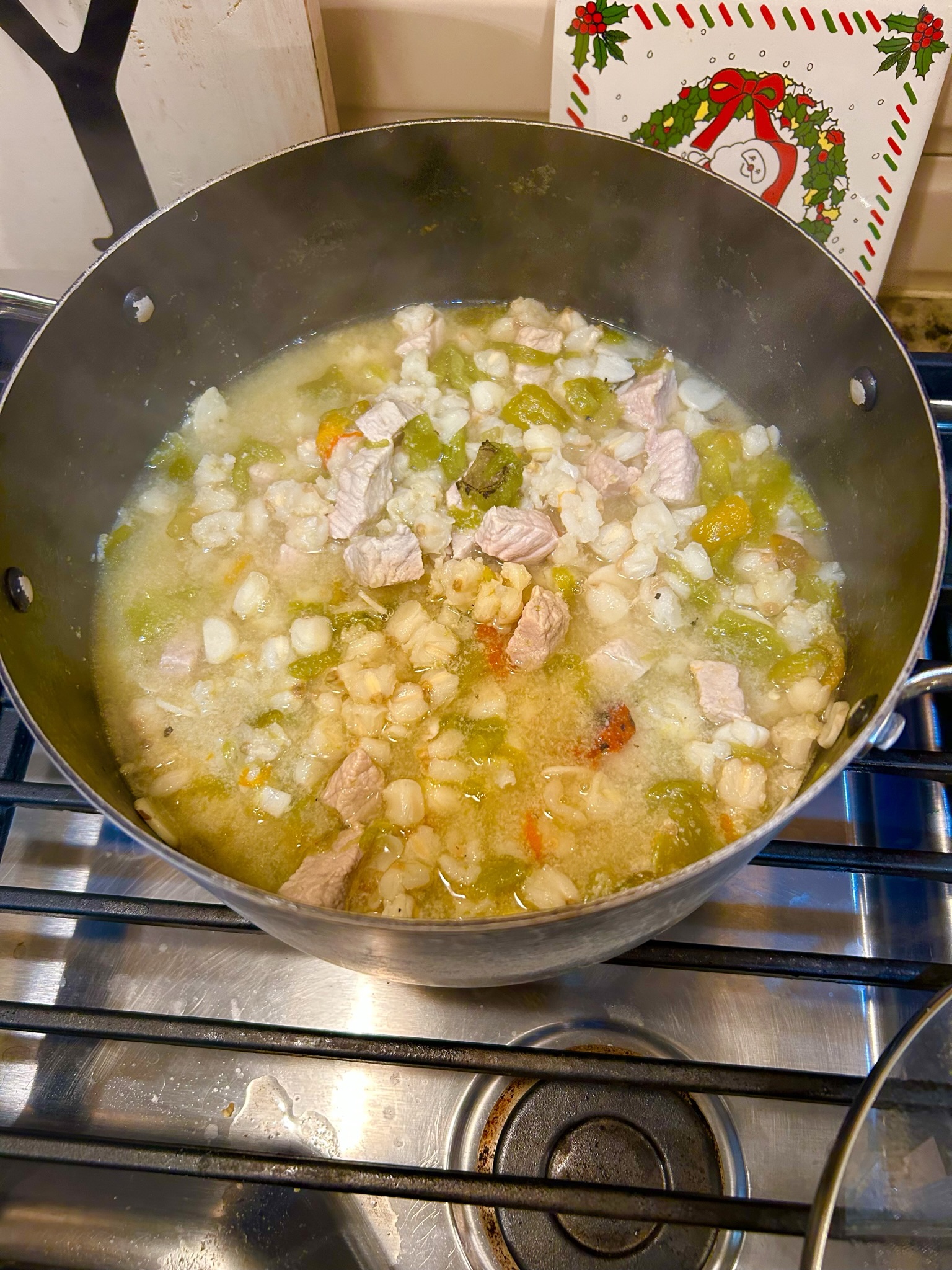
In our home, a Christmas food tradition consists of tamales and posole. Handed down for generations in my hometown of Santa Fe, NM, the combination of New Mexico red chile and pork tamales along with posole, a soup made of hominy, green chile, and pork that my Yankee husband loves, is served on Christmas Eve. No Christmas Eve is complete without them. This can also be said of Mexico, where “tamaladas” are held for the laborious task of making tamales. The tamales are a bit different then the ones I get from home but the tradition is just as beloved.
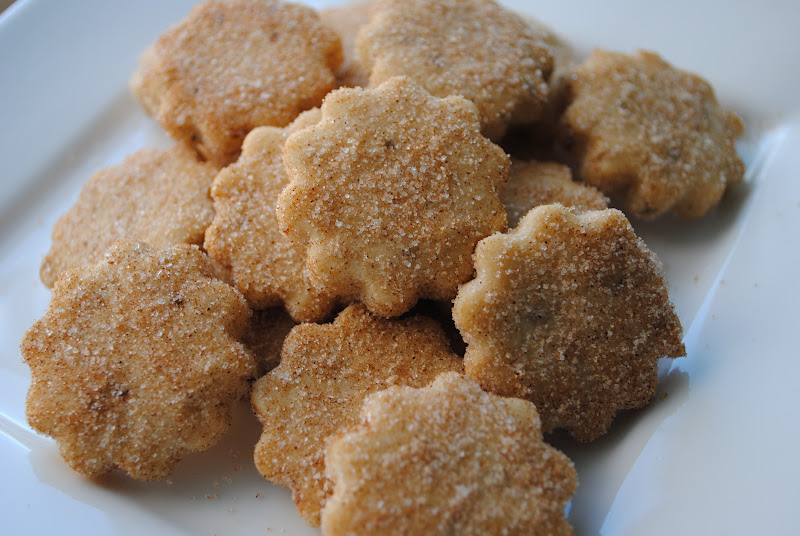 Equally beloved in New Mexico are cookies called biscochitos. Similar to southern snickerdoodles but with added anise, no Christmas season is complete without them and they are perfect with eggnog!
If you’re from the coastal regions of the Southern US., oyster stew, rich with butter, milk, and cream, is probably a Christmas morning tradition for you while in St. Louis you’ll probably feast on Butter Cake, a St. Louis holiday staple.
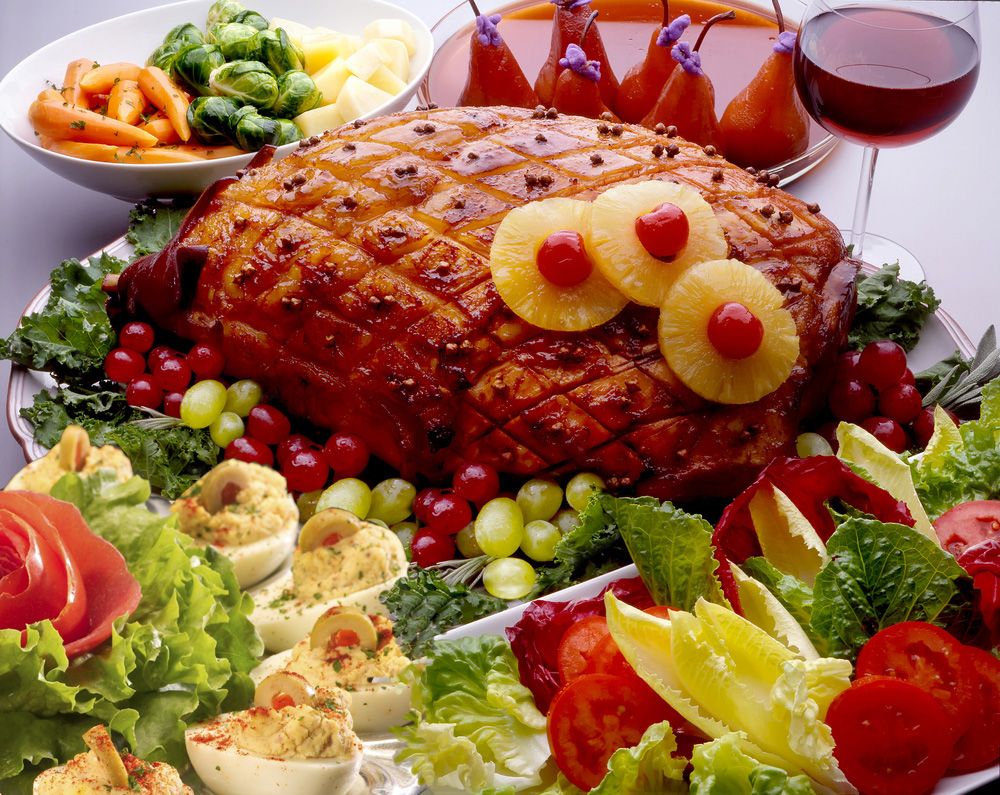 Ham is also a Christmas tradition nationwide but it’s a unique tradition in South Dakota. Even if you’re not in South Dakota, you can bake this ham covered in eye-popping pineapple rings and bright maraschino cherries or buy one of those yummy honey-baked ones.
Across the globe, some Christmas culinary traditions have made it stateside, albeit perhaps without the knowledge and history that go along with their ingredients and recipes.
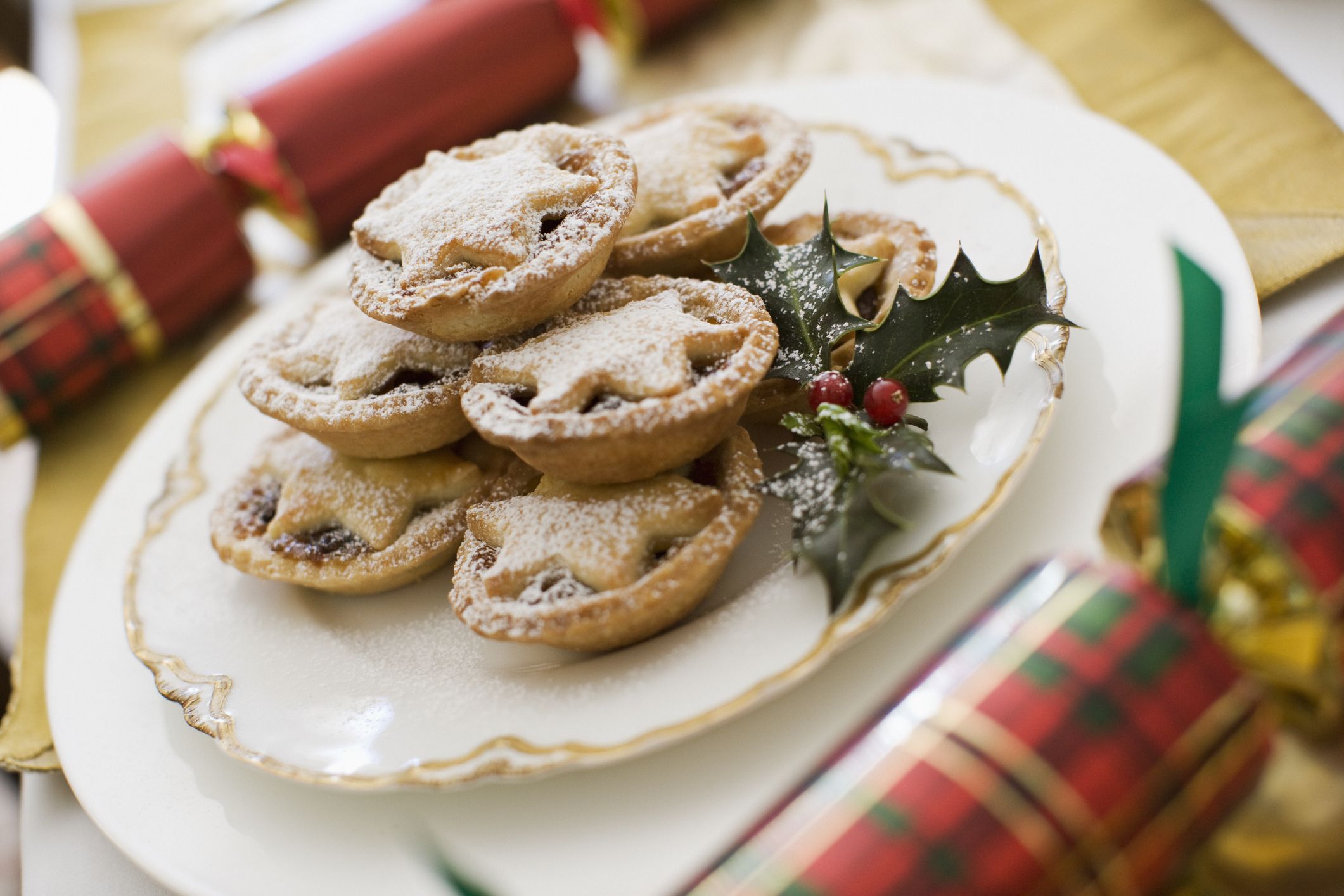 In the U.K., mince pies are the ultimate season indulgence. The small, individual pastry pies are filled with mincemeat, a mixture of fruits and spices, and served with brandy butter.
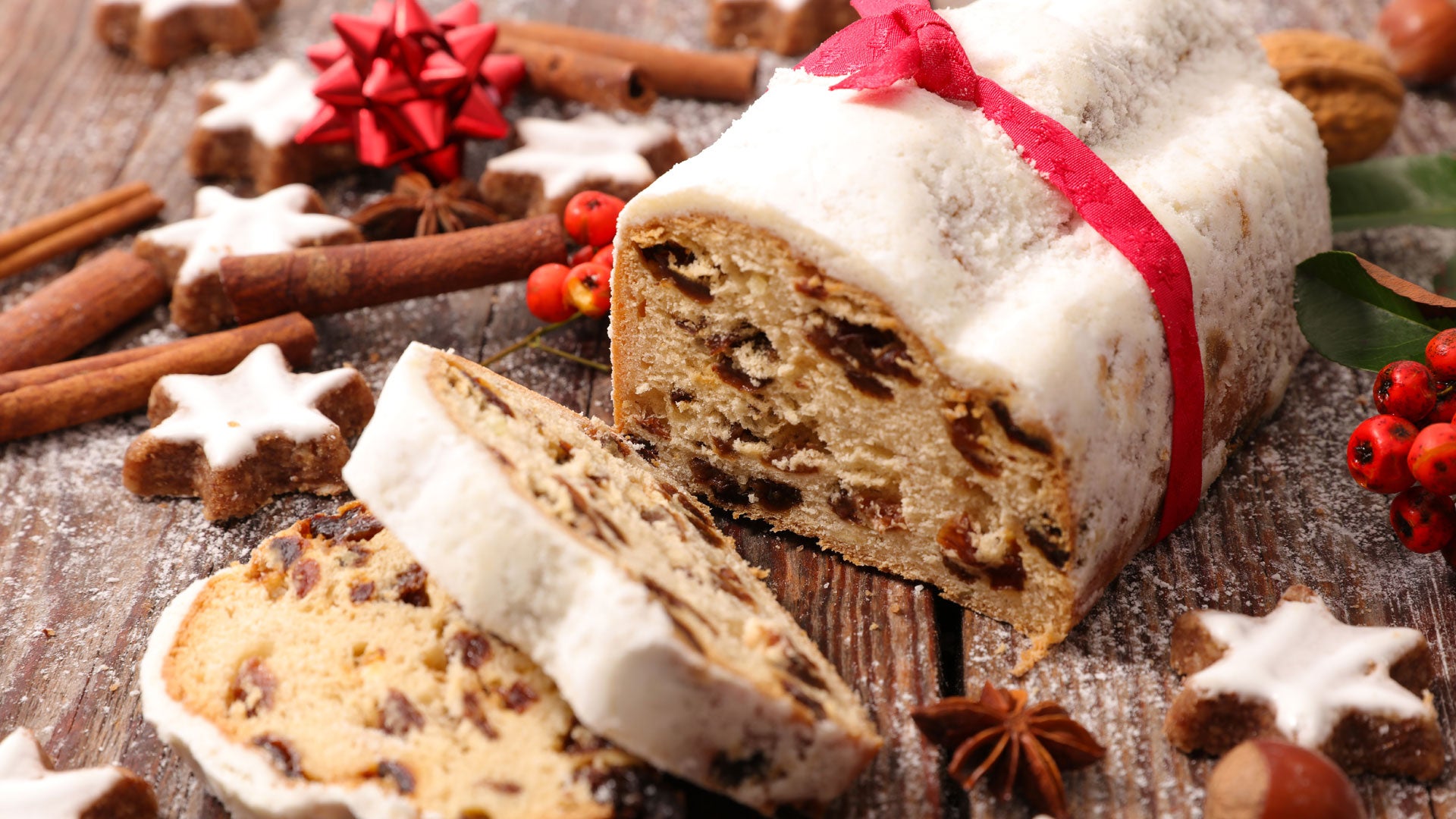 Germans are equally as proud of their prized Stolllen. The cake-like bread most associated with Dresden and popular this time of year. It dates back at least to the 1400s when it was a dull dish primarily for fasting and traditionally made of dried fruits, nuts, and spices and finished with sugar icing and maybe some rum. The bread’s shape and white glaze or dusting of powdered sugar is said to symbolize the swaddled infant Jesus.
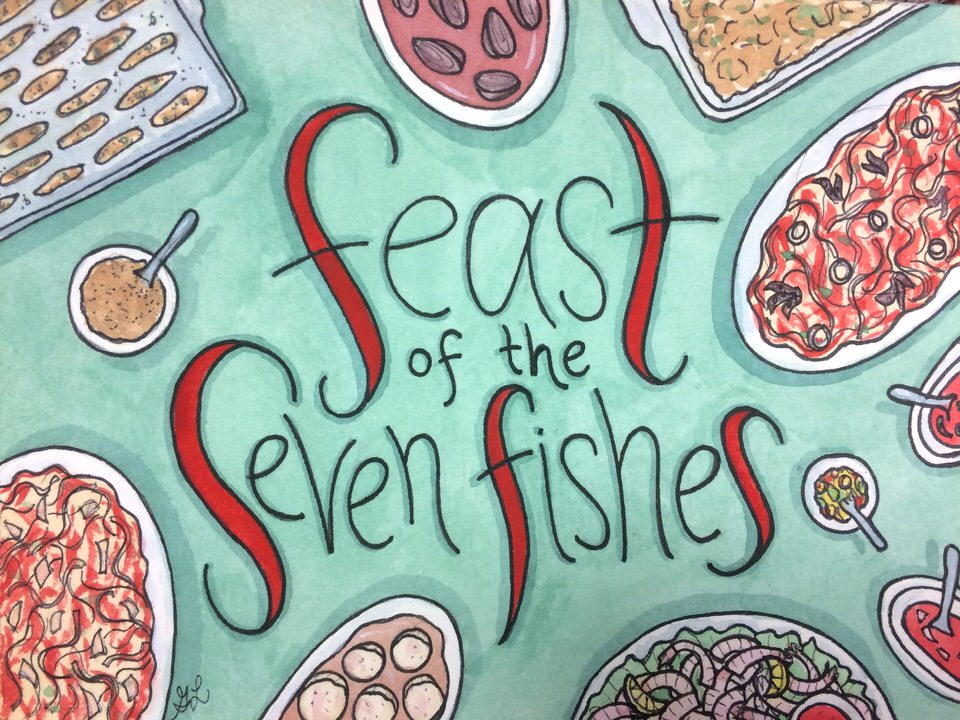 If you’re looking for amazing food, look no further than Italy. Am I right? On Christmas Eve, some Italian-American families celebrate the Feast of Seven Fishes, a Southern Italian tradition (and one that many Italian-American families commemorate) that’s been around forever. The exact fish and their preparation served doesn’t matter so much as the abundance of seafood dishes at the table. “Why seven?” Some say it is for the Seven Sacraments of the Catholic Church, others say it symbolizes the church’s Seven Virtues: faith, hope, charity, temperance, prudence, fortitude, and justice.” Amen to that!
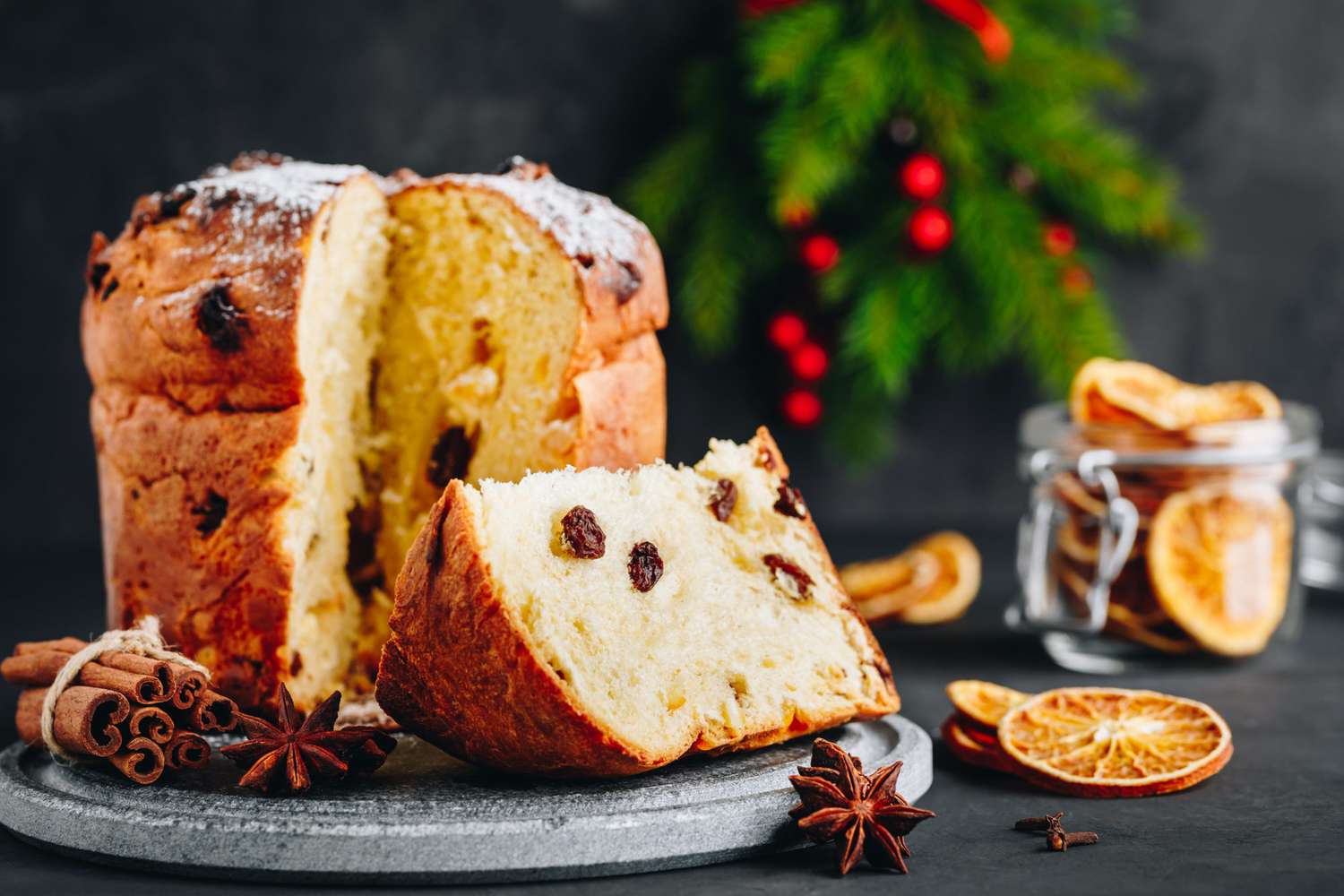 This time of year, Italians are also craving and creating Panettone, a mix of sweet bread and fruit cake stuffed with candied fruits and raisins. This lovely Christmas bread, widely associated with red boxes stacked up in specialty stores during the holidays, isn’t just a tradition in Italy. Throughout many South American countries, Italian immigrants introduced panettone and over the years it’s become integral in their Christmas festivities According to some, it’s considered bad luck to cut off the domed top or to eat it all by yourself.
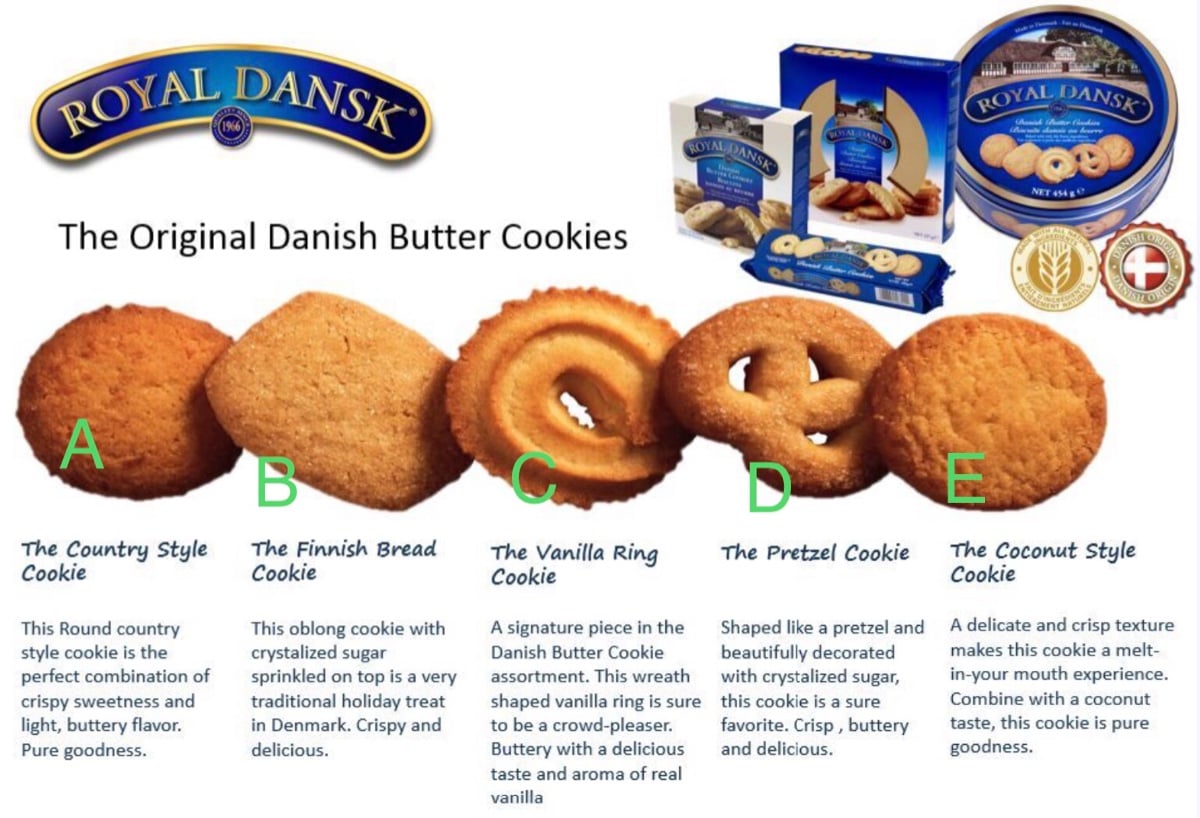 And speaking of sweet treats, who doesn’t have a round tin of Danish butter cookies right now? Their distant cousins from Austria, Linzer cookies, are delectable as well. Made from shortbread and flavored with almonds, the sandwich cookies are traditionally filled with apricot or strawberry preserve. They too are perfect with eggnog!
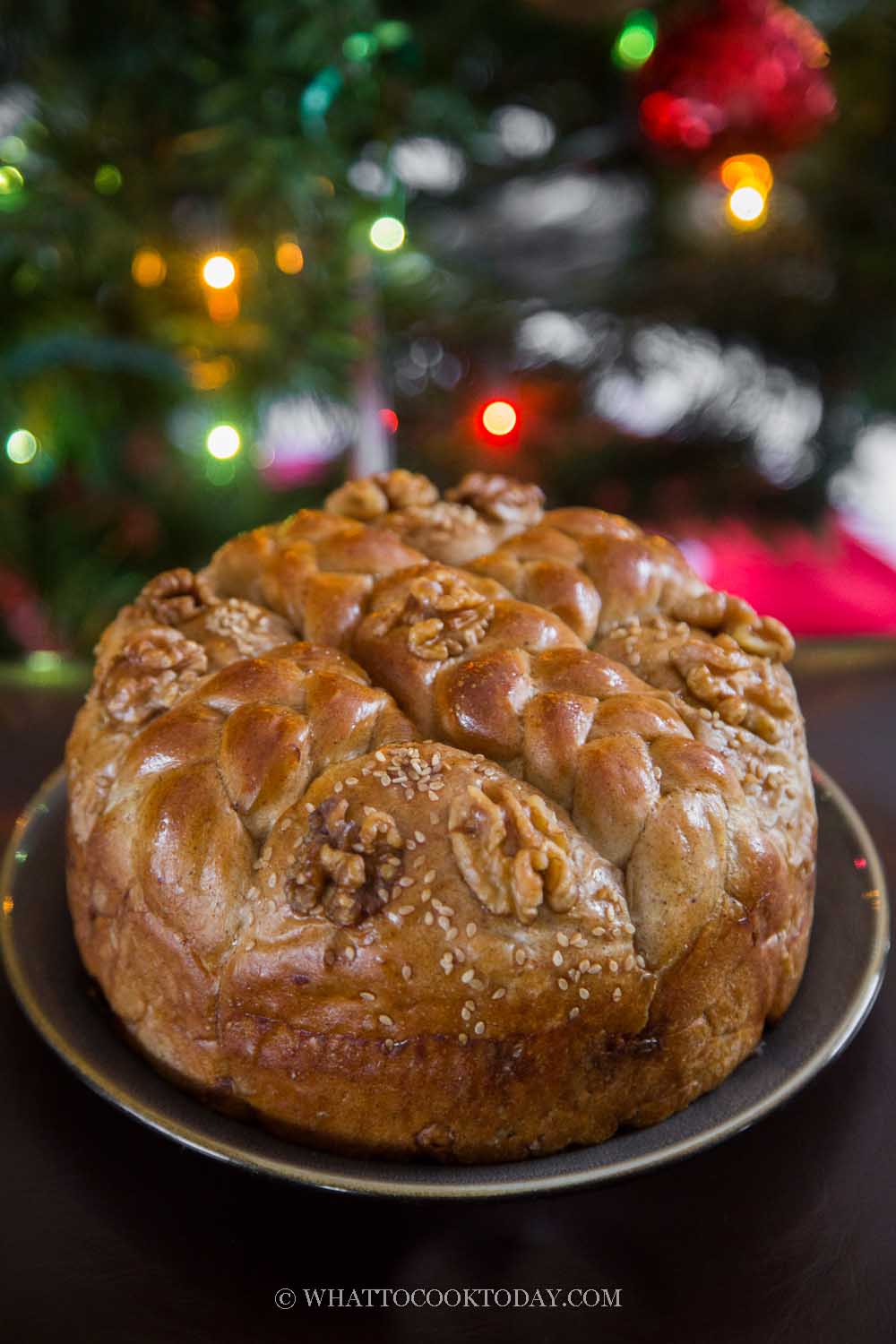 Many families celebrate Christmas in Greece with Christopsomo or “Christ’s bread.” This round Greek Christmas bread is always decorated with a cross. Recipes vary, but the bread typically includes flour, yeast, sugar, and aromatic spices like star anise and cinnamon. Some people also add ingredients like walnuts, honey, raisins, and brandy.
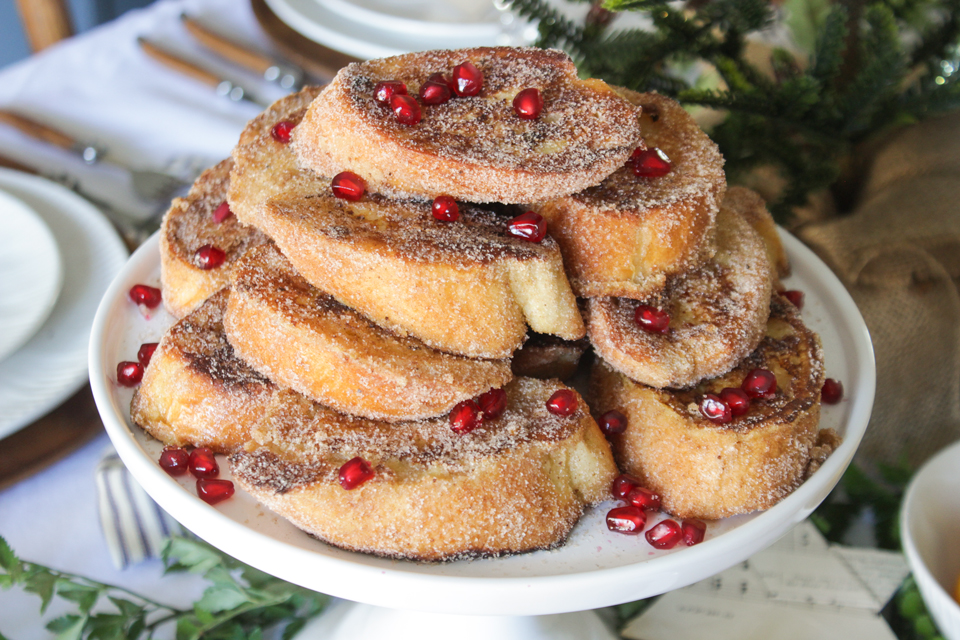 In Brazil, families wouldn’t dream of having a Christmas meal without rabanada. Similar to French toast, rabanada is a fried bread dish that starts with thick slices of crusty bread dipped in milk and sweetened with condensed milk then dunked in eggs, and fried. While the bread is still hot, it’s rolled in cinnamon sugar. It can be eaten as a breakfast dish but is often served as a dessert for dinner on Christmas Eve.
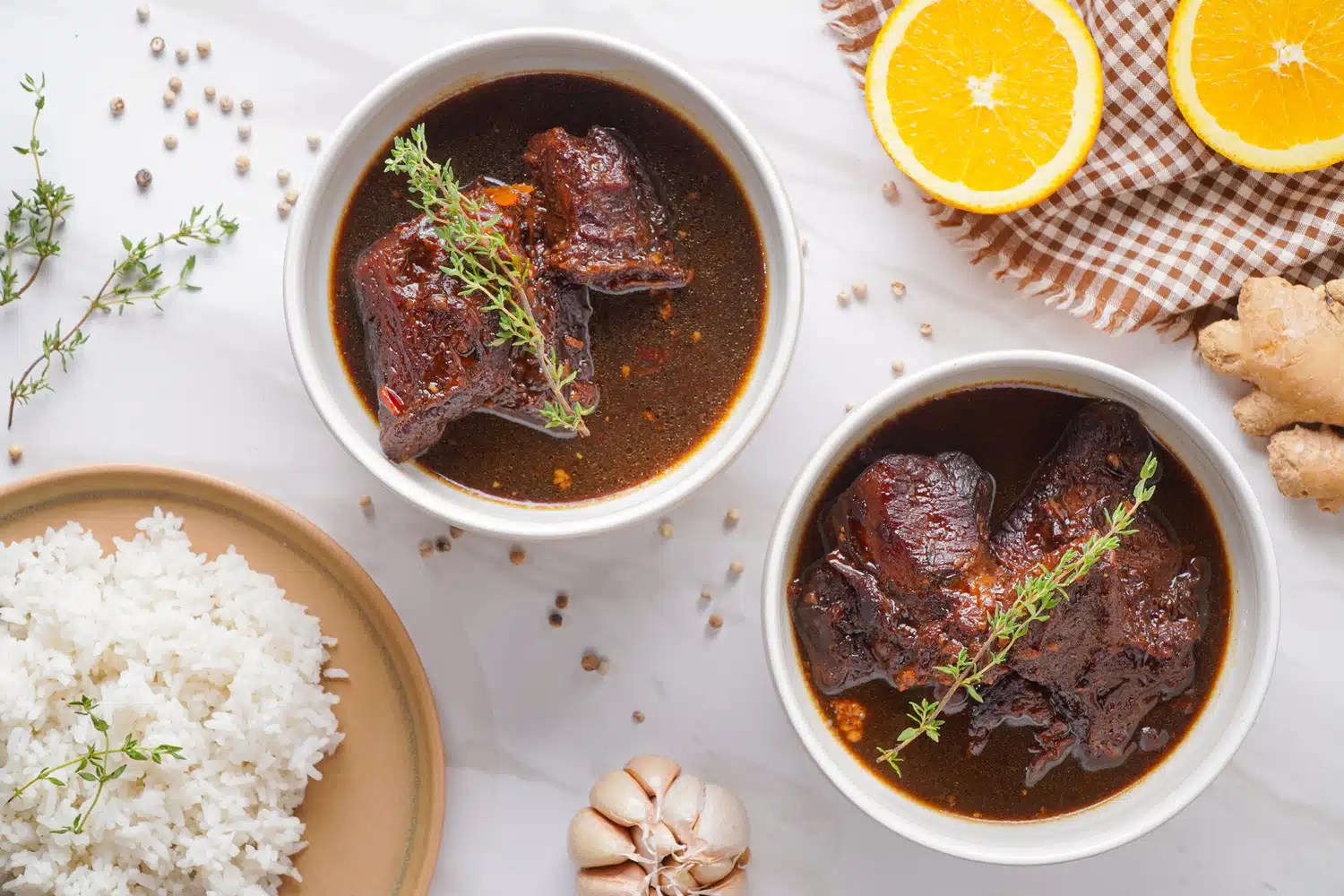 Pepperpot and black cake are touchstone Christmas recipes in Caribbean countries like Trinidad, Jamaica, and Guyana and another member of the Christmas feast supporting cast is macaroni pie. Recipes vary from country to country and family to family, but all agree they are both Christmas traditions.
Tori Avey
Run, run, fast as you can, you can’t catch me, I’m the gingerbread man!
— The Gingerbread Man book
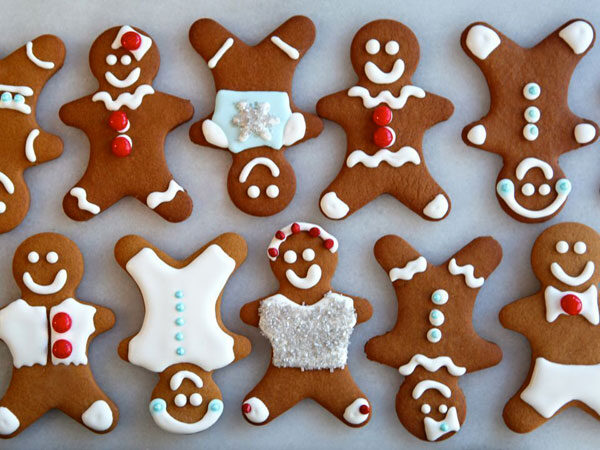
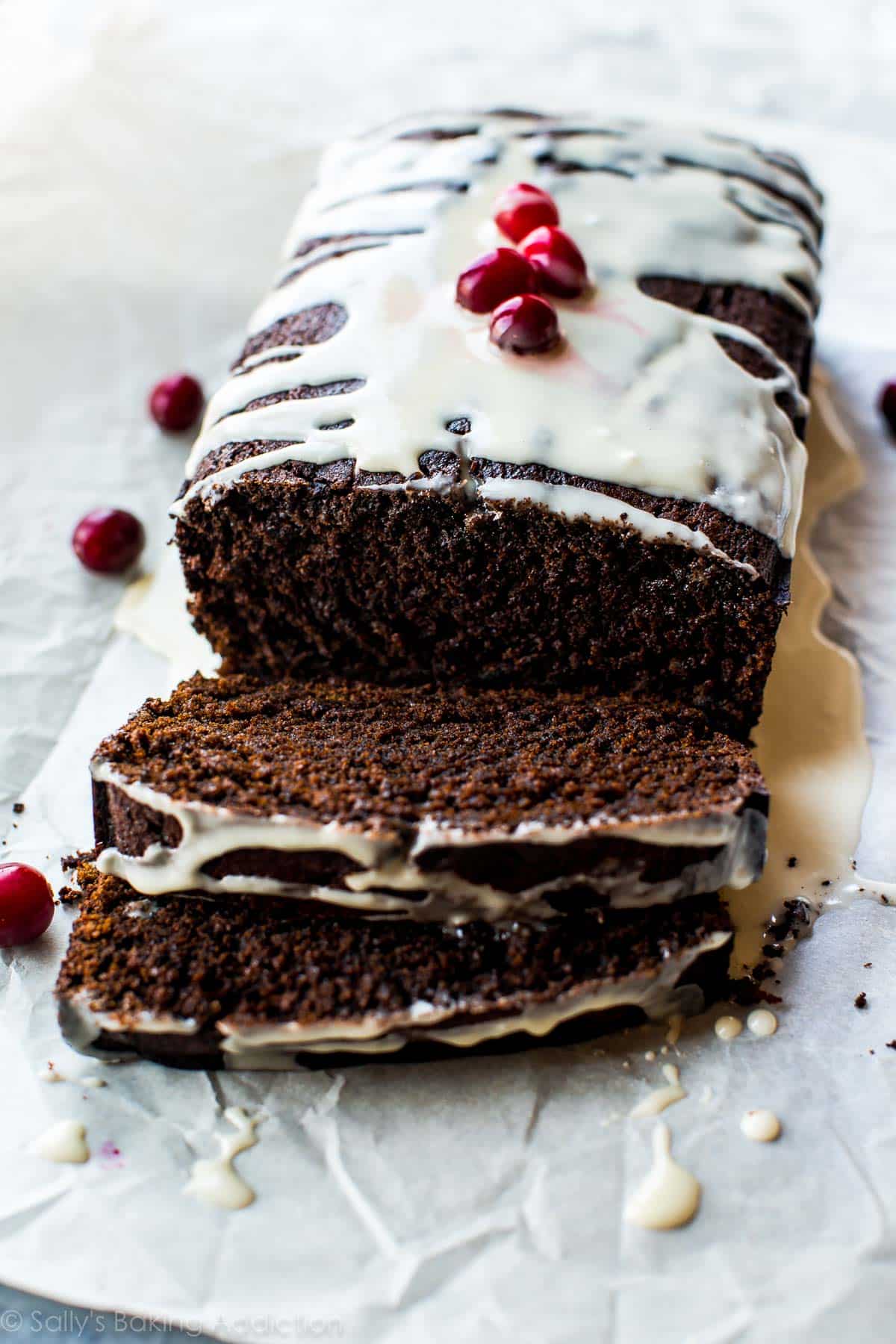
We’ve all heard it and we’ve all read it, the beloved “Gingerbread Man” book. And, even though it’s slightly grisly, it has delighted children at Christmas since 1875, when it was published in St. Nicholas Magazine, and perhaps no confection symbolizes the holidays quite like gingerbread in its many forms, from edible houses to candy-studded gingerbread men to spiced loaves of cake-like bread.
 Cakes made with ginger and molasses or honey were likely introduced to Western Europe by 11th-century crusaders returning from Mediterranean countries. The hard cookies, sometimes gilded with gold leaf and shaped like animals, kings and queens, were a staple at Medieval fairs in England, France, Holland and Germany. Queen Elizabeth I is credited with the idea of decorating the cookies in this fashion after she had some made to resemble the dignitaries visiting her court. Yet another royal, Henry VIII, is said to have used a ginger concoction in hopes of building a resistance to the plague. Even today, we use ginger as an effective remedy for nausea and other stomach ailments.
In Germany, gingerbread cookies called lebkuchen were heart-shaped and decorated with romantic messages. The oldest recorded gingerbread recipe, dating to the 16th century, is kept in the Germanic National Museum in Nuremberg. Gingerbread from that city has “protected geographical indication” from the European Union, like Parmigiano-Reggiano and champagne.
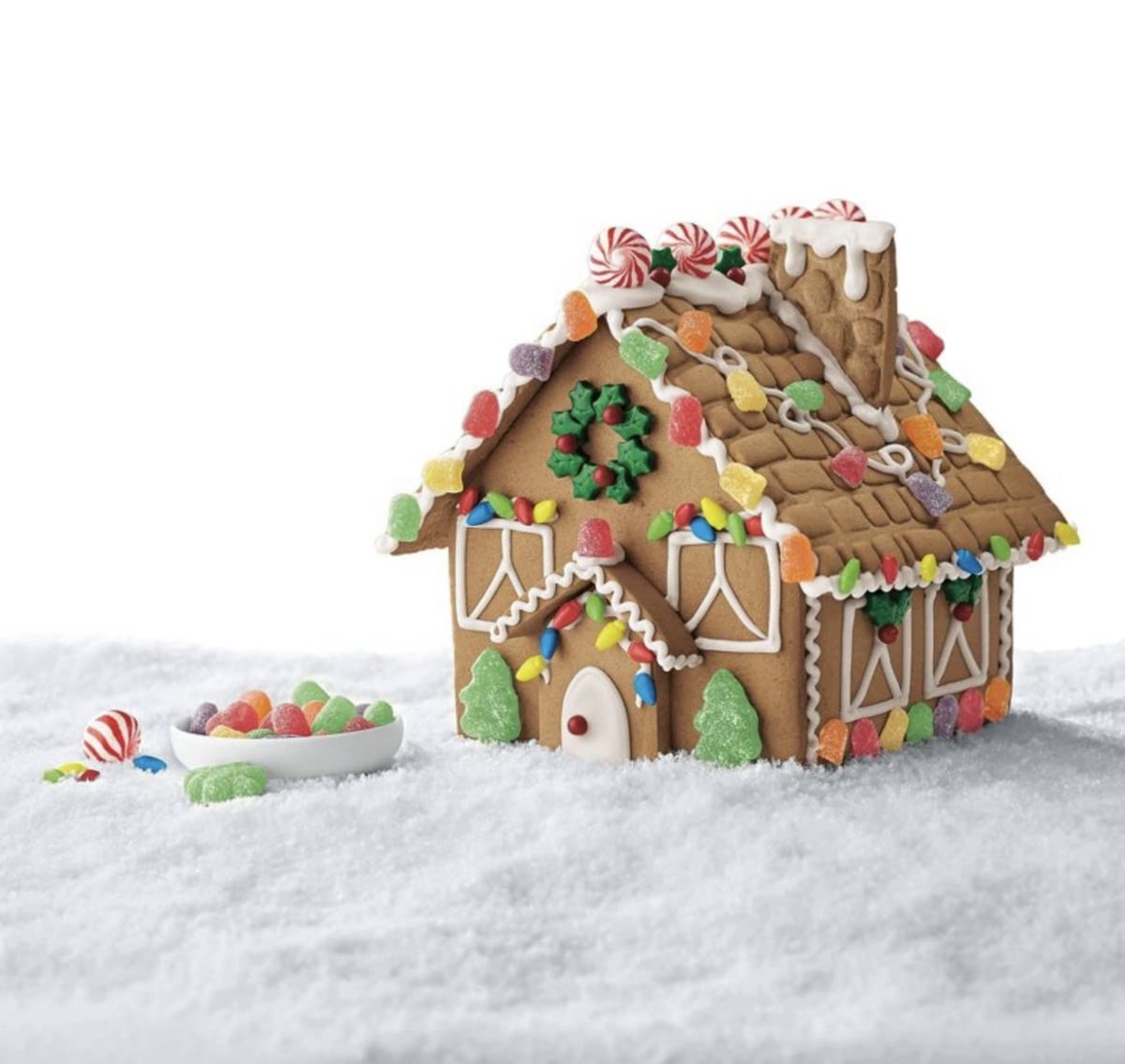 Gingerbread houses originated in Germany during the 16th century. The elaborate cookie-walled houses, decorated with foil in addition to gold leaf, became associated with Christmas tradition. Their popularity rose when the Brothers Grimm wrote the story of Hansel and Gretel, in which the main characters stumble upon a house made entirely of treats deep in the forest. It is unclear whether or not gingerbread houses were a result of the popular fairy tale, or vice versa.
Recently, the record for world’s largest gingerbread house was broken. The previous record was set by the Mall of America in 2006. The new winning gingerbread house, spanning nearly 40,000 cubic feet, was erected at Traditions Golf Club in Bryan, Texas. The house required a building permit and was built much like a traditional house. I guess it’s true that everything is bigger in Texas!
Gingerbread arrived in the New World with English colonists. The cookies were sometimes used to sway Virginia voters to favor one candidate over another. A sweet start of things to come?
I do love the theory that says since the “men” are really more toddler-shaped than adult, they represent Baby Jesus and the spices involved are thought to represent the exotic gifts of the Magi.
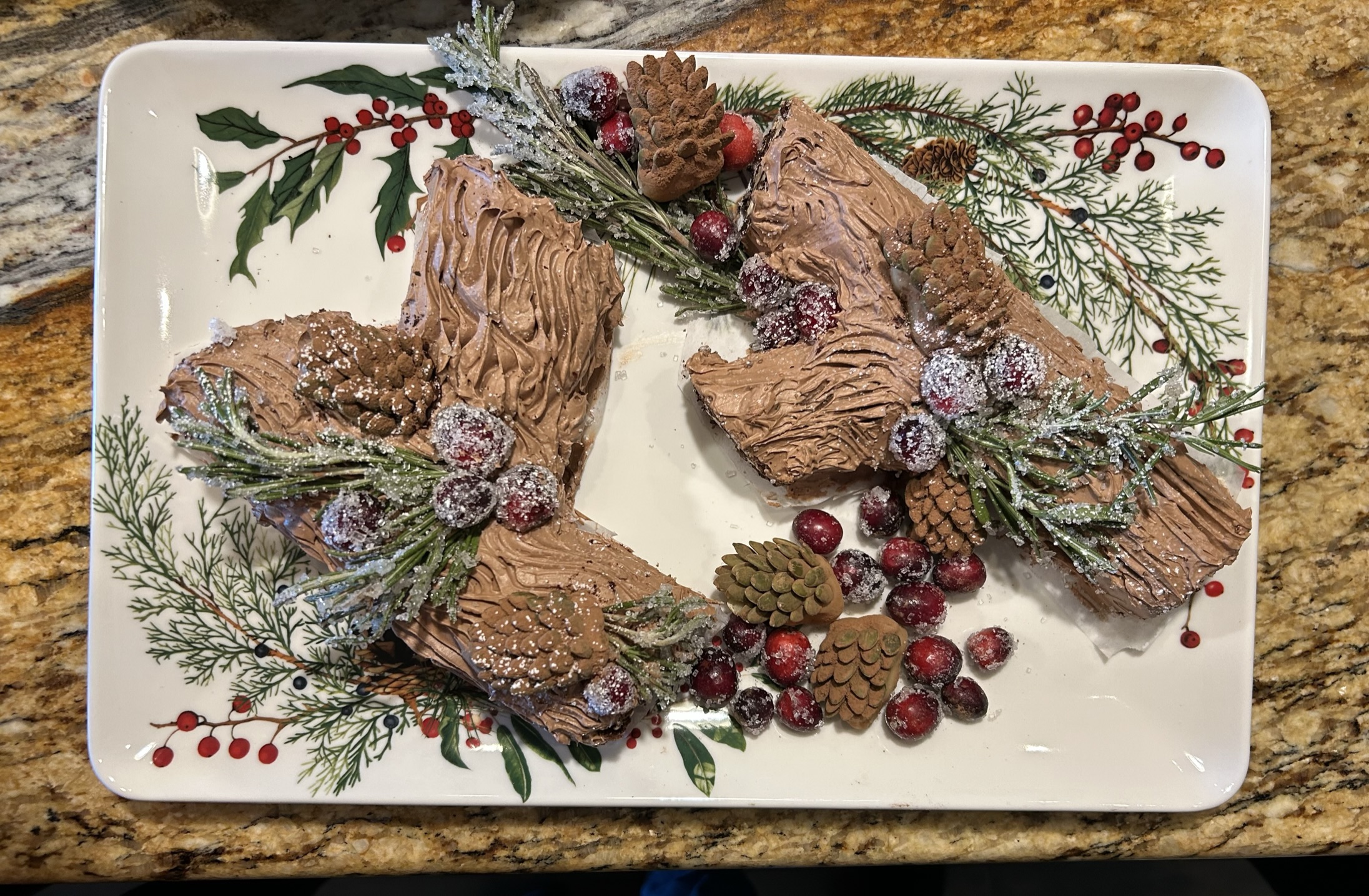 And last but certainly not least, the Yule Log. Two friends of mine made two of them recently for a Christmas get together and I was amazed at the results. They were so pretty and perfect you hated to cut into them and eat them. The “Buche de Noel” is a French tradition dating back to the 19th century and consists of a chocolate sponge rolled into the shape of a long and filled and covered with frosting. They are said to symbolize a yule log, which families would burn starting on Christmas Eve.
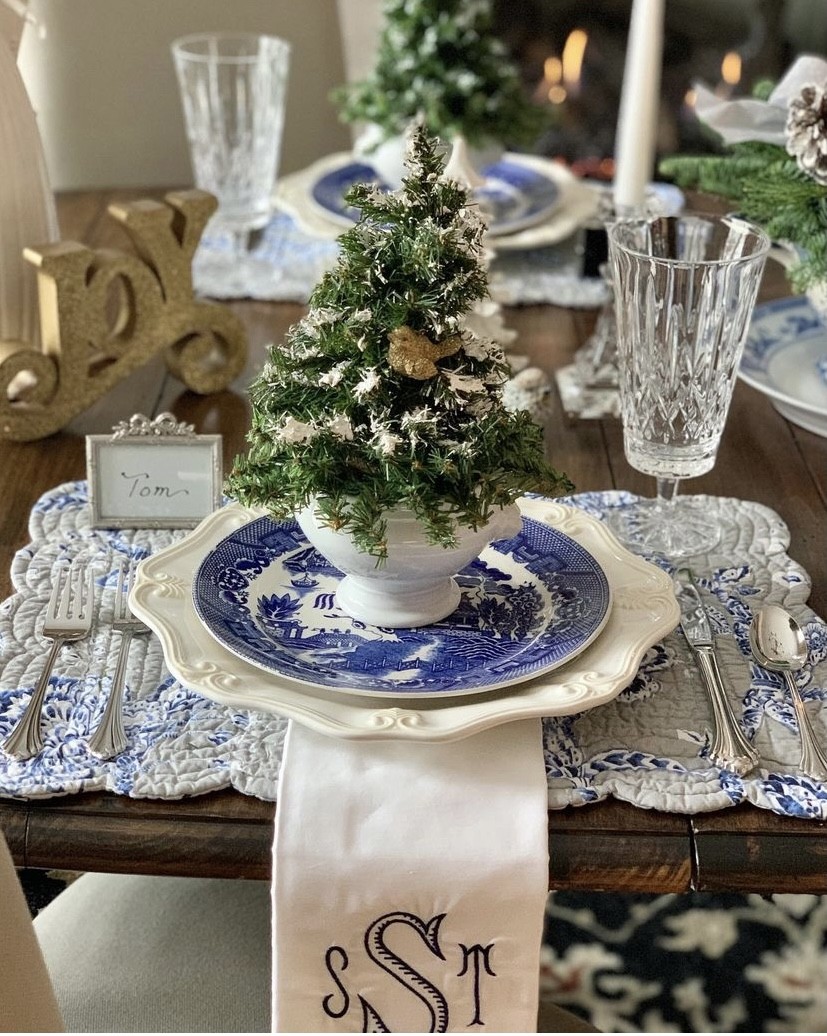
Housepitalitydesigns
All this talk and writing is making me hungry. I think I’ll go grab some biscochitos and eggnog and think about those delicious tamales waiting to be eaten. What about you? What are some of your Christmas family food traditions?
Discover more from Beyond Words
Subscribe to get the latest posts sent to your email.


 Beyond Words