
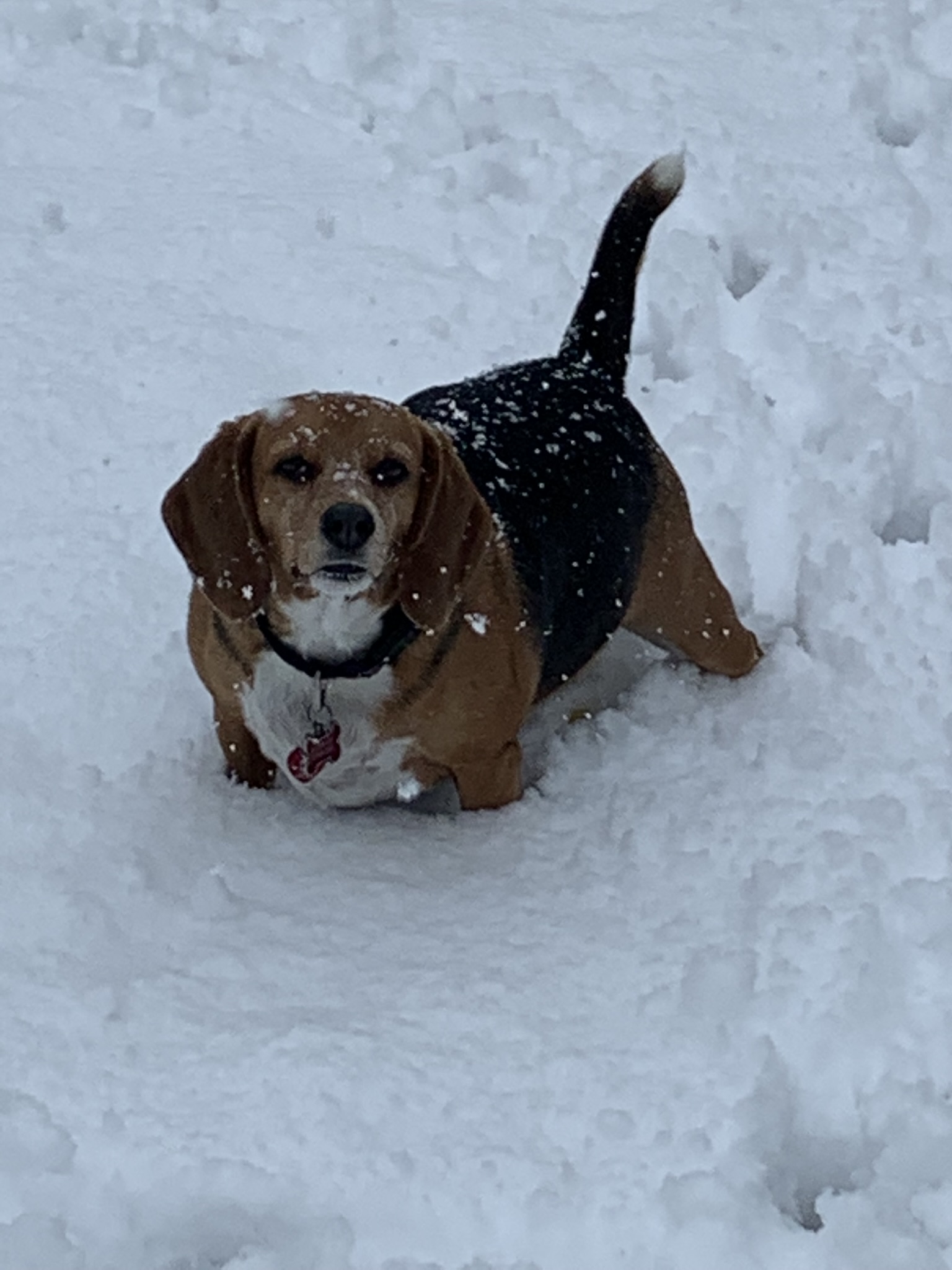
 He’s crossed the Rainbow Bridge. I’ve heard that a lot the past few days as we had to put down our beloved Beagle Barry. It’s been rough. We miss him so much. We give our hearts to our dogs and they give them back. Loyal to a tee and undeniably Man’s Best Friend, dogs fill a place in our homes and our hearts that no one else really does. But what is that Rainbow Bridge? Come to find out it’s got a long history.
Courtesy of Edna Clyne-Rekhy and Paul Koudounaris
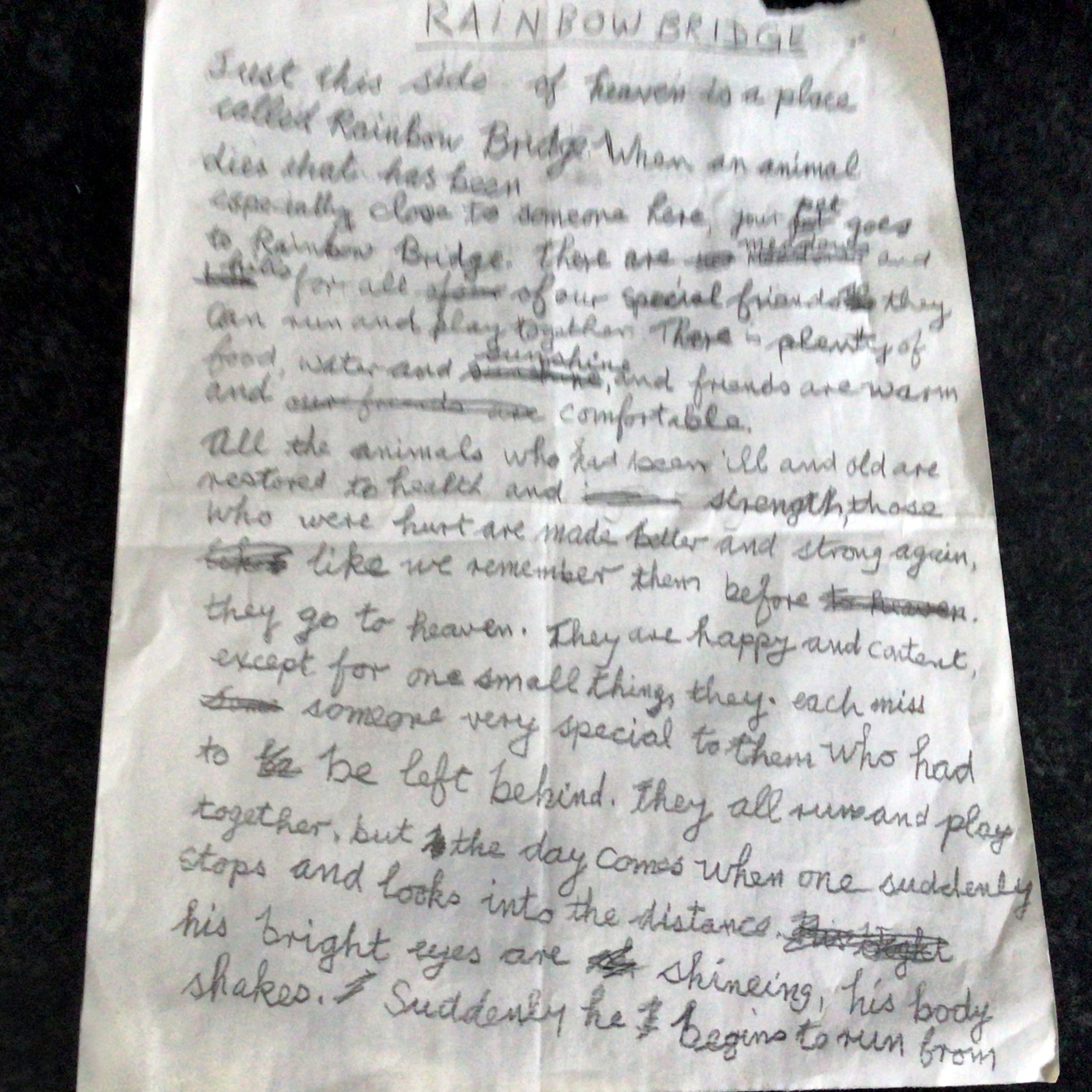
Originally written by Scottish teenager Edna Clyne-Rekhy in 1959 when her beloved dog Major passed, the Rainbow Bridge has become nearly ubiquitous when it comes to mourning an animal. Amazingly, the poem that has touched millions of pet owners remained largely authorless for years. Authorless perhaps for a time, but it still could be called one of the most influential pieces of literature ever written. That wasn’t the plan though.
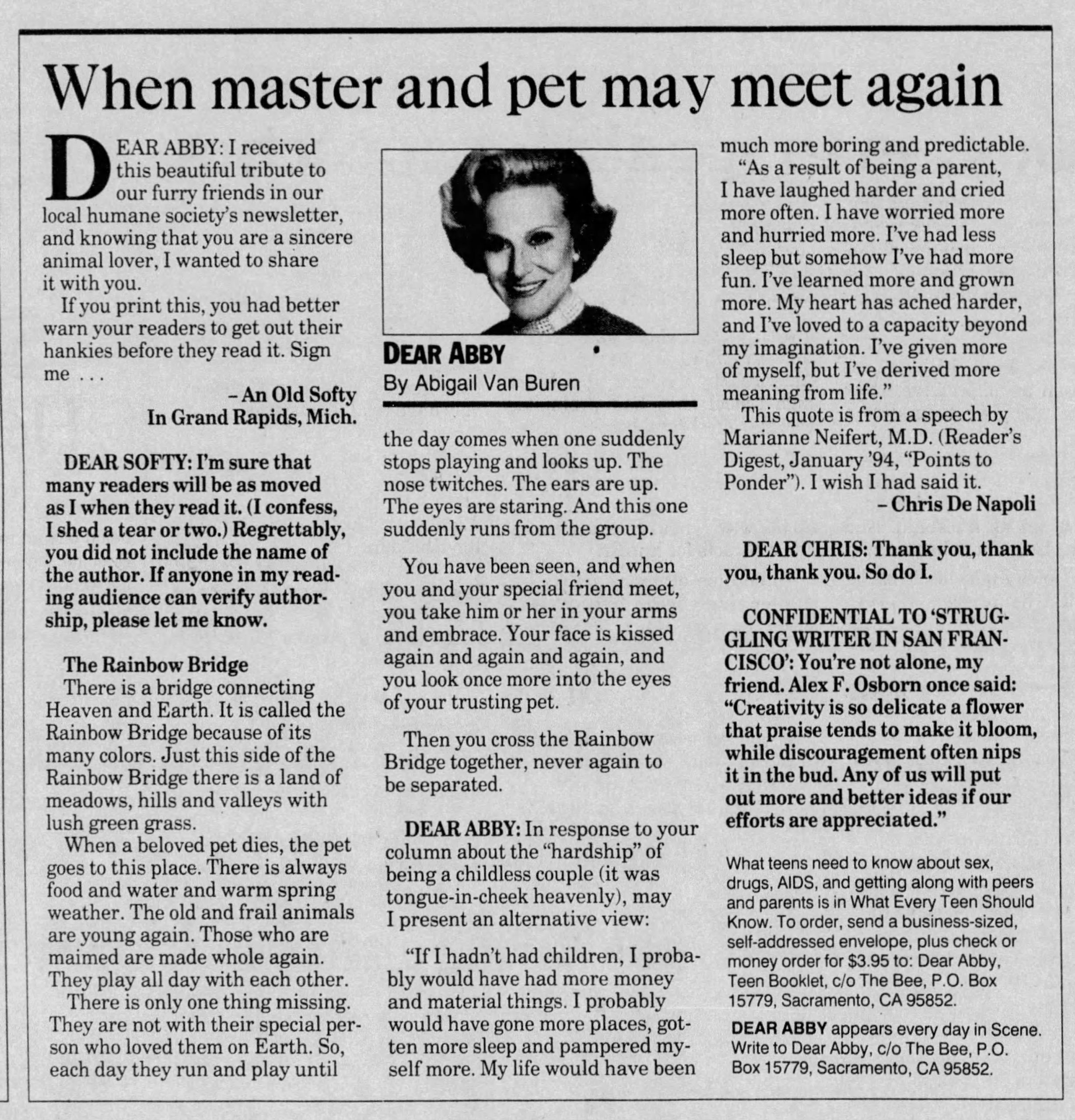
Photo credit: Paul Koudounaris
According to American author Paul Koudounaris, who dug deep into the poem, Clyne-Rekhy penned the poem and figured it would remain hers and hers alone. After handwriting it, she sometimes typed out copies to give to friends who were so touched by it that they then passed it on. It made its way across the pond when it appeared in a “Dear Abby” advice column in the “Sacramento Bee” in 1994. The newspaper’s wide circulation guaranteed its popularity, which remains today.
The poem paints a picture of a meadow where a pet goes upon death, restored to perfect health and days full of play. One day however, the pet stops playing, turns around, smells up, and looks in the distance where it sees its beloved owner. The two run to each other, are reunited, and walk side-by-side across the Rainbow Bridge into heaven.
This may be contrary to some religious teachings, which believe animals don’t have an afterlife, but I for one hope and pray I will see my Barry and all former dogs in heaven. I picture them all with St. Francis, who loved animals, and am reminded of Romans 8 in which Paul the Apostle writes that God created all and all are “waiting redemption.” Since God created animals, maybe he means them too?
Also, in Rev 21:1-5, Pauls’ fellow Apostle John writes that “I saw a new heaven and a new earth, for the first heaven and the first earth had passed away.” Maybe that new earth included the animals of the old earth?
Some also say the rainbow is a reference to Noah and his Ark while the idyllic setting of the meadow, filled with loving and peaceful animals, could be in reference to Isaiah 11:6-9 that states:
The wolf will live with the lamb,
the leopard will lie down with the goat,
the calf and the lion and the yearling[a] together;
and a little child will lead them.
7 The cow will feed with the bear,
their young will lie down together,
and the lion will eat straw like the ox.
8 The infant will play near the cobra’s den,
and the young child will put its hand into the viper’s nest.
9 They will neither harm nor destroy
on all my holy mountain,
for the earth will be filled with the knowledge of the Lord
as the waters cover the sea.
 In any case, my heart is broken and I miss Barry so much. He was our “OB,” our “Original Beagle” and the sweetest of the bunch. We called him a “quirky little dog” because he had his ways that were both baffling and endearing. In between his two ACL replacement surgeries, fear of thunderstorms, incessant barking, insatiable appetite, and the colon cancer that eventually ended his life, was a boy who had the softest ears and was so obedient and loving. As is the case with all rescue dogs, we firmly believe he knows he was rescued and was forever grateful.
 Bubbas, as our daughter affectionately called him, is missed by more than me and my hubby. His housemates Nick and Boomer still seem confused and a bit sad. It makes total sense though because dogs are inherently pack animals and they see their pack is missing a member. I’m trying to stay happy and playful with them despite my sorrow because dogs not only feel our pain and stress, they take them on. They are truly amazing animals.
 Anyone who’s a fellow cynophile, which I’ve learned is a dog lover, has lost a beloved four-legged family member and knows the pain of doing so. It’s amazing how many people have reached out to me and the level of support from fellow dog owners is so different then that from those who aren’t dog obsessed. It’s the classic case of IYKYK.
In the end, Clyne-Rekhy had many dogs after Major and even used to rescue street dogs. When asked by Koudounaris what advice she had for anyone suffering from the loss of a pet, her response was immediate: get another pet. While we won’t be getting another dog since we are blessed with our other two, it’s great advice.
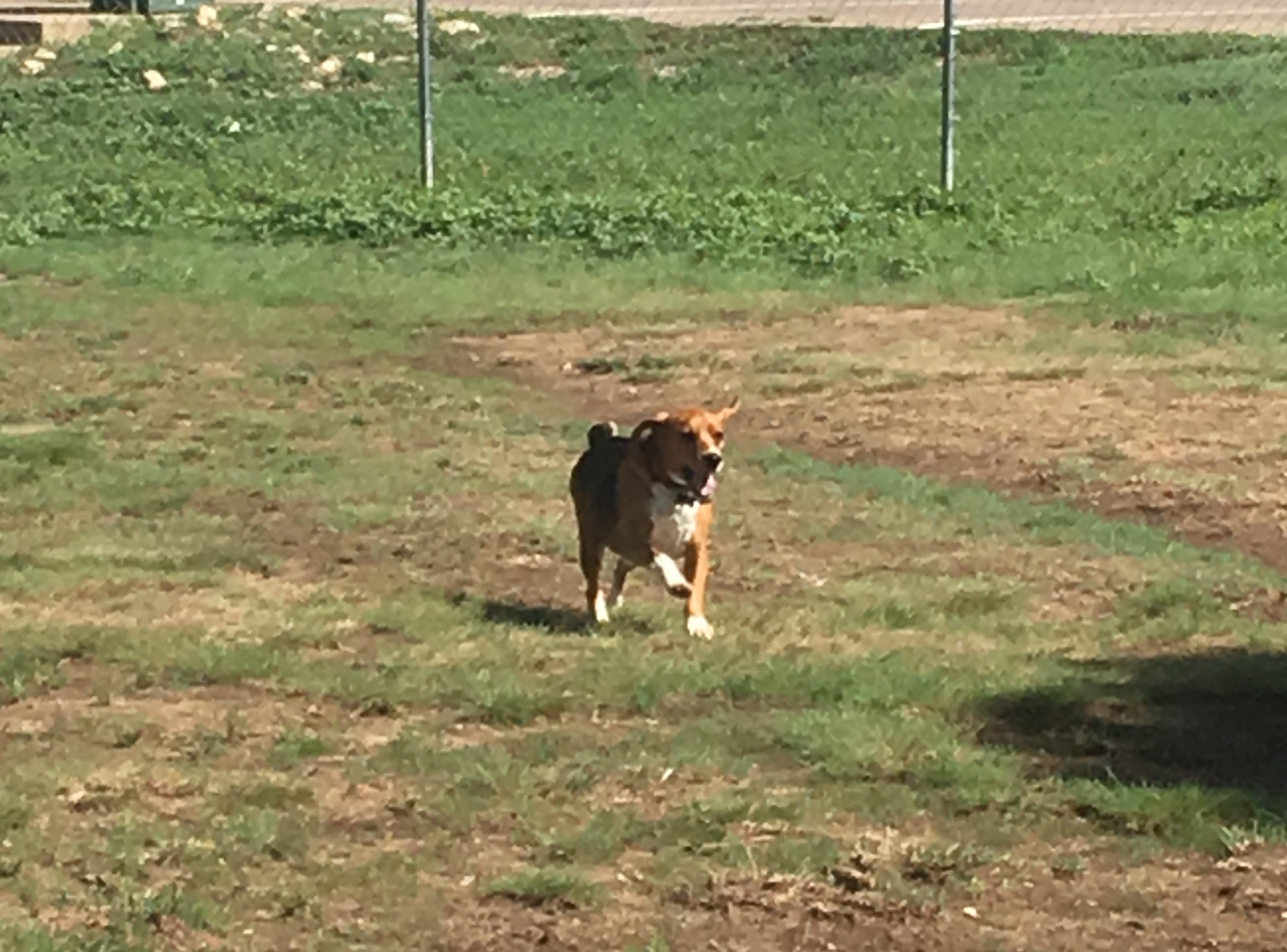 For now, we’re keeping Barry’s bowl and bed where they are and have his collar front and center in our family room with flowers my sweet neighbor gave me. We love and miss you, Barry. Run free and see you on the bridge someday!
The Rainbow Bridge
Just this side of heaven is a place called Rainbow Bridge.
When an animal dies that has been especially close to someone here, that pet goes to Rainbow Bridge. There are meadows and hills for all of our special friends so they can run and play together. There is plenty of food, water and sunshine, and our friends are warm and comfortable.
All the animals who had been ill and old are restored to health and vigor. Those who were hurt or maimed are made whole and strong again, just as we remember them in our dreams of days and times gone by. The animals are happy and content, except for one small thing; they each miss someone very special to them, who had to be left behind.
They all run and play together, but the day comes when one suddenly stops and looks into the distance. His bright eyes are intent. His eager body quivers. Suddenly he begins to run from the group, flying over the green grass, his legs carrying him faster and faster.
You have been spotted, and when you and your special friend finally meet, you cling together in joyous reunion, never to be parted again. The happy kisses rain upon your face; your hands again caress the beloved head, and you look once more into the trusting eyes of your pet, so long gone from your life but never absent from your heart.
Then you cross Rainbow Bridge together….










 Beyond Words