
I saw one today. Actually, I saw two. Jeeps with rubber ducks on their dashboards. They are everywhere and as a lover of rubber ducks, I had to learn why. It’s actually a fun story, as is the history behind the little rubber toy. Let’s dive in…
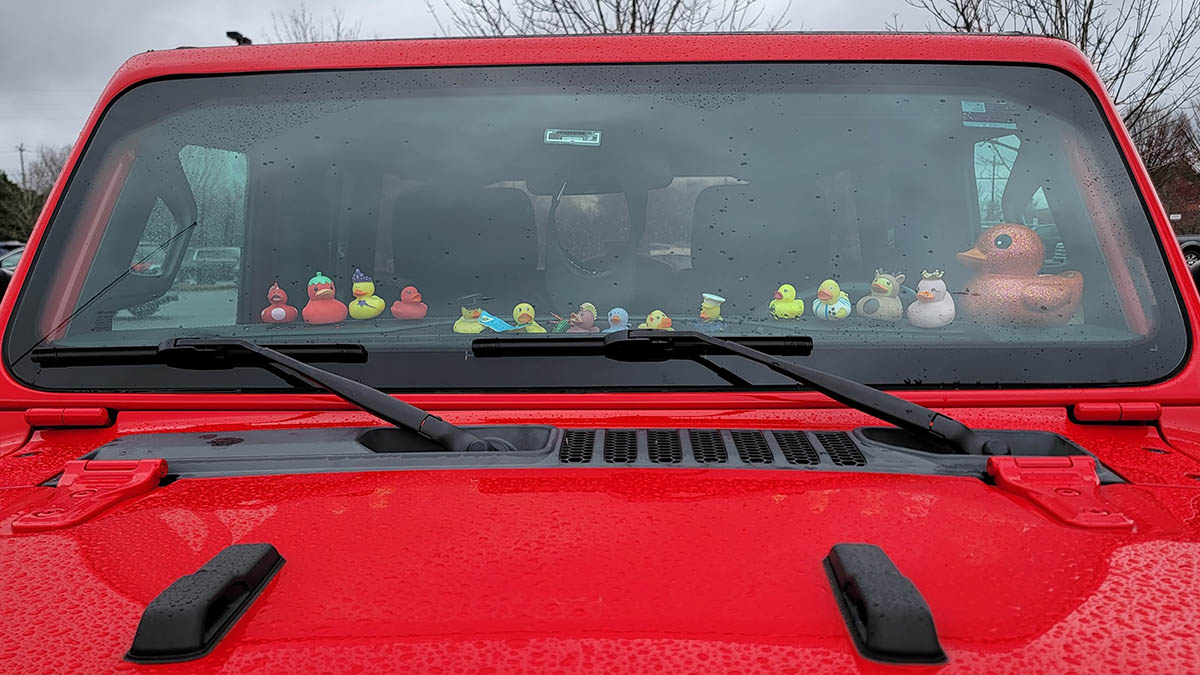 According to “Reader’s Digest,” it all started back in 2020 in Ontario, Canada. Officially called “Jeep Ducking,” the movement started after Jeep owner Allison Parliament had an argument with someone at a gas station. Her friend tried to calm Parliament down and what seemed to do the trick was a bag of rubber ducks, one of which Parliament placed on a stranger’s Jeep with a simple “Nice Jeep” note. The Jeep owner loved it and posted it on social media. The rest is no lame duck history.
Not only do I love rubber ducks and collect them, I love that at the heart of Jeep Ducking is to put a smile on someone’s face. I’m not even a Jeep owner but when I see a dashboard full of little rubber ducks, it puts a smile on my face. You could say they quack me up!
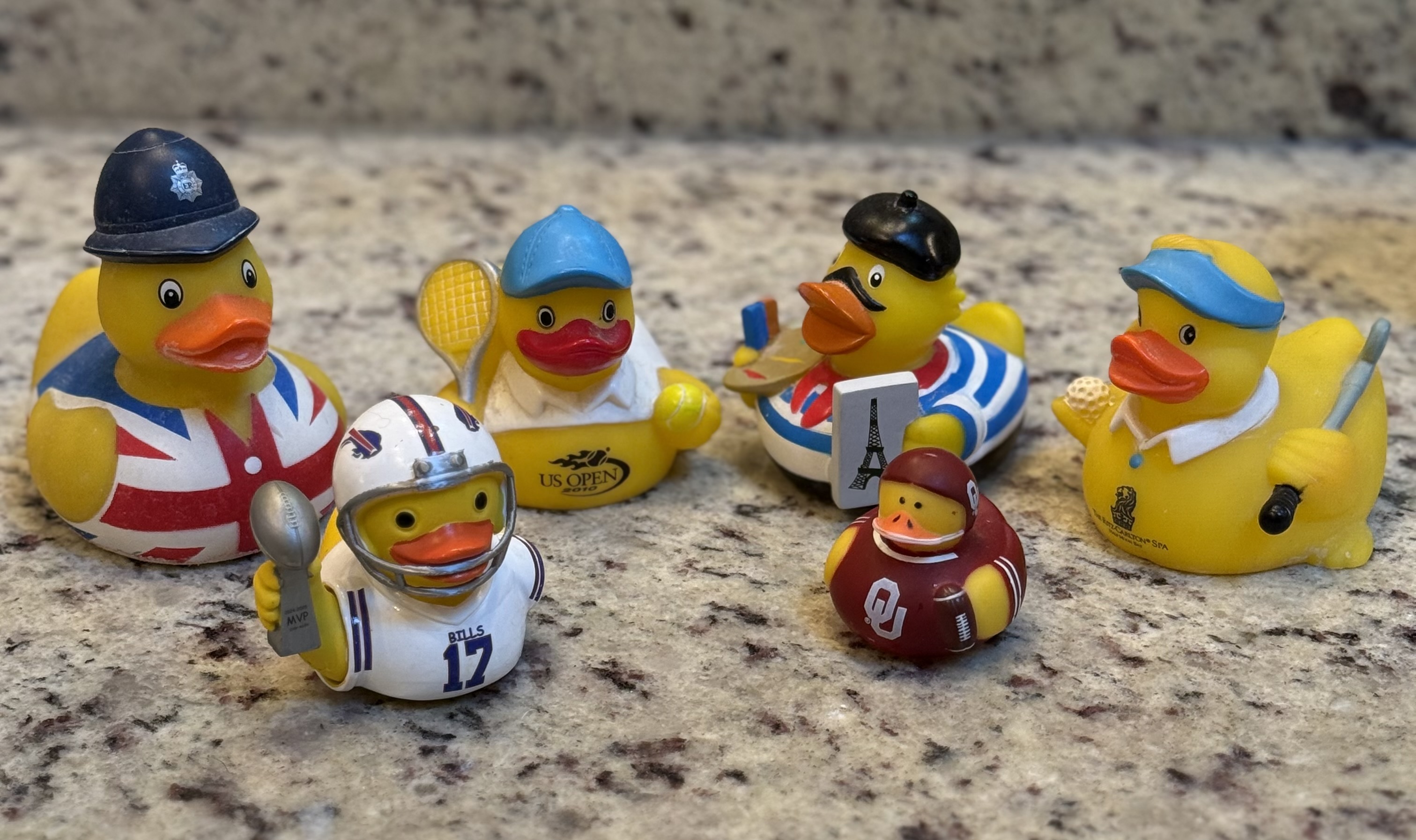 I’m not sure when or why I became enamored with rubber ducks. Maybe it was their cheerful face or happy color. Today I have them in various spots in our home and I always try to purchase one on trips or at special events. My collection is quite extensive and a bit historic.
The origin of the rubber duck itself is also historic albeit humble. Maybe that’s what I like about them. They’re happy and they’re humble. Nothing fancy. Just cheery.
According to the Rubber Duck Museum in Point Roberts, Washington (how fun would that be for me?!), the origin of the rubber duck traces back to the late 19th century with the advent of vulcanized rubber patented by Charles Goodyear. The material allowed for the production of a variety of rubber products like tires, but also toys. Hmmmm…very interesting, right?
 It wasn’t until the 1940s that sculptor Peter Ganine patented a design for a floating toy duck and chew toy. Ganine is believed to have been the now familiar duck’s primary designer and reportedly sold more than 50 million of them.
 The soft bath toy we all know and love today was originally made of hard rubber but later the advancement in materials led to the use of soft vinyl. By the early 1960s, the vinyl ducks were free from patent restriction and became bathroom fixtures. The cuteness of them and their iconic squeaker became childhood bath toys and joys and a soothing presence for children with apprehensions about being dipped into water. Children loved them so it’s fitting that it took a children’s TV icon to turn them into eternal icons.
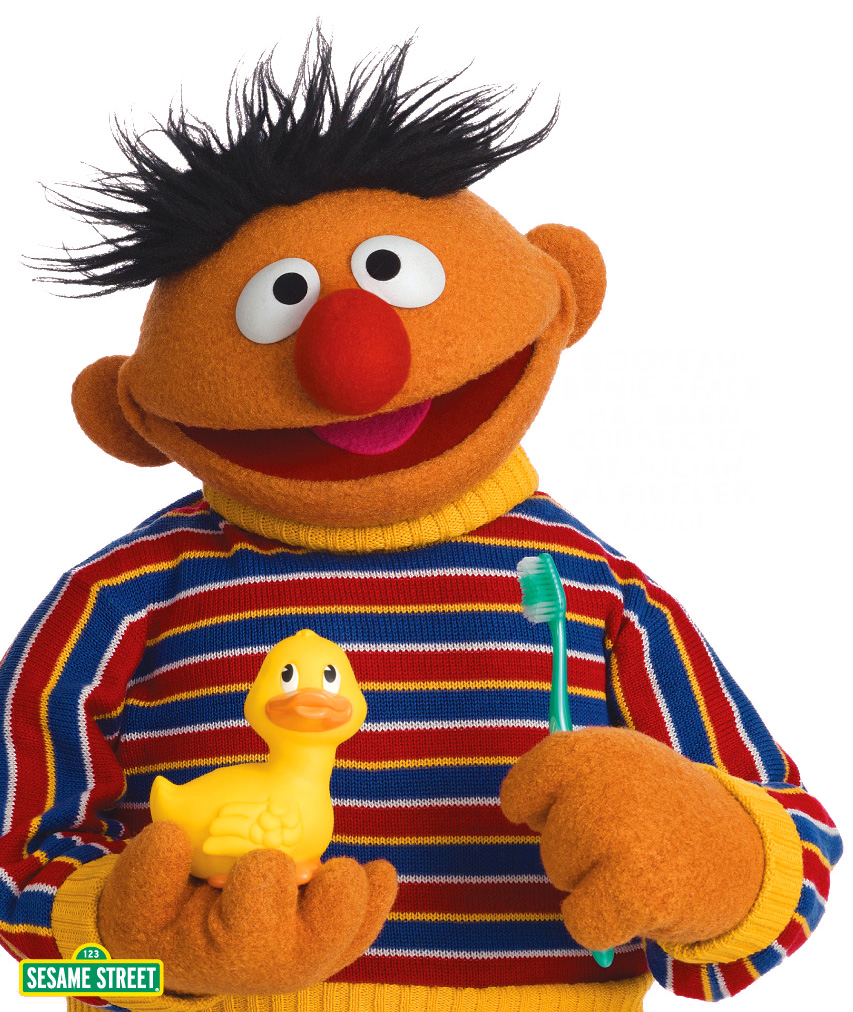 Fast forward to 1970 when, on the first season of television show “Sesame Street,” beloved character Ernie splashed around in a tub while singing the “Rubber Duckie” song. (you’re singing it now, right?!) The song achieved widespread popularity, selling more than 1 million copies and reaching No. 16 on the “Billboard Hot 100” chart. It should come as no surprise then, that the classic yellow duck was “in-duck-ted” into the National Toy Hall of Fame in Rochester, NY in 2013.
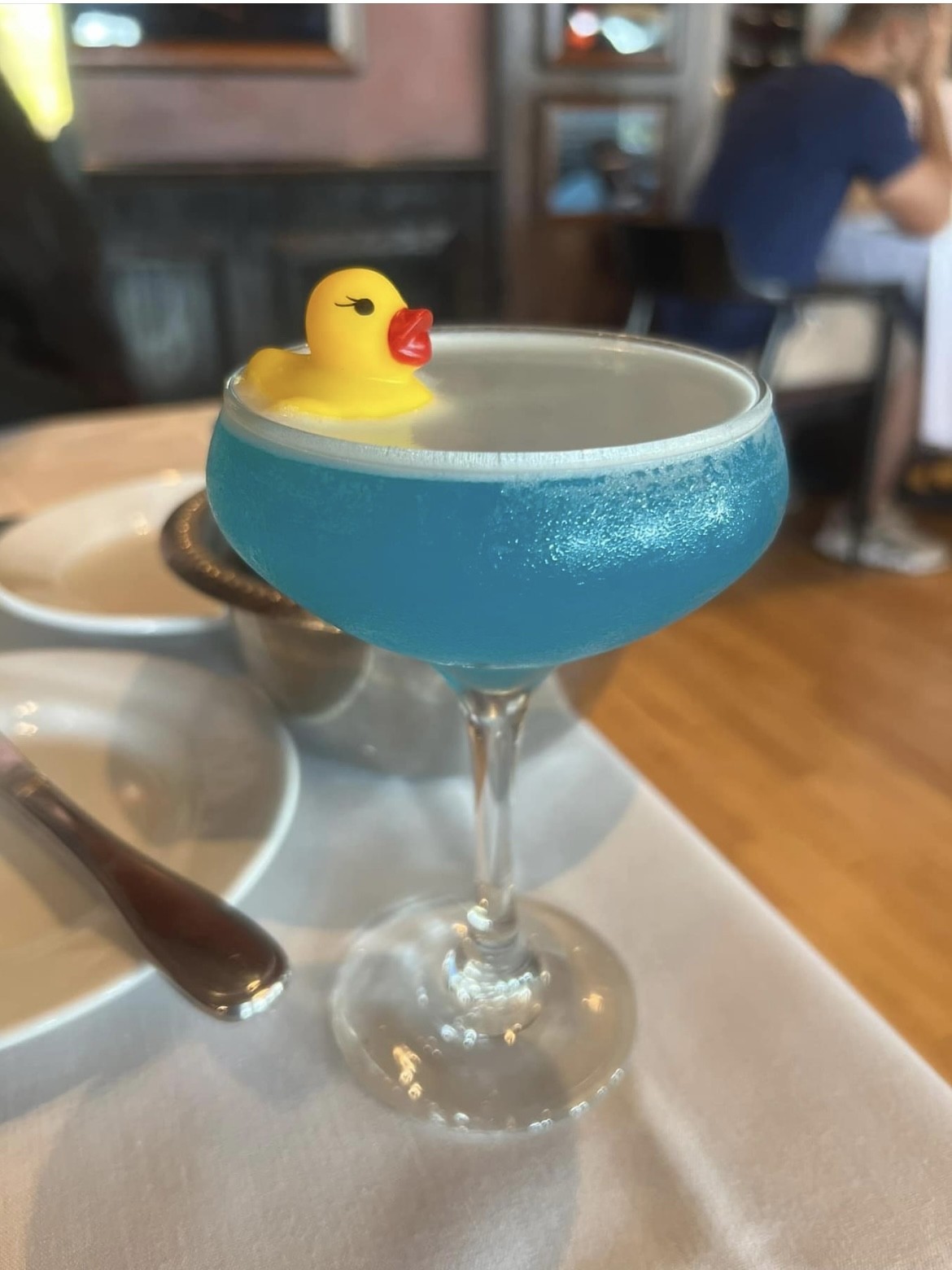 Various rubber ducks have since appeared in movies, commercials, and art installations; are popular gifts and marketing tools; are stars of many charitable rubber duck races nationwide; and have their own National Rubber Duck Recognition Day every January 4. Some are the original yellow, but others now come in a variety of colors and themes including celebrities, sports teams, holidays, and famous destinations all while remaining a symbol of relaxation and childhood innocence. What’s not to love?
But back to Jeeps.
It’s no secret that Jeeps are more than cars. They are a lifestyle and their owners consider themselves part of a community with a shared passion for the brand of vehicles. It’s perfect then, that this community has its own little but growing tradition all its own.
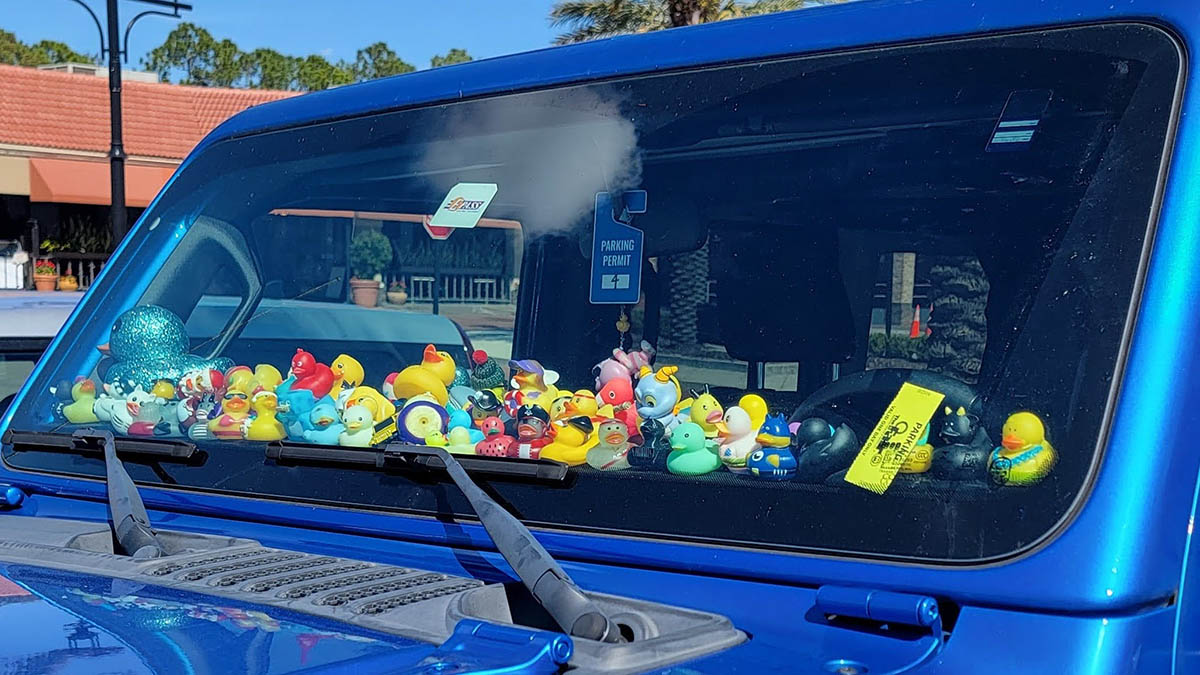 So, can anyone “duck duck Jeep” or is it all just reserved for Jeep owners? My inkling is only Jeep owners receive and display their ducks but perhaps anyone can “duck” a Jeep owner. If you’re inclined, simply place a duck just outside a Jeep driver’s side window, near the windshield wiper, or in front of any inspection stickers. Traditional two-inch ducks are the norm and finding one should be a surprise. Other than all this, what I love of Jeep Ducking is that the trend isn’t an effort to bring or spread awareness about any specific cause (thank goodness…we have enough of those!) but is instead a simple and sweet way of bringing a smile to someone’s face…often a stranger, which is even cooler. In other words, the only rule of Jeep Ducking is kindness and adding joy to someone’s perhaps otherwise regular day.
What to do if you find a duck on your Jeep? Most say to take a photo of it and post it on social media with the hashtag #duckduckjeep. Then, put the duck on your dashboard. You can keep that duck forever or pay it forward and give it to another Jeep owner. Again, kindness is at the heart of it all.
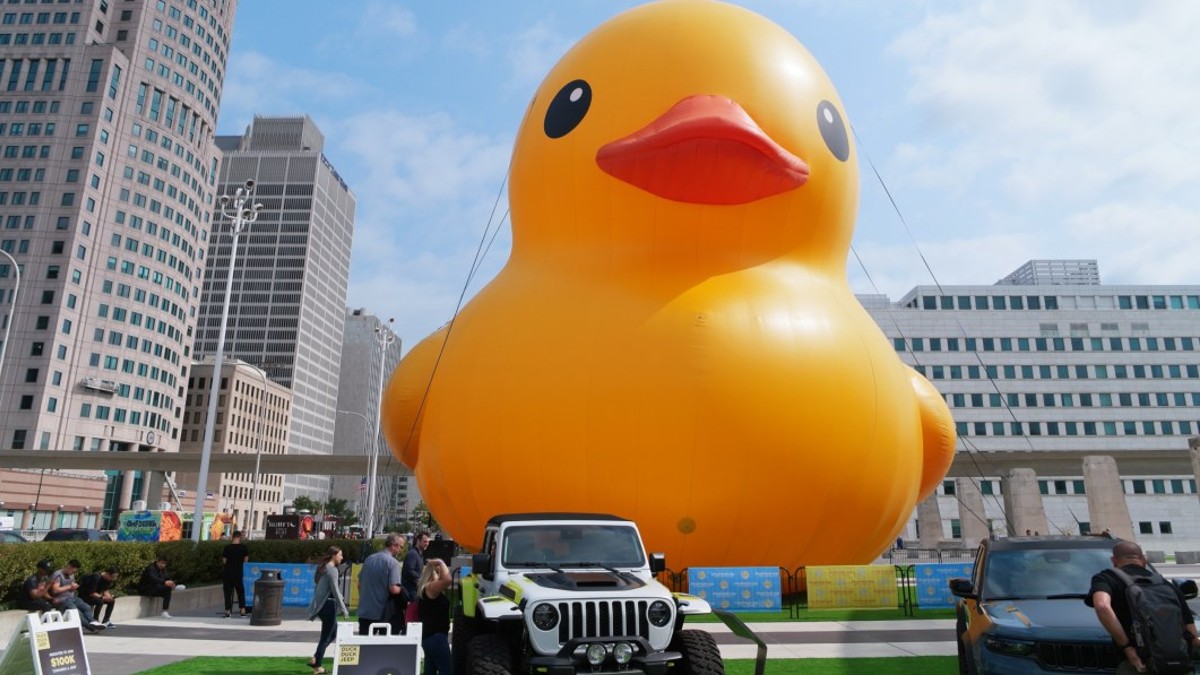 All of this has not gone unnoticed by Jeep corporate, which proudly displayed an 8,000-pound, six-story-tall yellow duck at the North American International Auto Show in Detroit.
Learning this makes me smile and hopefully brought a smile to your otherwise normal or stressful day.
About The Rubber Duck Museum
The world’s first and only rubber duck museum is located in Point Roberts, Washington, which sits right near the U.S.-Canadian border near Vancouver, and features 30 rare historical rubber duck artifacts ranging from the early 1900s to today. The extensive collection includes a duck dating back to 1911, original rubber ducks used by Ernie on Sesame Street, and an original mold from the Donald Duck toy created by Disney in the 1930s. Also included are more than 2,000 ducks for sale ranging from standard to large sizes and featuring a variety of themes. Admission is free.









 Beyond Words