Halloween has come and gone and Thanksgiving and Christmas are less than one and two months away respectively and you know what that means: it’s time to bake! And whether you’re making pies, cookies, or other holiday treats, you’re probably all using one thing in those recipes: butter. But before you turn up your health-focused nose, know that while butter is often dismissed as an unhealthy ingredient, butter does have its benefits and I’m here to spread its love.
Quick sidenote: As I’ve put this blog together and researched, come to find out Health Secretary Robert F. Kennedy, Jr. is set to unveil new dietary guidance encouraging consumption of foods high in saturated and trans fats, which was announced mere days ago. Kennedy says food like butter, cheese, milk, and even red meats have been “unfairly demonized for decades.” I’ll be following this more closely and suggest you do too.
But I digress…
Back to butter.
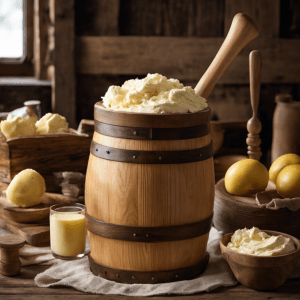 The Tasting Table calls butter the great unifier across countries, cultures, and backgrounds. Who doesn’t love butter, right? People have loved it for centuries! The earliest use of butter can be traced back to 8000 B.C. in Africa and in 16th century Europe, it was common to give newlyweds butter, which was a symbol of wealth and fertility. All these years later, the condiment is popular and used all over the world. Yes, it gets a bad rap from some but all butter is not the same.
Yes, butter of all types is high in fat, but it can also be a source of vitamins A, D, and E and in moderation it can be a healthy, yep healthy, part of your diet. I’ll get to the bad stuff in a bit, but know that butter is rich in nutrients like bone-building calcium and has compounds linked to lower chances of obesity. Now that doesn’t mean you can eat a sleeve of cookies or a whole pie, but in moderation it does have benefits.
 WebMD reports that butter may help lower your chances of cancer as a grass-fed variety is high in beta-carotene, a compound your body coverts into vitamin A and one that has been linked to lowered risks of lung and prostate cancers. That beta-carotene is also good for your eyes and may help slow the rate of vision loss or age-related macular degeneration. The vitamin D in butter is a nutrient vital for bone growth and development as is the calcium in it, which can help prevent diseases such as osteoporosis. Finally, butter can make your skin healthier and you don’t even need to spread it on! Butter has vitamin E, which is essential in skin health in that it reduces damage from UV rays, eases skin inflammation, and helps skin wounds heal. I’m here to say I believe this as my mom ate butter all her 94 years and had the most beautiful skin!
In short, butter is a dairy product made from the proteins and fats found in milk and cream. Most U.S. butter is cow milk-based and it, like almost all varieties, is high in fat. One tablespoon of unsalted butter contains on average 102 calories, 11.5 grams of fat (7 of which are saturated), and 0 grams of carbohydrates, fiber, sugar, and protein.
 Butter is indeed high in calories and fat, including saturated fat, which is linked to heart disease. The animal fats in butter also mean it has higher levels of saturated and trans fats, which can lead to higher cholesterol, risks of heart disease, and lower levels of HDL cholesterol…the “good” cholesterol that unclogs arteries. All of this means you should use butter sparingly.
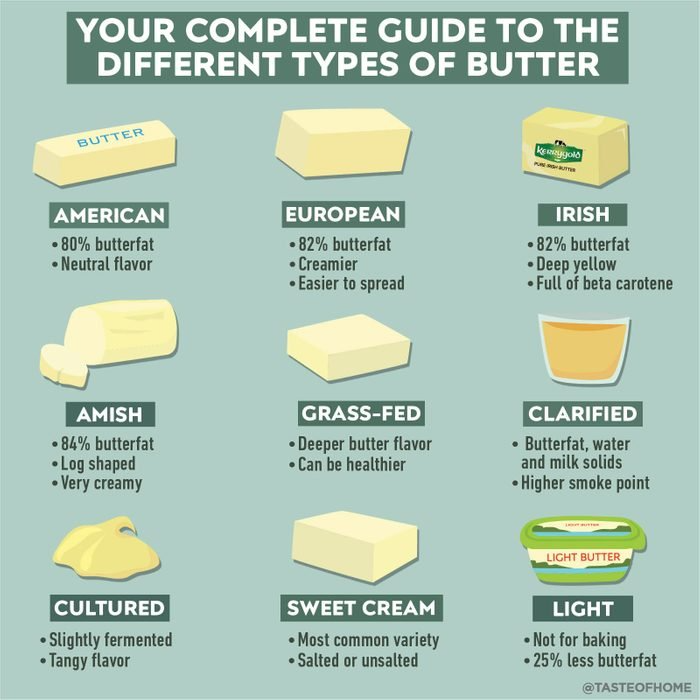
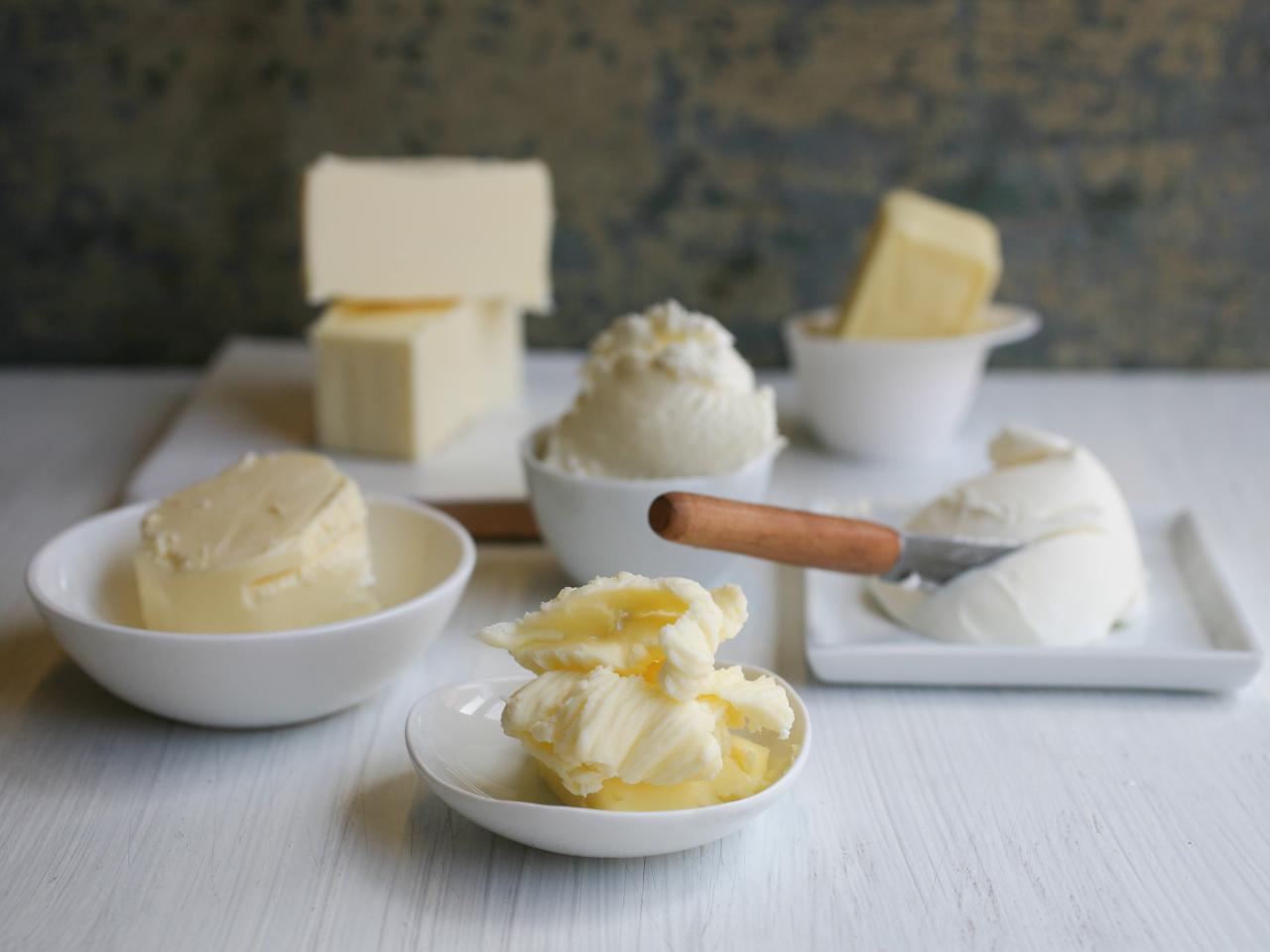
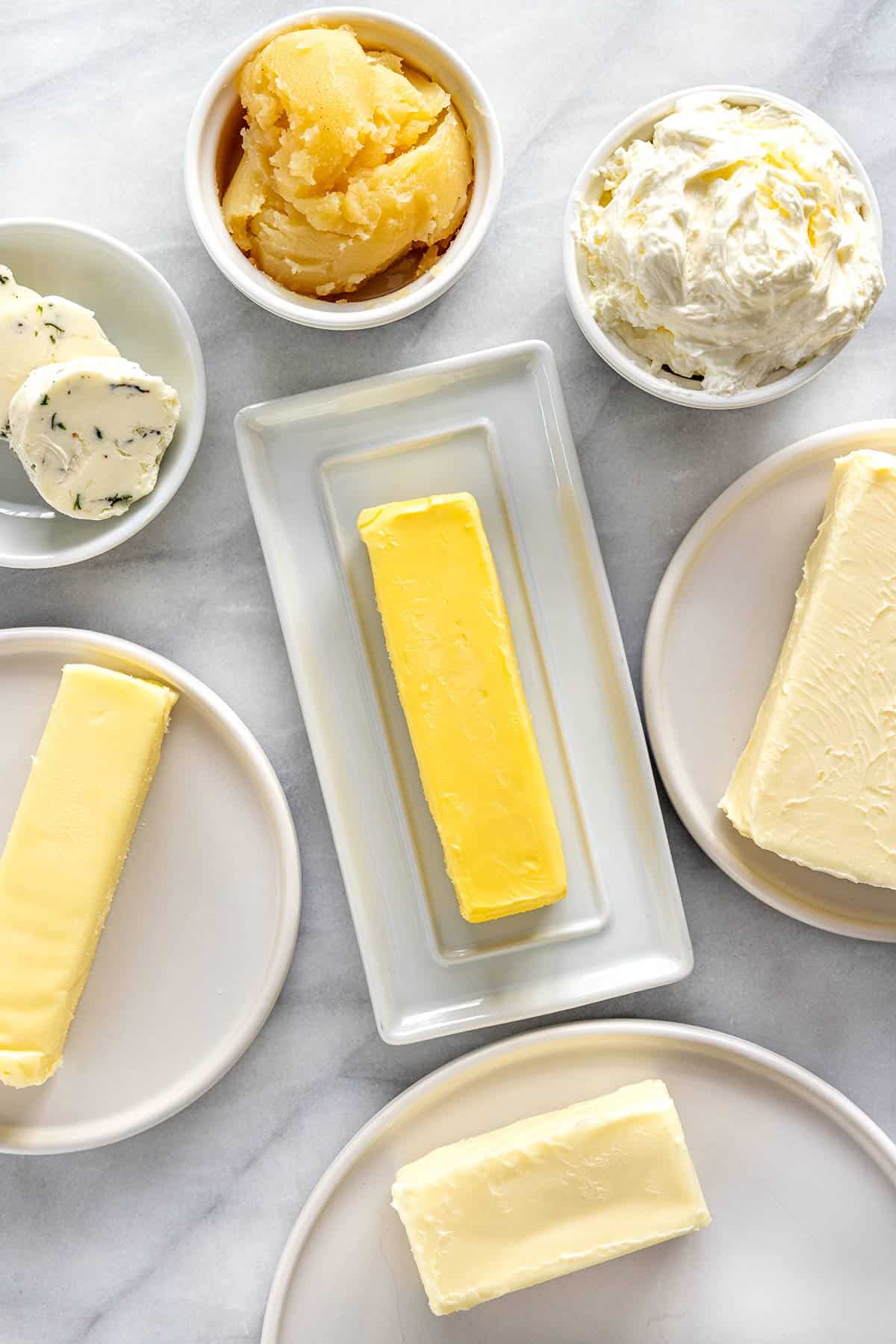
Butter comes in many forms including grass-fed, whipped, reduced fat, clarified ghee. Many of you may be wondering about margarine too, so let’s look at all of these.
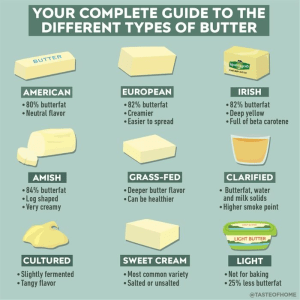
Grass-fed butter does boast some health benefits that may counteract health risks. It has lower levels of saturated fats and more unsaturated fats than standard butter because the milk it comes for is from cows that graze instead of being fed high-grain diets. It has about the same amount of calories and fats as 1 tablespoon of butter, but it’s a rich source of beta-carotene, vitamin K, Omega-3 fatty acids, and other ingredients.
Whipped butter is regular butter whipped up using nitrogen gas, is best for spreading, and shouldn’t be used in recipes.
The same can be said about reduced-fat butter, as it shouldn’t be used to replace regular butter in baked goods or for pan-frying. It does have around 40 percent less milk fat than standard butter and fat from cow’s milk is replaced with water and gelatin.
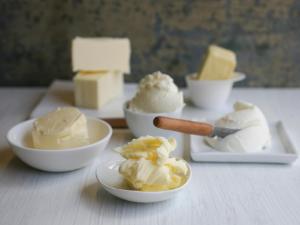 Clarified butter or “ghee,” is something I learned about not too long ago as the mom of one of my daughter’s friends had some on their kitchen counter. It looked interesting and easy enough but I never fully jumped on board. Ghee is a type of clarified butter that originates from India, made by simmering butter to separate the milk solids and water, resulting in a rich, nutty-flavored fat. It also has a high smoke point that makes it well-suited for frying and sauteing foods.
Those looking for vegan and dairy-free cooking should consider plant butter, as it is made with plant oils such as avocado, canola, coconut, or olive. The soft nondairy spread has the richness and flavor of butter and works well for lactose-free and seed oil-free diets. In most cases and with most brands, this butter can be used in recipes just like the real deal.
Then there’s seed oil-free butter, which often has a more pronounced and authentic buttery taste and tends to be richer in beneficial saturated fats. Which brings us to what are seed oils and why all the talk of them recently?
In brief…I could go on and on forever but I won’t’…seed oils are those extracted from various seeds like soybean, corn, safflower, and sunflower. They are often used in food processing due to their low cost and high smoke point but they are high in omega-6 fatty acid content. The refining process of them is known to also undergo the use of chemicals and high heat, resulting in compounds like trans fats and free radicals.
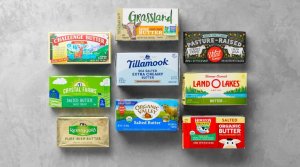
There are also many other variations of butter, including:
Unsalted, which is often called “sweet butter.” This version has no added sodium, which gives cooks and bakers more control over the amount of salt in recipes. It is best for baked goods, pan sauces, and pastas.
Salted butter on the other hand, does indeed contain sodium, which not only adds that flavor to what you’re making and it also extends is shelf life. It is best for serving with bread, pancakes, bakes potatoes, or on top of a dish.
 Uncultured or “sweet cream butter” is often referred to as “American butter,” as it’s our most predominant. It’s made from pasteurized fresh sweet cream that hasn’t been cultured and has a mild, creamy flavor. Its mellow flavor makes it great for general use and it’s great for baked goods and recipes where butter’s main function is to enhance in the likes of cakes, muffins, cookies, sauces, and casseroles. Because it also typically has a lower butterfat content compared to cultured butter, it’s great for sauteing, frying, and glazing.
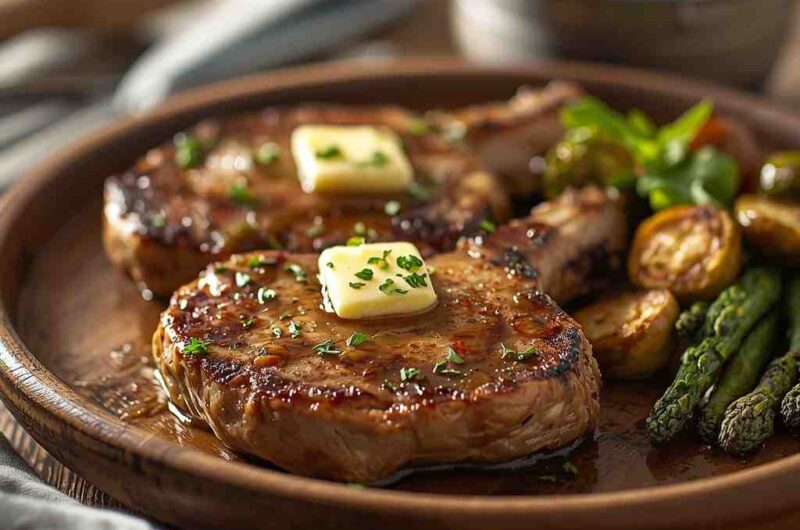
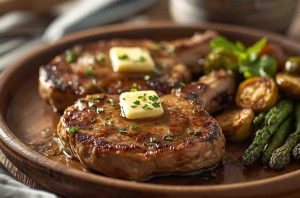 Cultured butter is sometimes called “European butter and is made with pasteurized fresh sweet cream and treated with live cultures like those in yogurt and cheese. It’s then fermented before it’s churned, resulting in an extra-creamy butter with a pleasant tang. This process produces a deeper flavor, making it ideal for recipes that want it to enhance the dish like mased potatoes, biscuits, pound cake, or atop a steak. It’s also higher in butterfat than sweet cream butter, making it great for flaky pastries and creamy sauces.
Irish butter is probably the most famous and popular of cultured European butters. It’s slightly higher in fat and can tend to be more pricey. Its deep yellow color is because its milk comes from grass-fed cows who graze on grass that is rich in beta-carotene. In fact, all butter sourced from grass-fed cows will be more yellow in color. It’s known to have a spreadable texture and rich flavor and is best for spreading, as a condiment, or meal topping. It’s low water content also tends to produce baked goods with flakier textures like biscuits or pastries. It’s not always best for baking though if it’s not a major player in the recipe, say like in chocolate chip cookies and cakes. It’s higher cost also means you might be better off using a lower cost butter if you’re making a big batch of brownies or cookies. Your call there.
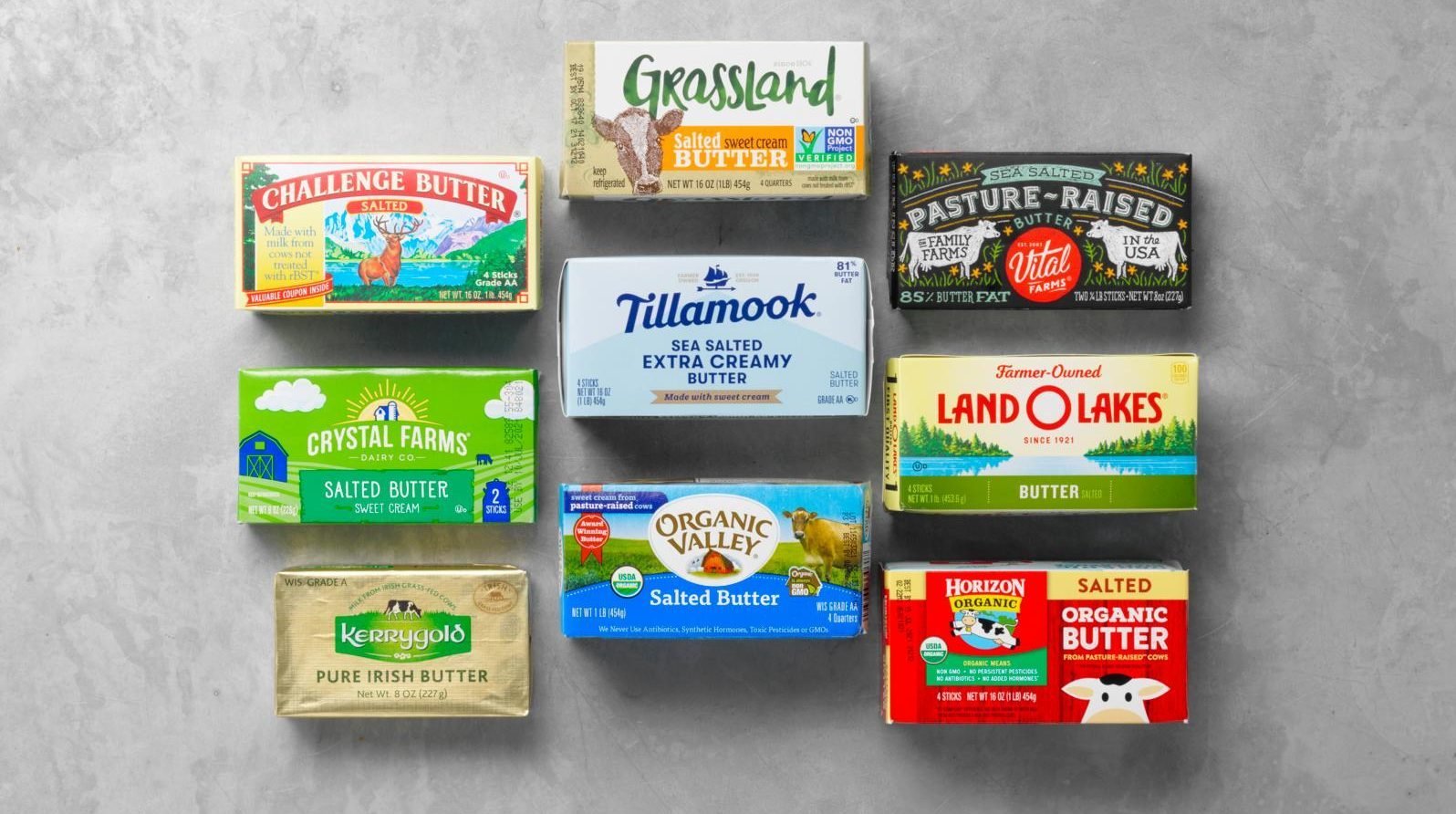
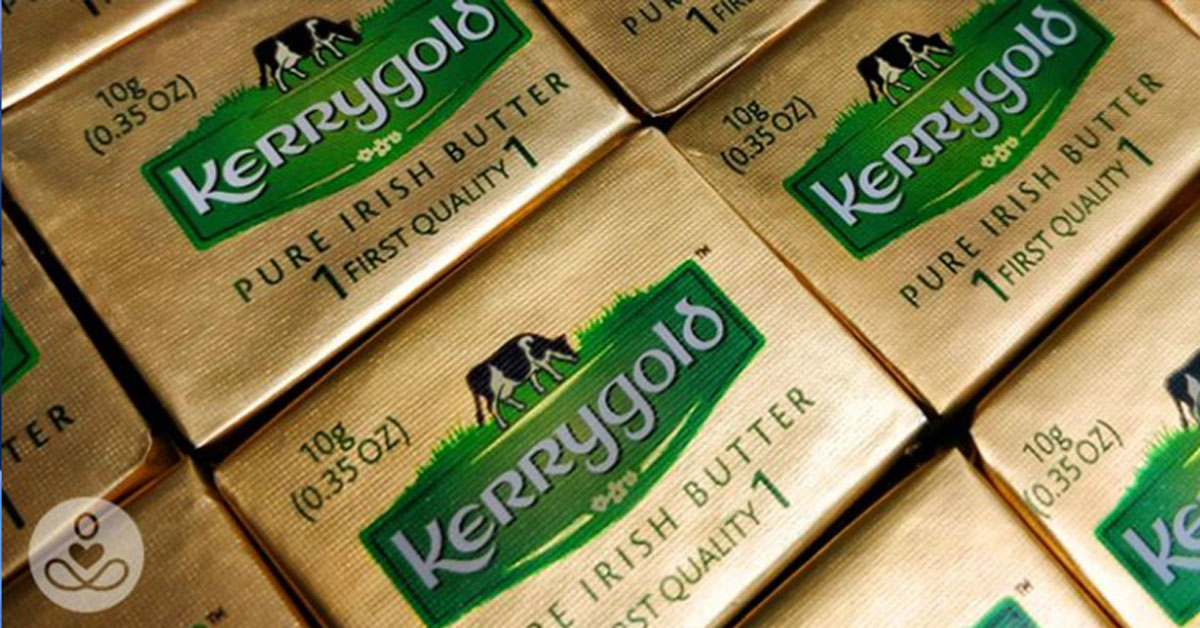
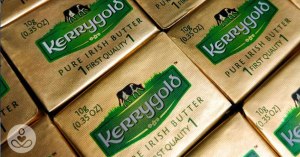 Let’s talk a little about Irish butter, widely considered among the world’s favorite and best kinds. I’m sure you’ve all seen the famous Kerrygold, which is the second top-selling butter after Land O’Lakes and Ireland’s top food export, but what is it that makes it the gold standard of butters besides its iconic golden hue?
One difference between American and Europe is that European butter, including that from Ireland, has a higher butterfat content, which means better taste. Irish butter also contains more salt, which not only adds flavor but also acts like a preservative. If you like to store our butter on the counter, you might want to consider Irish butter.
When you think about it, Ireland’s topography is perfect for dairy farming. It has abundant rainfall, the temperature rarely gets below freezing or extremely hot, and the country’s famous cliffs protect the farmland from cold and wind. They say Irish cows are happy cows and there’s also something to be said about the fact that Irish farmers take pride in what they do and don’t do, including adding chemical additives and hormones to their products. In the U.S. and many parts of Europe, the opposite is true as the dairy industry has become increasingly industrialized with dairy cows often kept indoors and in overcrowded pastures.
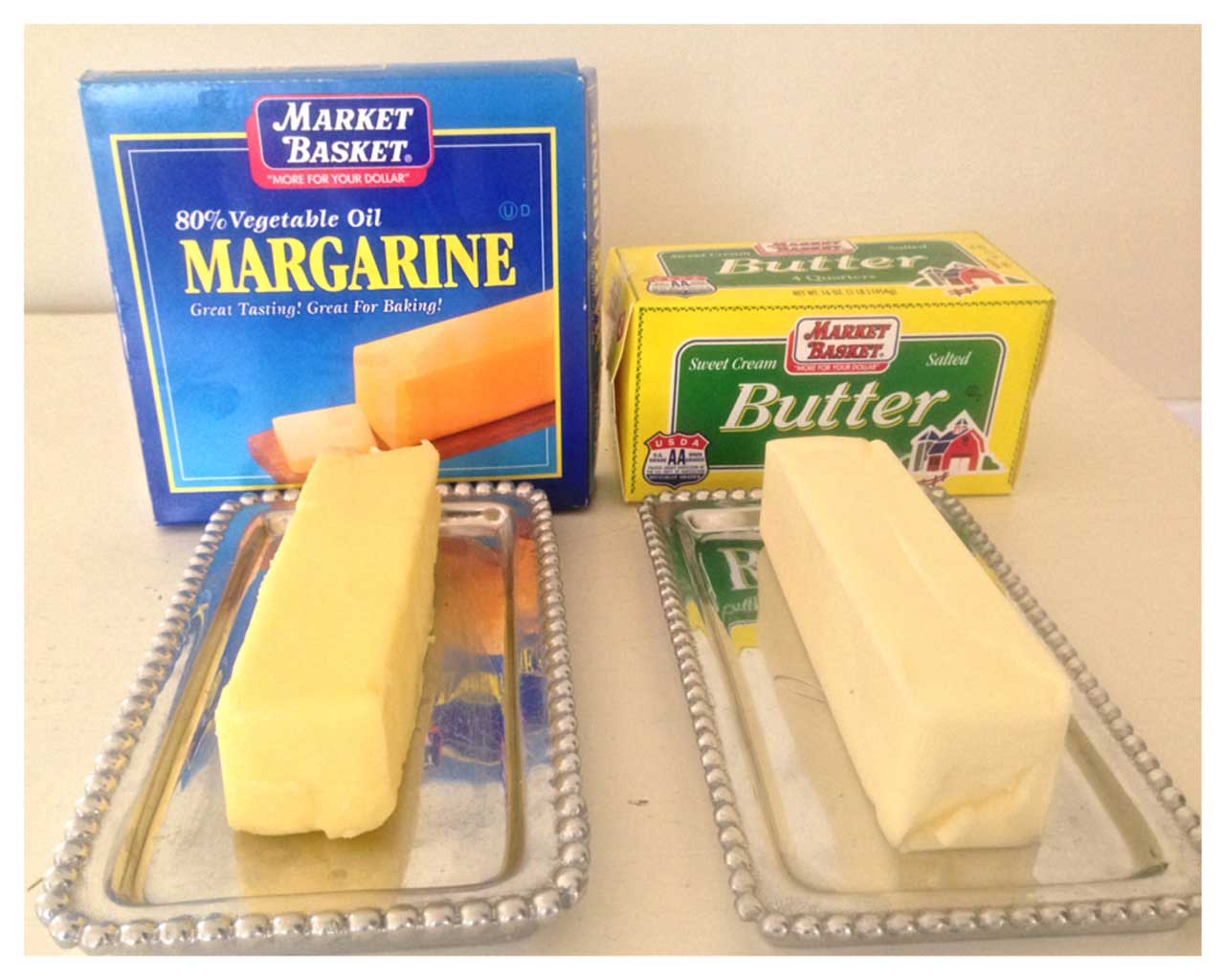
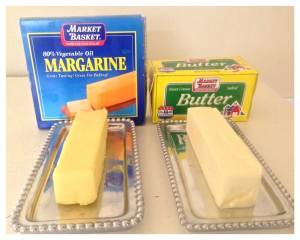 Then there’s margarine. Butter’s often maligned cousin. It does however, have its own health benefits and is not a true form of butter. Yes, both are yellow and their sticks and tubs look alike, but that’s where their similarities end. They are made of different ingredients and provide different health benefits.
Margarine is made from vegetable oils, not heavy cream like butter, which has higher levels of saturated fat. Margarine’s vegetable oils contain unsaturated fats, which are split into polyunsaturated and monounsaturated fats, which when used as a replacement for saturated fat, help lower LDL cholesterol, the “bad” cholesterol that clogs arteries.
Margarine’s unsaturated fats are considered “good” because they can help improve blood cholesterol levels, ease inflammation, stabilize heart rhythm, and lower heart disease chances. But, because unsaturated fats are liquid at room temperature, margarine isn’t good for baking.
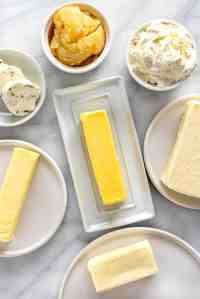 Here’s another way to compare the two:
A serving of stick margarine contains around 2 grams of saturated fat and 3 grams of trans fat. A serving of margarine from a tub contains 3 grams of saturated fat and no trans-fat. In comparison, a serving stick of butter contains around 7 grams of saturated fat and no trans fat while a serving of butter from a tub contains around 4 grams of saturated fat and no trans-fat. I find it amazing and surprising that many health experts say that spreads sold in tubs are a bit healthier than either butter or margarine sticks.
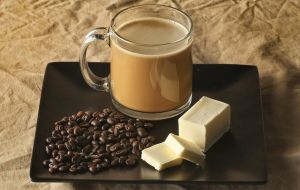
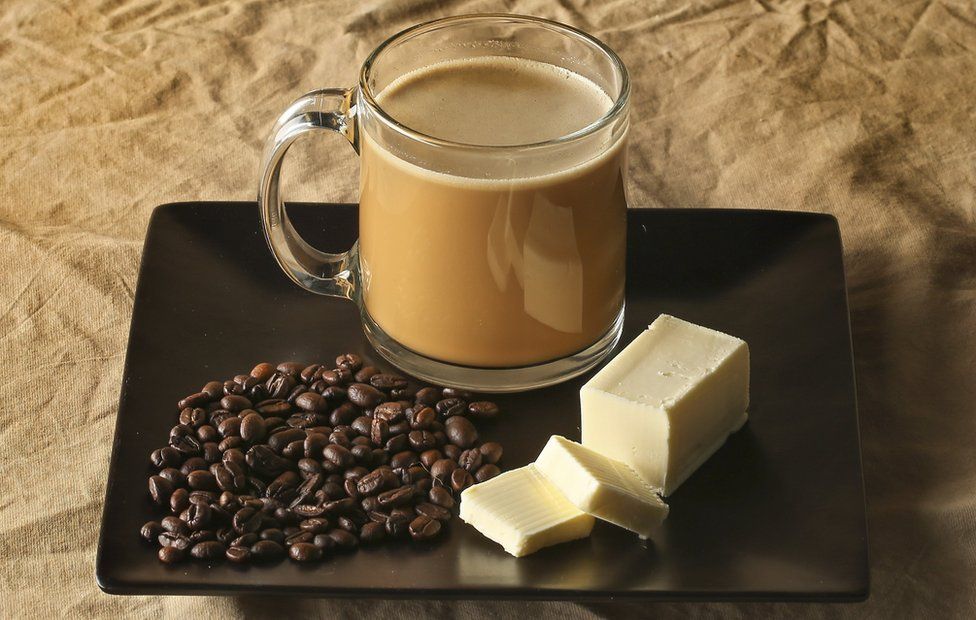
And what about bulletproof coffee, the caloric coffee version with added fat that is supposed to make you feel energized and full for longer? The drink is also known as butter coffee, and as you correctly assume, it is made with butter. First promoted by American entrepreneur Dave Asprey, bulletproof coffee caused quite a craze among those who follow a low carb, high fat diet or any trending food craze. It still needs to be determined whether bulletproof coffee can improve your health or make you feel energized
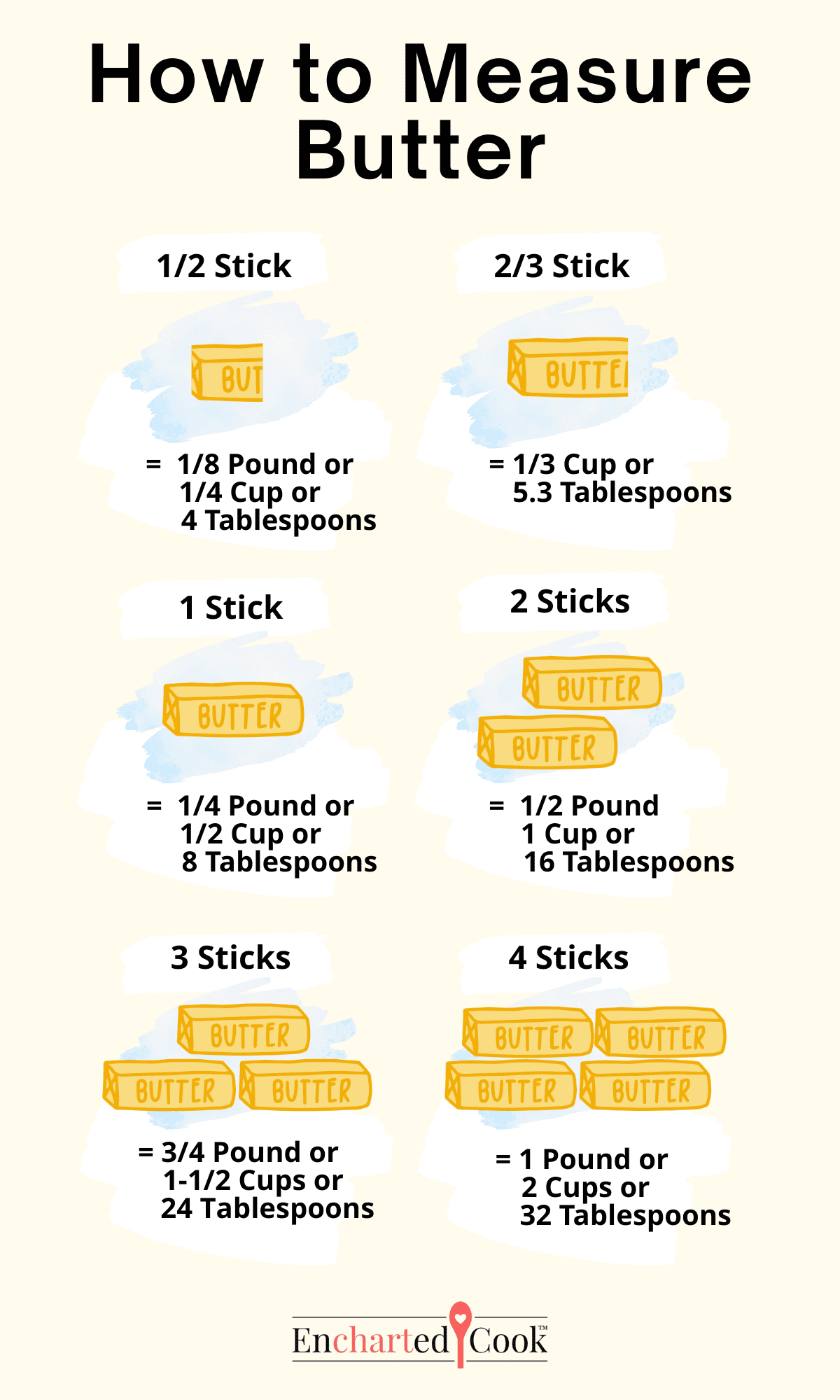
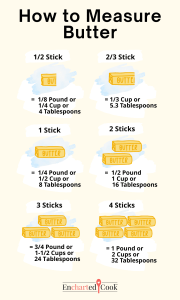 Lastly, in a pinch when cooking with butter and it needs to be softened? Here are some suggested ways to do so if the typical 30 minutes at room temperature needs to be sped up as well as a handy-dandy measuring guide:
Microwave a whole stick, wrapper and all, at high in 10-second intervals, rotating it 90 degrees after each 10 seconds. Rotating is key!
If you have some time to soften it at room temp, some say to cut up the butter, as cutting a stick into smaller chunks will soften if more rapidly
A way to test whether a stick of butter is softened enough but not too much is to gently press the top of the stick with your finger. If the indentation remains but the stick holds its shape, it’s perfectly softened. If you can hardly make an indentation, it’s not softened enough while if pressing your finger makes a finger mark not just a fingertip mark, it’s too soft.
Clever Uses for Butter
Prevent sticky fingers. While baking, slather a thin layer of butter all over your hands before mixing batter.
Get Rid of Smell on Hands. After handling anything stinky like fish, onion, or garlic, massage your hands with a dab of butter and scrub them clean with water and soap.
Slip off a ring. Use a bit of butter to loosen a tight ring stuck on your finger.
Swallow pills. If you have a hard time making the medicine go down, rub pills with a light coating of butter before swallowing them with water.
Dislodge gum from hair. Massage butter into the gum and then slide it easily out.
Stop Door Creaks. Grease the hinges on your door with butter rather than a pungent, toxic product.
Treat Skin Irritations: Always check with your doctor first, but many believe the protein in butter and its overall texture make it an effective way to treat minor scars and burns.
Disclaimer: As I mentioned previously, I’m merely reporting and writing what I’ve researched but am not a physician or even health expert per se, so please consult your doctor regarding any use of butter or margarine.

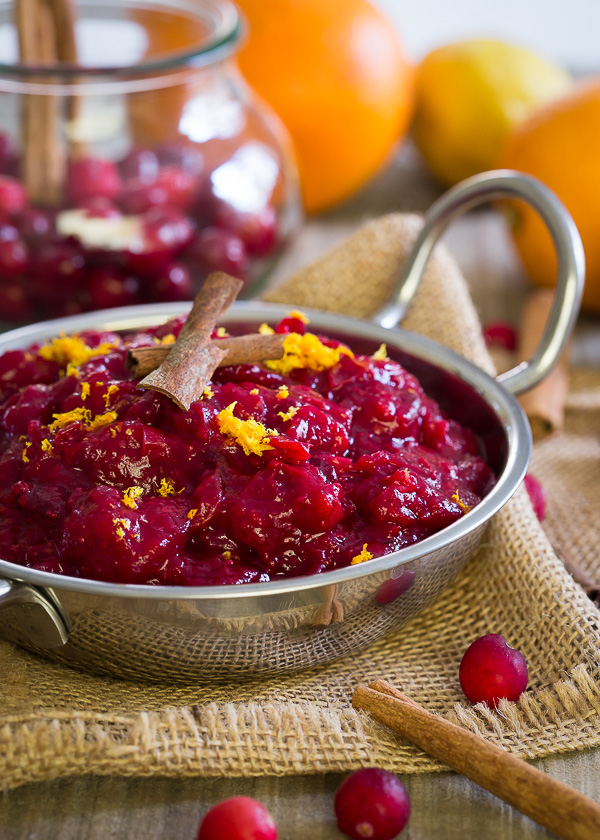
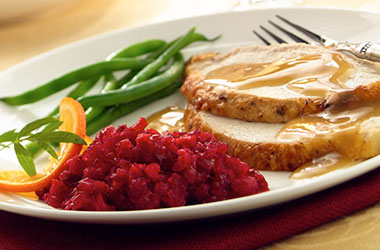 I’ll be spending Thanksgiving this year again with my husband’s side of the family, which has become an annual tradition I’ve grown to love. Another tradition I’ve grown to love is the serving of cranberry sauce alongside the turkey, dressing, potatoes, green beans, pies, and the likes. In fact, it’s something I volunteer to bring each year. I was never a big fan of cranberries back in the “open a can and pour out the log” days, but I’ve grown to love them with each new recipe I’ve discovered as well as my tried and true one. What about you? Yay or nay on cranberry sides? And what exactly are those little red berries that we generally only eat once a year?
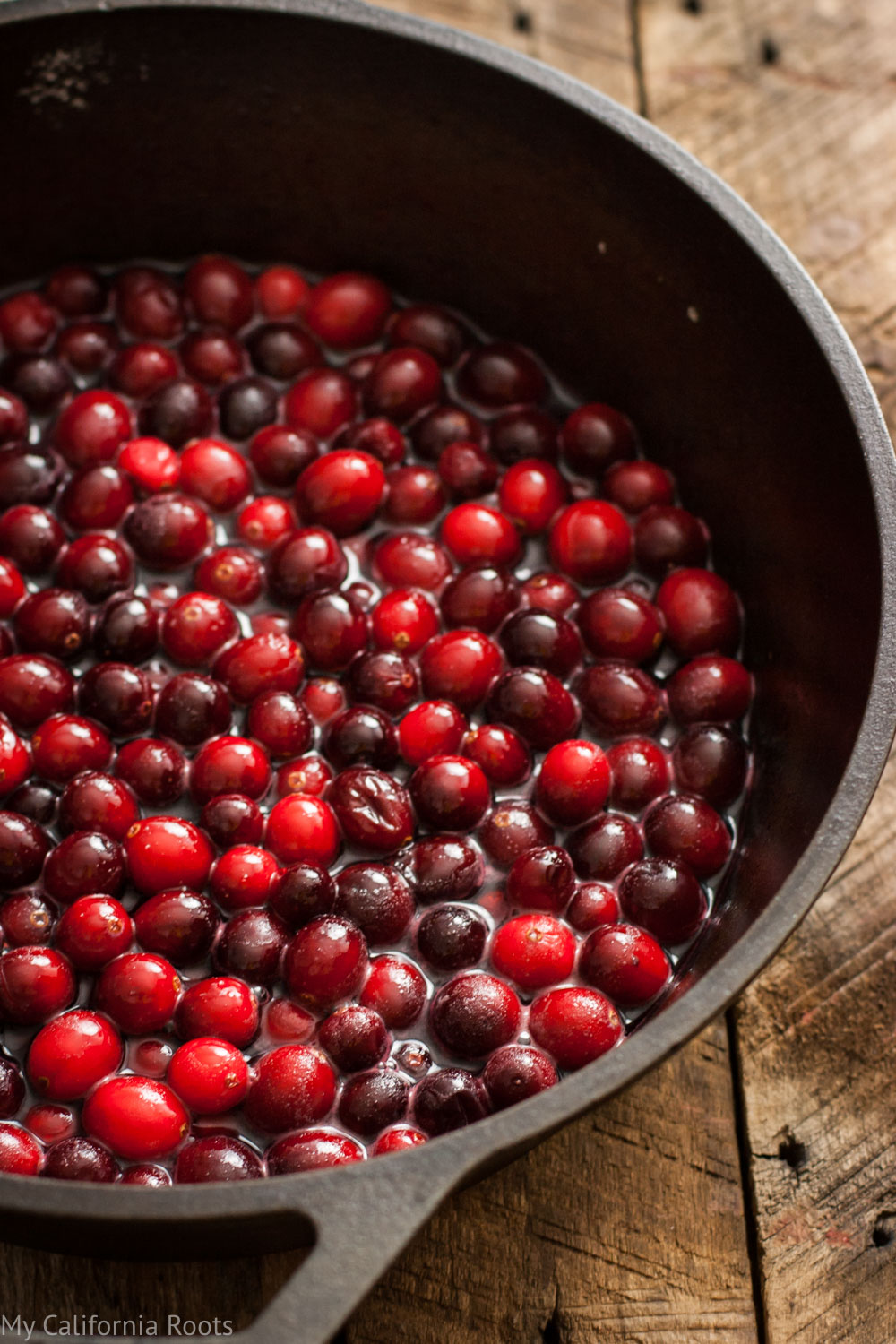 History also notes sailors used cranberries as a source of Vitamin C to prevent scurvy, and more recent studies suggest cranberries promote gastrointestinal and oral health, raise the good HDL cholesterol, and may even help prevent cancer.
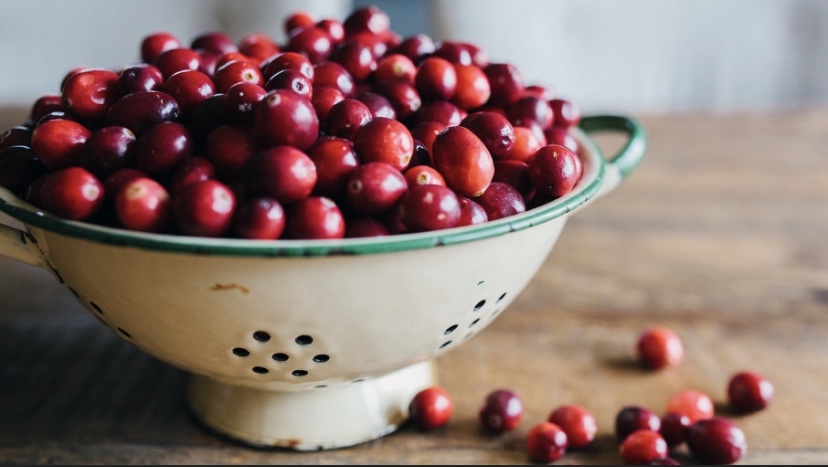 Cranberries grow on low-running vines in sandy marshes and are one of only three commercially grown fruits native to North America…the other two being blueberries and Concord grapes. During harvesting, the berry marshes are flooded, special equipment is used to knock the berries off the vines, and then they float to the surface. Most of the world’s cranberries are grown on some 50,000 acres in the U.S. and Canada and are harvested in September and October. Perfect timing for fresh cranberry sauce at Thanksgiving!
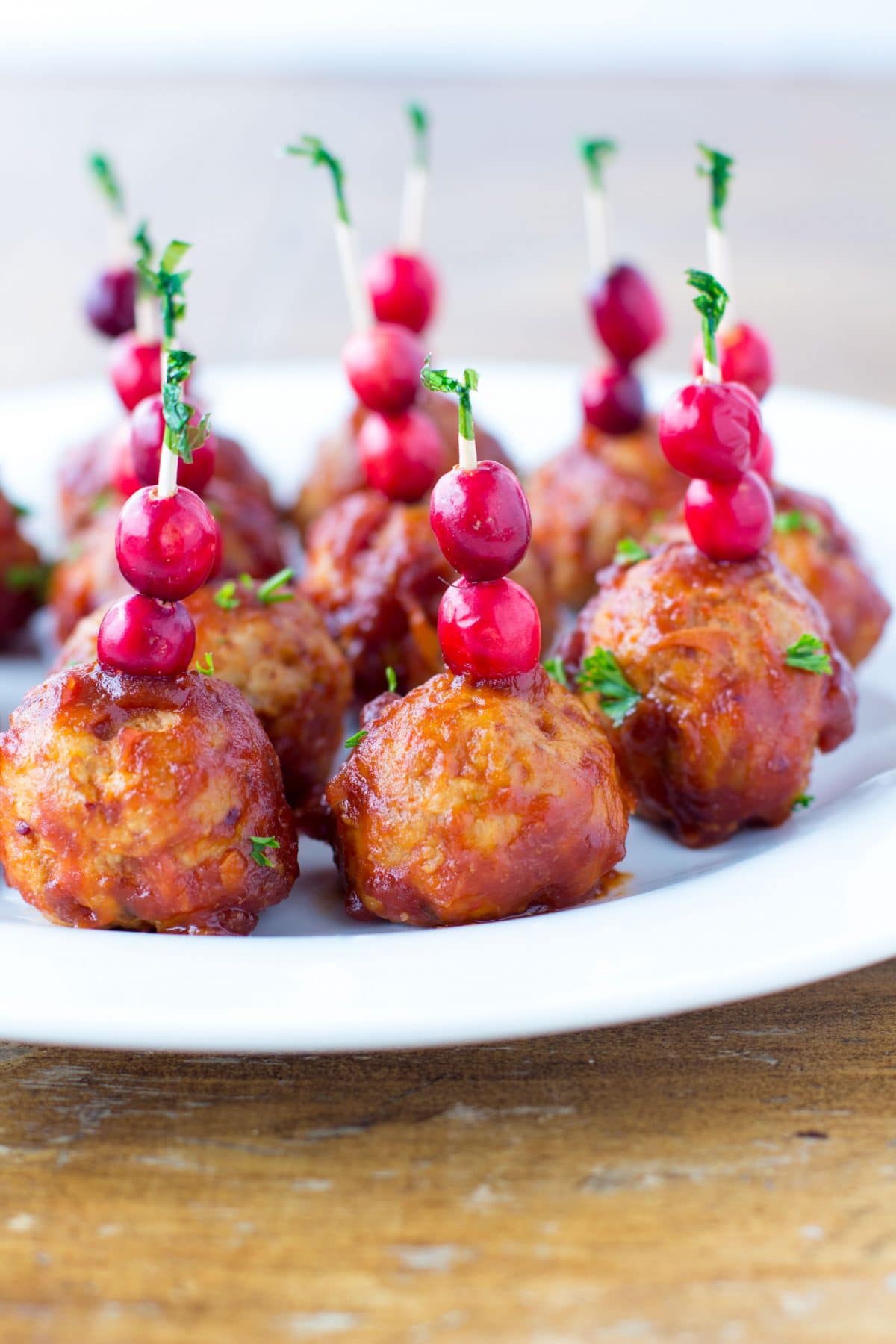
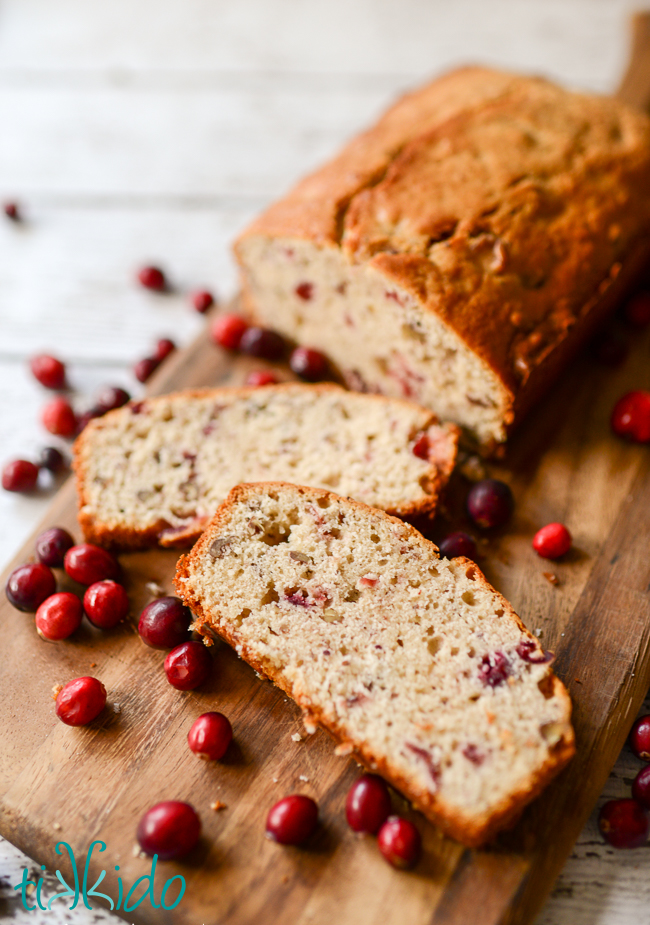
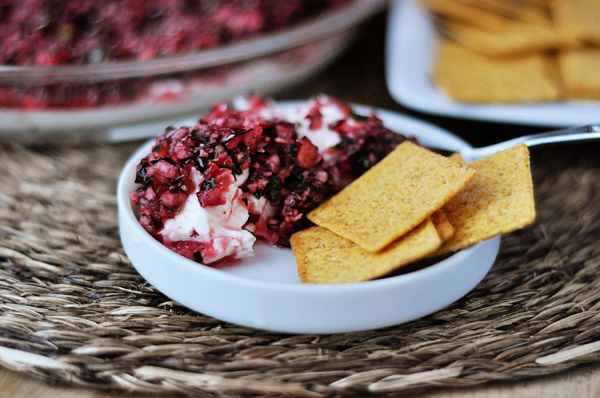
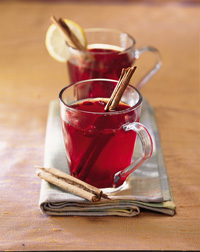
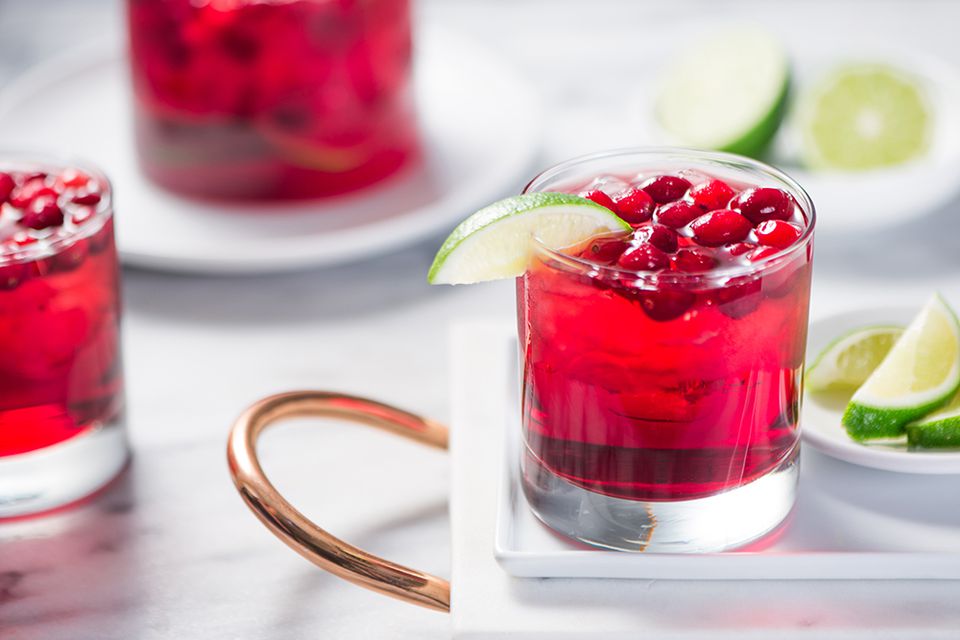
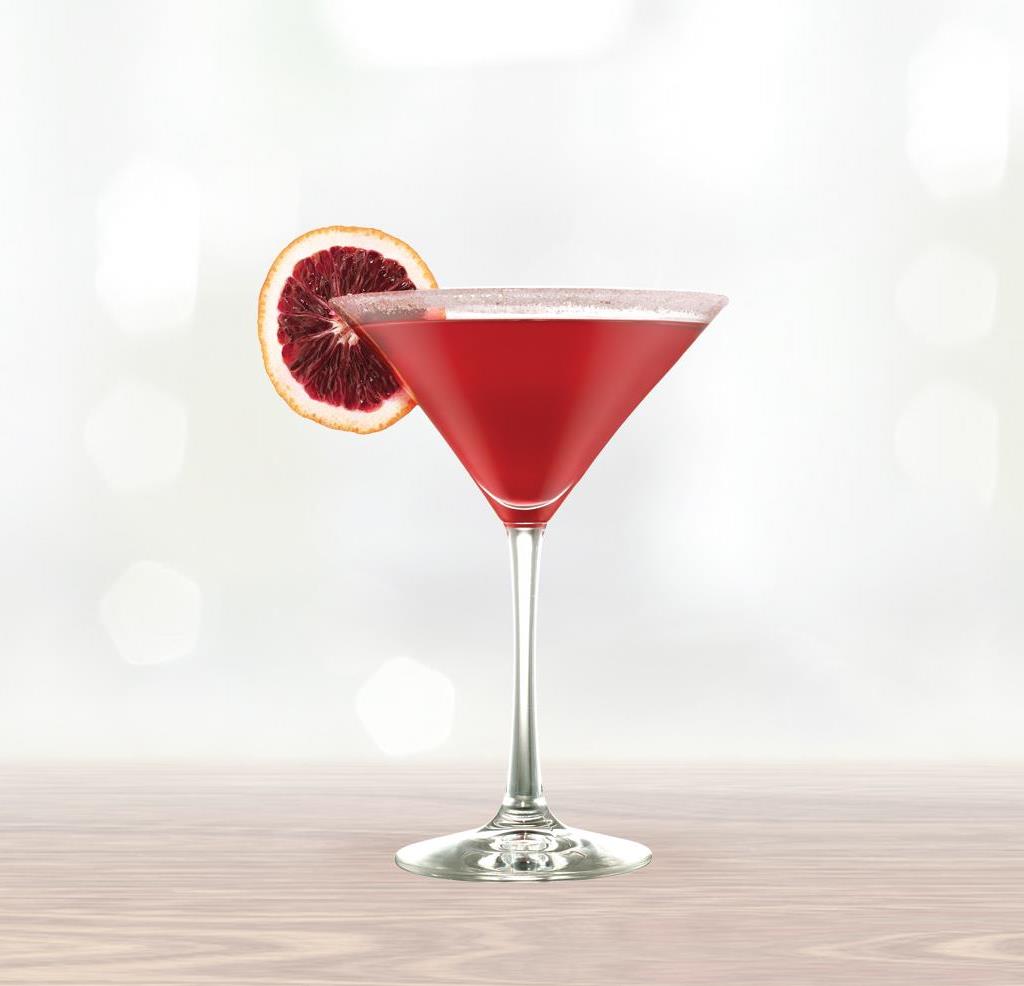
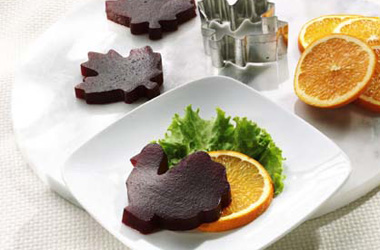
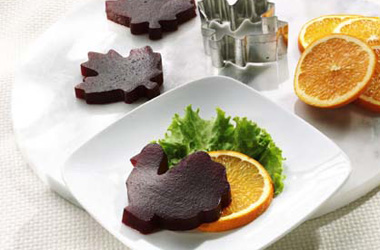 So, what do you prefer? Fresh or canned? Whole berry canned or jellied? I prefer the whole berry and fresh but if you like that blob of gelled stuff, here is a fun way to make it festive using cookie cutters and some other fun and yummy recipes.









 Beyond Words