
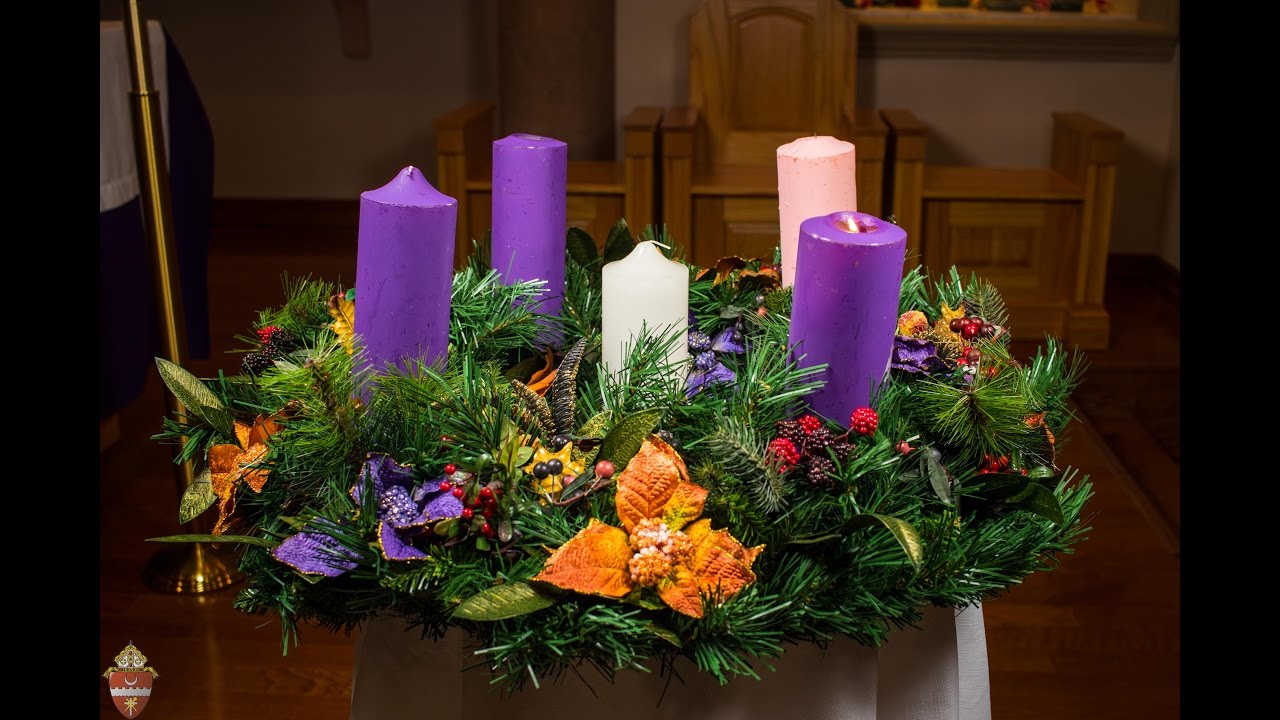
In many Western Christian churches, including most Catholic and Lutheran parishes, today marks the Second Sunday of Advent. Growing up, we didn’t really “celebrate” Advent but I’ve grown to embrace it. Expectation and anticipation come into play as we focus on hope, faith, joy, and peace…the four candles of an Advent wreath.
The word “advent” comes from the Latin word “adventus,” which means “coming.” During Advent, Christians patiently await the coming of their Savior, Jesus Christ. It generally begins on the fourth Sunday before Christmas, ends on Christmas Eve, and ranges in length from 22 to 29 days. Christians around the world have different ways of celebrating Advent. Some light candles, some sing, some eat candy, some give gifts, and some hang wreaths. As I mentioned above, one of the most popular Advent symbols is the Advent wreath.
 Origins of the Advent Wreath are found in the folk practices of the pre-Christian Germanic people who gathered wreaths of evergreen and lighted fires as signs of hope in the cold and dark winter months in Eastern Europe. From Germany, the use of the Advent wreath spread across the Christian world.
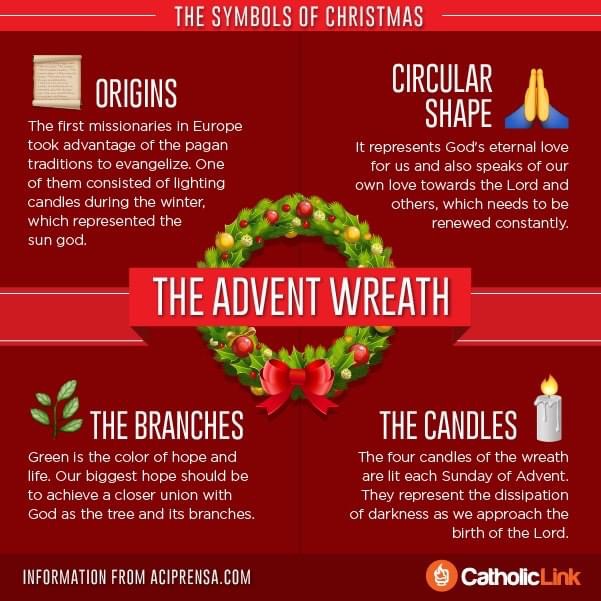 Christians later kept the popular tradition alive and by the 16th century Catholics and Prostestants throughout Germany used the symbol to celebrate Advent. Legend has it that the four candles and the four weeks represent 1,000 years and together total the 4,000 years between Adam and Eve and Jesus’ birth. Three candles on the wreath are purple and one is pink. They signify Christ being the light of the world and the contrast between darkness and light.
 Today, wreaths are made up of various evergreens shaped in a circle that represents continuous life, as well as four candles that symbolize the four weeks of Advent. On the first Sunday of Advent, a purple “Prophet’s Candle” is lit as we focus on Hope and Jesus’ coming. The second Sunday of Advent’s “Bethelehem Candle” purple candle symbolizes faith and is followed by the third Sunday’s pink “Shepherd’s Candle” reminding us of Joy and the birth of Jesus. On the last Sunday of Advent, the “Angel’s Candle” of Peace is lit. Some Advent wreaths also add a fifth white “Christ Candle” is the middle, which is lit on Christmas.
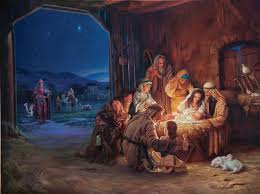 Then there’s the beloved manger scene: a simple stable complete with animals, a mom, a dad, and a baby like no other. What always reigns me in is the fact that the King of kings chose not to be born in a castle or palace, but in what was in essence a barn. This, along with the poor shepherds surrounding Him, can serve as reminders of the poor among us, as Father Larry reminded us of in today’s mass.
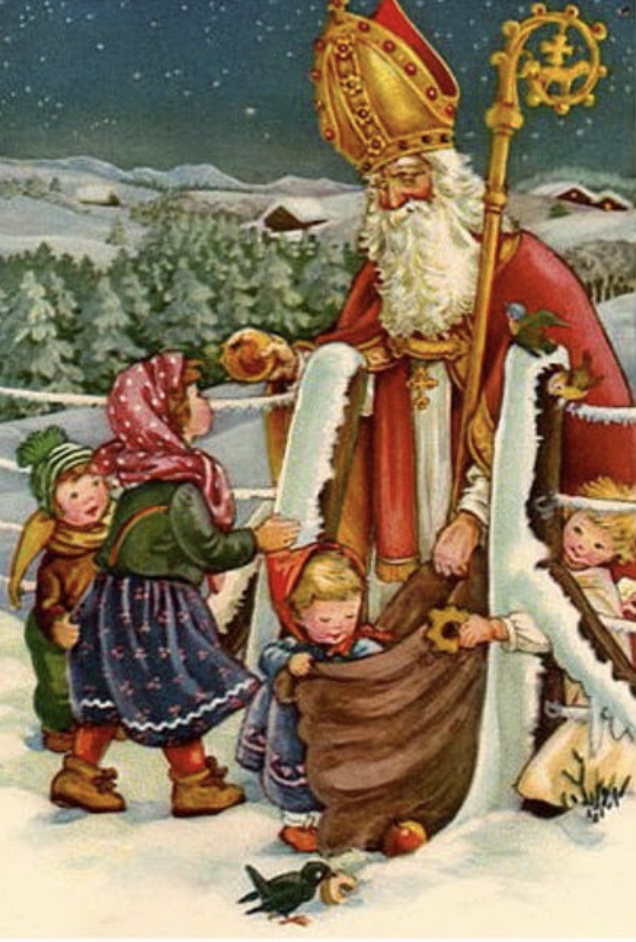 Yesterday Catholics celebrated the Feast of St. Nicholas. Considered the “first Santa,” good ole St. Nick wore a red coat like Santa, had a beard, and loved to share and give. He’s also mentioned in the classic “The Night Before Christmas.” Who knew?!
A very rich and generous man, St. Nicholas heard about a family that didn’t have enough money to buy food so he snuck onto their roof and threw some gold coins down their chimney. The coins landed in their stockings, which were hanging over the fire to dry. This, my friends, is why we hang stockings on fireplaces and put treats in them!
 Candy canes are also sometimes found on mantels and something about them just makes me smile. I particularly love their red-and-white striped pattern as I love stripes, I love patterns, and I love me some red and white! I remember my mom hanging them on our Christmas tree and although I don’t follow her in that practice, I do have a festive vase of them sitting on my kitchen counter every Christmas. Candy canes are fun and festive and they also have an interesting story behind them.

Did you know the flavor of peppermint is similar to hyssop, which is a member of the mint family and was used in biblical times for purification? The shape of the candy cane also has religious undertones as on that first Christmas morn, who were among the first to visit and meet Baby Jesus? That would be shepherds and as they paid homage to the newborn Savior, they carried with them their crooks, which they used in the field to round up sheep. It’s no coincidence that candy canes resemble those curved, reminders and that like the shepherds, Jesus protects us like His little lambs.
The red and white colors of a candy cane are said to represent purity and love. And finally, what do you get when you turn a candy cane upside down? The letter J. Whose name starts with J? Jesus!
Funny thing though, I really don’t love to eat candy canes. I just like to look at them. Maybe I should rethink this, as peppermint like the kind found in candy canes, actually has some major health benefits.
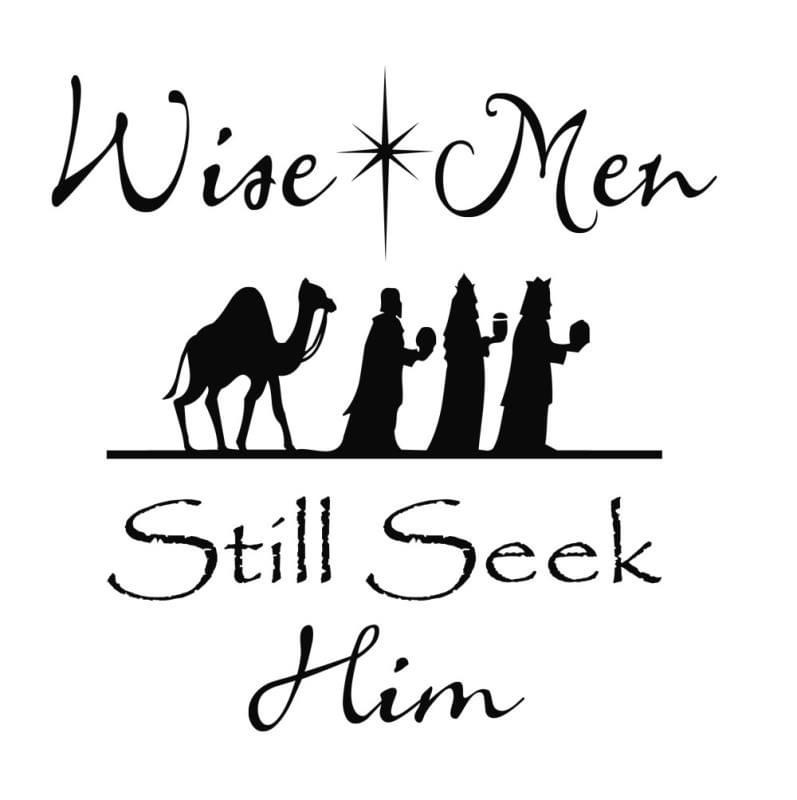 And last but certainly not least, why do we give presents? Well, think of the 3 Kings. They brought gifts to the infant King and by giving to others, we model their generous act. Our daughter Kristen only gets three presents at Christmas, which has been our family tradition all her life. If three gifts were good enough for Jesus, they are certainly good enough for the rest of us!
 All of these things explain some age-old traditions and also demonstrate the true meaning of Christmas. It breaks my heart to see the real reason for the season become increasingly secular, “offensive,” and commercial but my hope is that by sitting back and understanding exactly why we have days off in December and why stores love this time of the year, we will realize that there is so much more to it all than just time off, shopping, and Santa. I have hope.
Discover more from Beyond Words
Subscribe to get the latest posts sent to your email.


 Beyond Words