
While putting Christmas ornaments on our tree recently, I came across a little bag of ornaments I brought home from my mom’s earlier this year after her passing. My niece rightly took home my mom’s childhood ornament that is so special to all of us, but the ones I brought home are special nonetheless.
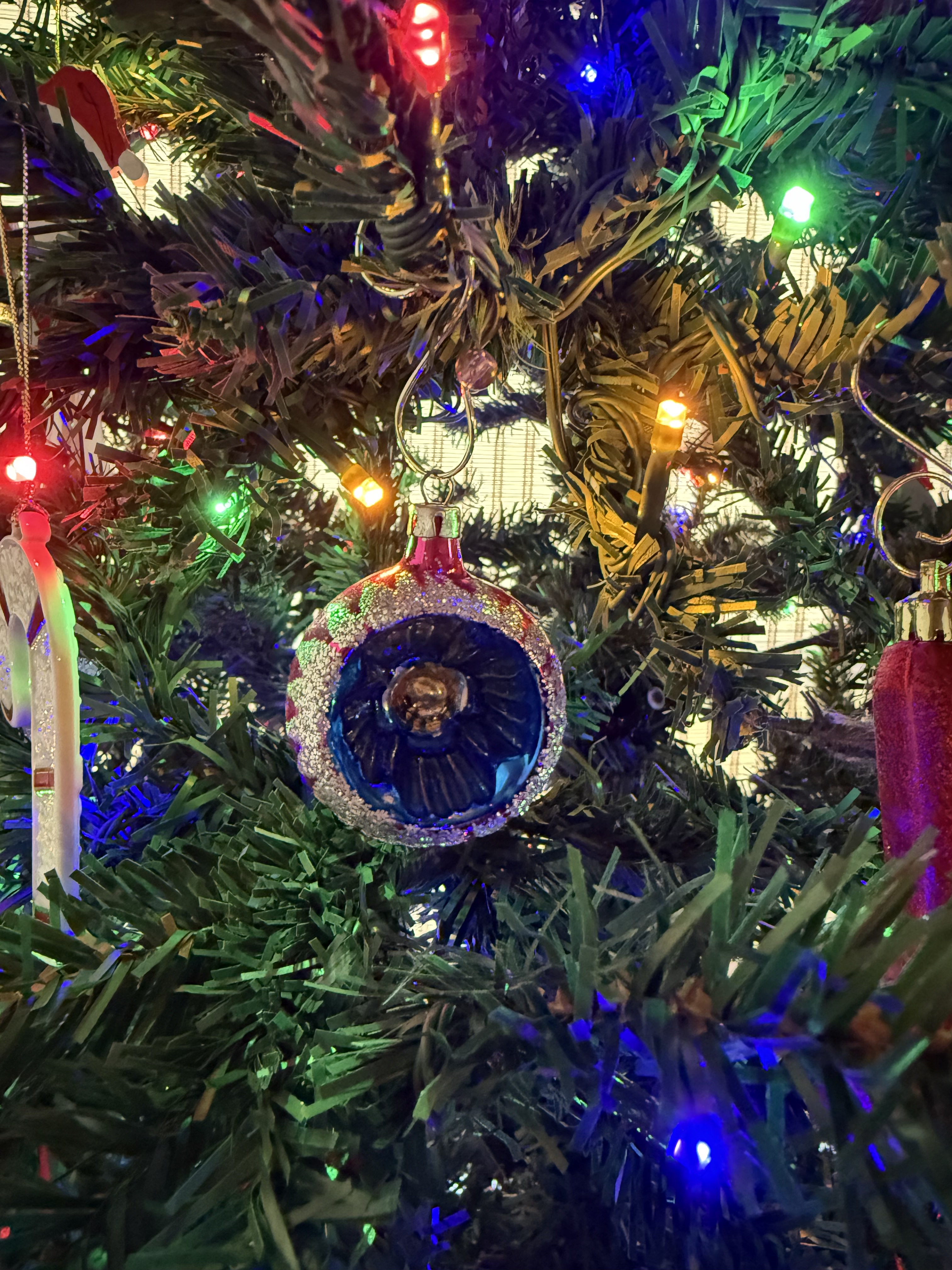
One of them is this old-fashioned blown-glass ornament, the kind that I remember filling up our tree when I was growing up along with tinsel and old-school tree topper. The hallowed-out ornament is pretty special to me and will forever have a special place on our tree.
About the time I’m decorating our tree, I read that handblown glass ornaments like my mom’s were first made in Germany around 1850 and that it was none other than F.W. Woolworth who brought them stateside. This made me nostalgic all over again as the Woolworth’s in Santa Fe holds a special place in my heart.
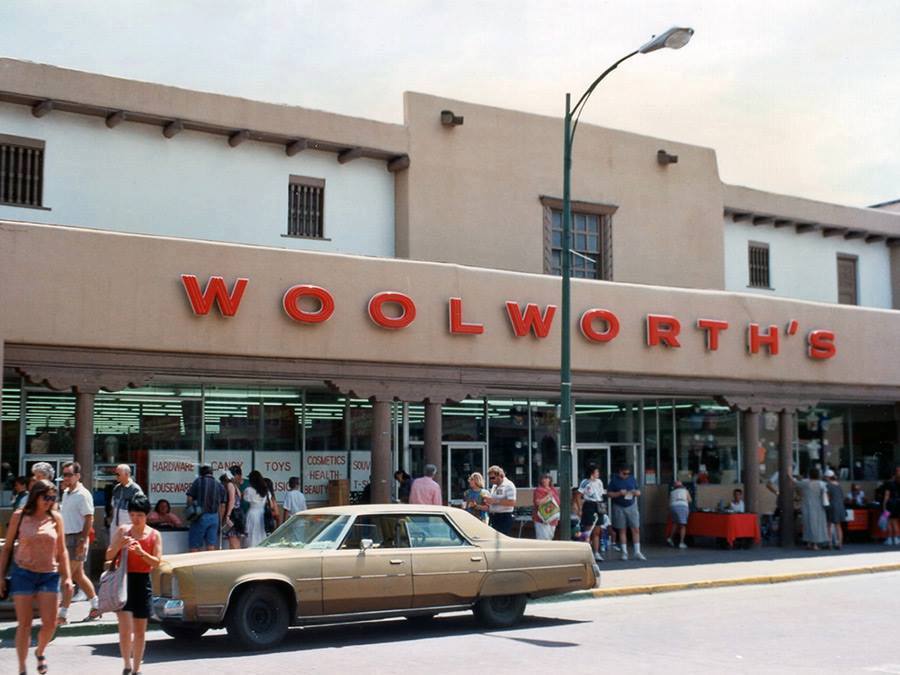 Sitting front and center on Santa Fe’s famous Plaza, Woolworth’s was somewhere I frequented. Whether it was to go shopping with my mom or eat there during lunch breaks from my nearby ninth grade school, you could say Woolworth’s has been a part of my life since day one. It’s where I ate my first and still favorite Frito Pie, served in the bag of Frito’s, and where I sat the soda fountain and met up with friends. Little did I know that all that time blown glass Christmas ornaments were popular items sold.
Fast forward 20 years or so and I found myself at yet another “Five and Dime,” this time it being Vidler’s in East Aurora, NY. Quite the jump from Woolworth’s in Santa Fe, but that was the case after marrying a man from East Aurora.
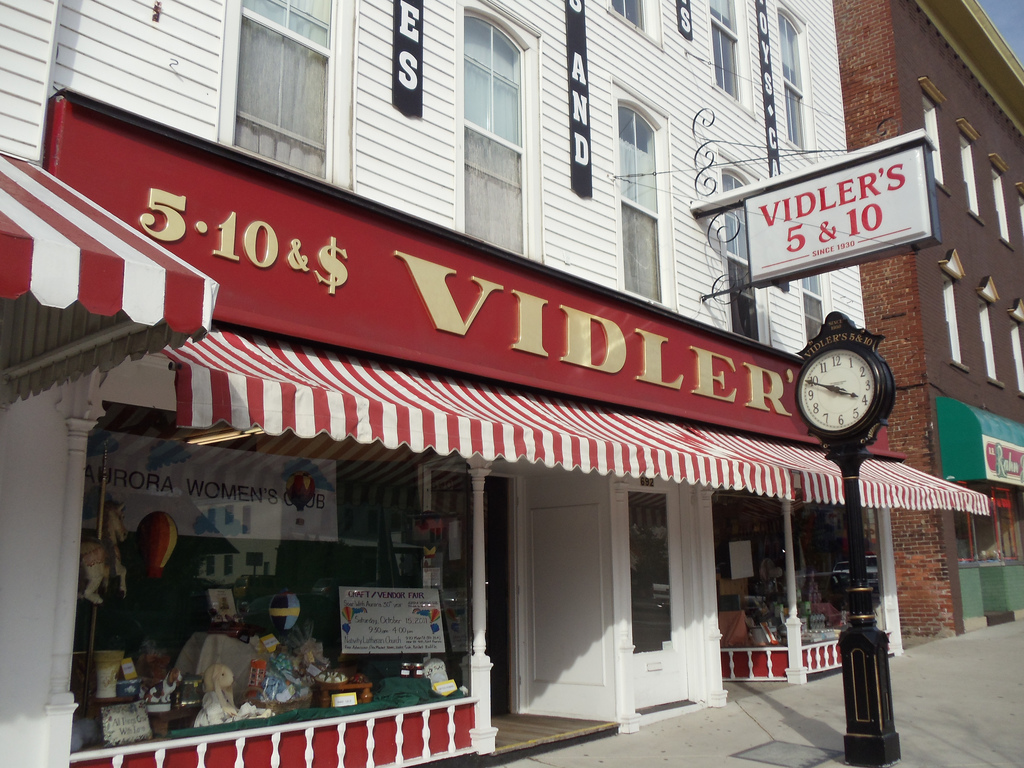 Just south of Buffalo, East Aurora is the quintessential Hallmark movie town. Locals call it “the village” and a Hallmark movie was recently filmed there and is airing currently on the channel. Vidler’s plays a central role in the film and is one of my favorite places to browse around when we go there. It’s been around since 1930, is currently run by third generation Vidlers, and is considered the world’s largest 5 & 10. Inside its two levels occupying four connected 19th century buildings right on red-brick Main Street, you’ll find everything from nostalgic candy and toys, kitchen gadgets and home goods, arts and crafts, jewelry, clothing, and seasonal décor as well as an old-fashioned candy counter and popcorn machine. It’s truly a blast from the past.
This kind of trip back in time is what Woolworth’s was all about. Conceived by Frank Woolworth and formally incorporated in 1905 as the “F.W. Woolworth & Company,” his concept consisted of a fixed and low-price store that would compete with the then U.S. retailers, which consisted mostly of large and expensive department stores, specialty stores, and general stores. It was a hit and his business model was copied by others in almost every large city and small town across America. When Woolworth’s corporate office building in New York was completed in 1913, it was the world’s tallest and today is still one of the 50 tallest in the U.S.
Between the early 1900s and 1960s, Woolworth’s was one of the largest corporations in the world with more than 2,000 U.S. stores and 4,000 worldwide. Woolworth’s closed for good in 1997, the victim of changing times, competition, inflation, and consumer habits but not before Frank Woolworth took a risk that paid off big.
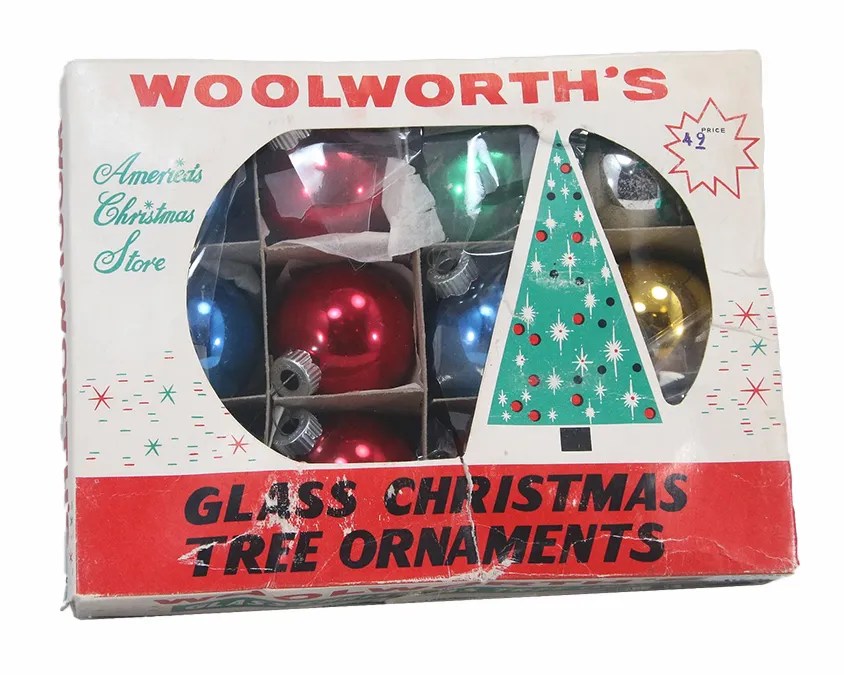 In 1880 he reluctantly agreed to buy a box of fragile glass baubles meant to hang on Christmas trees after haggling with a German traveling salesman who entered his store in Lancaster, PA. Woolworth wasn’t sold on their allure, but agreed to buy them with the stipulation that he could return any unsold ones. Shoppers loved them and they sold out in mere hours. What began as a small gamble would reshape Christmas traditions worldwide.
Historically, the first decorated trees were adorned with apples, candy canes, and pastries. Glass ornaments were first made in Lauscha, Germany by Hans Greiner. Other glassblowers recognized the growing popularity of ornaments and began producing various designs. Soon all of Germany was buying Christmas glassware from Lauscha. Then, on Christmas Eve in 1832 a young girl named Victoria wrote about having a tree hung with lights and ornaments. A picture of her tree was shown in a London newspaper decorated with glass ornaments from her husband Prince Albert’s native Germany and soon Lauscha was exporting its products throughout Europe.
 Woolworth eventually traveled to Lauscha and ordered sets of ornaments to sell in his stores. By doing so, he gave inexpensive access to what were previously expensive and hard-to-get ornaments for most people. By the 20th century, Woolworth’s had imported 200,000 ornaments and topped $25 million in sales from Christmas decorations alone.
After WWII, the East German government turned most of Lauscha’s glassworks into state-owned entities and production in Lauscha ceased. After the Berlin Wall came down, most of the companies were reestablished and today there are still about 20 small glass-blowing firms in Lauscha. Many silver companies also got on board, including Gorham, Wallace, Towle, Lunt, and Reed & Barton and began manufacturing silver Christmas ornaments. I have a silver ball that was my mother-in-law’s and it’s super heavy!
In a world that’s addicted to screens and showing wealth, it’s nice to know stores like Vidler’s and other general stores and five and dimes still exist as we all need a bit of nostalgia and simplicity every now and then. Especially perhaps during the holidays.
Discover more from Beyond Words
Subscribe to get the latest posts sent to your email.


 Beyond Words