
 Tomorrow starts a brand new year that, if you allow it, brings with it a tasty new beginning. The slate is clean and the page is blank, so make it your own and make it delicious. All that’s needed is the right attitude and the right ingredients.
Recipe For a New Year
Take 12 months and clean them thoroughly of all bitterness, resentment, hate, and jealousy.
Cut into weeks and days and into each mix well with faith, patience, courage, gratitude, and compassion.
Blend with kindness, hope, honesty, prayer, generosity, and prayer.
Sprinkle all with a dash of fun, humor, and joy.
Serve with unselfishness and a cheerful spirit.
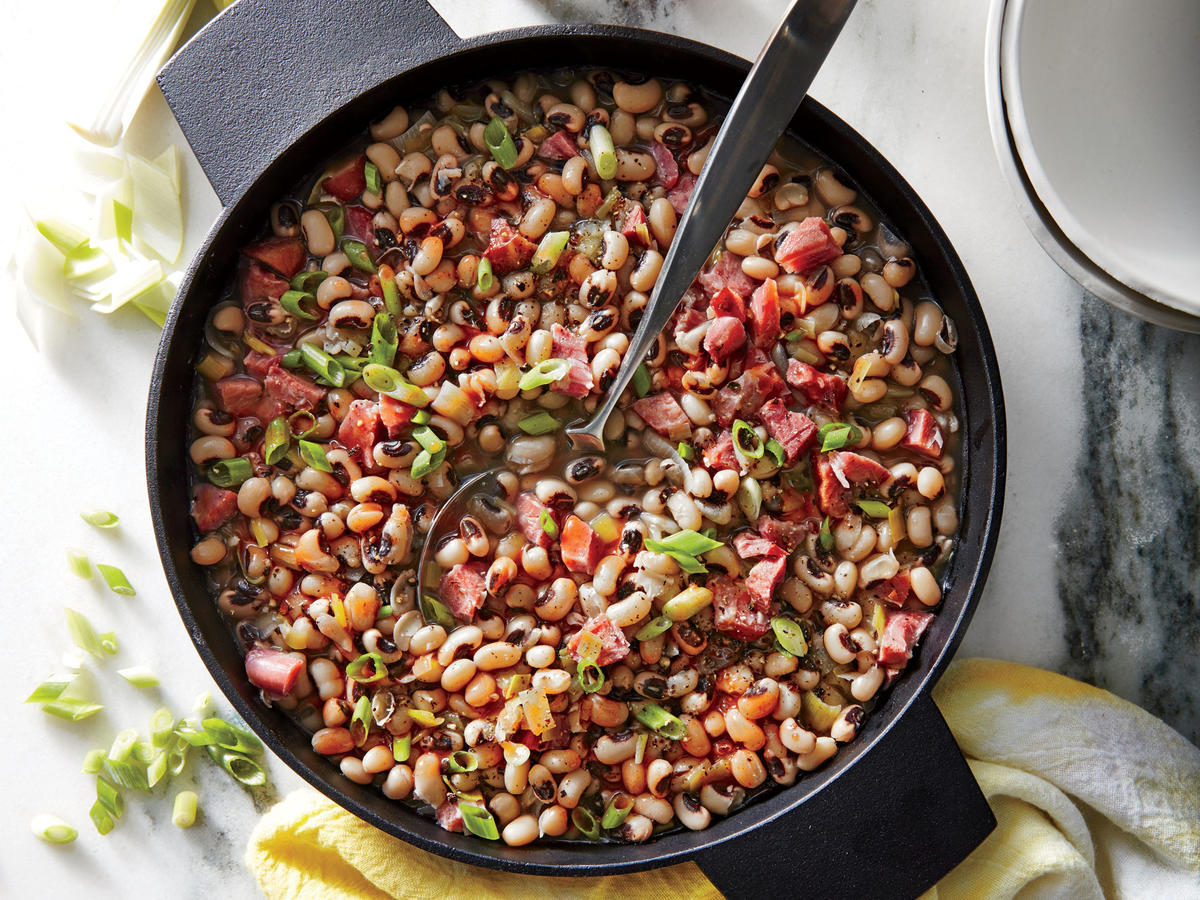 We all know the real recipe for New Year’s Day celebrations in the U.S. is a big pot of black-eyed peas, which represent luck. Many add pork, to signify prosperity, and make what’s called “Hoppin John,” a brothy dish of peas, pork, and rice. Said to have originated in the 1800s in the Low Country of South Carolina or, take your pick on historians, ancient roots in West Africa. Either way, the ingredients are what count as each one has specific meanings. Black-eyed peas represent coins, collard greens symbolize paper money, pork is said to bring advancement, and the accompanying corn bread symbolizes gold. It’s all about luck and it’s said that the more you eat, the more good fortune will come your way.
As for around the world, the new year is celebrated and commemorated in these unique ways:
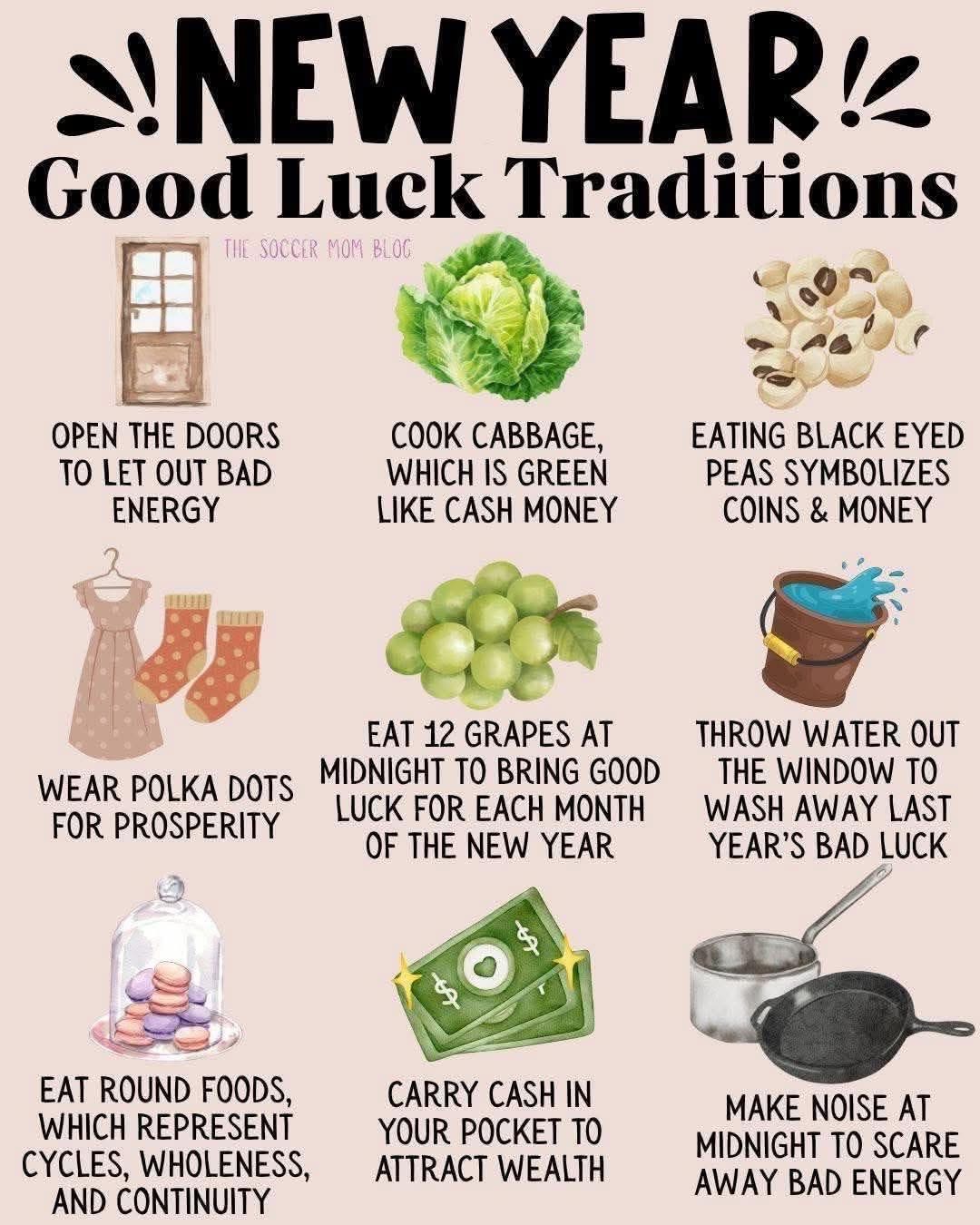
At midnight in Spain and some parts of Latin America, revelers pop 12 grapes, one at each stroke of the clock, to symbolize success for each month of the coming year.
The Japanese eat buckwheat soba noodles, which are associated with a long life. They also welcome the first sunrise of the new year with “hatsuhinode.”
Pomegranates represent fertility and are popular in Turkey and other Mediterranean countries.
Leafy greens signify money, so Danes eat stewed kale sprinkled with cinnamon.
Here are some other fun and interesting new year good luck traditions:
However you do it, do it safely and have fun!
Discover more from Beyond Words
Subscribe to get the latest posts sent to your email.


 Beyond Words