
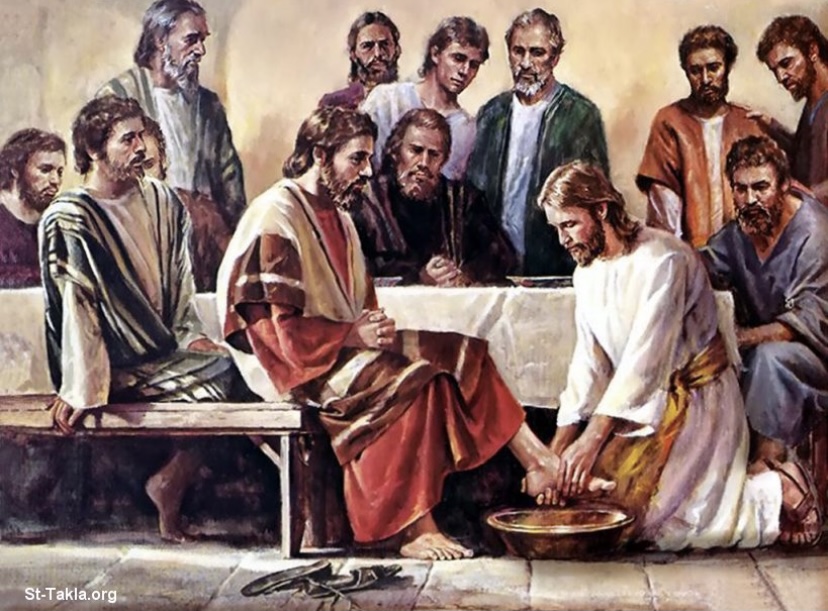
 Today, Holy Thursday, Jesus flips the master-slave dynamic on its head. Knowing His time was coming, He didn’t do His favorite things but instead bent down to do the work that was so lowly that only the lowest of the low were expected to do it: He washed feet. Amazing, right? The King of Kings bent down and gave what we would today call a pedi even though He knew that the next day He would be crucified. That vision of Master serving others brings to mind a wonderful tale of the folded napkin.
 Raise your hand if your familiar with the ancient Jewish mealtime tradition often referred to as the “folded napkin?” I love both history and etiquette so whether fictional or true, it fascinates me. It goes way deeper than history and etiquette though.
Stay with me.
In order to understand the significance of the folded napkin, you have to understand the mealtime Hebrew tradition many believe goes waaaaay back.
Let’s set the scene by setting a perfect table, which a servant would make sure was exactly how the master wanted it. During meals, the master would be served and while he ate, the servant would wait, just out of sight, until the master had finished eating.
When the master was done eating, he would rise from the table; wipe his fingers and face, and then wad up the napkin and toss it onto the table. The servant would then know to clear the table for in those days, a wadded napkin meant, “I’m done.”
But if the master got up from the table, folded his napkin, and laid it beside his plate, the servant would not touch or clear the table because a folded napkin meant, “I’m coming back!’”
Fast forward to the Resurrection.
 The Gospel of John (20:7) tells us that a napkin in Jewish burial tradition was placed over the face of Jesus, but upon entering the tomb after His crucifixion, not only was the tomb empty, the napkin wasn’t thrown aside like His other clothing but rather neatly folded and by itself.
Early that Resurrection Sunday morning, Mary Magdalene came to the tomb and found that the stone had been rolled away from the entrance. She ran and found Simon Peter and the other disciple, the one whom Jesus loved. She said, “They have taken the Lord’s body out of the tomb and I don’t know where they have put him!” Peter and the other disciple ran to the tomb to see, looked in, and saw that the cloth that had covered Jesus’ head was folded up and lying to the side.
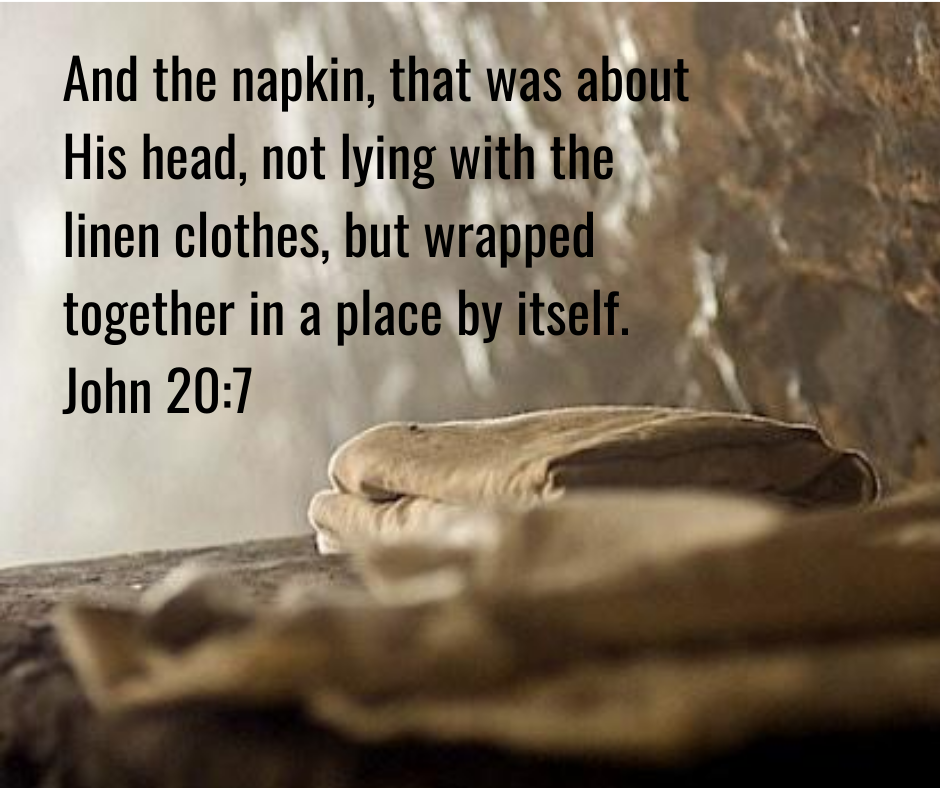 It’s such a small detail, but when you stop to think about it, you realize nothing in Scripture is accidental. If someone had stolen Jesus’ body, they probably wouldn’t have taken the time to tidy up and neatly fold his head cover. This tells us that Jesus Himself folded it, which not only emphasizes the orderliness of the Resurrection but that He rose intentionally.
Was that important? Absolutely!
Is it powerful and significant? Yes!
The folded napkin wasn’t just a random detail; it was a message.
So, what is the meaning for us here?
He’s coming back!
 Like the servant, stay alert and ready. Like His followers, be ready to tackle the evil out in the world all while ready and willing to grow in our faith. The folded napkin also reminds us that our time on earth is temporary. Let’s all vow to make it count. And if nothing else, practice proper etiquette and manners, treat others with respect, and know He is coming back!
Discover more from Beyond Words
Subscribe to get the latest posts sent to your email.


 Beyond Words