Beyond Words

Words, Wit and Wisdom for Today's Style and Decision Makers

Home Sweet Home September 2, 2016

Filed under: Uncategorized — carlawordsmithblog @ 12:04 am

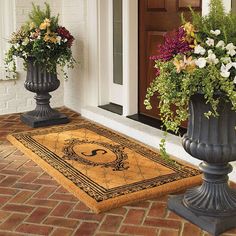
Front door mat


I’ve spent the past week unpacking, repurposing, and putting our new home together. I’ve also headed back to work right smack in the middle of doing so. Today, right now, is the first time in more than a week that I’ve sat down at my computer to take a moment. To think. To read. To write. To breathe.


Our home is coming along. The rooms are livable and taking shape. I was blessed with a friend who helped me put my kitchen together. She loves doing so and I so enjoyed her laughter as well as her style and wisdom. As many of you know, I also adore Erin Gates and her “Elements of Style” blog and book. I’m catching up on her writings and loved a recent one titled “A House Full of Personality.” In it, Erin writes:


“I love that this space looks lived in, loved, and decorated over time. Nothing too perfect or precious, just a gorgeous celebration of this family’s particular brand of cool. I’m so over perfection. In a world ripe with Pinterest-worthy everything and Instagram-filtered reality, I crave more realness from people.”


Bingo. She nailed it. That’s my goal for our new home. I want it to be our home, not a decorator’s home, not a Pinterest or Instagram home, not even a popular brand or trend home. A pretty home, but simply the Smith home.


Where I live will never be picture perfect. I will always have that one side table or piece of art that just doesn’t go or is perhaps dated, but if it brings me joy, it stays. Yes, I use that deciding factor and I use it often. Trust me, it works!


So, with Erin’s words in my head I tackled the move in. Truth be told, moving is sooooo overwhelming and I’m already soooo over it. But, unpack I must so I’ll do it with a grateful heart and a curious mind.


“To me, style is about years of collecting, figuring out what you like, and weaving it all together. The important thing is owning your look and not minding what others think. It can be tricky to find style confidence, but once you find it, you’re free.”

Anna Last


First things first. I love the openness of our house and the fact that, with so many windows, I rarely have to turn lights on during the day. But, with so much openness and tall ceilings and doors, I’ve come to discover that some of my smaller scale furniture is getting lost in the bigger space. Our previous home had smaller rooms that lent themselves to a cozier feel. This new house screams “give me space!”


Not about how big a house is

Our new house also has fewer rooms. I’ve gone from three living areas to one and from two eating areas to one. Fewer rooms mean less space in which to put all the things I love and need. Even considering how much we got rid of before we moved, we find ourselves still eliminating many items. I feel it’s shameful we paid to have the stuff moved, but there really was no way of knowing exactly what would fit and what would work. Note to self: this is what happens when you build a home, which I’d never done. And probably will never do again.  Placing pieces in the right spots is perhaps my biggest challenge right now but I’m working it.


Fortunately I’m devotee of the decorating tip of choosing items that can work in more than just one room and sticking to one palette and style. This way, you can easily swap items from one room to another. Maybe that small server no longer has a home (hello house with no formal dining room!) but works great as an end table or nightstand. Always consider scale and function, but before going out and buying something new, shop your house first. You’ll be amazed at what you might find! Shop season-less too. Yes, it’s fine to add seasonal décor here and there, but keep your basics, well, basic.


“Be fearless and love how you live. You’re unique and your home should reflect that.”

Kim Myles

 

A good home

I am by no means a decorator or designer by trade and rely on my personal preferences and expert advice from friends and shelter publications. I like many design forms and qualities, but recreating those looks in my home will just never happen and most of what you do see in my house will be of my choosing. I know what I like and what works for our lifestyle. I don’t want a head-to-toe professionally designed home and I don’t want my home to feel like a furniture showroom or the home of someone other than me. I prefer a lot of personal flair and a bit of imperfection. Formal and playful both appeal to me, but too much formality can be stuffy and dated and too much playfulness can feel silly and unstructured. My goal is the perfect combination of timeless tradition and casual coziness.


“I want my house to be like a diary. Your home should reflect your travels and history.”

Cat Deeley


A home, in my opinion, should fit the people who live in it. Consider your lifestyle, your family’s heritage, and the area where you live. By all means, consider the style of home. Nothing burns me more than a classic colonial on the outside only to walk in and discover mid-century modern décor. No, no, no and no. I’ve had to deal with that a bit in our new home. I love crown molding and lots of trim work, but our house does not lend itself to that look. I’m also having a heck of time saying “yay” or “nay” to exterior shutters. I’m obsessed with shutters, but thankfully I’m working with an honest and professional shutter maker who is making me think twice about them.


In addition to history, a home also needs order. Maybe not to the extent that I require in my OCD world, but order is a must. All your design hard work will go unnoticed in a room full of mess. Make it pretty too. Fluff the pillows, clear the clutter, and make the beds.


“Be true to what you love. Buy things you like and don’t worry about whether or not they match. Matching is overrated. If they are all things you love, they will just naturally come together.”

Suzanne Kasler


Matching, it seems, is no bueno. Your goal is interest and texture, not sameness. As Nick Olsen says, “There can’t be too much matching going on. There has to be something a little off in a room or it will look over-decorated.”


I’m big on accessories, especially art, but I’m having to edit what I display in a major way and I haven’t even started. Accessorizing will be the last thing I do. I like to live in a home for a bit before putting any art up or any decorations out.
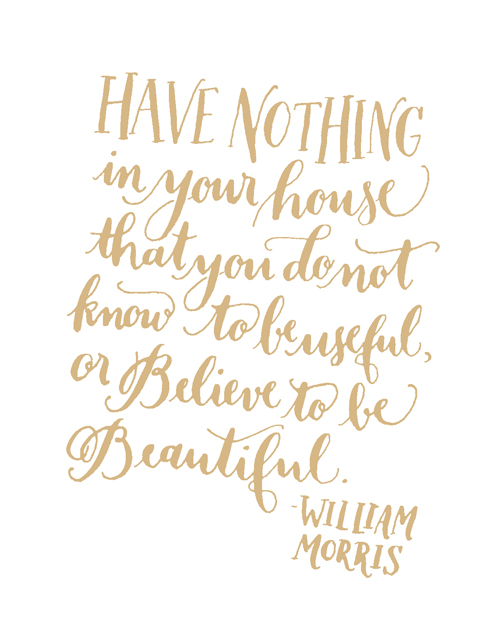
 

Have nothing in your house...Think of accessories as jewelry for your home and go bigger than you think. Done right, they can take your decor palette to the next level without breaking the bank. One large object has a lot more impact than several little ones. (I have trouble with this one!) At the same time, don’t make the mistake of not layering enough. You want to incorporate enough accoutrements to make a room look finished and the best way to do so is to display them in such a way that guests get a sense of who lives there and what the homeowners find interesting. Present items so that no two shelves, tables, or countertops are the same. Rows are dull and it’s better to display personal items you’ve acquired through the years than items you just recently purchased at the nearest home store. I would say predictability is as overrated as matching.


Stick to what Designer Stan Topol describes as “the unassuming over the conspicuous and the tried-and-true over the latest flash in the pan. It’s far better to have one exquisite item in a room than a half dozen of lesser quality.”


Another tried and true rule of thumb is to group similar objects. Old paintings scattered around the house will look dated, but a grouping of them could be interesting. Same with anything you collect. Keep it all tasteful though and think odd numbers. Display three similar articles, not two or four.


house-without-booksTwo other things I’m obsessed with are lighting and books.


In our new home I chose two lantern-style fixtures for over our kitchen island rather than the customary and suggested three small pendant lights. The lanterns weren’t even intended for this use but I LOVE them and am so happy with them! What I’m not a big fan of is overhead lighting. Give me lamps and give me lots of them.


I also like lots of books. In my dream home I’d have a mahogany library with rolling ladders and I encourage you to have books and have them everywhere. Coffee table books, cookbooks, shelves of books. I don’t care that most people read books on their tablets now and print recipes off the internet, books are actually one of my favorite accessories. Nothing says a life well lived like real books.


Other tips include hanging mirrors everywhere and incorporating real plants and fresh flowers in several rooms. I particularly love a real plant in the master bedroom, which can give it a sort of spa appeal and nothing brings cheer to a room more than a vase of fresh flowers. Treat yourself to them often!


Photos are also inviting, but don’t go overboard. Frame them elegantly, display them tastefully, and then let your home showcase your family’s journey through artful photos that tell your story.


Lastly, spend money on things you will have for years like sofas and beds. When it comes to things like lamps and coffee tables, which you may change out more frequently, less expensive is perfectly fine.


Perhaps the most important thing every home needs is personality. Yours! I’m a fan of Edie Wadsworth who encourages the finding of peace, purpose, and passion. She also encourages finding them your way and says:


“I don’t follow decorating rules. If I love something, then I’ll find a place for it in my house. Life is too short to follow the rules.”


Sounds like good advice. I’ll try my hardest to follow certain décor standards all the while following my heart at the same time.


A Cross to Bear August 21, 2016

Filed under: Uncategorized — carlawordsmithblog @ 4:08 pm

cross


I learned something today in mass about the cross that, in all my years of being Catholic, had never heard before. A special presentation on stewardship mentioned the idea that the vertical portion of a cross symbolizes our connection to God in heaven while the horizontal part symbolizes our relationship with others. In other words, we focus on God above while reaching out to others.


Love it. Blogging it.


Ironically I also learned something else about the cross this past week that I’d never heard. Many believe the popular and traditional style of a “six panel door” gets its distinct look courtesy of a cross and an open bible. Originating back in the 1700s, the door’s top four panels represent a cross while the bottom two represent an open bible. Reading this, I knew I had to look further into it.


Sure enough, I ran across an article on the “Historic House Blog” that explained this legend.


6 panel door with cross

Apparently during the Georgian period in America, a new door was designed using a frame and panels. The door, today called a “six panel door,” is still the most popular style of door in the country. These doors generally consist of two vertical stiles running the length of the door and are connected by horizontal rails. The frame is then filled with “floating” panels that fit into the grooves of the stiles and rails. Dealing with the menacing issue of wood swelling and leaking, 1700 engineers designed this door to minimize swelling and shrinking and increase security and durability. In a word, it was brilliant.


The entry and exit masterpiece is also sometimes called a “Cross and Bible door” or a “Christian Door” because if you look at one you can see how the framing of the door’s upper portion can outline a cross while the lower two panels could be envisioned as an open bible. Not everyone buys into this folklore, but I love six panel doors, I love Georgian and Federal architecture, and I love the cross and the bible so I’m a believer!


The cross is probably the most powerful symbol in all of Christianity. We see them in our churches, on top of our churches, on the backs of our cars, and in the jewelry and clothing we wear. An unadorned cross is common in all Christian faiths, but the crucifix is quintessentially Catholic.


Crucifix

A crucifix is not meant to be pretty. They are painful to look at but they are meant to remind us of the suffering Jesus did for us. I personally love the “Risen Christ” cross my parish has above the altar but it is definitely not the norm. In addition, all Catholic parishes worldwide depict the Stations of the Cross inside and often outside of the church.  But why; why a cross?


First of all the cross symbolizes suffering; the suffering Jesus endured for us. By “taking up the cross,” we surrender our wants and needs to God, accept our burdens with faith, and we show reverence for what our Lord did on our behalf. He died for us. We can certainly humbly withstand our sufferings in His name.


In the same vein, the cross symbolizes death; a death we are encouraged not to gloss over or hide. It is our hope that when we die, we will be raised by the cross and live eternally in heaven.


Of course, the cross is also about hope and life. On Easter Sunday we celebrate Jesus rising from the dead after dying on the cross, giving us hope and giving us strength.


Practicing Christians should identify with the cross. It is our calling to live as Christ did and by church doctrines. It is our faith, our identity, and our symbol to the world that we are followers of Christ. By professing this faith, our words and our actions should be guided by the cross.


 “Whoever wants to be my disciple must deny themselves and take up their cross daily and follow me.”

Luke 9:23


But why on earth are Catholics forever making the Sign of the Cross? I grew up doing so not only before and after praying and during mass, but also when I drive past a Catholic church or when I hear a siren.


Making the Sign of the Cross may be the most common of all Catholic actions and is done often. We do it when we pray, when we enter and exit a church, and all during mass. It is a way of professing our belief in the Holy Trinity: the Father, Son, and Holy Spirit. By marking our bodies with it, we mark ourselves as Christians, proclaim our discipleship, and declare that we truly belong to Christ. It’s important to note that the Sign of the Cross is not simply an action but a prayer itself.


Cross in clouds

The Sign of the Cross is also sacramental, as it is used in baptism and links us forever to the body of Christ. But, it is not unique to Catholics, as many would have you believe. Used by Episcopalians, Lutherans, Methodists, and Presbyterians during baptisms and other ceremonies, the sign was even encouraged by Martin Luther who recommended doing so first thing in the morning and at bedtime. In addition, Eastern Christians, both Catholic and Orthodox, employ the practice, albeit in reverse the order, touching their right shoulder on the word “Holy” and their left shoulder on the word “Spirit.”


Lastly, during a Catholic mass, an ancient Jewish tradition is performed. Parishioners often make three little cross symbols on their forehead, their mouth, and their chest right before the gospel is read. This comes from the Jewish custom of honoring scripture that says, “May the word of the Lord be in my mind, on my lips, and in my heart.” It’s one of my favorites.


“At the foot of the cross, we are all equal.”


Catholics also put it into practice before, during, and after all masses. As we enter a church, using holy water to make the Sign of the Cross declares that we are baptized, ready, and willing to participate in the miracle of the mass and doing so upon leaving mass says you will take the mass with you as you go about your day.


It’s not unique to places of worship. Who hasn’t seen an athlete cross him or herself before or after a competition or witnessed it time after time in movies? It is holy and it is cultural.


So the next time you see a cross, think about what it really means. Yes it means “I’m a Christian!” but it means so much more. You may never look at a door the same way.


Spice Things Up August 20, 2016

Filed under: Uncategorized — carlawordsmithblog @ 1:35 am

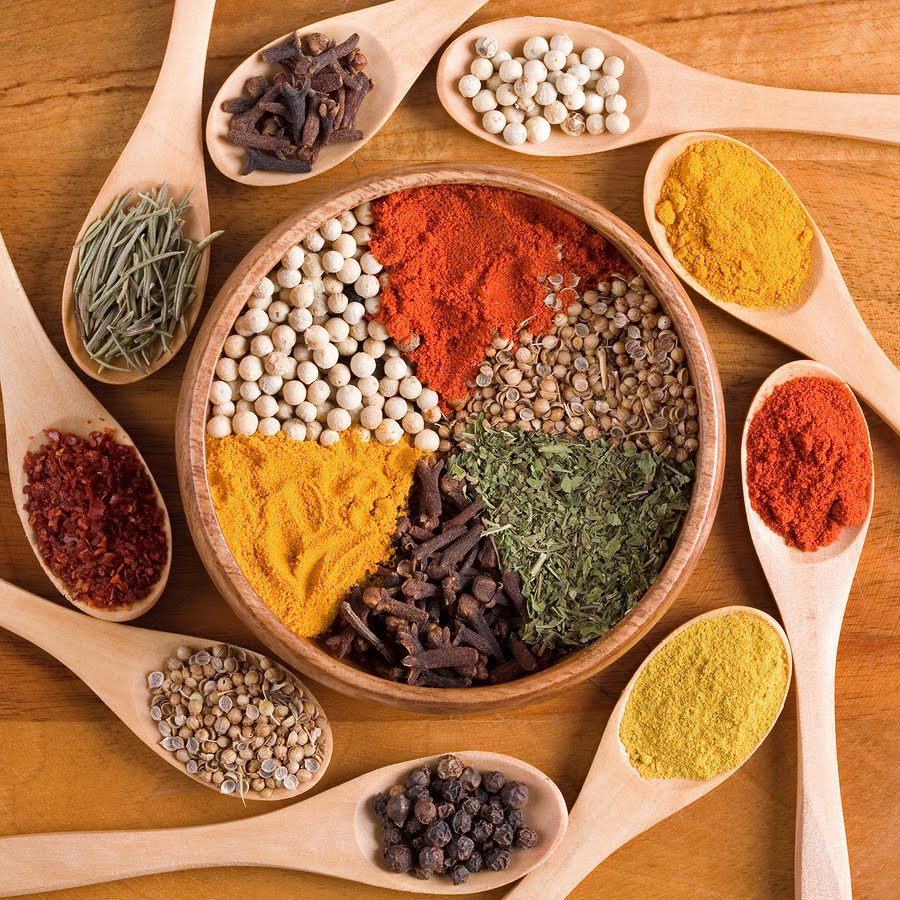
Spices and Herbs


While enjoying drinks and apps this past week with some friends, the topic of meal delivery companies came up. It was agreed that it’s a great idea and that if chosen correctly, the meals are actually good!


Another great thing about them is that all necessary herbs and spices for each meal come pre-measured and ready to go. We talked about deciding what to make for dinner each night and the horror of coming across a recipe that requires several if not many herbs, most of which you probably don’t have in stock or if you do, the stock is old and outdated because you use so little of it and so infrequently. To, excuse the pun, add salt to the wound, spices are expensive!


With so many herbs and spices to choose from, I thought a handy-dandy; clip-and-save guide was called for. There are way more spices than the four Simon and Garfunklel sang about and Christopher Columbus would be amazed that today’s grocery stores often have an entire aisle devoted to the things he travelled the world in search of. I loved researching the topic and hope you enjoy reading and learning from it. Bon appetite!


Spices

ALLSPICE

A pea-sized fruit that grows in Mexico, Jamaica, Central and South America, allspice has a delicate flavor that resembles a blend of cloves, cinnamon, and nutmeg. It’s best used in pickles, meats, boiled fish, gravies, puddings, relishes, fruit preserves, and general baking.


ANISE

A beautiful star-like spice, anise is a flowering plant native to the eastern Mediterranean region and Southwest Asia. Most known for its licorice flavor, anise also has similarities with fennel. It is commonly used in alcohols and liqueurs such as anisette and ouzo, and is popular in holiday baked goods, candies, and breath fresheners.


BASIL

The dried leaves and stems of an herb grown in the U.S. and North Mediterranean, basil has an aromatic, leafy flavor with hints of pepper, cloves, anise, and mint. Use it in pesto, tomato dishes, soups, and on squash, lamb chops, and poultry. Dried basil is more pungent than fresh, but fresh leaves turn black quickly so use them right away.


BAY LEAVES

The dried leaves of an evergreen from eastern Mediterranean countries, bay leaves are sweet, herbaceous, and floral. I use them each year in my Christmas Potpourri gifts and they are also good for pickling; in stews, sauces, and soups; and also on meats and fish.


CARAWAY

The seed of a Dutch plant, caraway’s flavor combines anise and dill. It is great for baking breads; in sauerkraut, noodles, and cheese spreads; and it adds zest to French fries and asparagus.


CILANTRO

Anybody who knows me knows I hate cilantro but it’s a popular (and in my opinion, waaaay over-used,) herb so I will include it here. Just know that if you ever make a dish to share with me, make it sin cilantro! Cilantro is also known as coriander and Chinese parsley in other parts of the world and is traditionally added to Tex-Mex and Asian dishes. This pungent, grassy-flavored herb is now thrown in nearly everything. It’s said the Julia Child considered cilantro “the devil’s herb,” and I couldn’t agree more.


CINNAMON

Cinnamon is obtained from the inner bark of cinnamon trees and used in both sweet and savory foods. The term “cinnamon” also refers to its mid-brown color. Cassia is the strong, spicy flavor associated with cinnamon rolls and other such baked goods and it handles baking conditions well. Ceylon cinnamon has a lighter brown color; a finer, less dense and more crumbly texture; and is considered to be subtler and more aromatic.


Cinnamon is most popular in dessert recipes and as a drink adornment. Available both ground and in stick form, the popular spice also has many healing properties and is great as a room deodorizer. Today Mexico is the top cinnamon importer.


CLOVES

The aromatic flower buds native to Indonesia, cloves are regularly used in Asian, African, and Middle Eastern cuisine. I also use cloves in my Christmas Potpourri gifts and they lend flavor to hot drinks, meats, and marinades. They can also be used to enhance apples and pears and are known to have antioxidant qualities.


CUMIN

Cumin comes in both ground and whole seed form and adds an earthy flavor to food. It is excellent in stews, soup, chili, gravy, and achiote blends. The seed comes from a flowering plant in the Eastern Mediterranean and is part of the parsley family. Cumin seeds are often mistaken for caraway seeds as the two share an oblong shape and coloring. Also used as a medicinal plant that has been around for centuries, mention of it can be found in both the Old and New Testaments.


CURRY POWDER

It bears clarifying that there is no spice or herb called “curry.” Curry is actually a popular Indian cooking method and the term is generally limited to dishes prepared in a sauce with leaves from a curry tree.


Curry powder, on the other hand, is a spice mixture developed by the British and usually contains turmeric, coriander, cumin, and mustard. You can identify this type of curry dish by its trademark yellow color. By contrast, curry powders and curry pastes produced and consumed in India are extremely diverse; some red, some yellow, some brown; some with five spices and some with as many as 20.


DILL

Boasting a clean, aromatic taste, dill is the seed of the dill plant grown in India. It is often the predominant seasoning in picking recipes and adds a nice flavor to salmon, sauerkraut, potato salad, green apple pie, and cucumber salads. Dried is not very flavorful so use fresh whenever possible.


GINGER

The root of this flowering plant is part of the turmeric family and originated in the Southern Asia rainforest. It is a hot, fragrant spice and is that pinkish-salmony colored item you see served next to sushi. Ginger is a common ingredient in Indian and most Asian recipes and fresh ginger root is a nice additive to seafood, meat, and vegetarian meals. Powdered ginger is what’s used in gingerbread, cookies, crackers, ginger ale and ginger beer. Ginger is also a popular digestive aid and fresh pieces of ginger root can be wrapped in plastic and stored in the freezer for up to three months.


MARJORAM

Grown mostly in France and Chile, marjoram is from the mint family and has a sweet-minty taste. It’s used in drinks, jellies, lamb, and to flavor soups, stews, fish, and sauces.


NUTMEG

Known to induce sleep and possessing anti-inflammatory qualities, nutmeg is the seed of an evergreen tree indigenous to the Indonesian Spice Islands. Usually used in a powdered form, it enhances many dishes, including soup, gravy, beef stew, minced meat, rice pudding, and chutney. It’s sweet and savory flavor is a favorite in the U.S. for pumpkin pie as well as sprinkled on top of drinks like egg nog and rum punch.


OREGANO

Another plant of the mint family and a species of marjoram, oregano’s dried leaves are great in herb dressings and dips. It’s also a long-time kitchen favorite in tomato and chili dishes, pizza and Greek and Italian specialties. Oregano is a great anti-fungal and anti-oxidant, with one teaspoon having as much anti-oxidant makings as one apple. Dried has a stronger flavor than fresh and it can be used in place of marjoram.


PAPRIKA

A mild, sweet red pepper from Spain, Central Europe, and the U.S., paprika is both aromatic and prized for its brilliant red color. Use it to garnish pale dishes, salad dressings, hard-boiled eggs, and for seasoning chicken.


PARSLEY

Recognized as the traditional but unused table garnish, parsley is the world’s most popular herb. It is widely used in European, Middle Eastern, and American dishes such as mashed or boiled potatoes, risotto, tabouli, pesto, goulash, and as a rub for chicken and meat dishes. Flat leaf parsley is used for cooking while the curly version is what you see used for garnish. Sprinkle on at the end of cooking to give your dish a delicious and vibrant taste. A relative of celery, parsley is also highly nutritious and has wonderful healing properties and is a great source of folic acid and vitamins K, C, and A.


PEPPER

Salt’s proverbial buddy and the world’s most traded spice, black pepper comes from a woody vine and is native to India although Vietnam is currently the world’s largest pepper producer and exporter.


White pepper consists of the seed of the pepper plant alone and has a slightly different flavor than black pepper. It is often used in cream sauces, Chinese and Thai cuisine, salads, and mashed potatoes.


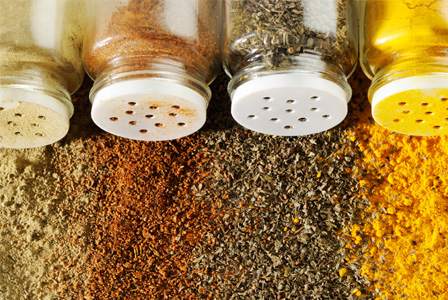
Pepper should be stored in airtight and dark containers and areas, as it loses its flavor and aroma through evaporation and when exposed to light. Most experts recommend using whole peppercorn in peppermills rather than shakers and suggest grinding whole peppercorns immediately before use.


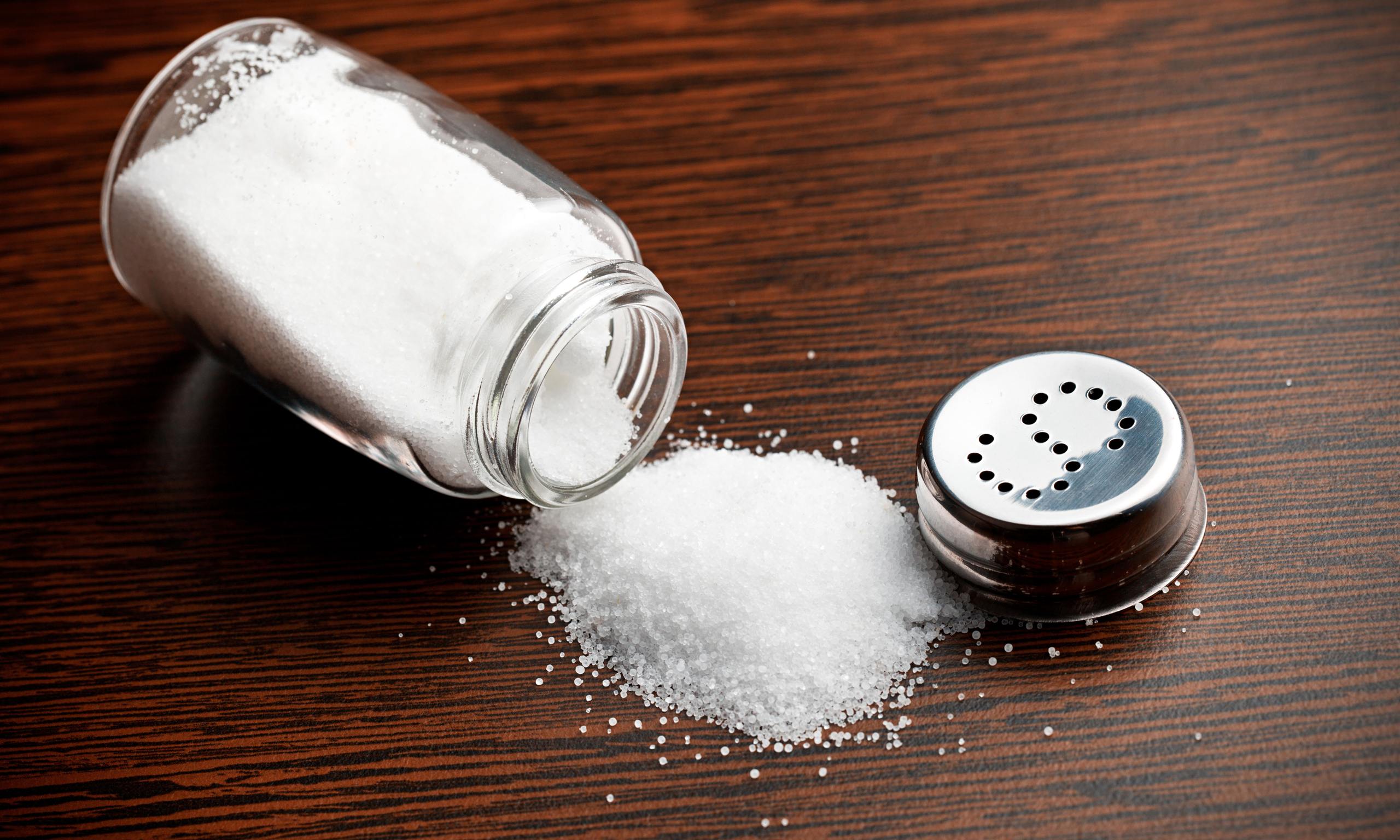
If you come upon salt and pepper shakers without a “P” and an “S” on them, the one with fewer holes at the top is usually salt, as you should use less of it in food.


PEPPERMINT

Peppermint is actually a hybrid cross of watermint and spearmint and is an ingenious plant in Europe and the Middle East. The plant produces no seeds but can grow virtually anywhere. It’s usually used raw and the leaves are often used in tea, chewing gum, and toothpaste.


When a recipe calls for “mint,” spearmint and peppermint can be used interchangeably. Peppermint has a sharper flavor, while spearmint tends to be more delicate and sweet. Use peppermint in savory dishes like salads and vegetables, but spearmint in richer dishes like gravies and sauces. Either are fantastic rubs for lamb. It is one of my favorites, great for belly aches, can reduce fevers, and is known to renew energy.


POPPY SEED

The ingredient in one of my favorite salad dressings, poppy seeds come from a flower grown in Holland. They have a nut-like flavor and are great for topping breads, rolls, and cookies and are also delicious in buttered noodles.


ROSEMARY

I have a giant rosemary bush in my backyard and my dog often comes in smelling like the fragrant, pine needle-like herb. Grown in France, Spain, and Portugal, rosemary has a piney bittersweet taste and is great in lamb dishes, soups and stews; and sprinkled on beef. It is also a beautiful landscape item. Dried Rosemary is as good as fresh but if you use fresh, be sure to crush the needles to release their scent and flavor.


SAFFRON

Often considered the world’s priciest spice, saffron is native to Southwest Asia but today almost all saffron is grown in a belt from Spain to India and Iran accounts for nearly 90 percent of world production. The spice is highly-regulated with quality control measures and real Spanish-grown products are protected against other countries undermining its genuine brand and rightly so, as the hay-like and sweet flavor of true saffron is key to perfect and authentic paella. Saffron sells for around $5,000 a pound so when you buy it, you do so in very small quanties of delicate red threads. Saffron starts as a purple flower and adds a rich golden-yellow hue to dishes. Expensive to buy, it can be substituted with safflower and turmeric but never truly replaced in dishes like paella and French bouillabaisse.


SAGE

The leaf of a shrub grown in Greece, Yugoslavia, and Albania, sage has a mild minty flavor. Use it for meat and poultry stuffing; and in sausages, meat loaf, hamburgers, and stews.


TARRAGON

Used in mayonnaise-based dressings and sauces, this peppery herb is also good in sautés of chicken, fish, and seafood. It can have a bittersweet flavor with hints of licorice and vanilla and should be used sparingly since its flavors can quickly overwhelm a palette.


THYME

Also the leaves of a shrub, this one from France and Spain, thyme boasts a strong and distinctive flavor that is both pungent and lemony. It’s best reserved for poultry seasoning, croquettes, fricassees, and fish dishes. Its flavor stands up to long cooking and thyme is also a natural cough expectorant.


TURMERIC

A root of the ginger family, turmeric has a mild, gingery pepper flavor that is both warm and bitter. Grown in India, Haiti, Jamaica, and Peru, it is the main spice in curry dishes. It is commonly used in Asian food and often blended with mustard to flavor meats, dressings, and salads. It’s also frequently sourced to flavor or color curry powders, butters, and cheeses. The root of turmeric is also used widely to make medicine and is thought to be a good anti-inflammatory.


Salt

PASS THE SALT

Although salt is a mineral not a spice, I’m including it here because it is used in so many dishes and some consider it a chef’s most important tool second only to a knife.


Salt is essential for human life and saltiness is one of the basic human tastes, along with sweet, bitter, sour, and delicious. Although widely-used, excessive salt consumption can increase the risk of cardiovascular disease. Keep in mind that one teaspoon of salt has 2,300 mg of sodium and that the FDA suggests a maximum of 2,400 mg of salt per day.


The three most widely-used salts are table, kosher, and sea salt and, although their chemical make-up is the same, each one’s texture and density differ.


Table Salt. Table salt is mined from underground salt deposits and consists of fine, evenly shaped crystals and it is denser than other salts. It’s the most widely-used salt and is best for exactly what its name implies – sitting on the table for personal meal enhancement – but it is also good in pasta dishes and soups. Table salt comes both iodized and without added iodine. Iodized table salt is known to prevent thyroid goiters and has significantly reduced disorders of iodine deficiency in countries where it is used.


Kosher Salt. Kosher salt is less refined than table salt and boasts big, coarse flakes. It does not contain iodine and is often considered the most versatile salt. Some but not all kosher salt meets certain and strict requirements, meaning it is produced under conditions approved by Orthodox Jewish law. It’s a good choice to rub on meats to seal in their juices and is recommended for scouring stubborn food particles off of cast iron. If you want to only use one type of salt, I recommend kosher, as its course texture impressively enhances flavors.


Sea Salt. Sea salt flakes are collected from evaporated seawater and are typically unevenly shaped. The more expensive of the three salts, it is best used for finishing purposes and you want to use it with caution.


One other salt worth mentioning is Pickling Salt, which is ultrafine, dissolves quickly, and is great when making brine.


Storing spices

STORING

How and where you store your spices is as important as how you use them. We buy ginger and nutmeg during the holidays and rarely use them again. But, the experts at McCormick & Co. say the shelf life of properly stored spices and herbs is around four years for whole spices, two-to-three years for ground spices, and three years for leafy herbs. Smell your spices for freshness. No scent or a bland smell means it’s time to toss them.


One more tip: one tablespoon of fresh herbs is equivalent to one teaspoon of dried.


Happy and flavorful cooking!


Hats Off To Summer August 12, 2016

Filed under: Uncategorized — carlawordsmithblog @ 11:51 pm

Floppy2

I just completed a friendly texting competition with a friend on whose Texas city was currently hotter…not in popularity, but in temperature. Her “current temperature” of 106 topped my 102, but my “feels like” temp of 113 topped hers. Yep, 113! The thermometer might as well just read “too damn hot!”


These are the long, hot dog days of summer when I avoid being outside at all costs, but if I need to be three things are must haves: sunblock, lightweight clothing, and a hat. I’ve always been a hat girl and since I’m growing my hair out, I’m thrilled that I can now put it in a ponytail, (albeit a tiny one!) which means I can wear a baseball cap without looking like a boy. Yay me!


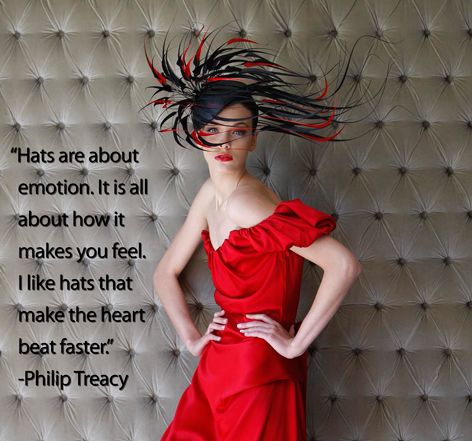
Philip Treacy


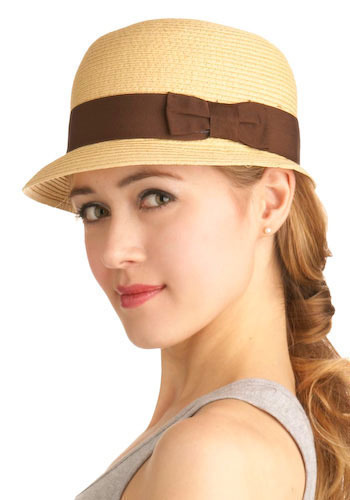
Baseball caps are all fine and good when playing golf, boating, or some other sporty activity, but for women ixnay on the ballcapays unless you just have bad hair and are out running a few quick errands. With so many styles of fun and fashionable hats out there, why settle for something a boy can also wear?


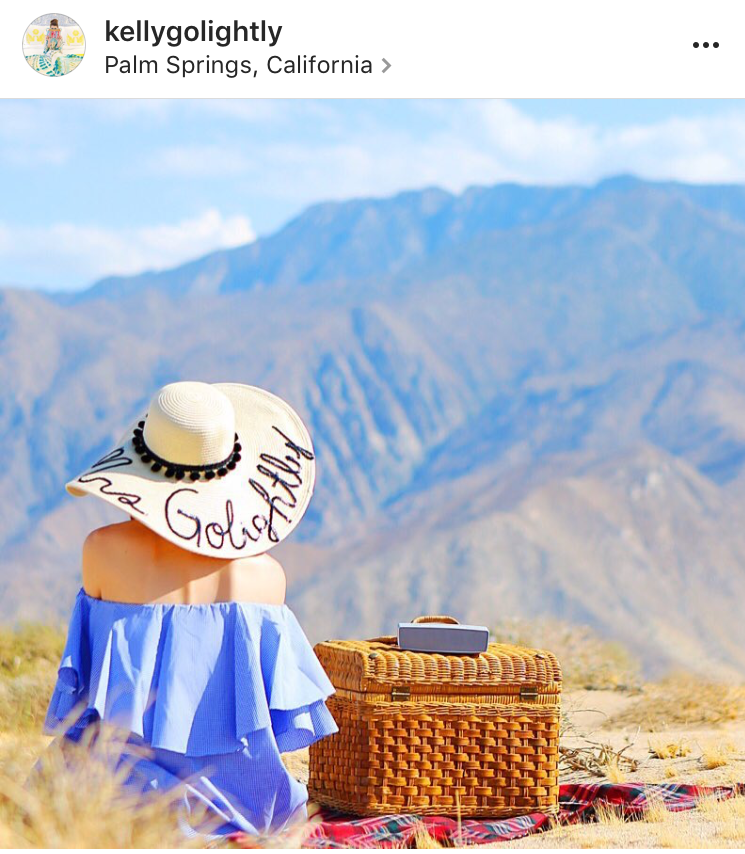
One of my favorite bloggers and fashionistas, Holly Golightly, is big on hats and can pull them off like nobody’s business. Holly lives in Palm Springs and who knows heat better than those in Palm Springs? Hers was the first Eugenia Kim embroidered hat I saw and, although I don’t live the lifestyle that could pull one off, I find them so festive and fun.


Kelly Golightly

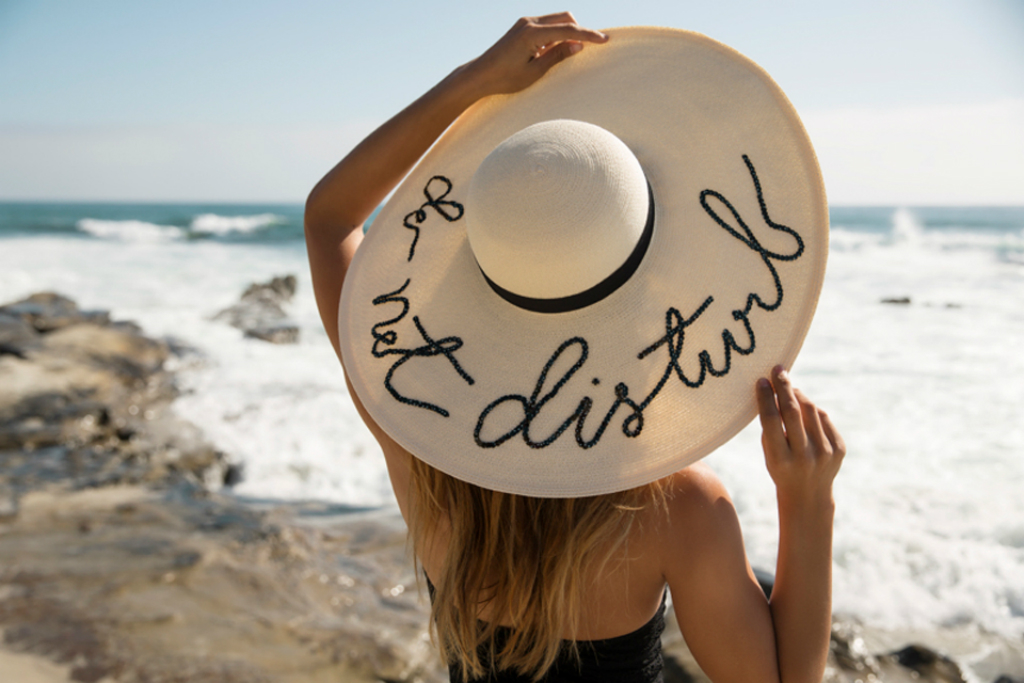
Eugenia Kim


Kim is the current milliner of choice to the stars and recently spoke to Marie Claire magazine about how to pick that perfect hat.  It was a fascinating discussion on way more than just fascinators!


“It’s all about proportion and finding that sweet spot that brings harmony to the face,” she explained. “If your face is small, don’t overpower yourself with too wide of a brim. If your face is large, look for styles with more width.” In short, size does matter!


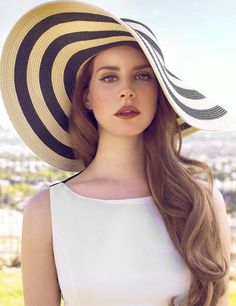
It should go without saying that if you’re sporting a chic hat, leave the bright prints and statement jewelry at home. Hats alone make a big statement so let them do the talking. Other rules instruct that a hat should sit comfortably on your forehead, your bangs should be pulled back, and as a woman you don’t need to remove your hat indoors unless it obstructs people behind you. Also, do your best to match your sunglass style to the feel of your hat. Aviators probably shouldn’t be worn with a formal topper while “look at me, look at me” sunnies look just silly with a ball cap. I personally I love a bold lip on a woman who can pull off the perfect hat look as well as any hat coupled with a low pony. Sleek and sophisticated.


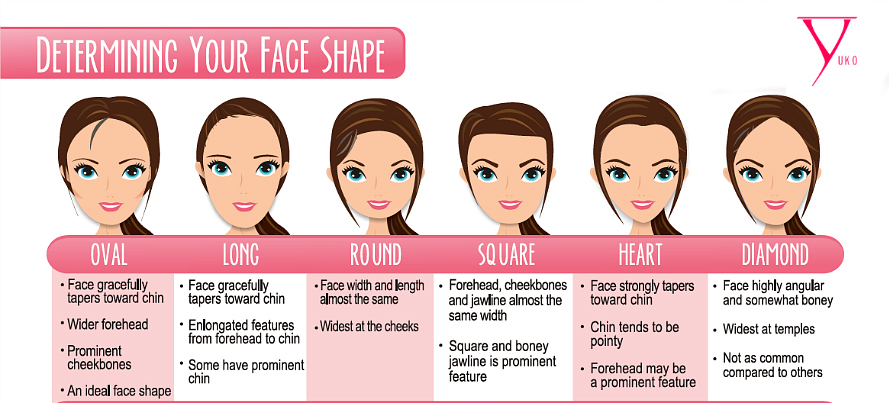
Face shape

So what kind of hat can you stylishly pull off? It all depends on your face shape and then finding one that both suits you personally and fits your lifestyle. And what if you’re not sure what shape your face is? The above should help you out.


Fisherman cap1   Boater1

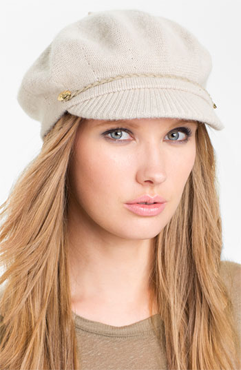
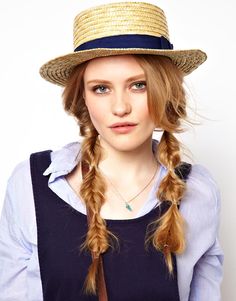
Oval faces have it made, as they can pull off almost any style of hat, including trendy and cool fisherman and boater style caps. Options are virtually limitless for you so your selection can be based solely on personal choice.


Newsboy     Fedora-Hats-for-Women

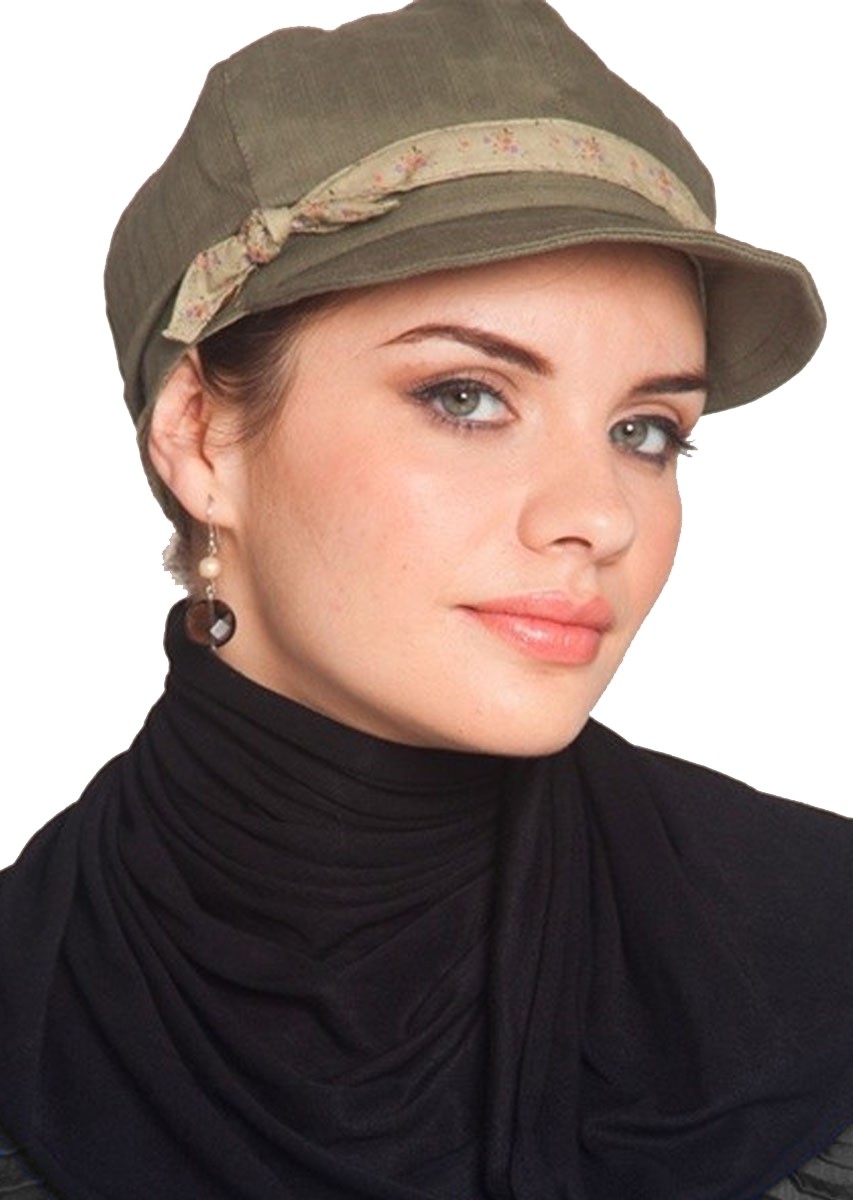
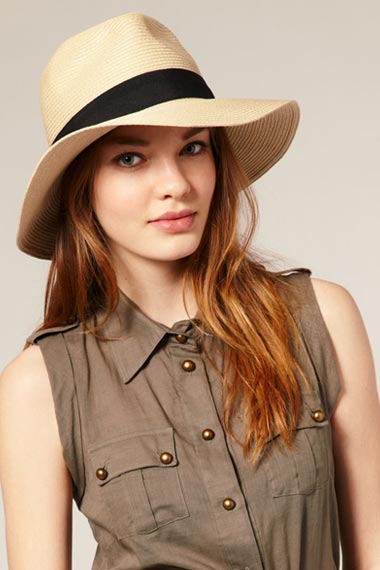
If you have a round face you want to avoid anything low to the head or rounded and look for something that has sharp lines and a tall crown. To add a more balanced proportion to your face, choose a hat with an asymmetrical brim or wear the brim slightly slanted.  Your goal is to create length and a newsboy or long-rimmed fedora can help you reach that goal. Think more Indiana Jones and less Indiana basketball.


Womens-Cloche-Hats Bucket1 Crusher

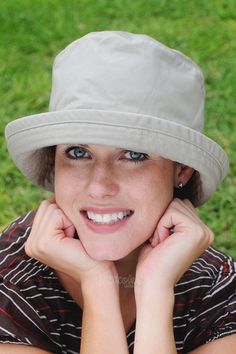
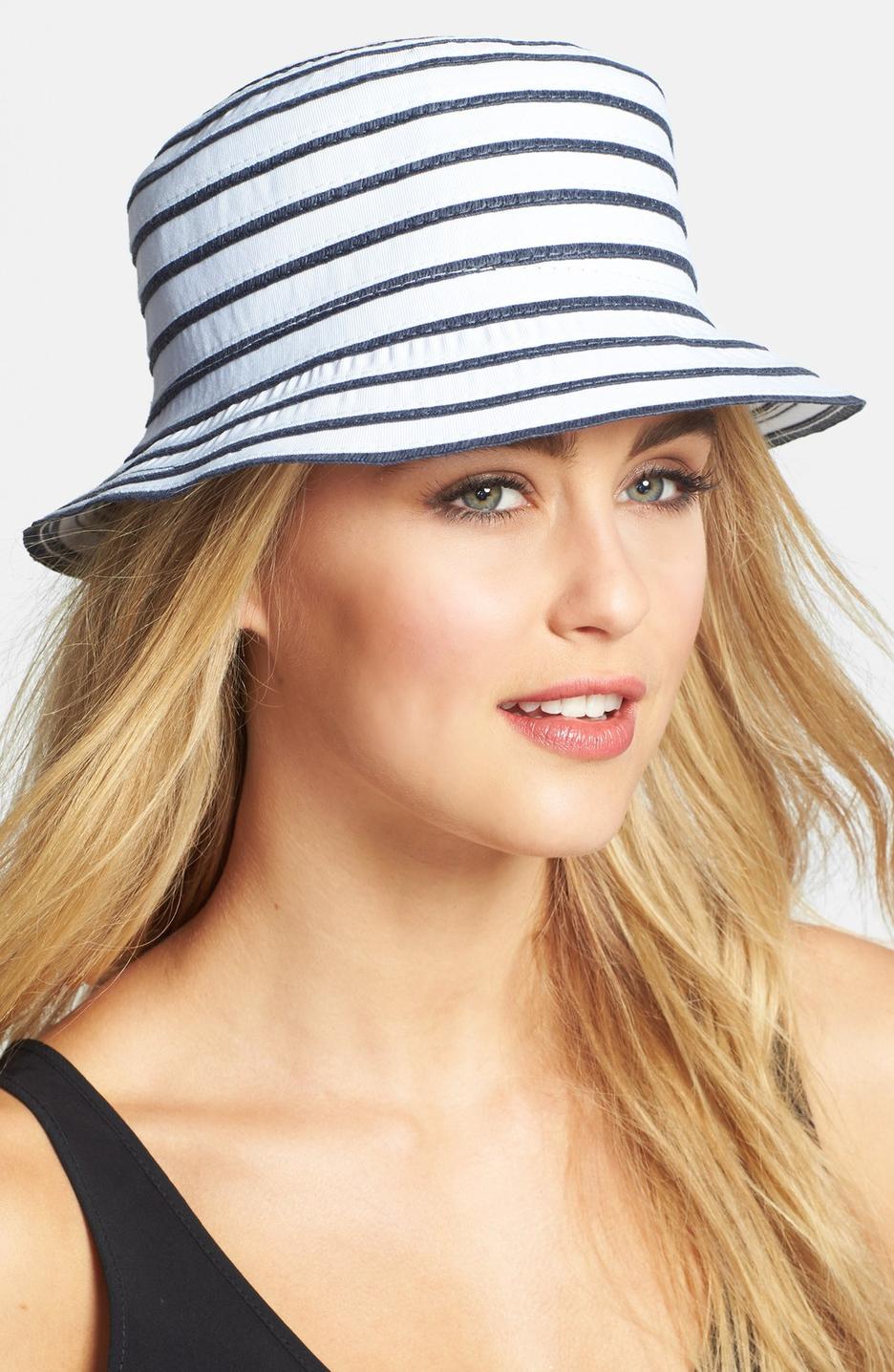
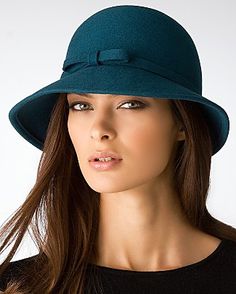
On the opposite end of the face shape spectrum are those of you with oblong or long faces.  Styles that work for you and help add width to your face and shorten your crown are cloches, crushers, or bucket style hats. Hats with wide brims that can be turned down are also winners. Losers are hats that are tall or sit high on your crown. Long-shaped faces should favor crowns deep enough to cover your forehead.


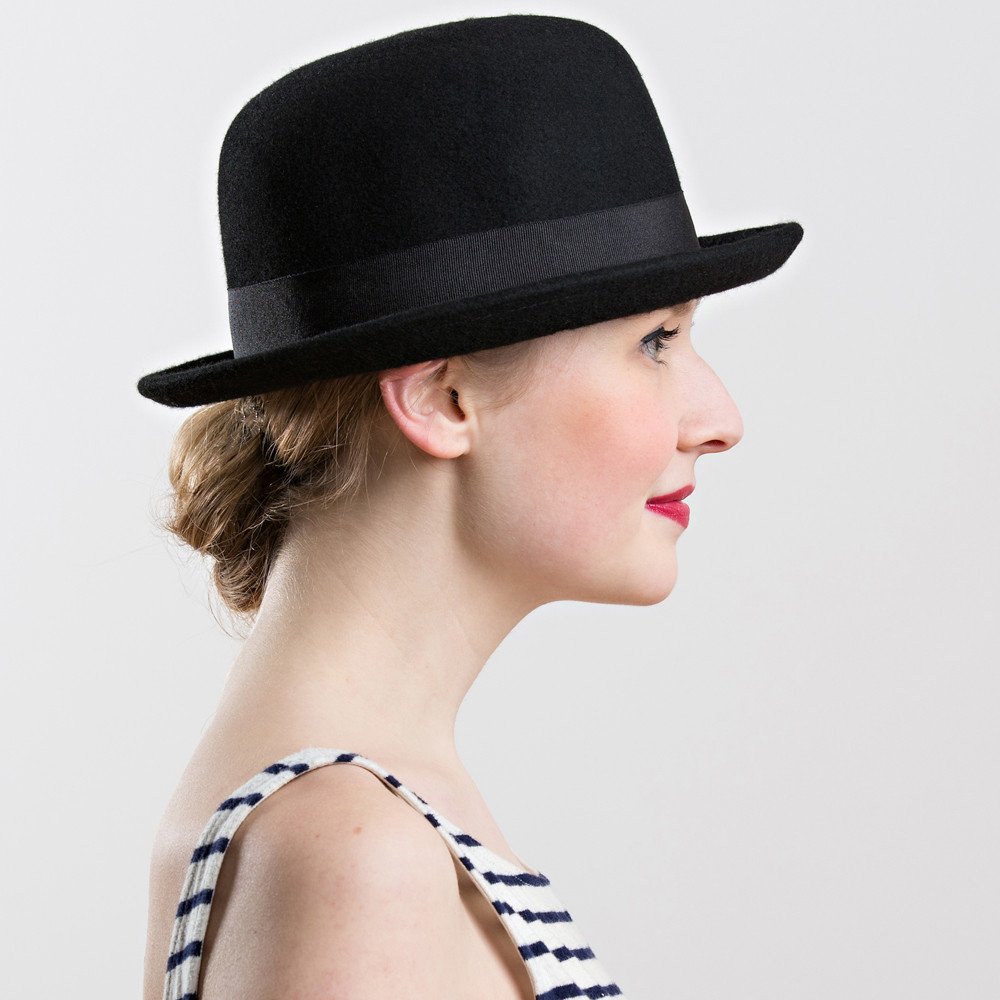
Floppy   Cloche  Bowler1

Square faces need a hat that will soften their hard angles and prominent jawlines. Think curvy like floppy hats, cloches, bowler hats, and even beanies to help round out the crisp lines of your features.


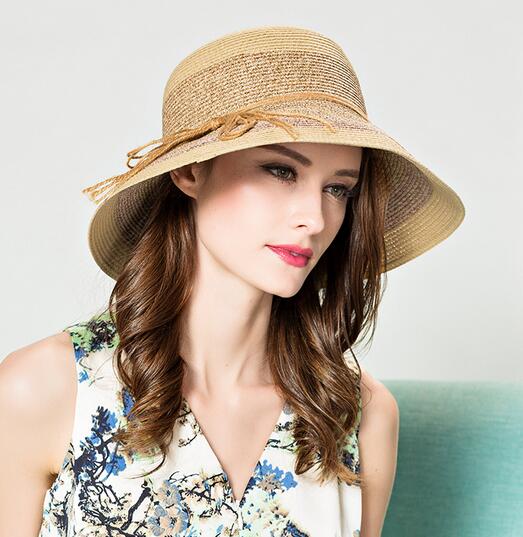
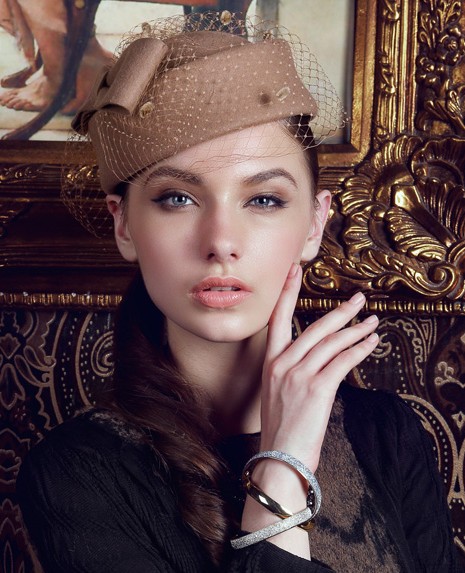
elegant-bow-spell-color-sun-hat-women-summer-beach-straw-bucket-hats29034 Pillbox formal

Last but not least, heart shaped beauties have a love/hate relationship with their large foreheads so look for toppers that make it look more narrow. A brimmed hat of almost any style will accomplish this, especially one with a medium-sized brim. Cloches and Pillbox hats also work well.


girls

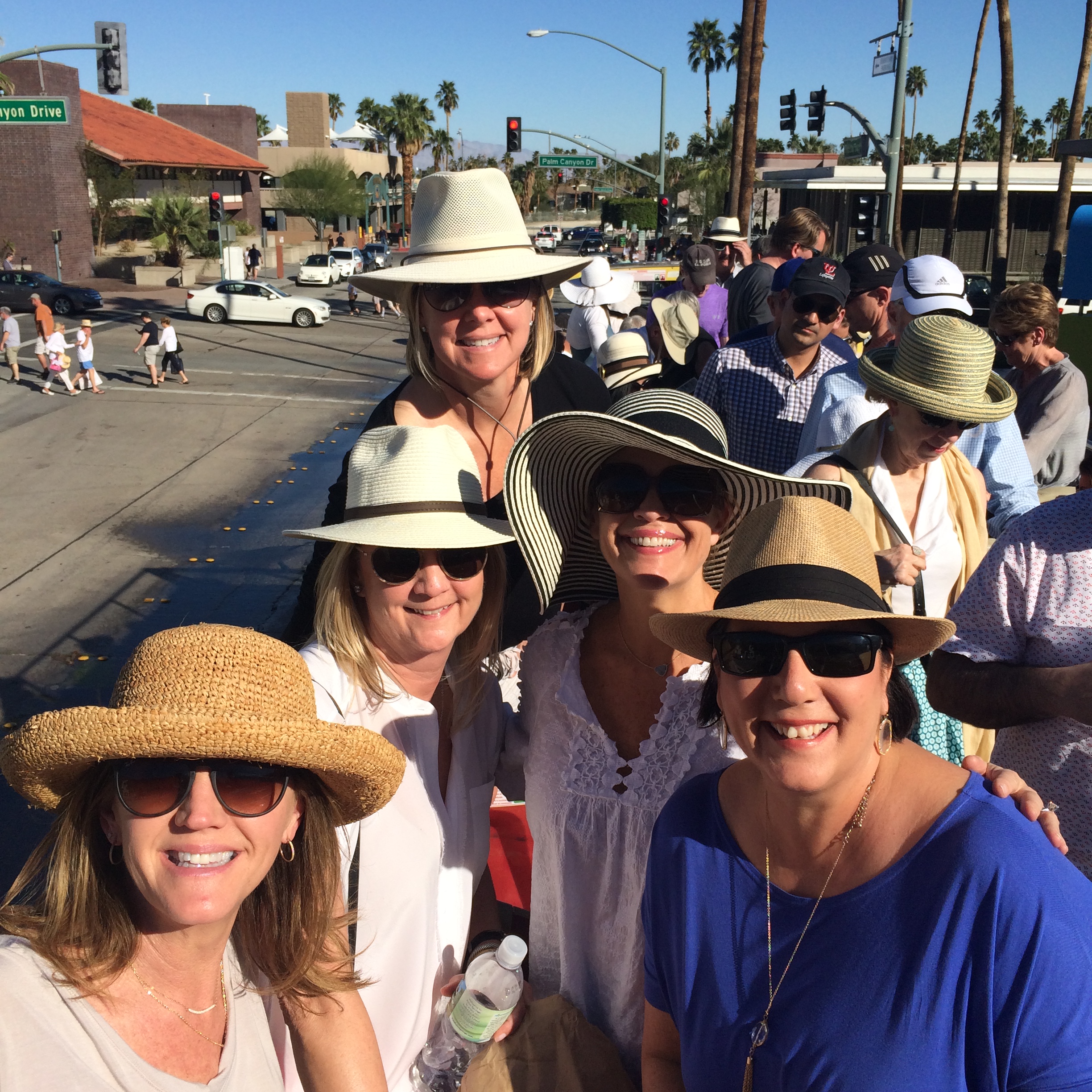
Like I said earlier, I love hats and shopping for them can be so much fun. On my recent college girls trip to Palm Springs we visited a hat store and had a blast picking out one for each of us. Did we make the right choices based on our face shapes? Who knows. Maybe we should have just all gotten a crown.


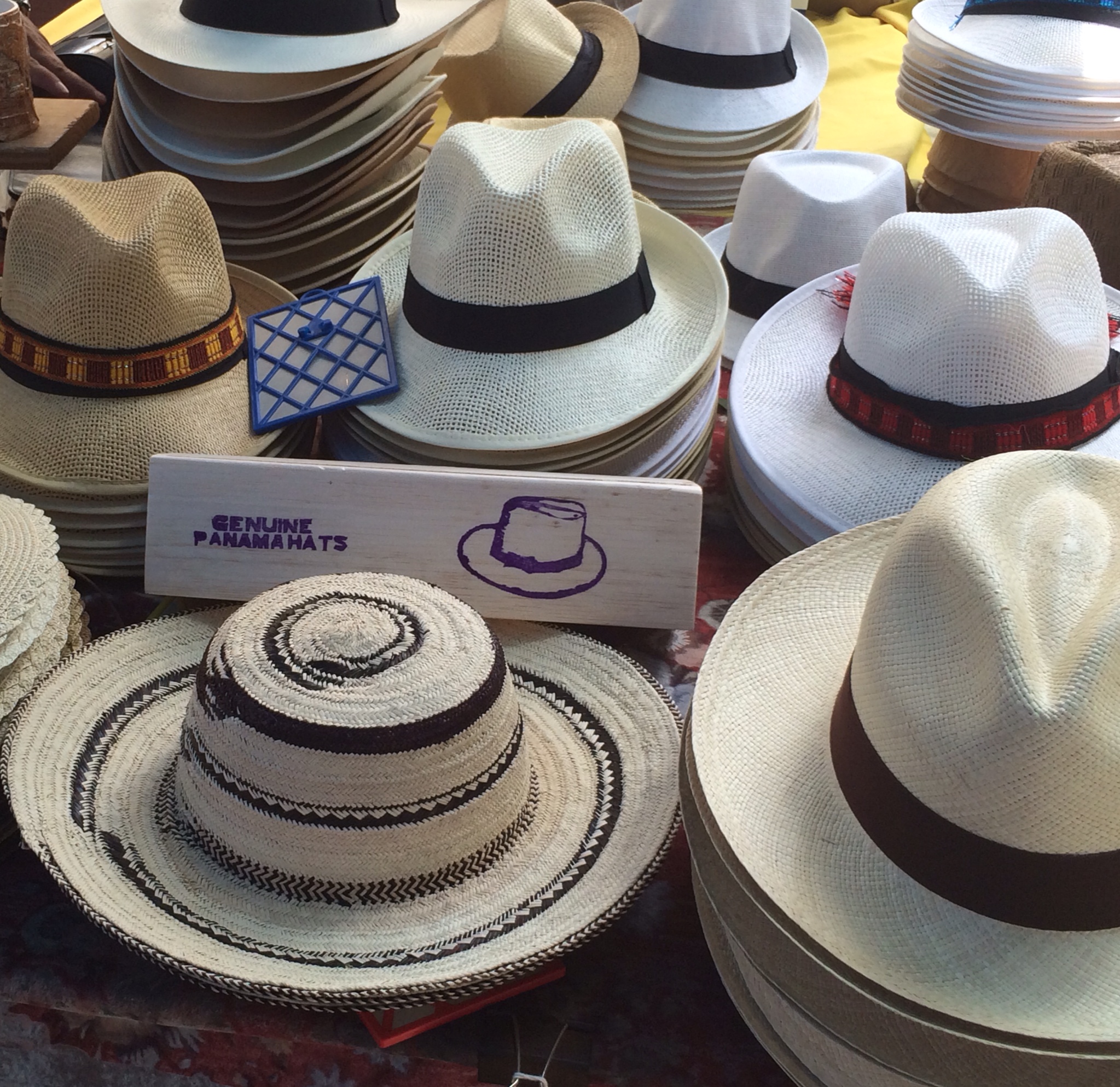
Panama whiteEver heard of the Ecuador Hat?

If you’re looking for that “one size fits all” hat, Kim suggests the Panama hat, calling it universally flattering and in essence the “LBD of the hat world.” It may be perfection, but it’s not Panamanian.


On a recent trip to Panama I learned that the iconic “Panama Hat” is actually made in Ecuador and is that South American country’s most iconic souvenir. So how did hats that have been made in Ecuador for centuries become “Panama hats?


Panama hats in PanamaTheories abound but most center around the fact that Panama’s position as a trade and transport region as early as the mid-1850s resulted in Ecuador exporting its hats to Panama to sell from there. Without today’s technology of labeling where a product is made, people assumed the hats were made in Panama since that is where they were purchased.


In addition, travelling by boat through Panama proved a shorter and easier route to search for west coast gold for many east coast Americans who, along the way, bought straw hats in the Central American country to protect them from the sun. They quickly became “Panama hats.” Years later while the Panama Canal was being built, many of the construction workers building it wore the hats because they were lightweight and breathable in the hot and humid Panama weather.


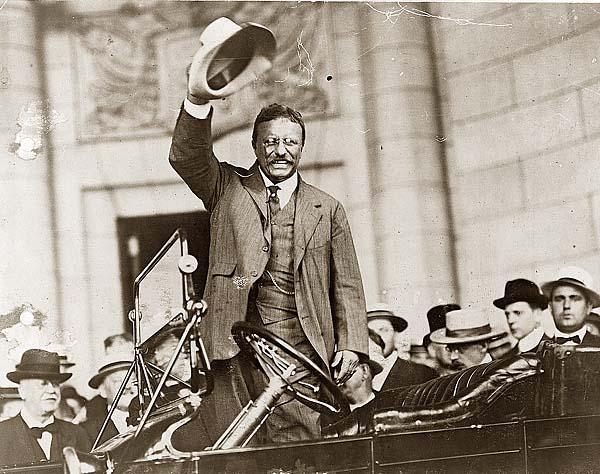
Théodore-Roosevelt-Panama1


But, perhaps the hat’s most celebrated moment came when President Theodore Roosevelt was photographed wearing one while visiting the Canal in 1906. From that point on, “Panama Hat” is the name that stuck. Teddy probably didn’t know it, but more than a bear is named after him.


I Want My MTV August 1, 2016

Filed under: Uncategorized — carlawordsmithblog @ 5:10 pm

I will officially get nothing done today. As much as I have on my “to do” list, you won’t find me packing and purging or planning and plotting, you will find me in front of the TV. Watching MTV. What is a grown woman doing watching MTV? Why, watching videos of course. Old videos.


Today marks the 25th anniversary of the legendary music television station. Once groundbreaking when it debuted with The Buggles’ “Video Killed the Radio Star” video, today’s MTV is total trash but back in the day…oh back in the day.


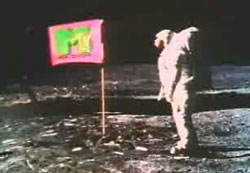
0807_mtvmoon

It all started on Saturday, August 1, 1981 with the words, “Ladies and gentlemen, rock and roll.” From there the original MTV theme song, which I can still hear in my head, was played over a montage of space-themed footage. What was dubbed as “the best of TV combined with the best of radio,” became an instant success.


Within two months, record sales soared and bands such as Men at Work and Human League, whose songs weren’t playing on the radio at the time, quickly had hits. Who can ever forget Colin Hay’s eyes as he sang “Who Can It Be?” It made stars of Devo, Hughie Lewis and the News, and Bow Wow Wow. And Tawny Kitaen and Whitesnake. It also put the font Kabel on the map, as it was used in left hand corner of every video, telling viewers the artist, song title, and album.


I remember it all like it was yesterday. The rocket ship open. The moon landing with an MTV flag. We’d all gather at my friend G. Calvin’s house between classes at OU and watch videos. Video after video after video. We’d never seen anything like it and we were in awe. There they were, all the bands and singers we loved, right on our TV and doing amazing and entertaining things. Rock on.


Madonna_-_Lucky_Star_(screenshot)

MTV is where I met Madonna. Her “Borderline” and “Lucky Star” videos changed my life. It’s also where many of us ‘80s girls learned to dance that goofy Go-Gos “swing your arms” dance move. But the Go-Gos. I mean. No one was cooler. Okay except maybe The Police in their haunting “Every Breath You Take” as Sting stared you down and played a STANDING BASS and Stuart gorgeously slammed the drums. U2’s black-and-white “Every Breath You Take” was equally haunting and brought us Bono’s amazing voice and muscles and The Edge’s amazing everything. Swoon.


MTV also brought the second British Invasion and bands from all over Europe made us say “wow!” Soft Cell (remember “Tainted Love?!”) and Madness were probably my favorites but they would probably cringe if they knew we used their hit song “Our House” as a sorority theme. Then there was “Flock of Seagulls” and their trendsetting hair as well as Aha, whose “Take On Me” video set the bar for creativity.


The videos themselves often didn’t make sense, but that was the beauty and intrigue of them. One of my favorites was Tears for Fears’ “Everybody Wants to Rule the World.” Watching it now it’s totally illogical but the memories it brings back are anything but. The opposite holds true for another of my faves, the Rolling Stones’ “Just Waiting on a Friend.” To this day when I hear it, I think of my friends Penny and Christie and can envision the video of Mick, Keith and the gang meeting each other on the steps of what is probably a New York City walk up. Simple in its depiction of good friends and powerful in that it still reminds me of mine. Girls just want to have fun, right?


“Springsteen, Madonna, way before Nirvana. There was U2 and Blondie and music still on MTV.”

Bowling for Soup’s “1985”


The videos may not have been prolific but they were original. They were also mostly free of vulgarity, unlike today’s offensive grinding videos full of video whores and hate. Yes there was “Like a Virgin,” but how tame it was compared to today’s twerk fests. Something else they were free of was politics and activism. With the exception of “women power” videos like Benatar’s “Love is a Battlefield” or Robert Palmer’s stepford wife-like “Addicted to Love,” it was a love fest. I didn’t love Duran Duran, but I loved their “Hungry Like a Wolf” video. Who didn’t?! It was MUSIC television. Just music. Imagine that.


mtv-vjs

But it wasn’t only the videos that had us at hello, there were also the VJs: Martha Quinn, Alan Hunter, Nina Blackwood, JJ Jackson, and Mark Goodman. Martha was the cute and quirky one, Alan and Nina were the hotties, while JJ and Mark were just plain cool. They didn’t try too hard and we loved them all.


It’s funny to watch it all today. In the videos you see pay phones, shoulder pads, and bad animation. Think about it all you tweens and millennials though, it was like having YouTube on your TV 24 hours a day and playing only music videos. No dumb shows, no contests, no nothing…just the music and the artists you love all day every day. It was pure heaven. I want my MTV. How it used to be and just for today.


Take a Peak July 24, 2016

Filed under: Uncategorized — carlawordsmithblog @ 7:34 pm

3598

Just last week I was looking at glorious mountains in Alaska. There is really no way to explain their grandeur and beauty and they continue to invade my thoughts. Mountains anywhere are stunning. They are enveloping, challenging, and impressive. They are also all over the Bible and are often places where both historic prophets and modern day people encounter God.


Abraham sacrificed his son Isaac on a mountain. Noah’s Ark came to rest on Mt. Ararat. Moses climbed Mt. Sinai to receive the Ten Commandments. Jerusalem was built on Mt. Zion, which came to symbolize the Promise Land for the Jews. Mt. Zion is also believed to be the burial site of King David and where Jesus and His apostles conducted the Last Supper. And that’s just the Old Testament.


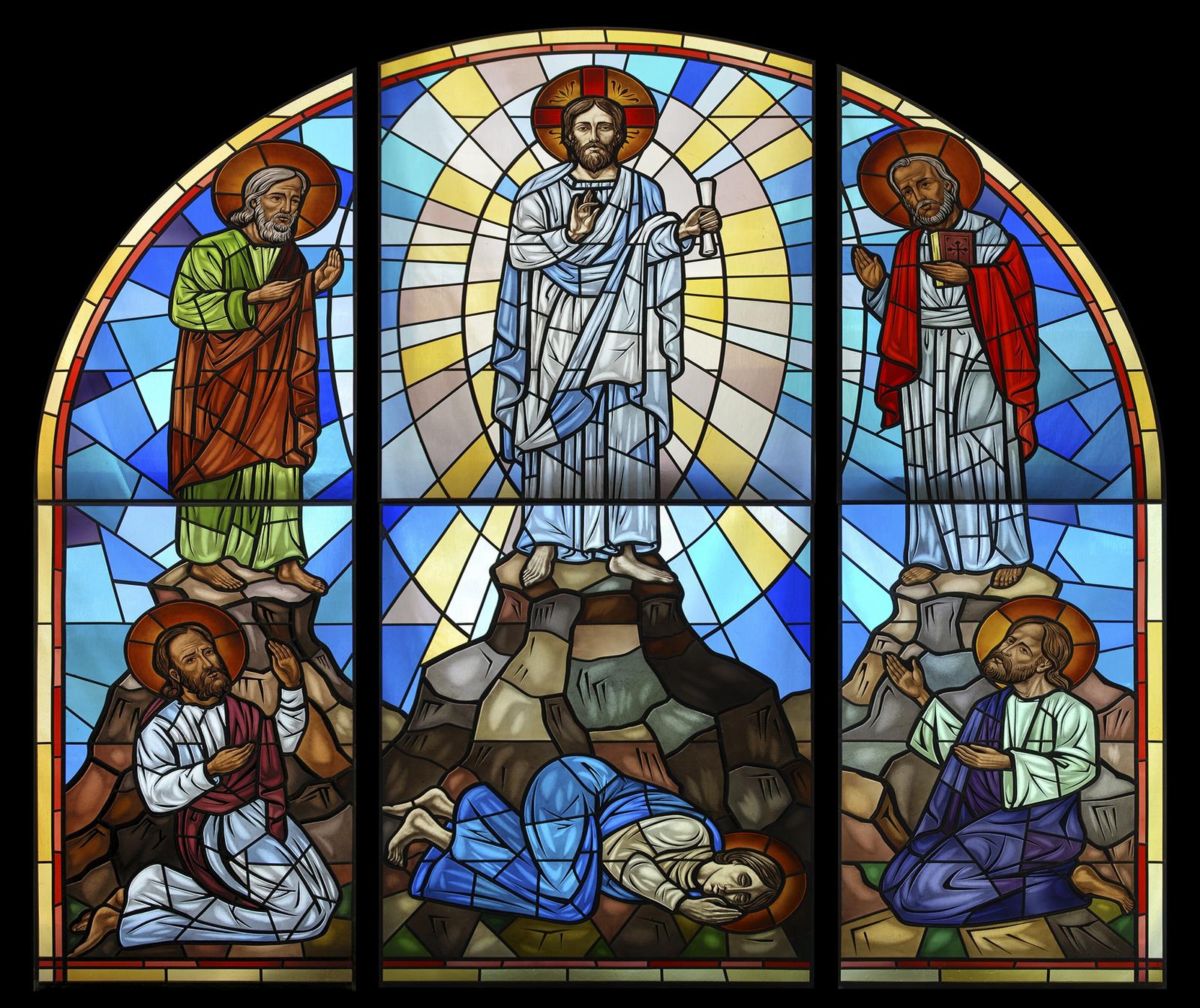
In the New Testament, mountains are just as prevalent. In His “Sermon on the Mount,” Jesus gave us the “Our Father,” the New Law, and The Beatitudes. His Transfiguration takes place on top of a mountain and he is put to death on Mt. Calvary.


A mountain top is perhaps the perfect place to encounter God. The sky is grand, the air is clean, and heaven just feels a little bit closer. Maybe it’s all just symbolic, but let’s hike up and look at The Sermon on the Mount and The Transfiguration this Sunday and see how our lives can be affected by them.


Jesus followers

The Sermon on the Mount

It’s been 2,000 some years since Jesus preached his Sermon on the Mount, but it is as pertinent today as it was then…perhaps even more so. Matthew’s gospel tells us that Jesus “went up into a mountain and when he sat down, his disciples came to Him.” As He spoke to them He gave them The Beatitudes, reiterated the Ten Commandments, and taught them the “Our Father.” Wow. It was definitely a busy day on that mount!


What I love about this story is that unlike Israel and Moses, who received The Ten Commandments with great fanfare and pageantry, the Sermon on the Mount was much more serene and tranquil. Many believe Jesus picked the quiet mountaintop setting to deliver his message so His listeners would truly hear what He had to say. Mountains have a way of amplifying the senses and boosting mindfulness.


What’s also interesting about the story is that Jesus didn’t start His visit with the Commandments. He began first by describing who will be blessed by God and giving them the Beatitudes, which are basically acts of virtues by grace-filled souls. He says the kingdom of heaven is for those who “are poor in spirt, mourn, meek, thirst for righteousness, merciful, pure of heart, peacemakers, and are persecuted for the sake of righteousness.” The first four deal with our relationship with God and our personal needs, while the second four focus on our relationships with others and our responsibilities.  In a way, these teachings steer us away from what the world today is steering us toward. We are called to be meek, humble, and pure; not exactly the virtues seen on TV, in music, and on social media.


So Jesus first taught how to be, then he taught how to pray with the “Our Father” and warned the disciples not to be hypocrites and publicly pray in loud ways but rather to “go into your room, shut your door, and pray to your Father.” He also brought up the issue of wealth, suggesting we look inward and ask ourselves “where is our treasure?” and “which master do we serve?” and instructed us to be both “salt of the earth” and “light of the world.” Our good works should shine before all and glorify God.


Then, He laid down His New Law. These “laws” can be found in both Hebrew and Christian Bibles, and we’ve all heard them and know them. Thou shall not kill, thou shall not commit adultery, turn the other cheek, and even love your enemies. They include instructions to worship God only, honor our parents, and keep the Sabbath holy; as well as prohibitions against idolatry, blasphemy, theft, dishonesty and even coveting. No pressure, right?


It is said The Beatitudes are how to become disciples and The Commandments are how to be Christians. It really all comes down to choices. We are instructed to make proper choices based on God’s instructions in the Bible rather than following the crowd and taking the easy and self-gratifying way.


Transfiguration

The Transfiguration

Then there’s the Transfiguration where Jesus takes Peter, James, and John to the top of a mountain and is transfigured before them. Trans what? Transfigured, meaning Jesus shone bright with rays of light, Moses and Elijah appeared next to Him, and a voice from the sky called Him “Son.” The event is considered one of the miracles of Jesus, is the only miracle that happens to Jesus himself, and was called “the greatest miracle” by St. Thomas Aquinas.


You could say God physically invaded Jesus’ body and in the same way don’t we all want God to invade our lives?


“Our faith can move mountains.” Matthew 17:20


Northern lights

Maybe the idea behind all the biblical mountain references is that the higher up you go, the closer you are to God. We all have mountains in our lives, many of which we create from molehills. Climbing a mountain is physically difficult and finding a spiritual “mountain” in which to pray can be just as hard. It is a struggle even Jesus encountered as He was tempted when “the devil took Him up to a very high mountain and showed Him all the kingdoms of the world in their magnificence.” I wish I could return to Alaska and go pray in those mountains, but “mountain” can be figurative too. Our “mountains of prayer” can be the shower, a church, a quiet room in the house, the beach, even our car. A real mountain can be a cathedral in so many ways. Whatever peak you choose, wait and listen for God to reveal Himself to you. Like Jesus, we just need to take the time to walk away from our busy lives and make the effort. Through dedication we can climb those mountains and we will not hike them alone. God is willing to meet us halfway. Are we up for the climb?


Size Does Matter July 23, 2016

Filed under: Uncategorized — carlawordsmithblog @ 5:36 pm

Everything is bigger in Texas, right? That’s what they say, but don’t tell that to an Alaskan, who will promptly tell you where to put that saying. I learned this on my recent trip to Alaska, and as someone who has called Texas home for more than 30 years and has a Texas native daughter, I found it all very interesting. Texas may have 10 gallon hats, but Alaska has 10 story glaciers.


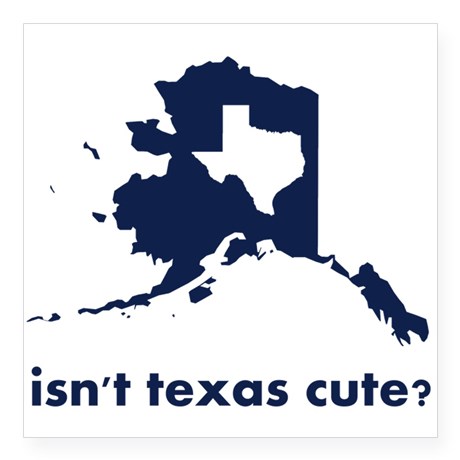
Talk is cheap, but the line of my trip definitely goes to a port attendant in Juneau who, upon seeing our Texas licenses, coyly said, “I thought about moving to Texas, if only it wasn’t so small.” Ouch. Insult meet injury as the below is a common T-shirt found in Alaska:


isnt_texas_cute_compared_to_alaska_sticker


As proud as Texans are, it’s hard to argue the size point to an Alaskan. With 663,268 square miles, Alaska is nearly two-and-a-half times bigger than Texas. In fact, it is bigger than Texas, California, and Montana combined and is actually larger than all but 18 sovereign countries.


No need to be shamed though Texas, with your 261,231 square miles of land you would be the 39th largest country in the world, ranking just ahead of Afghanistan. Considering there are roughly 200 countries across the globe, this means that the majority of them are smaller than Texas.


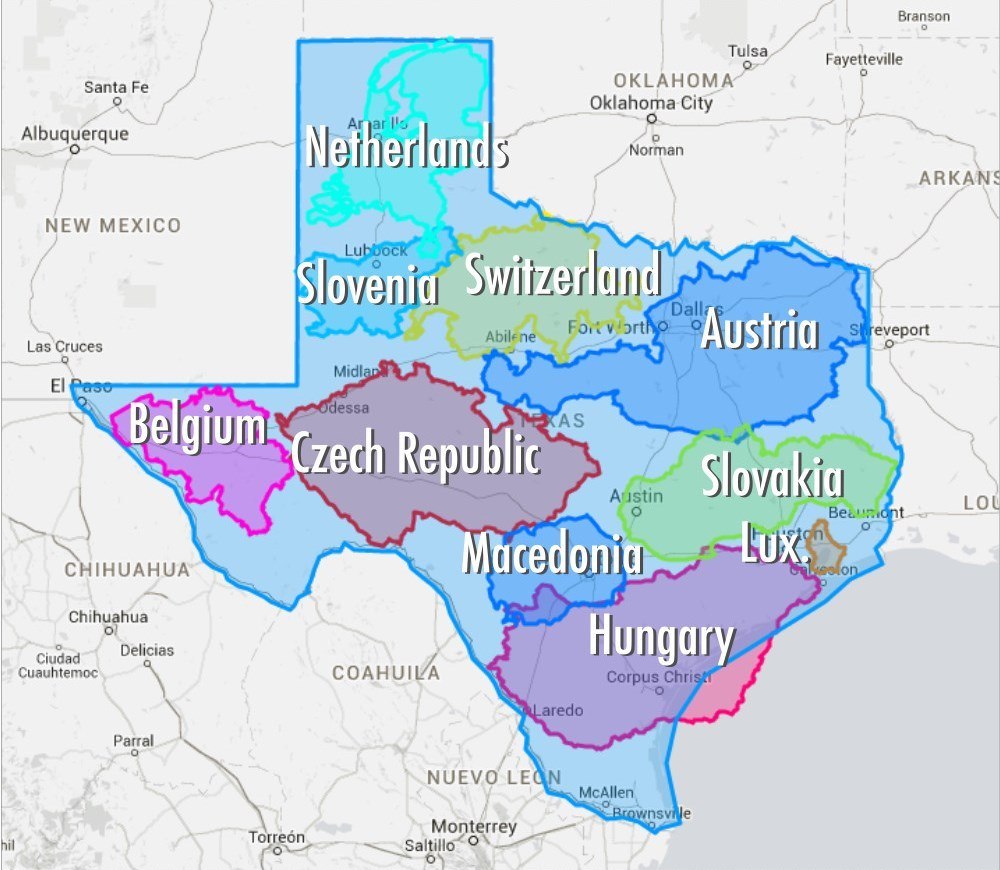
It’s worth saying though, that both states are larger in size than France and Germany and Rhode Island could fit in Alaska 425 times and in Texas 221 times! And if that’s not enough to make you saw “wow,” consider these maps depicting how much of Europe would fit in both.


Europe in Texas1    Euro in AK


You could say Texas is a solid #2 though, as it’s also the second most populous state topped only by California, whose 38 million residents somewhat dwarf Texas’ 27 million. But, Texas does boast the nation’s fourth, fifth, and seventh largest metropolitan areas in the country with Houston, Dallas-Fort Worth, and San Antonio respectively. Houston, with nearly 2.2 million residents, is the state’s largest city and who can forget that the first word spoken from the moon was “Houston.” From the moon! Take that Alaska and California!


I remember when I worked and wrote for the Texas Department of Commerce our Tourism Division was big on always including fun facts about Texas in brochures, travel guides, and just about anything we printed and that little gem about the Lunar landing was one of our favorites.


For this blog, I thought it’d be fun to compare Alaska and Texas in a totally unbiased way. I love Texas and I loved Alaska so it’s all in fun. Fasten your seat belts and check your bags, here we go!


From north to south, Alaska measures 1,420 miles, roughly the same distance from Denver to Mexico City.

From east to west, Alaska measures 2,500 miles, which equals the distance from Savannah, Georgia to Santa Barbara, California.


Dallas to Houston is about the same distance as London to Paris.

Downtown Dallas to downtown Ft. Worth is longer than both the Gaza Strip and the English Channel.

Beaumont, Texas is closer to Tampa, Florida than it is to El Paso.

Brownsville, Texas is closer to Mexico City than it is to Dallas.

Texarkana, Texas is closer to Atlanta than it is to El Paso.

Corpus Christi, Texas is closer to Cuba than it is to Denver.

Austin is closer to New Orleans than it is to El Paso.


3587

Alaska is home to the country’s most northern point, Point Barrow, and the most western point, Cape Wrangell, which is further west than even Hawaii. It also has the most easterly longitude in the U.S. because the Aleutian Islands extend into the eastern hemisphere.


Alaska’s population is around 740,000 and approximately half of them live in Anchorage.

The population of Texas is just over 22 million, meaning 83 times more people per square mile than Alaska.


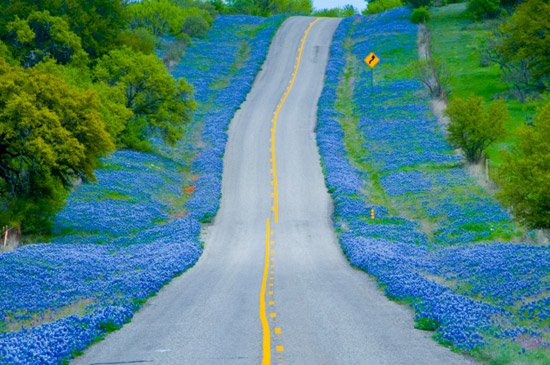
Bluebonnet roadTexas has the second largest state highway system in the country, topped only by North Carolina’s. Just Interstate 10’s length alone is nearly 900 miles and The Old San Antonio Road, also known as El Camino Real, is the oldest highway in the U.S. Historic Route 66 also makes its way through Texas.


Only 20 percent of Alaska’s roads are paved and the state’s road system is equal to that of Rhode Island’s, the smallest state. (The road I took for my dog sled race climbed waaay up into the mountains and was not paved!) Alaskans are big on boats and big on airplanes. There is one plane and one pilot for every 70 Alaskans and 6.3 times more active pilots per capita than Texas.


Flight time from Dallas or Houston to Anchorage is just over six hours.

Flight time from Tokyo to Anchorage is just over seven hours.


Alaska has more than 50 percent of the entire U.S. coastline with its 6,640 miles and a longer coastline than all other states combined.

Texas has 367 miles of coastline.


Alaska has 3 million (yes, 3 million!) lakes that are more than 20 acres big.

Texas has many lakes but only one, Caddo Lake in East Texas, is a natural lake. Most lakes in Texas are man-made. But, it does have 5,607 square miles of inland water, ranking it first in the 48 contiguous states, followed by Florida, Minnesota, and Louisiana.


(The word “lake” comes from the Greek word “lakkos” meaning hole or pond. A “lake” is a naturally formed body of water surrounded by land. Most true lakes in the U.S. are in the northern part of the country and were formed by glaciers (i.e. Lake Superior, Lake Huron, Lake Michigan). Lakes can also be formed by the combination of sinkholes and springs (such as in parts of Florida), in craters of extinct volcanoes, or when the deposition of silt in a river closes the natural outlet to a sea. A body of water not formed by natural means is technically a “reservoir” and are often created by manmade dams.)


Texas shares a border with Mexico.

Alaska shares a border with Canada and a maritime border with Russia. The Russian Diomede Island and Alaskan Little Diomede Island in the Bering Strait are only three miles apart.


Texas became the 28th state in 1845.

Alaska became the 49th state in 1958.


The U.S. acquired Texas from Mexico in 1848.

The U.S. purchased Alaska from the Russian Empire in 1867.


Alaska’s state capital, Juneau, has no connecting roadways to the mainland and can only be reached by boat or plane.


Texas’ state capitol building in Austin is taller than U.S. Capitol in Washington, D.C. At 302.64 feet, Austin’s pink granite structure is almost 15 feet taller than the 288-foot-high D.C. building. (I gotta say, Texas wins this battle by a landslide as the capitol building in Juneau is a nondescript edifice that looks more like an old office building than a state capitol.)


Alaska’s highest point, Denali (formerly known as Mt. McKinley), is 20,320 feet and is North America’s highest mountain. Alaska also has 15 other peaks higher than any in the continental U.S.


DFW airport is bigger in land space than Manhattan.


Flag_of_Alaska_svg

The flag of Alaska consists of eight gold stars forming the Big Dipper, as well as the North Star, all on a dark blue field. The Big Dipper is part of the Ursa Major constellation, which symbolizes the bear, an animal indigenous to Alaska. The stars can also be used as a guide to locate Polaris and determine true north.


Flag_of_Texas_svgLike the U.S. flag, the Texas flag is red, white, and blue, which stand for bravery, purity, and loyalty…in that order. The “lone” white star represents all Texans and stands for unity. Residents of the Lone Star State love their flag so much there is an actual pledge to it and is taught to school children. The term “Lone Star State” signifies Texas’ former status as an independent republic. It is the “lone” state to lay claim to this and Texans are very proud of it.


Texas is also known for its “Six Flags Over Texas,” and I’m not talking theme parks here. The slogan describes the six countries that have ruled over the territory and consist of Spain, France, Mexico, the Republic of Texas, the Confederacy, and the United States.


Alaska is known as “The Land of the Midnight Sun.” On December 21 each year, the sun doesn’t rise for 24 hours, and on June 21, the sun doesn’t set for 24 hours. While I was there, the sun set around 10:30 p.m. and rose around 4:30 a.m. Due to the long summer days, vegetables grow huge in Alaska. The largest known cabbage weighed 127 pounds.


The name Texas comes from the Caddo word “Tejas,” which means “friends.”

The name Alaska is derived from the Aleut word “Alyeska,” which means “great land.”


Oil is big in both Texas and Alaska but Texas wins this battle as the most oil-rich state. It has the highest number of total crude oil production at more than 1.2 billion barrels, the most refineries at 26, and has the most proven oil reserves in the country with more than 10 billion barrels.


Surprisingly, Alaska comes in third, followed by #2 North Dakota. Who knew?! Alaska is home to some of the largest oil fields in the country but proven oil reserves are declining.


So there you have it. The “Battle Between the Biggies.” I’d call it a draw because residents of both, when asked where they’re from, rarely say a city and instead instinctively reply “Texas” or “Alaska.” But, as much as I think they border on tacky, it’s not uncommon to see a Texas woman wearing Texas-shaped earrings, yet I didn’t see any wearing Alaska-shaped ones. Tiebreak Alaska or “ayes” of Texas? You decide!


“I’m Bored Mom.” Good! July 7, 2016

Filed under: Uncategorized — carlawordsmithblog @ 8:11 pm

bored-child-22795096

The Fourth of July has come and gone are we are now in the middle of the doldrums of summer. This time can be especially trying on parents of younger kids, or any kids still living at home for that matter, as camps are winding down, vacations have been taken, and the natives are getting restless. And bored. But guess what parents, boredom is good and you need to encourage it! In fact, you need to schedule it! What? Yep, stop planning every second of your child’s summer and let them experience boredom.  End of story but not end of blog.


XSchedule

The Importance of Doing Nothing

Boredom is very important in a child’s life but parents tend to think cooking classes, art camps, tennis lessons, and other scheduled activities are summer “must dos.” Wrong. Yes, it’s beneficial for a child to learn some new things but it’s also good for them to learn how to be bored.


According to Dr. Teresa Bolton and hundreds of other child development experts, boredom is crucial for developing a child’s internal stimulus, which ultimately results in creativity and motivational skills that will help them later in life. Child Psychologist Lyn Fry adds, “There’s no problem with being bored. Children need to learn how to be bored in order to motivate themselves. Being bored is a way to make children self-reliant.”


That’s all well and good, but enter parents. Parents who try waaaaaay too hard to make their kids’ lives perfect and who decide for them what they will be doing in their spare time. Mom and dad choose soccer camp, play movies in the car, schedule relentless play dates, and stock up on video games. These do very little to motivate kids and make them resourceful. Stop it, and stop it now.
 

Little Engine parents1Our role as parents is to raise honorable children and prepare them for their future places in society. But, providing endless sources of entertainment actually does more harm than good. Yes family time is important but so is alone time. Kids who are signed up for everything don’t experience autonomy, may not seek challenges, or have difficulty self-motivating. If a parent spends all his or her time filling up a child’s time, that child will never learn to do so for themselves, but a child whose life is not filled with programmed activities will have no choice but to increase their creativity and develop motivational skills. It is those type of skills that will satisfy our roles of preparing them for life…life that is not all about them and life that if full of challenges whether we like to admit it or not.

 

I’ll admit it. I was THAT mom for a short time. I had Kristen enrolled in this camp and that class. She’s an only child and I never wanted her to feel alone or left out, but I quickly discovered that my girl enjoys her down time. She still does to this day. As much as she is a “people person” and easily makes friends, she also needs and likes her alone time. It’s one of her biggest strengths.



Cure for boredom

“I am passionately curious.” Albert Einstein


So if boredom begets curiosity and curiosity was good enough for Einstein then boredom should be good enough for the rest of us, right? To be sure, I’m not saying don’t enroll your child in anything, but at the same time, don’t over-schedule them and, hear this, let them decide what they might want to take a class or lesson in. Maybe Johnny doesn’t really like soccer or wants a break from it during the summer. Maybe Sally would like to learn how to sew not dance. In the same vein, just because brother likes swim team doesn’t mean sister does. All siblings should not be required to do the same activities. Every child is different and should be allowed to have their own interests.
 

Sit down with your children and ask them what really interests them. Then, plan for them to participate in that activity, not an activity you think they should do. (The only lesson I firmly believe every child should be “forced” to do is swimming. I’m not saying swim team; I’m saying every child should take swim lessons and learn how to survive in water.)  It’s in our nature to control things, but as Psychoanalyst Adam Phillips warns, “It is one of the most oppressive demands of adults that the child should be interested, rather than take time to find what interests him,” Phillips also adds that boredom is integral to the process of taking one’s time.


Slow downHella hurry. What do so many criticize Gen X and Millennials for? Wanting something and wanting it all right now. Hmmmm….I wonder why? Perhaps they never were allowed to be bored as youngsters.


The good thing is, boredom is a temporary state. It never lasts forever and in most cases someone who is bored will be inspired to find something to do. When your child tells you, “I’m bored. There’s nothing to do,” that’s your sign that he or she needs some inner reflection and self-motivation. Remember that list you made with them about their interests? Have them look at it and figure out what they can come up with to tackle that interest. Put it on them. A motivated child is a child who will seek opportunities and experiences and will be able to protect themself from boredom.


ClocksRest assured however, that allowing your child to experience boredom does not remove responsibility from their life and does not mean permitting so much down time that they find trouble. I think that’s what many parents think they are avoiding, which is a good thing, but like anything it’s all about timing and balance.


You can always go old school on them and warn them that if they can’t find something productive to do, you’ll find something for them. Worked for me and will work for you little darlings. Guarantee it. In addition, older kids should be required to hold a job and youngsters should be encouraged to fill their boredom with chores. From a very young age, all kids need to be accountable for their actions and be provided with an environment that encourages them to work on their own, go beyond their comfort zones, and solve their own problems. This requires no structured programming and unplugging the TV, video games, cell phones, and computers…unless they use them to create something. Just say no parents!


So many kids today are never told “no” even when a parent is tired and needs some down time of their own. We rush around giving in to our children’s every whim, we coddle them and their feelings, and we allow too many choices. This is not what the bestselling “Parenting with Love and Logic” meant to suggest but like anything, today’s “I want them to like me and I want their life free of adversity” parents have taken the book’s very wise lessons too far.


So schedule boredom mom and say no to video games dad. Actually stay home for a change and let your kids chill. You may just be surprised at what they discover.


Squad Goals July 4, 2016

Filed under: Uncategorized — carlawordsmithblog @ 3:57 am

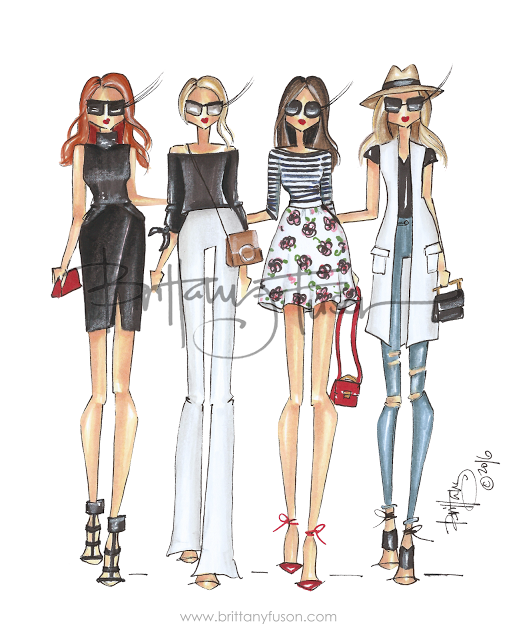
Brittany Fuson squad

Brittany Fuson’s “Squad”


I’ve been thinking a lot about friends lately. Old friends, new friends, funny friends, serious friends. I think it’s partly because of my upcoming move. But, I know I’m going to have to make new friends. I’ll meet them playing golf and tennis, going to book club and yoga, and socializing as couples. Still, it’s so weird to think that the women I meet and befriend will not have a clue about my husband, my daughter, my history, or my interests.


On top of that, in the last year or so I’ve met a wonderful group of girls in my neighborhood who have become dear friends…friends that complement the ones I already have but who I didn’t know before. I’ve thoroughly enjoyed getting together with them on a regular basis and getting to know them. I like them, I respect them, and I’m going to miss them. I also have a coworker in my hood who I’ve gotten closer to in recent months. Of course my thought process about all of this is “Why now?” But then I ran across some journals during a recent pack and purge day and I was reassured that these women will remain in my life regardless of where I move or where they move.


FriendsI was cleaning out my closet when, just as I thought I was done, I saw a bag at the very back. I thought, “What in the world is in that?” Come to find out it was old journals and a “This Is My Story” fill-in-the-blank book I’d filled out for Kristen years ago. Like when she was in elementary school. As I glanced through it and several entries in the journals, I was so pleased to read several of those entries mentioned my friends Kathy, Rosie, Mary, and MB. Pleased of course because they were happy and funny memories, but even more pleased because those four ladies are still so very important to me. Two of them don’t even live in Austin anymore, but I still rely on them and cherish our bonds.


It all made me realize that regardless of where one lives, one’s friends are everywhere.


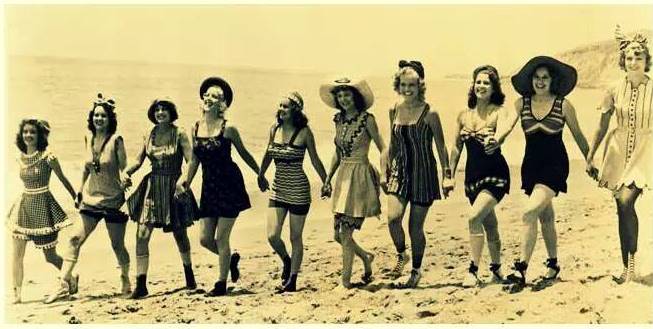
friends1 (2)


Today I went to a musical play with a friend I worked with 30 years ago. She moved from Austin many years back but just this year returned. Thirty years later and we’ve picked up right where we left off. I couldn’t be happier.


As I evaluate my friendships, I discover that so many of my friends are long-time ones. We lay claim to histories that are both happy and heartbreaking. We’ve worked together, travelled together, golfed together, cried together, laughed together, and grown together. They teach me, support me, comfort me, accept me, inspire me, laugh with me, and challenge me. We all have our “squad goals” and realizing mine is pretty dang special is very comforting and gratifying.


XBarb'sEver since I was a little girl, I longed for good and trusted friends. I remember like it was yesterday the day my friend Tina decided to be “best friends” with Michelle instead of me. It crushed me. I had a similar experience as an adult when a dear friend and I had a major disagreement and our friendship ended. It too crushed me. Years have gone by, we’ve both matured, and when I just last week ran into her in the grocery store we hugged and shared updates on our lives, our families, and our empty nest plans. We will probably never be the bosom buddies we once were, but the hurt is gone.


17

They say people come into your life for different reasons and for different lengths of time. I’m pretty sure my college girlfriends, who I take a trip with once a year and whose friendships I have now shared for more than 30 years, are time-tested and eternally secure. What a blessing to watch as our own kids, nieces, and nephews are now forging friendships all their own. I guess you could say that circle of college coeds has come full circle.


OU grads

In some ways holding on to friendships is easier today, what with so many apps and sites that help everyone keep in touch. But, we are also a much more nomad-like society and people move in and move away constantly. It’s challenging but not impossible to hold onto friendships. Plus, you can always go visit them!


All of this was further reinforced by a blog I read today. In yesterday’s “Our Daily Bread” entry, readers are invited to “sit a spell” and really take the time to catch-up with someone. This, as it detailed, can often be hard in today’s jam-packed and action-oriented world. We all get busy, time is precious, and it’s a lot easier to send a text or Facebook message. But, that’s not what Jesus did when he went to Zacchaeus’ house. He spent time with the tax collector and ultimately changed his life.


I loved “sitting a spell” with my friend Kathy and her sister Carolyn today as we lunched and headed to the play. I hope to continue doing so and if history serves as any indicator, I will continue to do so with my newly formed squad. Even when I move out of their neighborhood.


Do You Really Count? July 1, 2016

Filed under: Uncategorized — carlawordsmithblog @ 7:27 pm

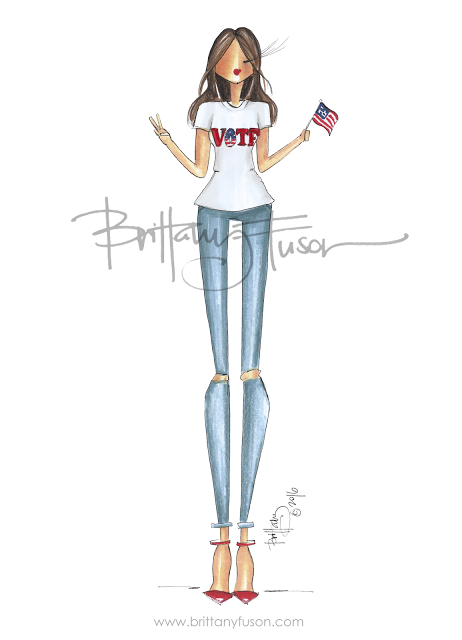
Vote1


Happy Fourth of July weekend America! And, what better way to celebrate then to get fired up about the presidential election? You know, because…’Merica!


You really can’t turn on the TV, open a browser or newspaper, or tune in a radio station and not hear or read something having to do with this fall’s presidential election. Even recently as I floated in a Hill Country swimming hole with friends, election talk could not be avoided. Who was voting for whom was a mixed bag, and at one point the supporter of the candidate I’m not supporting said “then just don’t vote” and I told her the same. In that scenario, we would cancel out each other’s votes so in essence our votes wouldn’t count. But do they anyway?


Primary season has come and gone and we voters are left with two candidates from which to choose our next leader: Republican Donald Trump and Democrat Hillary Clinton. This, of course, barring any third party run (I’m looking at you Gary Johnson) or Republican National Convention chaos, or even Mrs. Clinton being indicted from the federal investigation of her now infamous email browser. I’m not going there at all, but I am going to college: the Electoral College. What is it exactly and how does it work?


It’s important to start by reminding (or educating) everyone that the United States doesn’t elect presidents based on the popular vote. In other words, the candidate with the most votes doesn’t necessarily win. (see Bush vs. Gore 2000). It all starts with primaries and caucuses.


Up to this point, every state has held either a state primary or caucus, during which voters selected a winner. Next up are both party’s National Conventions when delegates officially nominate their presidential ticket. It’s those names that will appear on the November general election presidential ballot, which is held on the Tuesday following the first Monday in November in years divisible by four.


Cue the confusion.


Voting booth

PRIMARY BATTLES

A Primary Election or Caucus is held in every state prior to a November general election. Their purpose is to allow every registered voter in every state to vote. We vote for candidates but what we’re really choosing are delegates to represent our state at the party’s national convention. The goal is to get an accurate representation of delegates to vote at those conventions. So who are the delegates and how are they selected?


There are two types of delegates that go to national conventions: a pledged delegate (or “delegate” as they are usually referred to) and “superdelegates,” who in a way really do have super powers.


A delegate is basically someone nominated to attend the national party convention. Their naming comes as a result of their state’s primary election or caucus and they vow to vote for that candidate at the convention. In other words, whatever candidate won their state’s primary is who they pledge to vote for at the convention. Example: if someone supported Marco Rubio during the primary season but is selected as a Republican National Convention delegate, he or she pledges to nominate Donald Trump as the party’s official candidate at the convention.


A superdelegate, on the otherhand, can vote for whoever they want. Only the Democratic Party uses superdelegates and as you can imagine, they are like gold. Any U.S. citizen registered with a party can be a delegate but it’s all very competitive and the role is commonly reserved for those who campaign for it and have a history of serving the party well statewide.


Caucuses are the original form of selecting delegates but are now used only by a handful of states. At them, potential delegates are named and then selected after much debate and discussion.


conventionCONVENTIONS OF PARTIES

The purpose of Democratic and Republican national conventions is for delegates to choose the candidates that will represent each party in the general election. All of this is somewhat of a formality because nominees are usually known by virtue of primary and caucus wins. The conventions are also where party officials establish their platforms, which are basically their espoused values, planned actions, and policies they hope to enforce. Most of us think of them as where we see delegates wearing goofy hats and candidates walk out to the perfect song with families in tow. Regardless of the festive atmospheres, they are serious business. They’re like the Olympics and Super Bowl rolled into one of presidential campaigns


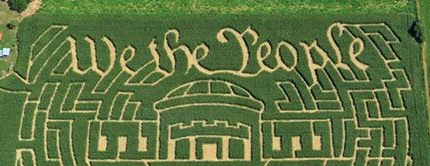
We the people

ELECTORAL COLLEGE DEGREES  

Although there is no official address or building for the Electoral College, it’s uber important as it essentially chooses the leader of the free world. It’s also all you’ll hear about on Election Night as news reports tally and count “electoral vote” totals state-by-state. We use this system of appointed electors for this election and this one only. It will take 270 electoral votes to win the 2016 presidential election. First one to 270 wins!


Basically, each state is allotted electors equal to its number of members of the U.S. House and Senate combined. History class refresher: every state has two U.S. Senators but the number of Representatives is based on population. States with bigger populations have more reps in D.C. and therefore more electoral votes. Campaigning in California could be more important to a candidate then campaigning in Montana.


The Electoral College is a “winner take all” system and any U.S. citizen can become an elector. Appointed by individual state party leaders, electors are bound to a particular presidential ticket. And, even though we will individually vote for a candidate on November 8, we are actually voting for presidential electors. Whichever candidate wins each state’s popular vote wins its coveted electoral votes as well. If it all sounds a bit like convention delegates, it’s because it is, just for a different purpose.


Primaries, caucuses, and conventions are all about choosing a candidate, while the Electoral College is about choosing a president.


The words “Electoral College” don’t appear in the Constitution but the process of it is outlined in Article One. The practice reflects the Founding Father’s desire to maintain our country’s celebrated “separation of powers” and “checks and balances” systems and was first used to elect none other than George Washington after being adopted at the Constitutional Convention in 1787. Not a lot has changed since then, except that originally electors voted for two people. Whoever got the most votes became president with the first runner up becoming vice president. That all changed in 1804 when the Twelfth Amendment created the process we use today.


The method was also seen as a way to ensure the U.S. operated as a federation of individual states and with limited federal government involvement. It’s how our country was meant to be. Founding Fathers believed state’s electors would know better which candidate would serve their state best so keeping political powers within state governments was encouraged. Much has changed since then, but much has stayed the same.


Vote2

SO, DOES MY VOTE COUNT?

Yes, and maybe no. Your vote for a candidate in your state’s general election this November influences which candidate gets the most votes in that state. And remember, all of that state’s electoral votes are allotted to the state’s popular vote winner. So, in a way, when you vote, you may be voting for your candidate, but you’re also voting for the party slate of Electors representing your choice for president and vice president.


I know, I know. It’s all very confusing. Maybe a few “pros” and “cons” regarding the Electoral College will help.


Electoral College Pros

  • It protects minority interests in that all states, even those with lower populations and in rural areas, have equal voices and no one region has enough electoral votes to elect a president.
  • It’s a fairly accurate method with a 90 percent success rate of choosing the candidate who won the popular vote more than nine out of 10 times.
  • It strengthens the two-party system (some might consider this a con) by encouraging generalized platforms rather than specific issues-driven agendas.
  • Because all but two states employ a “winner takes all” process, the winner does enjoy a clear majority.
  • It gives states the power to elect our presidents and keeps them an integral part of the entire selection process.


Electoral College Cons

  • A candidate can win the popular vote but still not be elected president as was the case in 2000 (remember all those hanging chads in Florida?!) when Al Gore won more popular votes but George W. Bush won the majority of electoral votes.
  • As mentioned in the above “pros,” no one U.S. region has the electoral power to pick a president but, so-called “swing states” have a great deal of power and get a lot of attention. In fact, some people think a presidential election comes down to voters in Colorado, Florida, Iowa, New Hampshire, Nevada, Ohio, Pennsylvania, Virginia, and Wisconsin. So much so, that candidates often focus their appearances and campaign funding in those states.
  • It’s complicated, confusing, and deters people from voting.
  • Small states and swing states get more power (some might consider this a pro) since one person does not equal one vote per se. For example, California’s 55 electoral votes represent approximately 700,000 people per vote while Wyoming’s three electoral votes represent just under 200,000 people.
  • Its longstanding two party system suppresses third party candidates and participation.


Maybe all of this matters to you, maybe you could care less. What I do hope you care about though, is voting. It is a privilege we often take for granted and a right that literally hundreds of thousands around the world only dream of having. Don’t be that American. Get out and vote.