Beyond Words

Words, Wit and Wisdom for Today's Style and Decision Makers

Take a Flying Leap February 1, 2024

Filed under: Uncategorized — carlawordsmithblog @ 3:04 pm


Thirty days has September,
April, June, and November,
All the rest have thirty-one,
Save February at twenty-eight,
But leap year, coming once in four,
February then has one day more.


We’ve all heard that rhyme, right? My husband and I were just talking about it the other day and of course I can never remember it correctly. But I do remember that 2024 is a Leap Year so happy February; a February that has one day more!


But you already knew that, right?


But, did you know a non-leap year is called a common year and that February 29 is called Intercalary Day? And, did you know a Leap Year occurs every four years? Okay fine, you’re on top of that. But, do you know why? Gotcha? Maybe?


Well, a Leap Year happens in order to help synchronize the calendar year with the solar year, which is the length of time it takes the earth to complete its orbit around the sun. The calendar we use is called the Gregorian calendar and was put into place by Pope Gregory XIII in 1582. On this calendar, every year divisible by four has an extra day and is called a “Leap Year.” Century years are the exception to the four year rule though, as they must be divisible by 400 to be Leap Years.  This is why the year 2000 was a Leap Year but 1900 wasn’t and why 2400 will be one but not 2100.


But what’s in the name “leap?”


The name is thought to have come from the fact that, while a fixed date in the Gregorian calendar normally advances one day of the week from one year to the next, the day of the week in the 12 months following a Leap Year will advance two days, thus “leaping” over one of the days.


But why always in February?


Some historians credit Julius Caesar when he gained power and reconfigured the then Roman calendar. He aligned the length of a year with the sun, giving each year 365 days but for reasons unknown, he left February at 28 days. Others say the month was selected kinda randomly and it just stuck.


Okay, so what happens if you’re born on a Leap Day?


Codes vary state-by-state as to when a leap baby or “leapling” celebrates his or her birthday, but most consider March 1 as the day. Interestingly, there is a 1 in 1,500 chance of being born on a Leap Day and babies born on one are thought to have special talents according to astrologers.


Other myths and legends about a Leap Year and Leap Day in particular include the Irish “Bachelor’s Day” legend that declares St. Brigid opened up the gates for women to propose marriage to men on a Leap Day after she struck a deal with St. Patrick as a way to balance the traditional roles of men and women in society. Boy was she a woman ahead of her time! This tradition is still occasionally observed in England but in neighboring Scotland, February 29 is often considered as unlucky as Friday the 13th.


Coincidentally, Leap Years almost always coincide with U.S. election years, as is the case this year, and often times with Olympic years as well, also this year. The next three leap years will be 2024, 2028, and 2032.


If you’re looking for a way to celebrate Leap Day, what better way than with the official Leap Day Cocktail? Invented by bartender Harry Craddock of London’s tony Savoy Hotel in 1928, it is considered a martini-like drink and is said to have been responsible for more proposals than any cocktail ever mixed according to the “Savoy Cocktail Book.”  Here is the original recipe:


Craddock’s Leap Day Cocktail

1 dash lemon juice
2/3 gin
1/6 Grand Marnier
1/6 sweet vermouth

Shake, serve, garnish with a lemon peel.


Enjoy and Happy Leap Year!


Keep the Faith January 28, 2024

Filed under: Uncategorized — carlawordsmithblog @ 8:09 pm

Last week I blogged about the differences between a bevy of things like mayo vs. Miracle Whip, plaid vs. tartan, broth and stock, and other things. Today, being Sunday, I thought I’d keep the theme going by looking into belief vs. faith (with some hope and trust thrown in) and I have faith you’ll believe it’s all very interesting!


You could say believing makes faith possible, but it goes deeper than that. You can believe in something but you may not have faith in it. Think sky diving. You believe it’s possible but do you have faith that your chute will open and you’ll land safely? You can believe in God but lack true faith that all is in His hands. That’s where trust come in.


As the saying goes, you build trust, and faith without trust is no faith at all. Faith always has an object. The object of Christian faith is Jesus. In fact, the biblical definition of faith requires trust and Webster defines faith as “belief and trust in…” name your object here. In that skydiving example, you need to trust the pilot and the equipment before having faith that all will go as planned.


Belief is the first foundation of faith and commonly defined as the acceptance and conviction of something true. For Christians, it encompasses the core doctrines of the faith, including the existence of God, Jesus Christ, and the Holy Spirit. Our personal beliefs shape and influence our values, priorities, and decisions. This holds true for civilization in general. Or so we hope. We believe murder is wrong, so we don’t do it. We believe too much sugar is bad so we eat too much of it. Our beliefs make us who we are. And I truly believe that.


Hebrews 11:1

Trust, on the other hand, is the second critical aspect of faith. When you trust someone, you open yourself up to a relationship that may include vulnerability, honesty, and allowing them to have a significant impact on your life. Hmmm…same with God. By placing our trust in Him we rely on Him to fulfil His promises and we open ourselves up to His influence, allowing Him to shape and transform us.


The third critical aspect of faith is hope: the belief in a positive outcome despite present circumstances. Hope provides us with the strength to endure difficult circumstances and persevere through trials. Christians center their hope around the promises of God and have hope in Him that we can endure any hardship because we have faith that He is in control and has a plan for our lives. We are not alone.


Many credit Judaism for giving us the gift of hope. The teaching is that western civilization is the product of two cultures: ancient Greece and ancient Israel. The Greeks believed in fate: the future is determined by the past. Jews believed in freedom: there is no ‘evil decree’ that cannot be averted. The Greeks gave the world the concept of tragedy. Jews gave it the idea of hope.


Think about it. Old Testament scripture gave us the hope of everyone from Abraham to Moses to Hannah not to mention the trust of Noah.


And who can blame them as their history is full of reasons to be hopeful, even in the darkest of times. They’ve been forced into exile, lost their homeland, have historically been oppressed, are told they as a country should not exist (even to this day and even though it existed in the Bible), and of course, the Holocaust. You would think they’d give up hope, but they don’t.


Christian, Jew, or otherwise, it’ll be a tough life if you give up hope. It all begins with belief and trust that work together to build the foundation of faith and give us hope. Are you ready to jump? Do you believe, trust, and have faith that God will catch you? I sure hope so.


Next up: Joy vs. Happiness and later, Mercy vs. Grace.


What’s the Difference? Good Question! January 20, 2024

Filed under: Uncategorized — carlawordsmithblog @ 10:47 pm

If there’s one thing I love, I love chicken salad. I had some for lunch today and would eat it regularly if it were around. Store-bought is good stuff but not always healthy stuff so I prefer to make my own. I kinda improvise with whatever I have on hand but, in addition to the requisite chicken, I like adding grapes, celery, and hard-boiled eggs. I stir it all up with mayonnaise.


Good ole mayo. What would we do without it, right? Well growing up I did without it because we were a solid Miracle Whip house. My mom used it for everything: potato salad, sandwiches, and certain sauces. My husband, on the other hand, grew up in a mayo house. So, what’s the difference between the two and can you use them interchangeably? I guess it depends on who you ask as preferring one or the other is a near religious experience.


Mayonnaise is often called the planet’s most versatile condiment; and with good reason. It’s a staple in salad dressings, on sandwiches, in everything from chicken salad to macaroni salad, and in the moistest of chocolate cakes. It also forms the base for various sauces such as tartar sauce, remoulade, ranch dressing, and rouille. But what is it and what is it that makes it so legendary?


Mayonnaise may have its origins in the ancient remoulade and another hypothesis is that it was derived from aioli. Where it came from is up for culinary debate, with both Spain and France laying claim to its creation.


What was created by whoever is a combination of oil, water, vinegar, and egg. The key is that, unlike salad dressings that separate, the egg in mayonnaise emulsifies, creating a thick and spreadable, well, spread. Many people make their own mayo and I’ve heard it’s fairly easy to do, but if you want to sell your ware and label it “mayonnaise,” there are rules. FDA regulations state that anything labeled as “mayonnaise” must contain 65 percent vegetable oil by weight. This, my friends, is what separates the mayo from the Miracle Whip.


Described as “the one-of-a-kind taste of creamy mayo and tangy dressing” on its labels, Miracle Whip was developed as a cheaper alternative to mayonnaise during the Great Depression. Launched in 1933 at the Chicago World’s Fair, it’s not just a brand name but a completely different product then mayonnaise. Yes, it also contains oil, water, vinegar, and egg, but water, sugar, and spices as well. The added sugar makes it perfect for dishes like macaroni salad and tangy cucumber salads. It’s technically not considered a mayonnaise at all but rather a “dressing” by the FDA. This explains why generic or store brands are called “salad dressing.”


How it got its name is equally interesting. According to Kraft archivist Becky Haglund Tousey, Kraft developed the product using a patented “emulsifying machine” invented by Charles Chapman. The goal was to create a product that blended mayonnaise with less expensive salad dressing and the machine used to do so was dubbed “Miracle Whip” by Chapman.


In general, mayonnaise is described as richer and with a lightly sour taste and eggy aroma while Miracle Whip is considered sweeter and spicier. Texture-wise they are very similar and either can work the same in most recipes. For baking however, it’s recommended you use full-fat mayo and know that anything other than full-fat mayo, including Miracle Whip, can separate and become greasy when exposed to heat.


When it comes to nutrition, Miracle Whip contains almost half the fat and caloires of mayonnaise but has more sugar than most brands of mayo.


So, there you have it; the answers to the burning questions regarding mayonnaise and Miracle Whip.


All this got me thinking of other “what’s the difference” ponderings, both in the kitchen and out. Let’s dive in…


What’s the Difference Between Tartan and Plaid?

I love them both but did not know that all tartans are plaid but not all plaids are tartans. Here’s why: all plaids and tartans are comprised of stripes that meet at a 90-degree angle. Tartans only have a geometry in their pattern with the stripes running vertically being exactly duplicated on the horizontal axis too. When looking at a simple plaid, you’ll notice the stripes in color, size, or pattern aren’t the same in both directions.


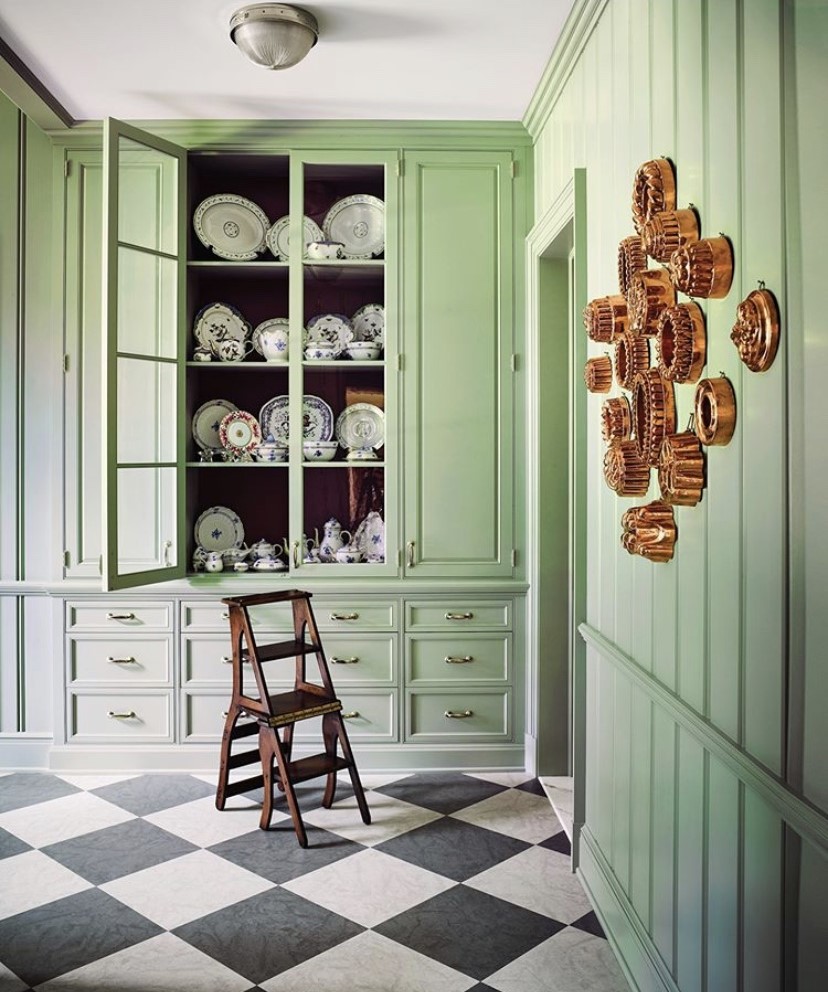
Bria Hammel Interiors

What’s the Difference Between a Farmhouse and Apron Sink?

You see them everywhere as they are the sinks of choice of late, but are they the same? The answer is no.


A farmhouse sink is always an apron sink but an apron sink is only a farmhouse depending on the material it’s made from. Though a farmhouse sink is often referred to as an apron or apron front sink, an apron sink is never called a farmhouse sink.


Historically, farmhouse sinks were constructed from cast iron or porcelain. Both sinks share similar characteristics, namely their deep basins, large size, and exposed fronts, but purists will argue that it isn’t a true farmhouse sink unless it’s made from a certain materials like porcelain and has an integrated workstation. The basic identifying feature of a farmhouse sink is its appearance and it’s traditionally installed to look like a seamless part of the countertop.


As opposed to the drop in style of farmhouse sinks, an apron sink’s primary identifying feature is its design. You have to slide an apron sink in from the front and it is installed under the countertop. Both farmhouse and apron sinks also stand apart from other sinks because they have an exposed front (also known as the apron). In general, apron sink hardware is drilled into the countertop behind the sink, while farmhouse sinks come with holes pre-drilled into the deck or backsplash.


When all is said and done, apron-front sinks are merely a contemporary farmhouse sink: they share the telltale exposed front-facing panel that farmhouse sinks have as well as a single and large tub, but are constructed from updated materials like stainless steel, cast iron, and natural stone.


What’s the Difference Between Chicken Broth and Stock? And What About Boullion?

Technically, stock is not the same as broth. Stock and broth differ in terms of their thickness and ingredients as broth is made from meat and vegetables while stock is made with bones. While both are flavorful, broth tends to be thinner.


Stock, typically thick and gelatinous, is made from animal bones like chicken, beef, and even fish and is generally unseasoned and unsalted. It is rarely recommended for consuming as is and is more often used as an ingredient. It makes a good base for gravy, rich sauces, and soups and is useful for de-glazing a pan for a quick sauce.


Broth, generally thinner in texture, is made with animal meat and is always seasoned. When chilled, broth doesn’t gel the way stock does. Light, thin, and full of flavor, broth tastes good on its own or as a base for all kinds of soup.


In most cases, stock and broth are interchangeable and wither will do for making soup, gravy, or a flavorful pot of rice or grains. When substituting stock for broth in a recipe, however, you might want to add a little salt and cut back on it or water it down when using broth instead of stock.


In general…

  • Stock and broth are equally great for thinning out sauces, making risotto, or as a base for quick soups.
  • Broth is better for consuming as is because it has seasoning that makes it tastier on its own.
  • Broth may be preferred as a flavor enhancer for cooking plain white rice or grains.
  • Stock may be better to use in a recipe with a complex flavor profile that you don’t want to tamper with.
  • Stock contains more calories, fat and carbohydrates than broth. But it also contains more protein, vitamins and minerals.

And now for bouillon. One bouillon cube or 1 teaspoon of granules dissolved in 1 cup of boiling water may be substituted for 1 cup of broth in any recipe. It is a condensed cube or powder derived from dehydrated broth and can be added as a burst of flavor to many recipes. Ultimately it is the same as broth and stock but with key notable differences in taste and texture. Bouillon cubes or powder also have significantly more amounts of sodium.


What’s the Difference Between Metaphors, Similes, Idioms, and Aphorisms?

Metaphors & Similes

A metaphor is a word or phrase typically used to describe one thing but unexpectedly used to describe something different. Metaphors make us aware of connections that we may not have thought of before. “He was drowning in paperwork” is a metaphor that makes a connection between having to deal with a lot of paperwork and drowning in water.


A simile is figure of speech in which two essentially unlike things are compared using the words like or as.  Examples are “hard as a rock,” “clear as mud,” “like the back of my hand,” and “he stood out like a sore thumb.” While a simile makes comparisons with help from like or as, a metaphor states outright that one thing is another thing.


 To compare these forms of comparisons, here are some examples:

Life is like a box of chocolates. (Simile)

My life is an open book. (Metaphor)

That baby is as cute as a button! (Simile)

Baby, you’re a firework. (Metaphor)

Fun fact: Because they both make figurative comparisons, all similes are metaphors, but not all metaphors are similes.


Idioms

An idiom is an expression that conveys something different from its literal meaning and that can’t be guess from the meanings of each word in it. Examples are “between a rock and a hard place” and “butterlies in my stomach.”


Aphorisms

memorable expression of a general truth or principle. Aphorisms are often handed down by tradition from generation to generation. They are pithy observations with a general truth and a flowery opinion that’s true such as “If it ain’t broke, don’t fix it.”


What’s the Difference Between Cross-Stitch, Embroidery, and Needlepoint?

This one caught my eye because I love to cross-stitch but have never needlepointed. As I watch shows like “The Gilded Age” and “Belgravia” I often see the women stitching something and am thinking it’s probably needlepoint. Let’s look deeper…


Embroidery refers to hand-stitching a design onto fabric with embroidery floss or perle cotton. Needlepoint is a technique in which thick fibers like yar ae stitched onto a stiff canvas using a blunt needle to mimic the look of tapestry. Cross-stitch, as the name implies, is a simple X-shape stitch made with embroidery floss on many different kinds of fabrics but most frequently on Aida cloth, an open-weave fabric with a natural grid that helps keeps stitches even.


What’s the Difference Between a Hamster, Gerbil, and Guinea Pig?

Okay, full disclosure here, I am not a fan of any of the above and personally think everyone should instead opt for a dog as a pet but I am interested in learning what these popular critters are. I do know they’re all rodents and wonder why anyone would choose to have a rodent in their home, but here you go.


Gerbils apparently sleep in bursts but are generally active while Guinea pigs tend to have a bit more personality than either gerbils or hamsters. They do require a specific diet and daily vitamin C supplements though. The average lifespan of a Guinea pig is five-to-seven years as opposed to two years for hamsters and gerbils. Hamsters are super fragile, die more quickly, are nocturnal, and will be happy as a (Guinea) pig in mud living as a single pet while guineas and gerbils tend to thrive better in multiples.


How guinea pigs got their names is widely disputed, both the “guinea” part and the “pig” part. Despite their name, guinea pigs are not native to Guinea, nor are they closely related to pigs. Size-wise, they are much larger than hamsters and gerbils and don’t have tails whereas gerbils have long tails and hamsters have stubby little ones less than an inch long.


Guinea pigs love to squeal and tend to keep their eyes open while sleeping to protect themselves from predators that may attack them. They and hamsters don’t have good eyesight, but hamsters’ eyes are worse than guinea pigs. They can see clearly during the night but come morning they see very poorly.


So, did you learn anything interesting or fun here? I hope so. I sure did!


Listen Up to Quiet Luxury January 11, 2024

Filed under: Uncategorized — carlawordsmithblog @ 8:20 pm

With the start of a new year, we’re all clamoring away at sticking to our New Year Resolutions and hoping to stay on track this time around. A lot of those resolutions may have to do with pairing down with buzz words like simplicity and minimalism. I personally love the simple life but I’m not much of minimalist. I have, however, found a liking to the “quiet luxury” fashion trend. I’m not one for trendy fashion at all, so I use the term “trend” lightly here, but this IYKYK trend is one I’m on board with.


It’s called “quiet luxury” but I’m hearing it loud and clear. So, what is it exactly? It’s kinda hard to describe but one thing most agree on is that it’s absolutely 100 percent logo-less. It’s understated, timeless, and chalk-full of functional and chic pieces that never go out of style. It’s not focused on flaunting brands but instead on craftmanship and class. It’s also anything but ostentatious, flashy, or skin-baring. The goal is to make a presence without making noise. You never, ever want to be accused of RIT (Rich in Theory) or PDW (Public Display of Wealth.) You could say French women have been doing this effortlessly elegance all along. Tres chic!


Basically, it’s leaving all those labels and logos in your closets and opting instead for understated elegance and refined taste. The style mania days of Gucci belts and logo-laden bags are back in the closet and styling options are now packed with closet classics and endless elegance. It’s not quite minimalism as its more polished and stylish. In a nutshell, think a quality investment coat thrown over stylish jeans, a cashmere sweater, and Tod’s loafers while carrying a logo-less bag.


TV-wise, think more “Succession” and less Dorit on “The Real Housewives of Beverly Hills” who seems to always have at least one logo on and multiple logos most of the time on as seen above and who once was quoted as saying “I believe in an excess of everything except moderation.” We get it, you have money but as the old saying goes, “Old money and no money are the same. You don’t talk about it.”


Enter the Roy family from “Succession.” I loved the HBO drama as did millions, and the low-key but high-dollar clothes cast members wore resulted in “Succession Fashion” considered the way to dress. The show centered around the billionaire Roy family that was as notorious for its quiet luxury fashion as it was for under the table deals and private jets. Son Kendall’s $600 Loro Piana cashmere baseball cap broke the internet while daughter Shiv’s trademark Katharine Hepburn-esque high-waisted pants and well-made suits became her trademarks. Family patriarch Logan Roy was not to be left behind and his classic cable knit sweaters embodied old money style. Never was a Roy draped in glitz or glam and they even made fun of a date’s Burberry bag (I love Burberry!) brought to a semi-formal gathering.


Also called stealth wealth in that luxury pieces worn fly under the radar, quiet luxury is anonymously chic, expensive but inconspicuous, and rejects any desire to show off. It conveys expensive and tasteful and is not about what you have or wear, but what you don’t.


Now granted, not everyone can afford $600 baseball caps or custom-tailored suits, but you can stick to the basics of this very basic kind of style. Your goal is to convey a mood more than a flash and put together an effortlessly elegant look that will stand the test of time. It’s almost like what you don’t wear speaks volumes.


Three women who have played big roles in this trend are Ivanka Trump, Gwynneth Paltrow, and Sofia Richie Grainge. Paltrow turned heads in her appropriately pared-down looks during her recent court appearances and love her or hate her or her dad, one must admit Ivanka has a style we can all love. Sleek, often monochromatic, and not a logo in site as shown in these photos, the former First Daughter should top any “best dressed” list if one is being honest and unbiased.


Then there’s Gen Z style icon and daughter of Baby Boomer Lionel Richie, Sofia, who made fashion waves and headlines last year for her wedding, especially among her generation who was both drawn to and surprised by her classic look and choices. For someone who could afford literally any dress in the world, her custom Chanel couture dress was undoubtedly uber expensive and yet it was also simple and unpretentious. Hair and make-up also come into play when talking quiet luxury, and Sofia’s for the entire weekend were simple and clean. Gone are the days of lengthy false lashes and overdone faces. In are days of tasteful, matte make-up and natural-look faces. Sofia’s everyday style continues this timeless sophistication and this Boomer loves it.


Okay, so if you’re not the daughter of a mega-star or mega-millionaire, how can you tag onto the quiet luxury look? (Personally if I were, I would be choose Carolina Hererra as my go-to. As photographed above, she is always classy, simple, and timeless.) Think elevated basics and clothes that whisper such as well-made sweaters; chic blazers; simple white tees; button down shirts; classic pants and jeans; cozy knits; sleek flats, loafers, or pumps; and layers…layers upon layers. And, minimalist accessories are mandatory. Maybe a nice watch, treasured ring, diamond stud earrings, or a piece of legacy but discreet jewelry. Period. No mas. Come to think of it, all of this describes my college friend Christie to a tee…excuse the pun. Always chic but never flashy, Christie epitomizes quiet luxury and has done so for years.


“Luxury” at one time was defined as anything exclusive and expensive, but thanks to the mass and counterfeit markets, what was once treasured is now touché and can be seen at any mall, airport, restaurant, or gym. Enter quiet luxury, which is a more low-key approach to, well, luxury.


So why a quieted down luxury and why now? Many credit the current economic challenges many are facing with trend forecasters dubbing it “recession core.” The state of our country and world the past couple of years is heavily influencing how people are dressing. I prefer to think that those with money are also trying their hardest not to rub it in the noses of those gasping at gas pumps and grocery stores, paying mortgages that equal many a high-end purse, and otherwise wondering what’s next. Flaunting extreme wealth is not only tacky but tone-deaf as well.


Brand-wise, all quiet luxury eyes are on The Row, Bottega Veneta, Khaite, Tod’s, Loro Piana, Brunello Cucinelli, and the always classic Ralph Lauren. Again, not affordable to most, but mass marketers like Chico’s, Alice Walk, Talbot’s, Ann Taylor, J. Crew, Lands End, department stores like Nordstrom’s, and even Old Navy offer classic styling at a fraction of the cost. Who can ever forget Sharon Stone’s brilliant pairing of a Gap shirt with a designer skirt for the Oscars? Still one of my favorite looks ever. Fabric-wise, cashmere is king as are silk, and Vicuna wool but one can make do without them just fine if unaffordable.


Then there’s color, or actually lack thereof. Camel and all things soft beiges, light creams, and pristine whites join rich blacks and chocolate browns to create the look, leaving behind anything bold or bright. It’s all about neutral tones, quality materials, and investment pieces. Focus on thoughtful shopping not trends or flash. Always remember that Gluttony and Pride are two of the Seven Deadly Sins while Humility is not. If anything, keep this in mind: fashion is what you buy. Style is what you do with it. Fashion is fleeting. Style in timeless.


I’ve never been a big trend follower and I love my khaki, white, and black clothes but I will say I also like to add a fun stripe or plaid and maybe even some floral now and then. I like the quiet luxury idea but I also like to have a little fun with my wardrobe. I suggest taking from all of this whatever you like but, in the end, you be you. As my daughter so brilliantly told me one time, “wear what makes you feel pretty.” Amen!


Calendar Girl January 3, 2024

Filed under: Uncategorized — carlawordsmithblog @ 8:44 pm

I’m a big calendar girl (as in I love calendars not that I’ve been in one!) and thoroughly enjoy getting a new calendar for an upcoming year. I do so every fall and love filling in all the birthdays, events, and holidays. Interestingly enough, did you know 2024’s calendar is exactly the same as that of 1996? I guess you could reuse the 1996 version, but who has one laying around? Not even me! But, just for fun, let’s compare the two years.


Both years were leap years with the new year starting on a Monday.


And, it’s no secret that this year is a (huge) election year and so was 1996. But, let’s not go there.


Instead…


Both years are also Olympic years. Paris will host the 2024 games while in 1996 they were in Atlanta. What I remember most about the 1996 games was the “Magnificent Seven,” the women’s gymnastics team that won the team gold medal. As amazing as that feat was, what most people remember is Kerri Strug.


With the USA in the hunt for the team gold medal but with only a narrow lead over Russia and Romania going into the final rotation, Strug, a vault specialist, landed poorly on her first attempt, injuring her left ankle. Strug hobbled to her the final vault, landed, hopped slightly on her one good leg, scoring a 9.712 and clinching the gold medal for the US.


American women also captured team gold medals in basketball, soccer, and softball, helping the host nation lead the medal table for the first time at a non-boycotted games since 1968, and US swim teams captured a pool-full of medals.


Track and Field had its own star in Michael Johnson of the U.S. Michael Johnson of the U.S. who swept the 200 and 400 — shattering the 200-world record with a time (19.32) that would stand for more than a dozen years. American Carl Lewis wrapped up his brilliant Olympic career with a fourth straight gold in the long jump.


It all started with swimmer Janet Evans and Muhammad Ali lighting the Olympic torch to commence the games. After Ali’s death in 2016, two banners flanked his coffin at his funeral service: the American flag. and the Olympic flag.


Sadly, the games were also known for tragedy when an explosion rocked Centennial Olympic Park


Pop culture wise, “Home Improvement,” “Friends,” and “Seinfeld” were the popular TV shows of the time and photos of their casts were also popular calendar subjects. How TV viewing has changed in the 28 years that have passed.


On the big screen Tom Cruise was everywhere…including in calendars…as both “Mission Impossible” and “Jerry McGuire” were released that year. Who can ever forget “Show me the money?” and whose heart didn’t melt at “You had me at hello?” Other screen toppers were “Independence Day,” “The English Patient,” and “Happy Gilmore.” Quite the range of subject matters!


In the world of music, country was hot thanks to George Strait, Reba McEntire, Brooks & Dunn, and my favorite, Mary Chapin Carpenter. On the pop and rock side, “One Headlight” by the Wallflowers was my fave and still one as is Jewel’s “You Were Meant for Me.” Tracy Chapman had hits as did Alanis Morissette with her ironic “Ironic” but what really got everyone dancing was the catchy “Macarena.” You’re doing the dance in your head right now aren’t you?!


I’m well aware that actual calendars are becoming as rare as good TV sitcoms, but thankfully they are still out there. Each year I purchase MD Anderson Cancer Center’s Children’s Art Project wall calender that includes artwork from young patients for each month. It’s my go-to calendar, I don’t actually hang it on a wall but keep it on my desk, and to ensure I have dates and events literally at my fingertips, I have a photo file on my phone of each month’s page. Yes, I have to take a new photo and update the album each time I add something to a month, but the process works for me. I tried using the phone calendar and hated it. I don’t like having two or more calendars and opt for my old-school one for everything.


I’ve always loved calendars. Back in my “former life” when I had a plethora of work items I had to schedule, balance, and jot down, I loved my Franklin Planner. It seemed like it was made just for me and my planning personality. I liked it way better than Filofax or other brands, and would probably still be using one today if I needed to.


If you do happen to have an old 1996 calendar, you could possibly make a profit off one as they are proving popular online items to buy. Or, just hold onto this year’s calendar until 2052, which is the next year the calendars will be exactly the same.


Resolve to Be Real December 30, 2023

Filed under: Uncategorized — carlawordsmithblog @ 4:55 pm

One of my favorite things to do is the annual “Polar Plunge” in Austin’s Barton Springs Pool. Every New Year’s Day, hundreds of Austinites jump into the downtown spring-fed treasure that boasts a constant water temperature of 68 degrees. The “Plunge” is a way of washing off last year’s woes and starting the new year refreshed and rejuvenated.


The night before, New Year’s Eve, traditionally means champagne, noise makers, legendary parties, and toasts to Auld Lang Syne. We have never been big New Year’s Eve revelers save for a glass of champagne or two, so making it to the early morning plunge is usually not an issue, the issue is going to downtown Austin. Not my favorite part of the world of late. The weather will also dictate my plunging this year. I will keep you posted!


New Years is also a time for making resolutions and I’m personally a big resolution girl. It probably has a lot to do with making a list, which I love doing! Let’s see: lose weight, eat healthier, save more money, spend less, be more positive, read more, be nicer, exercise more. Did I miss anything? We’ve all heard them and we’ve all tried them, sometimes with stunning success and sometimes with epic fails.


I, of course, try to do all of those things, but each new year I also resolve to learn something new. I’ve studied or taken classes in everything from Italian to ice skating, cooking to shooting a gun, zip-lining to pickle ball, cross-stitch to the rosary, and bridge to yoga. I love yoga and its bridge pose but I hated bridge. Too quiet, too serious, and way too much math. My husband and I took dance lessons (he hated them) and I’ve improved my golf game and now play at least once-a-week (he loves it.) I haven’t decided what I’m going to learn this year but I don’t pressure myself to start right away; sometimes what I learn comes mid or late year and totally by surprise.


Every year I also vow to grow spiritually and plan to again in 2024. I’m deciding a virtue I’d like to grow in, a sin I’d like to eliminate, and a saint I’d like to study more about.


We often make resolutions to do things but how about resolving to not do things? Don’t give in, don’t overthink (talking to you Carla!), don’t settle, and don’t take everything so seriously just to name a few.


The Baker Mama

Here are a few samplings of ways to start off 2024 in a positive and productive way:

  • Evaluate what didn’t work the year prior and resolve to fix it and work to change it. If you hate your job, work on finding a new one. If the flowers in your flower beds drive you crazy, choose different ones. If some current friends aren’t meeting your needs, take a break from them. Everything is worth evaluating.


  • Keep growing. Learn something new. Go somewhere new. Do something differently. Take risks. Look at challenging situations as opportunities for growth, not pockets of struggles. I’m not a big risk taker, but this year I hiked (on my novice level) Arches and Canyonlands National Parks. Neither were my idea and I’d just as soon stay back at the hotel spa, but the group of fabulous women I was with are all big hikers and they inspired me. Yay me!


  • Filter the noise in your life. Don’t just listen to the loudest voices; listen to the truest ones. Get rid of the Negative Nancys in your life and surround yourself with uplifting and supportive people not toxic and critical ones. I recently lost a family member and sometimes it takes something as tragic and sad as that for you to discover who your true people are and who was there for you.


  • Don’t dwell so much on your “perfect” future that you forget to live today. Find ways to be satisfied rather than constantly striving for bigger, better, and more. Realize that “having it all” is not possible.


  • Master the art of handling rejection. You will face it so become resilient at it.


  • Learn how to say “no” and mean it. Set your boundaries and respect them. If you do, others will too.


  • Be genuinely happy for others. Envy makes us blind to the goodness of God and results in sorrow. It can also lead to anger, resentment, and bitterness. Get rid of it in your life.

 

  • Give without expectations. Not everyone has the same heart as you so don’t expect others to do for you what you do for them. This will only lead to constant disappointment. Give more but expect less. As my daughter once so brilliantly reminded me: not everyone sends thank you notes. Give because you want to give and without the expectation of getting one.


  • Let grace have the last word. You don’t need to win every argument or always be right.


  • Replace “I have to” with “I get to.” So many activities we complain about are things we take for granted and things others are praying for. Realize this. Off the top of my head I think when I say “I have to take a shower today” or “I have to go to the grocery store today;” two things millions in the world would love to “have” to do.


  • Turn the pages that need to be turned. This isn’t always easy but may be vital to your happiness.


I recently read the book “The Midnight Library” and its subject matter got me thinking. Thinking about life as I know it and have known it, hopes and dreams, and New Year’s Resolutions.  In brief, the book is about Nora Seed and the regrets that have piled up. Some legit; some just in her mind. But, when she finds herself at the Midnight Library, she’s given a chance to make things right and do things differently through its books. Needless to say, this guilt-ridden cradle Catholic and library/book lover is all over it.


Don’t get me wrong, I love my one beautiful life and am so grateful for my many blessings, but I do have regrets and probably would have made different…and better…choices a few times in my life. Nothing earth shattering or life changing, just ones filled with more wisdom and less chance. More grace and less naiveté. It’s never too late, right?


Come a week or so we might all be feeling regretful. January 10 is the day a British study estimates most of us will have ditched our New Year’s resolutions. Ugh. Are you already a resolution fail?  Maybe we should make New Year’s Intentions instead of Resolutions. The word just sounds more user-friendly and practical.  “I intend to learn or do XYZ” jives with me way more than “I resolve to…” Tumaytoes tohmahtoes perhaps, but whatever works.


Gretchen Rubin

I love happiness guru Gretchen Rubin’s above idea to have a “Ta Da List” to keep you motivated and she also has tips on how to commit to committing and make sure resolutions we set are successful. First off she says, be specific. Don’t just say you want to find more joy or calmness in your life but instead identify what gives you joy or makes you calm and then resolve to do those things. For example, “sign up for tennis lessons” assures you will accomplish the goal of “learn to play tennis.”


And dump the demanding mindset. Seems like our resolutions are often grim or a grind. The more pleasant something sounds, the more likely you’ll do it and feel a sense of accomplishment. “Have lunch once-a-month with friends” will probably get checked off the list long before “lose 20 pounds.”


Experts also suggest setting smaller goals. Rather than saying “I’m going to lose weight this year,” say “I’m going to work on losing 10 pounds between now and March.”  Some also recommend setting monthly goals rather then or in addition to year-long commitments.


Whatever I choose to do or learn this year, I’m going to focus on something “new” instead of something “no way.” I’ll learn something new, go somewhere new, and do something differently. The challenge will be figuring out how to really commit to something.  But, do I really need to? Do I have to?? If I decide to take piano lessons, do I really need to perfect my skill at it? Isn’t it okay to just enjoy learning the basics of something new and then moving on to something else? I’m thinking yes.


Lastly, accept the fact that you aren’t the same person you were one year ago and embrace the new and maybe different you. Remind yourself of your successes and victories and replace that dreaded I “have” to with I “get” to unless the “have to” is health related or essential. Stop wasting energy on people and things that drain your brain, show gratitude, and face the year and your intentions enthusiastically and with confidence. I’m confident you can do it!


Do You Know What I Know? December 12, 2023

Filed under: Uncategorized — carlawordsmithblog @ 5:15 pm

It’s no secret I’m very traditional and love a good tradition. A few days ago I wrote all about candy canes, including their history and their story. Today I’m continuing the traditions and “why” theme, including some fun facts about many of the things we hold near and dear to our Christmas hearts. Let’s start with a simple greeting.


Tis the season for seeing “Merry Christmas” and all things Christmas everywhere.  Sadly, you also often see the word “Christmas” shortened and referred to as “Xmas,” which has always irked me. In my thinking, doing so literally removes the real meaning of Christmas: Christ. But, I’m happy to report that there’s a somewhat acceptable explanation for it.


Apparently, the X in Xmas doesn’t replace “Christ” from the word with the English letter X, but rather with the Greek letter “chi,” which looks like the English letter X. Chi is the first letter in the Greek word that we translate as “Christmas” and ancient Christians would abbreviate it by using only the first letter of it. They meant no offense and coincidentally, the letter also resembles a cross.


I still much prefer “Christmas” over “Xmas,” but am happy to learn the origins of the latter meant no disrespect to why we celebrate Christmas. Amen!


Now let’s talk about St. Nick, or better yet, St. Nicholas. Catholics and others celebrate the Feast of St. Nicholas each December 6 and he is widely considered the “first Santa.” Nicholas, a real person, wore a red coat like Santa, had a beard, and loved to share and give. He’s also mentioned in the classic “The Night Before Christmas.” Who knew?!


A very rich and generous man, Nicholas heard about a family that didn’t have enough money to buy food so he snuck onto their roof and threw some gold coins down their chimney. The coins landed in their stockings, which were hanging over the fire to dry. This, my friends, is why we hang stockings on fireplaces and put treats in them!


St. Nicholas is said to be represented by Christian artists more frequently than any saint.


So that’s why we hang and fill stockings, but just why do we give presents for Christmas? Well, think of the Three Kings/Wise Men. And although we probably don’t give gold, frankincense, and myrrh to family and friends, by exchanging gifts we model their generous act. We all know what gold is, but what exactly are frankincense and myrrh and why were they given to Baby Jesus?


Even back then, gold was considered a royal metal, signified Jesus’ Kingship, and was literally a gift fit for a King. Frankincense is the gum or resin of the Boswellia tree, used for making perfume and incense. It was one of the ingredients God instructed the Israelites to use in making the pure and sacred incense blend for the most holy place in the tabernacle. It was a precious spice with great significance and worth in ancient times and considered a symbol of prayer between God and man. Myrrh is an expensive spice used for making perfume, incense, medicine, and anointing the dead. It signified Jesus would ultimately have to die for the salvation of all and frequently appears in the Old Testament, primarily as a sensuous perfume in the Song of Solomon.


Our daughter Kristen has always and to this day only received three presents from us at Christmas and for good reason other than avoiding then piles of presents kids ask for and receive. Think about it: if three gifts were good enough for Jesus, they are certainly good enough for the rest of us.


In many Western Christian churches, including most Catholic and Lutheran parishes, the season of Advent is celebrated before Christmas. The word “advent” comes from the Latin word that means “coming” and during Advent, Christians patiently await the coming of their Savior, Jesus Christ.


Both Advent wreaths and Advent calendars are popular ways to celebrate the weeks leading up to Christmas and make for fun craft ideas for kids and families. An Advent wreath is made up of various evergreens formed into a circle, representing continuous life and God’s infinite love for us, and four candles (three purple and one pink) that represent the four Sundays of Advent and Christ being the light of the world.


On the first Sunday of Advent, four weeks out from Christmas, a purple “Prophet’s Candle” is lit as we focus on Hope and Jesus’ coming. On the second Sunday of Advent another purple candle, called the “Bethlehem Candle” is lit and symbolizes Peace while also reminding us of Mary and Joseph’s treacherous journey to Bethlehem. The sole pink candle is lit on the third Sunday of Advent and is called the “Shepherd’s Candle” reminding us of Joy and the birth of Jesus. On the last Sunday of Advent, a purple “Angel’s Candle” is lit and symbolizes Love. Some Advent wreaths also add a fifth larger white “Christ Candle” in the middle, which is lit on Christmas. Advent officially ends on Christmas Eve.


An Advent Calendar is a fun and popular children’s activity and great teaching tool. They teach children to the true meaning of Christmas while teaching them to be patient and focused as we wait and prepare for the coming of Jesus Christ.


Advent calendars count down the 24 days of December ending on Christmas Eve and are believed to have been created by Christians in the early 19th. The first known Advent calendar was handmade in Germany in 1851. Many Advent calendars display a colorful nativity scene with little numbered windows or doors that open to reveal a symbol of Advent or Christmas. Some even have chocolates or other treasures hidden behind each flap.


Growing up my family didn’t really celebrate Advent and my childhood home never had an Advent wreath or Advent calendar. Although the Advent calendar is a relatively new way to count down the days until Christmas day, celebrating the Advent season is an ancient Church tradition established long ago in the liturgical calendar.


And now, just for grins, how about some fun reindeer trivia and facts?


All of Santa’s reindeer were female because only female reindeer keep their antlers in December.


Reindeer are one of the only mammals that can see UV light, allowing them to see predatory polar bears against the snow and lichen, that fungi, moss-like plant they eat.


Caribou is simply the North American name for reindeer.


As the name suggests, reindeer are a species of deer and the only deer species in which both males and females can grow antlers. Yes dear…um deer!


Do you know the names of all of Santa’s reindeer? Dasher, Dancer, Prancer, Vixen, Comet, Cupid, Donner, Blitzen, and the most famous reindeer of all, Rudolph.


Let’s end with a song. We’ve all heard one particular one, have sang it many times, and probably know all the words by heart but what in the world are we talking about with “maids a milking,” and “lords a leaping?” They’re all part of the famous “Twelve Days of Christmas” carol but they don’t signify the 12 days before Christmas as many believe and they have a Christian origin.


The celebration behind the tune started back in the Middle Ages as a way to mark the days between Christmas Day and the Feast of the Epiphany on January 6. From 1558 to 1829, Catholics in England were forbidden from openly practicing their faith so a song of 12 days was written as a catechetical tune that included hidden meanings of the faith. Secretly and on the down low, the verses reminded believers of some of the tenets of their faith without being overtly religious. This way, they could be sung without fear of punishment.


On that “note,” here are what the “Twelve Days of Christmas” symbols symbolize and the reasons we sing them this season:


First Day: A partridge in a pear tree. Jesus. Mother partridges are known to pretend they are injured as a way of keeping predators from their helpless nestlings, much like our Lord protects us.


Second Day: Two turtle doves. the Old and New Testaments in the bible.


Third Day: 3 French hens. The 3 Wise Men; the Father, Son, and Holy Spirit; and the 3 Theological Virtues; faith, hope, and love.


Fourth Day: 4 calling birds. The four evangelists – Matthew, Mark, Luke, and John – and their four gospels.


Fifth Day: 5 golden rings. The first five books of the Old Testament: Genesis, Exodus, Leviticus, Numbers, and Deuteronomy. Also called the Pentateuch, from the Greek words for “five” and “books,” they are meant to answer the basic questions of life and its origins.


Sixth Day: 6 geese a-laying. The six days of creation.


Seventh Day: 7 swans-a-swimming. The seven Gifts of the Holy Spirit: wisdom, understanding, counsel, fortitude, knowledge, piety, and fear of the Lord as well as the seven Sacraments: baptism, confirmation, Eucharist, reconciliation, anointing of the sick, holy orders, and matrimony.


Eight Day: 8 maids-a-milking. The eight Beatitudes given to us through Jesus in the Sermon on the Mount.


Ninth Day: 9 ladies dancing. The nine Fruits of the Holy Spirit: charity, joy, peace, patience, kindness, goodness, generosity, gentleness, faithfulness, modesty, self-control, and chastity.


Tenth Day: 10 lords-a-leaping. The 10 Commandments.


Eleventh Day: 11 pipers piping. The 11 faithful apostles: Simon Peter, Andrew, James, John, Philip, Bartholomew, Matthew, Thomas, James, Simon, and Jude.


Twelfth Day: 12 drummers drumming. The 12 points of the apostles’ beliefs and their creed.


All of these things explain some age-old traditions and also demonstrate the true meaning of Christmas. It breaks my heart to see the real reason for the season become increasingly commercialized and secular, and my hope is that by sitting back and understanding exactly why we have days off in December and why stores love this time of the year, we will realize that there is so much more to it all than just time off, shopping, and Santa. I have hope.


Candy Canes & Peppermint: For the Health of It December 9, 2023

Filed under: Uncategorized — carlawordsmithblog @ 10:54 pm

Lisa Sieczka


Something about candy canes just makes me smile. I particularly love their red-and-white striped pattern as I love stripes, I love patterns, and I love me some red and white! I remember my mom hanging them on our Christmas tree and although I don’t follow her in that practice, I do have a festive vase of them sitting on my kitchen counter every Christmas.


You don’t need to look very far this time of year to spot similar vases and other decorations centered around the beloved red-and-white striped treasures. You see real ones hanging on tress, created and grouped into wreaths, and used as package decorations. Candy canes are fun and they’re festive, and they also have an interesting story behind them.


Did you know the flavor of peppermint is similar to hyssop, which is a member of the mint family and was used in biblical times for purification? The shape of the candy cane also has religious undertones as on that first Christmas morn, who were among the first to visit and meet Baby Jesus? That would be shepherds and as they paid homage to the newborn Savior, they carried with them their crooks, which they used in the field to round up sheep. It’s no coincidence that candy canes resemble those curved, reminders and that like the shepherds, Jesus protects us like His little lambs.


The red and white colors of a candy cane are said to represent purity and love. And finally, what do you get when you turn a candy cane upside down? The letter J. Whose name starts with J? Jesus!


Funny thing though, I really don’t love to eat candy canes. I just like to look at them. Maybe I should rethink this, as peppermint like the kind found in candy canes, actually has some major health benefits.


Are you feeling stressed and anxious during the current and crazy holi-daze? Are you maybe drinking a little more alcohol than normal at Christmas parties? If you’ve said “yes” to any of this, you might also be suffering from a tension headache, commonly brought on by stress and alcohol consumption and oh so common during the holidays. Well, guess what? Peppermint may actually ease those tension headaches! Ahhhh…just breathe!


Yep, study after study show that rubbing a topical peppermint oil on your forehead and temples can reduce headache pain as well as any over-the-counter pain reliever. It’s also great inhaled to relieve altitude sickness for any of you skiing this season. And it smells so good!


In addition to drinking and stressing more this time of year, you might also be eating more and perhaps eating things you don’t normally consume. Maybe before you head out to another party or before opening that cookie jar, take a whiff of peppermint oil or even a candy cane as just smelling peppermint has been shown to curb cravings and appetites with one study reporting that by simply smelling peppermint oil every two hours, participants were less hungry and less likely to over eat.


If you do enjoy a little feeding frenzy but then encounter a little rumblin’ in your tumblin’, no worries, as peppermint is also known to tame tummy troubles. In fact, the mint can help with all types of stomach problems, including nausea, heartburn, menstrual cramps. and even irritable bowel syndrome. One Italian study found that IBS symptoms were significantly reduced among 75 percent of those who took peppermint oil capsules while an Australian study discovered that peppermint actually activates an anti-pain agent in the colon and soothes inflammatory pain in the gastrointestinal tract.


Tis also the season for colds and flu, but before reaching for cold medicine to clear up your stuffy nose, reach for peppermint as well. Although it may not always open your nasal passages, it magically tricks your mind into thinking it has. The key is menthol, which peppermint is chalk-full of and is what makes all those over-the-counter meds smell so yummy and minty.


If you’re feeling aches and pains or if you’re exercising more to work off those candies and cookies you’ve been eating, you may be a little sore. Peppermint can help here to, as it has a cooling effect when topically applied for muscle ache, stiffness, and even nerve pain.


Another health benefit of peppermint is that it boosts concentration and has memory-enhancing properties. This is good news to all you students out there studying for finals and for anyone finalizing year-end budgets, reports, or simple “naughty or nice” lists. Peppermint scent can actually give someone a mental perk, resulting in greater alertness, increased motivation, and enhanced performance. So powerful is peppermint’s punch, that some schools have been known to hand out peppermint candy during test periods!


I pretty much swear by my Young Living peppermint oil and use it often. I massage it into inflamed or sore areas and joints to ease inflammation, soreness, stiffness, and joints and muscle aches. I also rub it on my forehead, temples, sinuses, and neck for headache relief, respiratory issues, and general stiffness. If I’m feeling particularly stiff or achy, I might use another essential oil made specifically for injuries, but I always top it with peppermint because it smells so good! It’s also an oil I regularly diffuse.


Peppermint oil also boasts a high concentration of natural pesticides that help repel some insects, including pesky mosquitos. If you do get bit by something, rub some peppermint oil on the bite area to relieve itching.


Gray Malin

Finally, let’s not forget about the plant’s culinary uses. Fresh or dried peppermint, as well as peppermint extract, are common in herbal teas, ice cream, candy, jams and jellies, and many an alcoholic drink. A Moscow Mule or Mojito without mint? Nyet! You could say this is peppermint’s “in” season, as you find it in everything from peppermint Kisses to peppermint bark to peppermint room candles. Peppermint as an ingredient doesn’t’ stop in the kitchen though. It’s a main ingredient in many a chewing gum, toothpaste, shampoo, lotion, and soap.


So why peppermint? No one really knows, other than it’s a natural plant full of natural benefits. Scientifically, peppermint is actually a hybrid mint, meaning it’s a cross between water mint and spearmint. It contains way more menthol than spearmint and enjoys widespread cultivation worldwide. Even in my mom’s flower beds in Santa Fe when I was growing up, which I would eat straight off the stem. I can literally smell the photo above if I close my eyes.


It’s actually easy to grow and will grow almost anywhere. It develops best moist places with part-sun to shade and a good supply of water. Being that it’s a hybrid, it’s typically sterile and doesn’t produce seeds. It grows “like a weed” though by spreading its branches, meaning each new plant grows from a fragment of the parent plant.


So, there you have it. Anything and everything you knew or didn’t know about candy canes and the healing qualities of peppermint. What’s not to love, right? Now where did I hide that peppermint bark?


The Pies Have It November 21, 2023

Filed under: Uncategorized — carlawordsmithblog @ 3:50 pm

Thanksgiving is but two days away, which means your turkey should be thawing and your pies should be baking. Both turkey and pie, particularly pumpkin, are Thanksgiving traditions and I love them both. But did you know that pie at Thanksgiving really has nothing to do with the Pilgrims or Native Americans? In fact, common belief is that the tradition was probably started by a magazine sometime in the mid-nineteenth century. Who knew?!


When it comes to Thanksgiving, nothing comes between me and my pumpkin pie!  I LOVE pumpkin pie.  It’s my favorite pie in all the universe and I can eat it anytime of the year.  Our daughter, on the other hand, loves pecan pie. Me, not so much. My husband? He’ll have a little of everything.


A new survey reveals that I am not alone in my pumpkin pie obsession. Here are the most popular go-to Thanksgiving pies ranked according to how many people said they were their faves:

Pumpkin – 50 percent

Pecan – 27 percent

Apple – 20 percent


And guess what, just like pies, which come in all flavors and styles, the one you like the best says something about your unique traits and personality. Just what do your pie choices say about you? According to “The Tasteful Life,” a lot!


If pumpkin pie is your favorite, you are nostalgic and a traditionalist.  (yep, that’s me!)

Pecan pie lovers like the simple things in life and are seekers of love.

Apple?  You’re all-American and predictable.  You are probably also the healthier one of the pie bunch.

Let’s dive and cut in a little deeper.


Pumpkin Pie

A Thanksgiving tradition, pumpkin pie is considered an American tradition. Made of one of the earliest import foods Europeans introduced the New World to, the orange squash quickly became beloved by Colonists and remains so today.


The pie is a fall tradition so those who like it best often consider fall their favorite season. Raising my hand! Those who love pumpkin pie also love sitting at home cuddled up with a cozy blanket, a fire, and maybe a good book or good friends. Yep, that’s me too. Pumpkin pie is considered simple and a classic, and so are pumpkin pie lovers. They are nostalgic and traditionalists; like to keep things chic but not fussy; are effortlessly elegant; and are most likely emotionally stable, consistent, and reliable. Pumpkin pie lovers also can’t stand drama or chaos and having a calm environment is very important to them. Chills, as those describe me to a tee.


Apple Pie

According to the American Pie Council, this is America’s all-around pie of choice, and rightly so, right?  If it’s your favorite, you’re probably “As American as Apple Pie,” love tradition and security but can tend to be a tad predictable. You’re also inclined to loyally lean on the same products again and again, whether it is your dish soap or your favorite jeans, and you are a grounded, realistic person and friend as well as compassionate, outdoor lover, and enjoy being active.


Pecan Pie

Pecan pie is very sweet and if it’s your fave, so are you! Lovers of this pie tend to like the simple things in life and are seekers of love. Especially popular in the south, there are many versions of pecan pie, but all are sweet and all are beloved. Lovers of pecan pie are likely thoughtful and analytical and have tons of friends. Those friends love your rationality and loyalty and often come to you for advice. Sounds like you are just like pecan pie itself: infectious!


Most Thanksgiving menus will consist of all of the above, and what a fun idea the above pic is…little pies of all of them! If you, like me, are making a random other pie (blueberry on my part), here’s what some of them say about those who request them:


Peach Pie

Probably my second favorite pie, peach pie has been around forever and is so versatile. You can serve one hot or cold and make it with fresh, frozen, or canned peaches. If you love peach pie, you probably also love a challenge and love for your mind to be stimulated.  You are definitely a thinker but sometimes over analyze and you are someone who learns from mistakes and trials. You also hate to fail. Hmmm…me again.


Blueberry Pie

Blueberries can stain a table cloth or shirt like nobody’s business but guess what; if this is your favorite pie you couldn’t care less! A blueberry pie lover is that fun-loving, laid back, life of the party person. In fact, you’re kinda like the pie itself, which is considered by many the easiest to make, in that you are easy going and open minded and you love when others succeed. You are also smart, have excellent taste, don’t embarrass easily, and are quick to laugh at yourself. Relax and be happy: you’re a blueberry pie lover!


Cherry Pie

When I think of a cherry pie, I think tart and so are you to a certain extent if this is your pie pick! It’s all in a good way though, in that you have attitude and confidence and you don’t let people push you around. You, like the bright red of the cherries themselves, also don’t mind standing out in a crowd and you live for a little excitement. That yearning for adventure means you’re a risk taker, are game for trying new things and taking on new hobbies, and are rarely bored with life.


Sweet Potato Pie

Often confused with its more popular cousin the pumpkin pie, sweet potato pie has also been around since colonial times. Its ingredients were adapted from African cuisine and it’s still a staple soul food item. It’s nostalgic and very southern, and so are you if you love it. It’s also usually a surprising but welcome sight at holiday gatherings and so are you!


Lemon Meringue Pie

Like the tangy center of this pie, you are bubbly and full of optimism. You are anything but “basic” and love bright colors and making the best of every situation and life in general. You could say your motto is “When life gives you lemons, make a lemon meringue pie!”


Chocolate Silk Pie

To me, this is basically a chocolate pudding pie but to those who favor it, it’s much, much more. Baked properly, a chocolate silk pie is just that: smooth as silk. So are you. You prefer the best things in life and have great taste. Richness emotes from the pie and from you.


So, there you have it. What does your favorite pie say about you? Do the traits describe you? Just for fun, print this out, and ask family and friends which pie is their favorite and then have fun sharing what it says about them.


All of this got me thinking.  What does the rest of the food at the Thanksgiving table say about us?  Let’s find out!


If the turkey is your favorite part of a Thanksgiving meal, you are probably strong, honest, and reliable. You are also probably a traditionalist and a true friend.


Those who dive right into the stuffing (or dressing as some call it) love to laugh and are fun and lively. They are most likely the life of a Thanksgiving Day party.


Mashed potato lovers tend to be a bit sophisticated and reserved, but if the mood strikes them, they loosen up and they enjoy life to the fullest.


Crazy over cranberries?  Then you are more than likely nostalgic and are the one adult who doesn’t mind sitting at the kids’ table.


If the green beans get you, you are hands down the health nut of the bunch…unless it’s that famous recipe with cream soup and fried onions!


Susie Davis

Whatever is your liking, as we all do our shopping and plan our Thanksgiving meals and as we cook and bake ‘til we’re turkeyed-out, let’s all focus on being thankful and what ingredients are really important in the recipe for life.


“Into each day put equal parts of faith, patience, courage, work, hope, fidelity, kindness, rest, prayer, and one well-selected solution.  Add one teaspoon of good spirits, a dash of fun, a pinch of folly, a sprinkle of play, and a heaping cup of good humor.” 

Author Unknown


One Potato, Sweet Potato, Yams! November 20, 2023

Filed under: Uncategorized — carlawordsmithblog @ 6:01 pm

(c) Copyright 2005, Hoosier Photo

Have you finished your Thanksgiving Day grocery shopping? Are the pies baked? Did sweet potatoes or yams make the cut? I love them both and whichever is picked for Turkey Day I’m okay with as they are both healthy and yummy. Healthy and yummy, but different and not interchangeable.


The popular saying is “puh-tay-toe” “puh-tah-toe,” but this time of year it switches to sweet potatoes or yams. So, as we get ready to celebrate all things we are thankful for, let’s say thank you to the two orangey potatoes! Both are critical Thanksgiving Day side dishes and chalk full of nutrients. Okay, maybe not when mixed with brown sugar and marshmallows, but when done right, they really should be part of not only your Thanksgiving menu, but your year-long diet.


First things first: sweet potatoes aren’t yams and they’re not even true potatoes! According to my Concierge Choice Physicians newsletter, a potato is considered a “tuber” and a sweet potato is actually a root vegetable. Both potatoes and sweet potatoes grow under the soil and as for yams vs. sweet potatoes, they are both root vegetables but belong to two different plant families.  And by “plants,” we’re talking real plants.


The sweet potato is from the morning glory family while the yam is related to the lily. Who knew?! Yams are generally more starchy and less sweet than their sweetly named cousins and grow much larger. Just two states – Idaho and Washington – provide more than half of the total U.S. potato crop and a single state – North Carolina – accounts for more than half of hte sweet postato harvest in the U.S. And, other than Thanksgiving Day tables in the U.S.A., where you’re from may dictate which one you eat and cook with. Yams are commonly used in African, Asian, and Caribbean cooking while sweet potatoes are generally more popular in New World meals.


We all feel better when we order those “healthy” sweet potato fries instead of regular fries and many of you consider fresh sweet potatoes healthier than those canned cubes soaked in syrup, but ironically many of the popular canned yams you see this time of year are technically sweet potatoes. If you’re picky about one or the other, check the label. When buying fresh ones, you’ll also want to check your choice.


As you peruse the produce department, know that yams have long, tapered shapes and skin that looks like bark on a tree. They have a neutral flavor, tough flesh, yucca-like texture, and are best when boiled in savory recipes like soups and stews.


The most common varieties of sweet potatoes have smooth orange or reddish skin, orange flesh, and a sweet flavor. Surprisingly, both (even the canned ones) are healthy depending on how you prepare them. Let’s start with yams.


Yams are linked to many health benefits including boosting brain health, reducing inflammation, improving blood sugar levels, inhibiting the progression of both osteoporosis and rheumatoid arthritis, and reducing cholesterol and LDL levels. A single yam also packs nearly 370 percent of your daily Vitamin A requirement and even canned yams are great sources of fiber, potassium, manganese, copper, and antioxidants. Canned yams in syrup are non-GMO, contain no preservatives, and are certified by the American Heart Association as a heart healthy food.


But what about all that syrup in the canned variety? What’s really in it? Basically, sweet potatoes, water, corn syrup, and sugar. Ick, right? No worries! You can actually remove the sugar by rinsing the pieces in water before cooking because pieces of sweet potato don’t absorb sugar. Whatever is in the can stays on the surface of them prior to rinsing, which can also get rid of much of the syrup. Perhaps best of all is the fact that canned sweet potatoes are already cooked meaning Aunt Carla’s famous Sweet Potato Casserole cooks fast and who doesn’t want at least a few Thanksgiving dishes that cook quickly?


Sweet potatoes on the whole have a higher concentration of most nutrients, have more fiber, and are generally more nutritious than yams. In fact, they are considered “nutrient dense” in that one cup of a baked sweet potato with the skin on provides more than 50 percent of your daily Vitamin A, C, and magnesium requirement and more than 25 percent of your Vitamin B6 and potassium requirement. They are also loaded with antioxidants that protect your body from inflammation and possibly even cancer, heart disease, and aging.


Sweet potatoes are also good for your gut as they are laden with both soluble and insoluble fiber and their antioxidants promote healthy gut bacteria growth, the former may lower the risk of colon cancer and the latter is thought to limit conditions such as irritable bowel syndrome.


The eyes also have it with sweet potatoes! What food do we immediately think of as good for the eyes? Carrots, right? What color are carrots? Orange. What color is the flesh of a sweet potato? Orange. And yes, you guessed it; that orange color is due to high amounts of beta-carotene, which your body converts into Vitamin A and uses to form light-detecting receptors inside your eyes, much like it does with carrots. And, how ironic that both carrots and sweet potatoes are root vegetables.


In the end, can you substitute sweet potatoes for yams and vice-versa? The bad news and short answer is “no,” so do your best to use what is listed on any given recipe. The good news is, those canned yams aren’t as bad as you maybe thought they were. Want a sweet dish? Go for true sweet potatoes. Want a more savory dish? Opt for yams. Want it in a hurry? A canned variety is the way to go. Whichever you choose, I hope your dish is yummy! Let’s be thankful for them all.


Happy Thanksgiving everyone and here are a few recipes you might enjoy. I personally leave out the pecans in most but am including them for your preference.


Ann’s Perfectly Baked Sweet Potato

Wash potato and cut off both ends.

Put in cold oven directly on rack and above cookie sheet and then heat to 425.

Cook for 1 hour and then turn off oven but keep potato in oven for 30 more minutes.

Top with butter or toppings of your choice.


Candied Yam Soufflé

Sandra Lee

Ingredients

1 stick of butter

1 cup light brown sugar

½ cup chopped pecans

2 large (40 oz.) can large yams or sweet potatoes, drained

1 t ground cinnamon

1 t ground nutmeg

1 12 oz. jar marshmallow topping (or mini marshmallows)


Directions

Preheat oven to 325.

Melt butter in saucepan over medium heat.

Add brown sugar and pecans and simmer for 3 minutes.

Meanwhile, place drained yams in large bowl and mash finely.

Pour sugar/pecan mixture over yams and stir until thoroughly combined.

Add cinnamon and nutmeg and stir.

Transfer to a metal pie pan and top with marshmallow topping or marshmallows.

Bake for 15 minutes.

Remove from oven and raise oven temp to 400 degrees and bake additional 10 minutes.

Watch carefully to keep from over burning.


Ruth’s Chris Sweet Potato Casserole

Crust Ingredients

¾ cup brown sugar

¼ cup flour

¾ cup chopped nuts…pecans preferred

¼ cup melted butter


Sweet Potato Ingredients

¾ cup sugar

¼ cup salt

½ t vanilla

2 cups mashed sweet potatoes

¼ cup butter


Directions

Preheat oven to 350.

Combine crust ingredients and mix in bowl. Set aside.

Pour sweet potato mixture into buttered baking dish.

Sprinkle crust mixture evenly on top.

Bake for 30 minutes.

Allow minimum 30 minutes to cool before serving.


Sweet Potato Casserole

The Sandy Show & The Pioneer Woman

Ingredients

4 whole medium sweet potatoes

1 cup sugar

1 cup milk

2 whole eggs

1 t vanilla extract

1 t salt

1 cup brown sugar

1 cup pecans

½ cup flour

¾ stick of softened butter


Directions

Wash potatoes and bake at 375 about 30-35 minutes or until fork tender.

When done, slice open and scrape out flesh into a large bowl.

Add sugar, milk, eggs, vanilla, and salt and mash slightly.

In separate bowl, combine brown sugar, pecans, flour, and butter and mix thoroughly.

Spread sweet potato mixture into baking dish and sprinkle with crumb mixture on top.

Bake at 400 for 30 minutes.


Praline Sweet Potatoes

Texascooppower.com

Potatoes Ingredients

3 cups cooked and mashed sweet potatoes

1 cup brown sugar

2 eggs, beaten

1 t vanilla extract

½ cup milk

½ cup (1 stick) melted butter


Topping Ingredients

1 cup chopped pecans

½ cup brown sugar

½ cup flour

1/3 cup (1/2 stick) melted butter


Preheat oven to 350 and butter 9 x 13 baking dish.

In large bowl, combine potatoes with brown sugar, eggs, vanilla, milk, and butter.

Pour into prepared baking dish.

In small bowl, combine pecans, brown sugar, and flour.

Stir in melted butter until crumble forms.

Scatter evenly over top of sweet potatoes.

Bake 30-40 minutes and until topping is golden brown or crunchy.


Heart Healthy Chipotle Chili

Orlandodietician.com

Ingredients

2 tablespoons extra virgin olive oil
1 large yellow onion, diced
2 garlic cloves, diced
3 cups peeled and seeded butternut squash, cut into 1/2 inch pieces
1 medium parsnip, peeled and cut into 1/2 inch pieces
1 large sweet potato, cut into 1/2 inch pieces
2 tablespoons chili powder
2 tablespoons ground cumin
1 tablespoon unsweetened cocoa powder
1 teaspoon cinnamon
2 14.5 oz. cans diced tomatoes, undrained
2 chipotle peppers in adobo sauce, diced
1 tablespoon adobo sauce (from the same can)
2 cups water
2 teaspoons vegetable base
2 cups chopped kale (remove the hard stems)f
1 15 oz. can black beans, rinsed and drained
Fresh ground pepper to taste

6 tablespoons of plain Greek yogurt (optional, for topping)


Directions

In large pot, heat oil over medium-high heat and add onion and garlic. Sautee 3 minutes then add butternut squash, parsnips, and sweet potato, stirring with a wooden spoon. Cook and stir occasionally for 10 minutes. Add in chili powder, cumin, cocoa and cinnamon. Cook for one more minute.

Stir in tomatoes, chipotle peppers, water and vegetable base. Cover, reduce heat and simmer for 30 minutes or until vegetables are tender. Add kale and stir until wilted. Add black beans, cook an additional two minutes and add pepper to taste.

Serve with a dollop (one tablespoon) of Greek yogurt on top.


Roasted Sweet Potato Fries
Orlandodietician.com

Ingredients

  • 1 large sweet potato (skin on)
  • 1 and 1/2 teaspoons ground cumin
  • 1/4 teaspoon garlic powder
  • 1/2 teaspoon freshly ground black pepper
  • 1/4 teaspoon cayenne pepper
  • 1 tablespoon extra-virgin olive oil


Directions

Preheat oven to 425 degrees. Rinse the potato well and cut into thin strips.

In a large bowl or mix together the spices and olive oil. Toss in the potatoes and coat with spice mixture (you could also do this in a large plastic bag).

Place potatoes on a baking sheet and bake for 20 minutes. Turn and bake on the other side for an additional 15 minutes or until fries are browned and crisp.


Disclaimer: Always check with your health provider before adding anything to your diet or nutrition plan.