Beyond Words

Words, Wit and Wisdom for Today's Style and Decision Makers

I’m a Fan May 10, 2025

Filed under: Uncategorized — carlawordsmithblog @ 3:05 pm

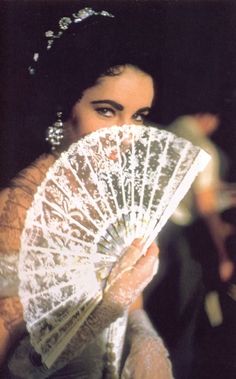
Like many of my generation, I have a curio cabinet filled with things that bring back memories and things that make me simile, all accumulated over the years, on trips, and as gifts. Two special items are fans. Yep, those fold-up hand-held fans but special nonetheless.


One I bought in Spain and one my niece brought me from Japan, where she lived for many years and where her husband is from. Often associated with both Spanish flamenco dancers and Japanese geisha dancers, fans are much more than simple accessories and have a long and interesting history.


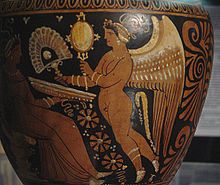
To start with, there are basically two versions of the hand-held fan: the folding type and the rigid style. Both date back centuries, with ancient Hebrews, Greeks, and Romans all having been depicted using fans. The items are also mentioned in the Bible.


Some say the true origin of the fan goes back as far as 4,000 years and in Egypt, where it was considered a sacred instrument and used in religious ceremonies. It was also seen as a symbol of power and royalty and two fans were found in King Tut’s tomb. In fact, archaeological ruins from the 4th century depict the use of fans.


From there it gets kinda hazy. Both Japan and China stake claim of inventing the modern-day fan and both countries have valid points and history. What is agreed upon is that the folding fan, modeled after the folding wings of a bat, came from Japan while the “fixed” or rigid version was developed in China It wasn’t until the Ming Dynasty that folding fans were introduced in China.


Originally fans were intended for practical reasons like swatting away insects, shielding a lady’s face from the sun or fire, and cooling one off. They were first used by the middle class, who didn’t have staff to fan them or take on household tasks using fans. Both folded and rigid fans became popular imports in 1500s Europe as trade routes opened up.


Fans quickly become exotic and stylish symbols of wealth and class, even falling into the “expensive toys” category. It didn’t take long for well-healed women to soon be seen carrying an assortment of hand-held fans, which were often decorated with jewels and feathers and hanging from the skirts of the likes of even Queen Elizabeth I. They eventually were considered works of art and created by specialized craftsman with many hand-painted on luxurious silk.


This was not the case across the ocean in America though, where the fan had much more humble origins. Fans stateside were rarely jewel-encrusted or hand-painted. Instead, they were often produced and mended by the likes of Shakers and made from straw or paper.


Fast-forward to today, where in Japan the folding fan remains very important in Japanese society and culture; even in that of sumo wrestling. A traditional fan is made from washi paper while fans made of silk are considered the most precious. A fan symbolizes prosperity through its opening up and its single starting point and wooden strips going out from it resemble the various paths leading us through life after the single point of birth.


The color of and pictures on a fan are also full of meaning. A pair of birds symbolize a loving couple, bamboo and pine represent patience, a lion symbolizes strength, a koi carp represents luck and a long life, plum blossoms represent a new beginning, while cherry blossoms represent the love of parents as well as richness and good luck. Typically, fans will consist of an odd number of pictures, as odd numbers are considered lucky.  Gold colored fans are believed to attract wealth while red and white ones are considered to bring luck.


In Spain, fans go hand-in-hand, both literally and figuratively, with classic flamenco dancing. It’s believed that both the fans and shawls used in flamenco originally came from China and Japan but Spaniards have made them uniquely their own through their passionate dance.  Popular products coming through Portugal through trade routes and it didn’t take long for fans to become sought after items, especially by those in Southern Spain where the weather is hot and flamenco originated.


Growing up my sisters and I took flamenco lessons and I still love the dance to this day. It is considered a very seductive dance that incorporates emotion, grace, and style in a performance full of power and passion. If you’ve never seen a live flamenco performance, I highly recommend doing so.


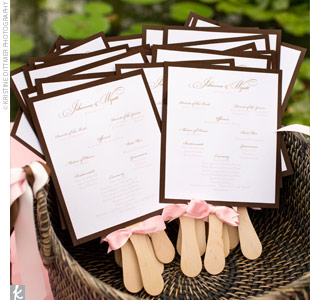
Brides have jumped on board the fan wagon and fans are making their way down wedding aisles in many forms. One way is to provide folded versions for outdoor wedding guests while another option is a more rigid version complete with wedding party or wedding schedules printed on them. Another popular trend is to incorporate fans in a bridal or bridesmaid bouquet.


The fashion world has of course not missed the boat on this one, with many a fashion house incorporating fans on their runways and splashing their logos on fans of all fashions.  So in style are fans, that designer versions were given to front row VIPS at a recent Dior Couture show, of course emblazoned with the design house name and logo.


Ironically it was Dior’s home of Paris where Jean-Pierre Duvelleroy launched his fan house in 1827 and it stands today as one of the rare French fan makers still in existence. The well-known French fan maker and leather goods manufacturer is credited with introducing the notion of “fan language” to his fans. Some say it was just a marketing ploy by him and other manufacturers to sell fans, but I personally like the concept; a concept that has never been fully debunked.


In the courts of early England and Spain, it was said that fans were used in, yes, a secret and unspoken language of sorts. These hand messages were clever in that they allowed a woman the ability to cope with stifling and restrictive social etiquettes. And according to a recent exhibit on the history of fans at Purdue University, Joseph Addison, publisher of “The Spectator” in the early 1700s, is credited with opening an academy for women to be trained in the use and handling of a fan, saying “women are armed with fans as men with swords and sometimes do more execution with them.” Amen sistas!


So, what exactly was this secret language? Jules Duvelleroy’s “Language of the Fan” leaflets included a code supposedly used by women for centuries. True or not, I’m a fan.


Some of those codes were:

  • “We are watched”: Twirl the fan in the left hand
  • “Follow me”: Carry the fan in the right hand in front of face
  • “Do not betray our secret”: Cover the left ear with the open fan
  • “I hate you”: Draw the fan through the hand
  • “I love you”: Draw the fan across the cheek
  • “I wish to speak to you”: Touch the tip of the fan with the finger
  • “Yes.”: Let the fan rest on the right cheek
  • “No”: Let the fan rest on the left cheek
  • “You are cruel”: Open and shut the fan
  • “We will be friends”: Drop the fan
  • “I am married”: Fan slowly
  • “I am engaged”: Fan rapidly
  • “Kiss me”: Bring the handle of the fan to the lip


With the heat of the summer upon us, maybe it’s time to fan up and speak the language!


Right or Wrong April 4, 2025

Filed under: Uncategorized — carlawordsmithblog @ 9:07 pm

I was recently scrolling through social media and came upon a lengthy post by singer Lauren Daigle. If you are familiar with her, you know her message is always positive and uplifting. If you aren’t familiar with her, you’d look at a photo of her and guess she’s more of a Grateful Dead fan then that of the Greatest One. This post however, was a little different.


Evelyn Henson


In it she shared multiple examples of being confronted by several negative and aggressive people in one day for totally unnecessary reasons. They didn’t recognize her but made sure they gave her a piece of their obvious conflicted minds. She went on to ask followers “what’s happened to us?” Why are there so many angry people out there? (And please, no one word answers here dealing with hate.) Can’t we all be kind and spread joy instead of bitterness and anger? It made me think and made me a little sad.


You catch more flies with honey than vinegar.

Common saying, right? Those flies are pretty happy right now because there’s a whole lot of vinegar out there and very little honey. I get it. People are pissed. People are hurt. People are worried. People are resentful. It’s okay to disagree. It is another matter to disrespect someone as a person. When that happens, game over for me. Insulting me and my beliefs personally will never get me to listen to your side or assess your argument. The minute you name call, I’m out. We can express our displeasure and let people know we are disappointed, but come on people, do it like adults and do it with courtesy and respect.


James Clear

I subscribe to author James Clears’ simple yet motivating weekly newsletter that consists of three ideas, two quotes, and one question to consider each week. I love getting them and almost always walk away with some type of inspiration. Again, they’re simple but so good.


One of his three ideas recently was “the way to help someone is not to critique what makes them smaller but to encourage what makes them larger.” Pretty sure Lauren Daigle would agree.


Maybe it’s all the stuff I’m hearing and seeing out there that has me on this wavelength and music always proves prolific. Just yesterday driving, The Vaughn Brothers’ 1990 hit “Tick Tock” was the next selection on my playlist. Boy were they ahead of their time as they sang about a dream in which everyone worked together and got along. “Time’s ticking away” they sang. Brother Stevie Ray is probably rolling in his grave seeing how the times haven’t really changed in so many ways.


Indeed, times are tough right now. Hate, unrest, and bitterness abound. Friend groups and even families are fracturing. I’m feeling it personally and it hurts. Sadly, I can’t fix it. It’s disheartening and it’s depressing. Most of all, it’s just wrong.


What to do, what to do?


Love your enemies. That’s what. At least that’s what Jesus so famously preached during his Sermon on the Mount. If you’re any level of Christian, I’m guessing you know the scripture. But, are you living that scripture after you religiously (excuse the pun) attend mass or service or are you harboring hate and letting it fill your heart as you go about your life. Hmmmmm…


There’s an old Texas saying that suggests “Hug your friends tight but your enemies tighter…hug them so tight they can’t wiggle” and Oscar Wilde once famously said, “Always forgive your enemies. Nothing annoys them so much.” He and Texans may be onto something and the Japanese would agree.


There is a form of Japanese martial art called aikido. The idea is to absorb the aggressive energy of your opponent, move with it rather than against it, which will frustrate your opponent until he comes to the point of realizing that fighting is useless. I wish many out there right now would take their “fight” to this level.


It is said that hatred does more damage to the person in which it is stored than to the person on which it is poured and no amount of vindictiveness or destruction ever leads to anything good. It’s also said that gentleness is actually a sign of moral strength and ultimately fosters harmony in relationships and builds trust. It is the combination of self-control, compassion, and humility and boy could we use a giant dose of gentleness. Peaceful and respectful disagreement…not insults and violence…should be all of our goals.


Here’s where I might lose some of you. I recently read Mrs. Trump’s “Melania” book and, say what you want about her based solely on her husband, the woman is highly intelligent, educated, and accomplished. She ends her book with an excerpt from a speech she gave last year. Here is an excerpt of the excerpt that I hope we can all learn something from:


“We have always been a unique union but courage and common sense must ascend and bring us back together as one. Let us not forget that differing opinions, policy, and political games are inferior to love. And let us remember that when the time comes to look beyond the left and the right and beyond the red and the blue, we will ascend above the hate, the vitriol, and the simple-minded ideas that ignite violence. Let us reunite. Now.”


We all need to find a better way to disagree, to be better winners, and to be better losers. Life happens. We don’t always get our way. So, as we head into the Lent homestretch, let’s all look in the mirror and truly own the division we might be causing. Take all “buts” and justifications out of it and take a step back. Is it really doing any good or is it doing more harm than good? Is it truly changing anything or just creating negativity? Maybe it’s time to fast from differences and feast on unity. Can I get an amen?


Gone Fishing March 30, 2025

Filed under: Uncategorized — carlawordsmithblog @ 8:27 pm

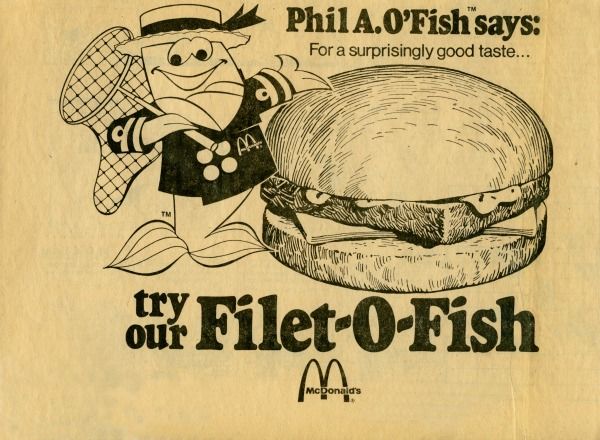
This past Friday my husband and I were in an Uber headed to the airport and headed home. It was around lunch time so we talked about where we might grab a quick bite to eat while waiting for our flight. He mentioned he was craving Jersey Mike’s, which he loves, but then realized it was Friday and it’s Lent so meat was a no no and a no go. I responded that maybe there’s a McDonald’s there and we can get a Filet-O-Fish. Yeah, I know, don’t tell Robert F. Kennedy, Jr. but those little fish sandwiches are a Lenten tradition for many. And quite perfectly, they were created by a Catholic and for that very reason.


It all stems back to the Catholic tradition of not eating meat on Fridays during Lent and an innovative franchise owner named Lou Groen. A devout Catholic, Groen came up with the idea of serving a fish sandwich to customers at his Cincinnati McDonald’s restaurant. It was introduced in 1963 and the legacy continues nationwide. So popular is the sandwich, that it once had its own mascot called Phil A. O’Fish, who premiered in 1976. Dressed in a sailor suit and net and ready to go fishing, he no longer exists but love for his namesake sandwich remains.


As a Catholic, Groen was looking for a Lenten Friday meal but as a businessman he was also looking for something that would prevent customers from fleeing down the street on Fridays to a local fish joint. The sandwich was somewhat of a risk for a restaurant based mainly around hamburgers, but Groen’s creation of a simple breaded fish patty on a bun with tartar sauce and a slice of cheese was brilliant. With 87 percent of the Cincinnati population being Catholic, his creation and research paid off. In a big way.


The year it was introduced, the sandwich saved the franchise and became a permanent menu fixture. During Lent, the original location sells more than 500 fish sandwiches a day, making up almost 20 percent of sales. Outside of Lent, those numbers are 70 per day and only six percent of total sales.


Originally made with halibut, the Filet-O-Fish now consists of Alaskan Pollock, a type of cod, due to halibut being too expensive. The fish is caught fresh and not raised on farms and what kinda sets it apart is the fact that the bun is soft because it’s steamed. It’s the only sandwich on the Micky D’s menu with a steamed bun.


The franchise remains in family hands; a family that has not only passed down the business but their Catholic faith as well, through generation after generation. My guess is they’re all abstaining from meat this Lent and probably enjoying a Filet-O-Fish. Or two.


So why do Catholics not eat meat on Lenten Fridays? The tradition stems from early Christian teachings that emphasize penance and sacrifice. Come to find out that Lutherans and Episcopalians, among perhaps others, also follow the custom.


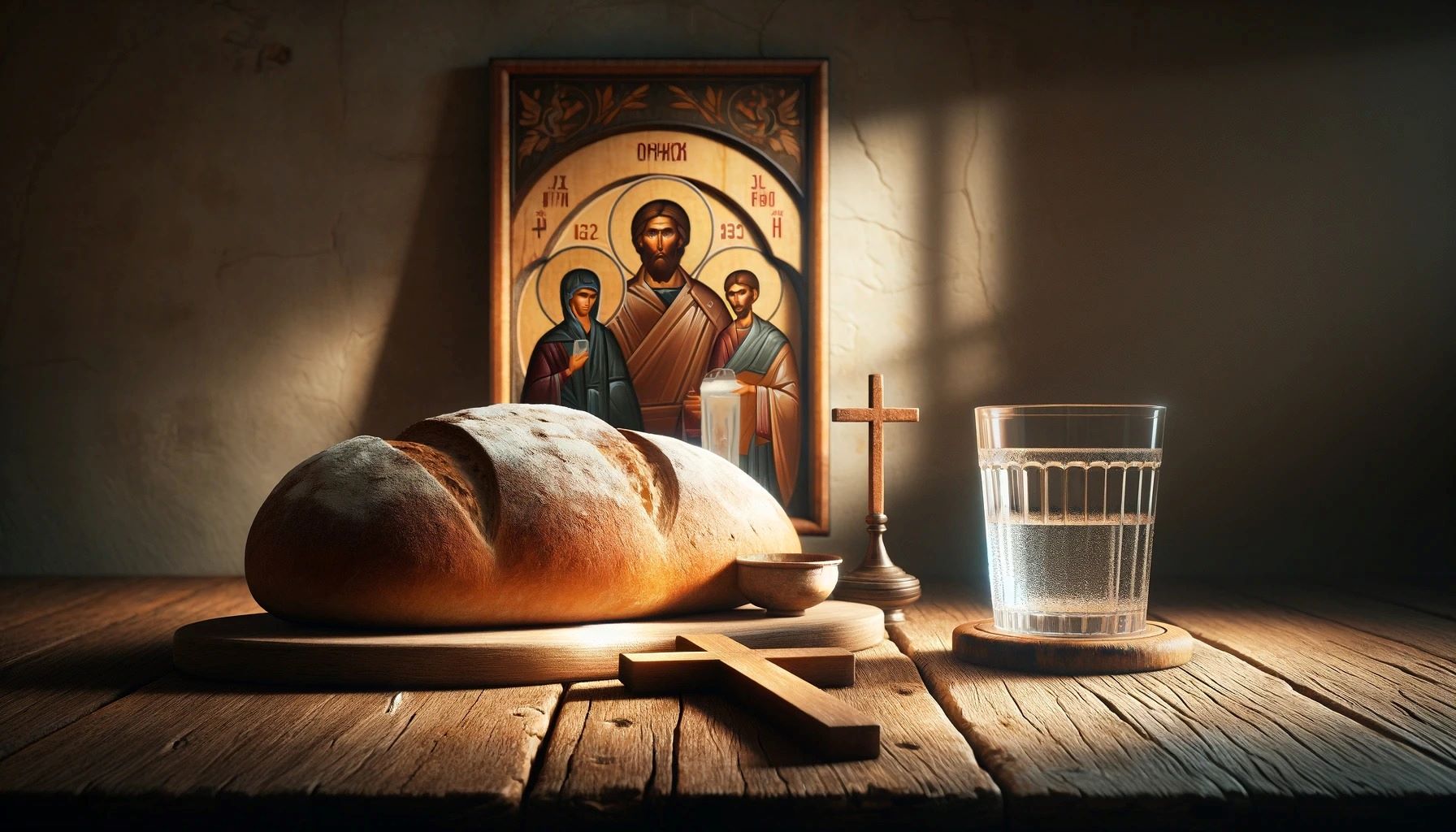
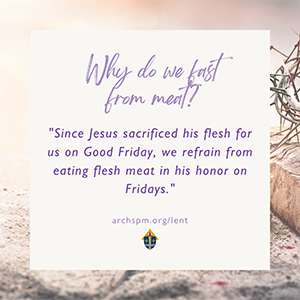
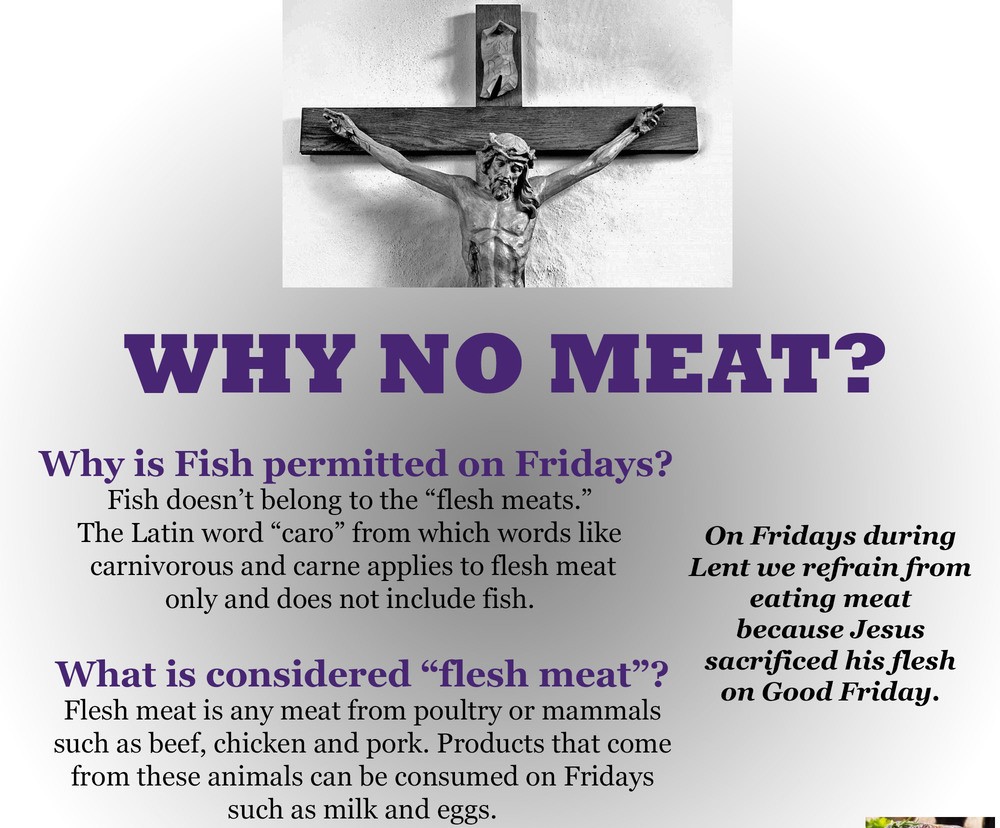
Abstinence is a form of penance and penance expresses sorrow and contrition for wrongdoings. It indicates an intention to turn away from sin and back to God. It’s also a sacrifice for most and so by refraining from eating meat, we are reminded of Christ’s ultimate sacrifice for us: His very life. Since Jesus sacrificed His flesh for us on Good Friday, we abstain from eating “flesh meat” in His honor.


Flesh meat includes the meat of mammals and poultry, including beef, pork, chicken, and turkey. Fish don’t belong to the flesh meat category. Also, according to 9th century definitions, fish don’t bleed so they don’t count as “meat.” In addition, back in the day, flesh meat was more expensive and often reserved for feasting and rejoicing whereas the cheaper fish was eaten more often and not associated with celebrations.


In the end, it’s all done in a spirit of humility and aligns with the concept of Lent being a period of giving up certain pleasures and appreciating the many blessings in our lives. Sometimes it really is as simple as a piece of fish on a bun. Just ask McDonalds.


Irish Eyes Are Smiling March 17, 2025

Filed under: Uncategorized — carlawordsmithblog @ 5:05 pm

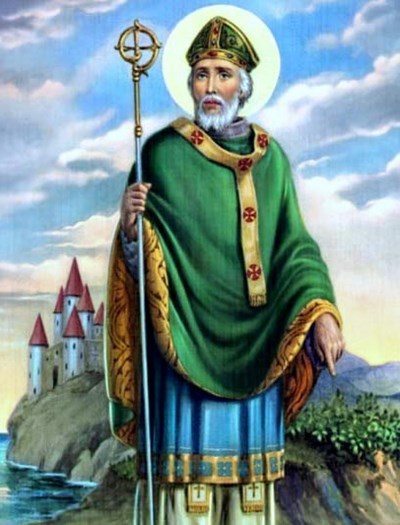
Happy St. Patrick’s Day everyone! We are all a wee bit Irish today and I’m guessing you are wearing green as you read this as we all honor the land of leprechauns, fabulous golf, U2, step dancing, Guinness, shamrocks, green beer, Irish coffee, and St. Patrick. But who was the saint named Patrick and why do we celebrate him in such a big way?


Forever tied to Ireland, Patrick wasn’t born on the Emerald Isle but in Britain. When he was 16 young Patrick was kidnapped by Irish raiders who took him to Ireland and sold him as a salve. He spent many years there herding sheep and turning to God in prayer. He escaped when he was 22 and made his way back to England where he spent 12 years in a monastery. Legend has it that he had a dream in which the people of Ireland were calling him back. The dream is said to have been the voice of God encouraging him to spread Christianity across Ireland and convert the pagans. Patrick returned to Ireland and began preaching the gospel, building churches, and converting many. Born of wealth, Patrick lived in poverty and suffered greatly until he died on March 17, 461. He is said to be buried in Down Cathedral in the County of Down in Ireland and ironically, St. Patrick’s Day is celebrated on the day he died, not on his birthday.


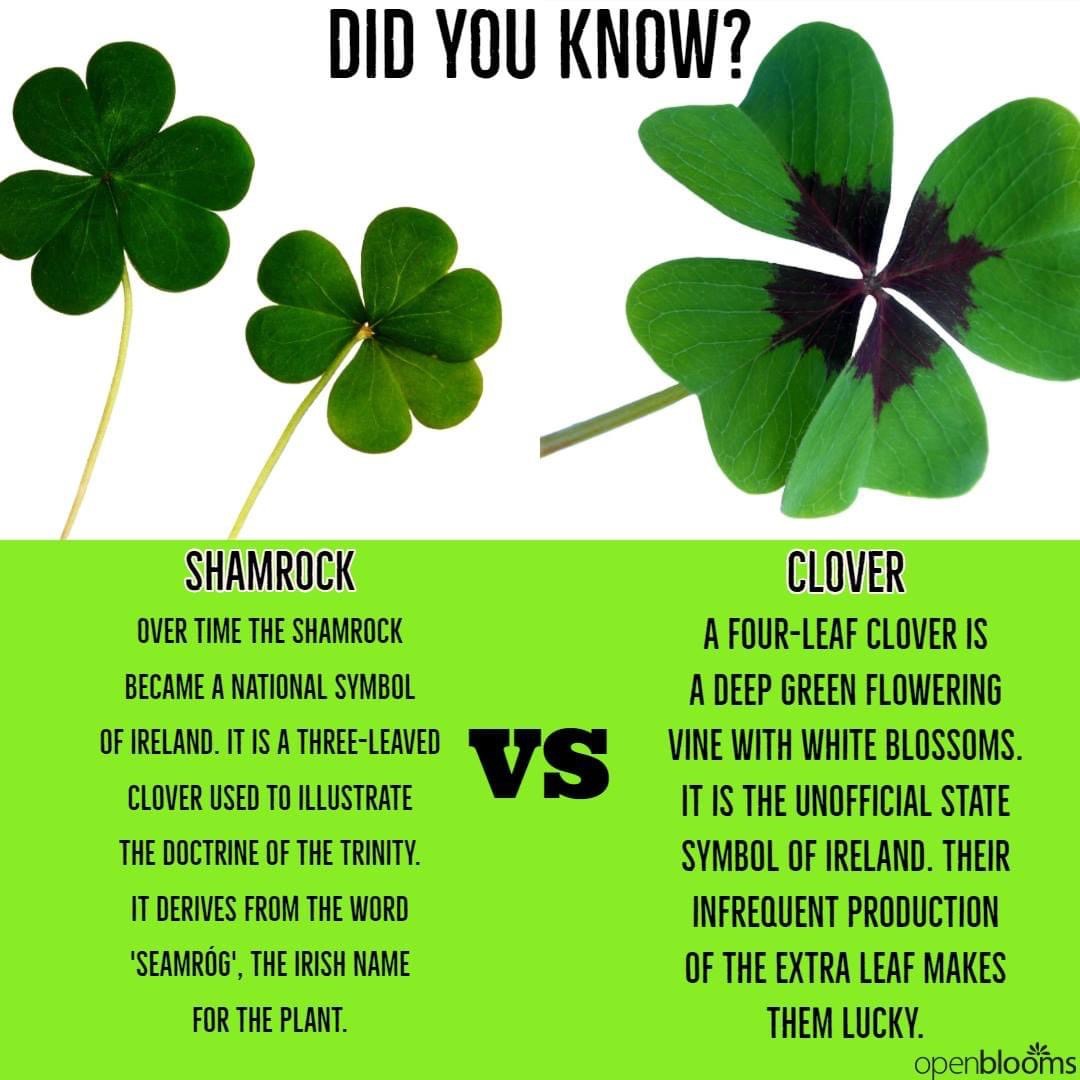
My favorite part of the St. Patrick story is that he used the shamrock as a way to teach the Holy Trinity. The simple green plant grows abundantly in Ireland so he cleverly used it to explain the trinity: Father, Son, and Holy Spirit. His idea was so convincing that even pagan rulers converted to Christianity and to this day the sprout is often called the Catholic rose.


The shamrock has three leaves and is considered a clover plant but what is the difference between it and the four-leaf clover? The latter is the result of a mutation in the clover plant that causes it to sprout four leaves instead of the normal three. These four-leaf wonders are very rare and is why they are considered a universal symbol of good luck.


Patrick loved incorporating other traditional rituals in his lessons for both simplicity and proof. Because fire was sacred to the Irish, Patrick superimposed a sun onto a Christian cross. Today this cross, called a Celtic cross, is one of Christianity’s most popular.


Another cross, St. Patrick’s Cross of Ireland, also makes up part of the Union Jack, the flag of the United Kingdom. When you look at the flag, you can see it is actually made up of three different crosses:  St. George’s red Cross of England, St. Andrew’s white Cross of Scotland, and St. Patrick’s red one. And to be clear, the UK is considered all of Great Britain – England, Scotland, and Wales – with the addition of Northern Ireland. Ireland is considered its own republic.


Funny thing is, as much as a celebration and party St. Patrick’s Day is today, from 1903-1970 it was considered a religious holiday according to Irish law, which required pubs remain closed for the day. Squeal! The law was reclassified as a national holiday in 1970, paving the way for the opening of drinking establishment doors and green beer. In the Diocese of Ireland however, it is still considered a Holy Day of Obligation, meaning Catholics are obligated to attend mass and receive the Blessed Sacrament.


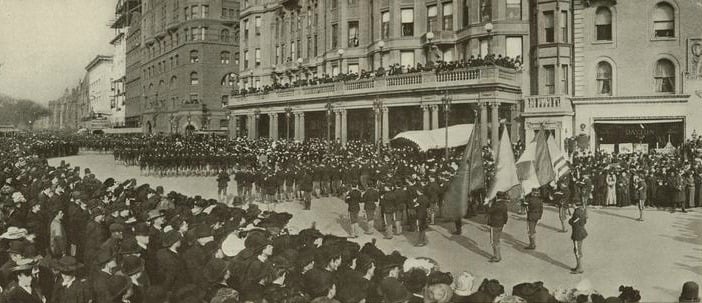
Stateside, it all started as a political holiday when American Irish immigrants organized themselves and commemorated St. Patrick with annual parades and festivities to demonstrate their political and social might. Ironically, there are more Irish in the U.S. than in Ireland! There are an estimated 34 million Americans who claim Irish ancestry but the population of Ireland is only 4.2 million.


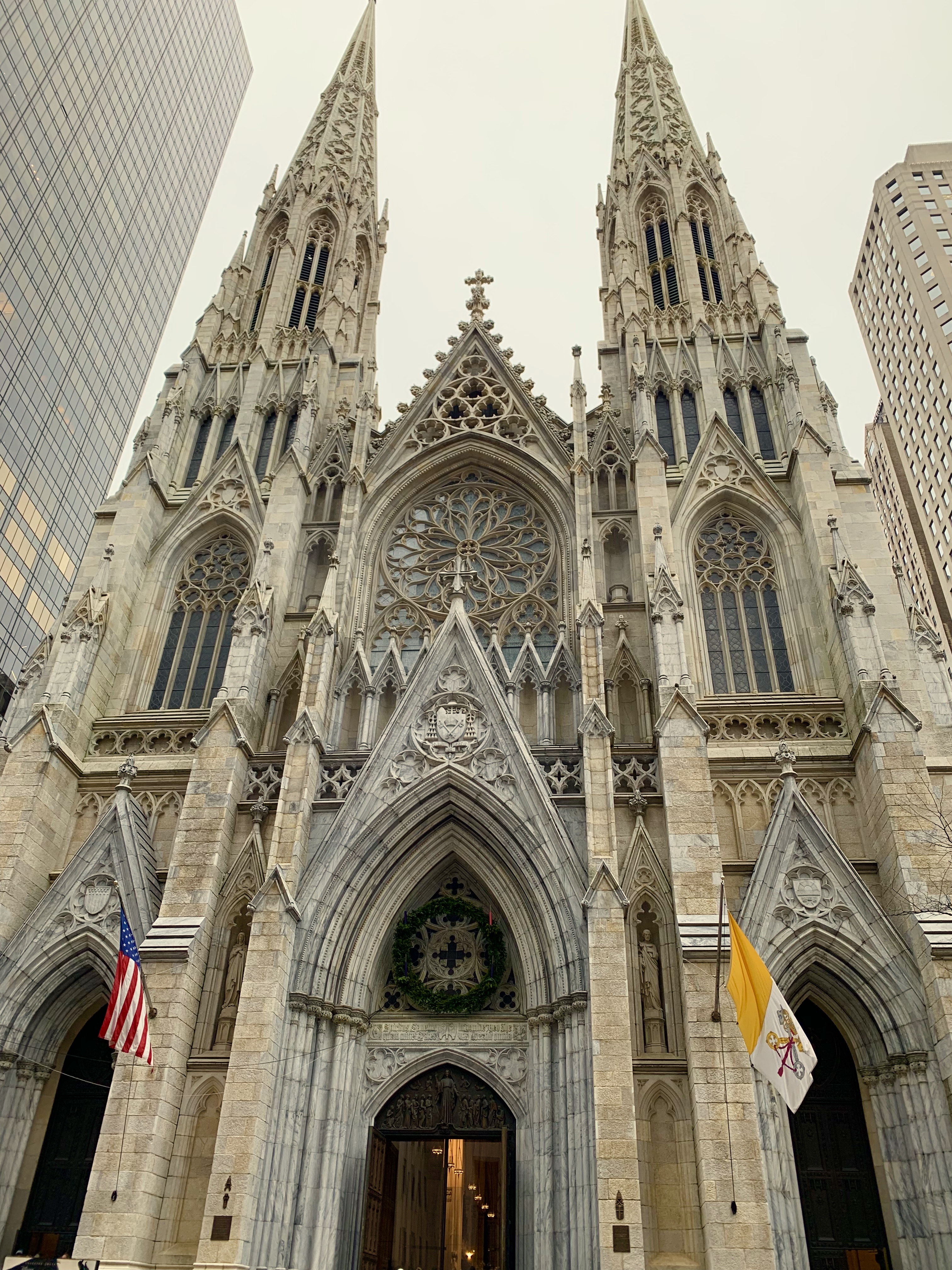
St. Patrick today, along with St. Nicholas and St. Valentine, is one of Christianity’s most widely known figures and his prayers can be found among all walks of life. St. Patrick’s Cathedral in New York City is one of the city’s most popular tourist attractions and the Fifth Avenue Neo-Gothic icon ranks right up there with the Statue of Liberty and the Empire State Building. And, in case you’re wondering, St. Patrick isn’t only revered by Catholics. He is honored with a feast day in the Episcopal Church and is also venerated by the Orthodox Church.


Parades and festivals will happen in many places today, but perhaps the ones in New York, Boston, and Chicago rank highest. Surprisingly, St. Patrick’s Day is also a big event in Dallas. As with everything in Texas, it is done in a very big way in Big D! In Chicago, the Chicago River is colored green and green beer and whiskey flow abundantly throughout the city. And it’s WHISKEY, not WHISKY. Irish spell the scotch with an added “e,” while their Scottish neighbors omit the extra vowel. American-made whiskeys also add the “e.”


Lastly, the color green. It’ll be everywhere you look today and be ready to get pinched if you’re not wearing it. It’s definitely tied to St. Patrick’s Day and all things Irish, but it’s also tied to jealousy. “Green with envy” is a common saying but my lads, it’s nothing to celebrate. Today and every day, let’s take a cue from St. Patrick and be giving not envious. It’s a trait that will make all eyes smile, not just those Irish ones.


Happy St. Patrick’s Day and the luck of the Irish to you!


Irish Eyes Are Smiling

Filed under: Uncategorized — carlawordsmithblog @ 4:59 pm

Happy St. Patrick’s Day everyone! We are all a wee bit Irish today and I’m guessing you are wearing green as you read this as we all honor the land of leprechauns, fabulous golf, U2, step dancing, Guinness, shamrocks, green beer, Irish coffee, and St. Patrick. But who was the saint named Patrick and why do we celebrate him in such a big way?

Forever tied to Ireland, Patrick wasn’t born on the Emerald Isle but in Britain. When he was 16 young Patrick was kidnapped by Irish raiders who took him to Ireland and sold him as a salve. He spent many years there herding sheep and turning to God in prayer. He escaped when he was 22 and made his way back to England where he spent 12 years in a monastery. Legend has it that he had a dream in which the people of Ireland were calling him back. The dream is said to have been the voice of God encouraging him to spread Christianity across Ireland and convert the pagans. Patrick returned to Ireland and began preaching the gospel, building churches, and converting many. Born of wealth, Patrick lived in poverty and suffered greatly until he died on March 17, 461. He is said to be buried in Down Cathedral in the County of Down in Ireland and ironically, St. Patrick’s Day is celebrated on the day he died, not on his birthday.

My favorite part of the St. Patrick story is that he used the shamrock as a way to teach the Holy Trinity. The simple green plant grows abundantly in Ireland so he cleverly used it to explain the trinity: Father, Son, and Holy Spirit. His idea was so convincing that even pagan rulers converted to Christianity and to this day the sprout is often called the Catholic rose.

The shamrock has three leaves and is considered a clover plant but what is the difference between it and the four-leaf clover? The latter is the result of a mutation in the clover plant that causes it to sprout four leaves instead of the normal three. These four-leaf wonders are very rare and is why they are considered a universal symbol of good luck.

Patrick loved incorporating other traditional rituals in his lessons for both simplicity and proof. Because fire was sacred to the Irish, Patrick superimposed a sun onto a Christian cross. Today this cross, called a Celtic cross, is one of Christianity’s most popular.

Another cross, St. Patrick’s Cross of Ireland, also makes up part of the Union Jack, the flag of the United Kingdom. When you look at the flag, you can see it is actually made up of three different crosses:  St. George’s red Cross of England, St. Andrew’s white Cross of Scotland, and St. Patrick’s red one. And to be clear, the UK is considered all of Great Britain – England, Scotland, and Wales – with the addition of Northern Ireland. Ireland is considered its own republic.

Funny thing is, as much as a celebration and party St. Patrick’s Day is today, from 1903-1970 it was considered a religious holiday according to Irish law, which required pubs remain closed for the day. Squeal! The law was reclassified as a national holiday in 1970, paving the way for the opening of drinking establishment doors and green beer. In the Diocese of Ireland however, it is still considered a Holy Day of Obligation, meaning Catholics are obligated to attend mass and receive the Blessed Sacrament.

Stateside, it all started as a political holiday when American Irish immigrants organized themselves and commemorated St. Patrick with annual parades and festivities to demonstrate their political and social might. Ironically, there are more Irish in the U.S. than in Ireland! There are an estimated 34 million Americans who claim Irish ancestry but the population of Ireland is only 4.2 million.

St. Patrick today, along with St. Nicholas and St. Valentine, is one of Christianity’s most widely known figures and his prayers can be found among all walks of life. St. Patrick’s Cathedral in New York City is one of the city’s most popular tourist attractions and the Fifth Avenue Neo-Gothic icon ranks right up there with the Statue of Liberty and the Empire State Building. And, in case you’re wondering, St. Patrick isn’t only revered by Catholics. He is honored with a feast day in the Episcopal Church and is also venerated by the Orthodox Church.

Parades and festivals will happen in many places today, but perhaps the ones in New York, Boston, and Chicago rank highest. Surprisingly, St. Patrick’s Day is also a big event in Dallas. As with everything in Texas, it is done in a very big way in Big D! In Chicago, the Chicago River is colored green and green beer and whiskey flow abundantly throughout the city. And it’s WHISKEY, not WHISKY. Irish spell the scotch with an added “e,” while their Scottish neighbors omit the extra vowel. American-made whiskeys also add the “e.”

Lastly, the color green. It’ll be everywhere you look today and be ready to get pinched if you’re not wearing it. It’s definitely tied to St. Patrick’s Day and all things Irish, but it’s also tied to jealousy. “Green with envy” is a common saying but my lads, it’s nothing to celebrate. Today and every day, let’s take a cue from St. Patrick and be giving not envious. It’s a trait that will make all eyes smile, not just those Irish ones.

Happy St. Patrick’s Day and the luck of the Irish to you!


A Timely Twist on Pretzels March 9, 2025

Filed under: Uncategorized — carlawordsmithblog @ 5:31 pm

My husband loves pretzels. He eats them almost every day and every time I go grocery shopping; I grab a bag for him. Me? Not so much. Unless it’s one of those decadent Auntie Anne’s in an airport, I pretty much could live without pretzels. Okay, the Dot’s Pretzels are pretty good too! Funny thing about my hubby is that he prefers the twists to the rods or the sticks. And just plain ole pretzels, nothing fancy or flavored. Those twists, come to find out, have an interesting history and what a perfect day to share it being the first Sunday of Lent.


Their origin is said to date back to the 600s when Catholic monks began making them by taking a long strip of dough and arranging it in the shape of arms folded over the heart. The three holes left by creating this shape represented the Holy Trinity and legend has it that these treats of twisted baked dough were given to students as they learned their prayers. At the time, crossing one’s arms was the traditional posture for prayer. In today’s Catholic churches, anyone who has not made their First Holy Communion crosses their arms in this manner as they make their way up the Communion line to receive a blessing.


But what about the name?


The monks called their little breads “bracellae,” which is Latin for “little arms” and from which we got the German word “bretzel.” And, interestingly enough, the Latin word for “little reward” is “pretiola,” which is pronounced “pret-zi-oh-la” and sounds a lot like “pretzel!”


This is all very timely for another reason. In a word, Lent. You see, back when pretzels were first concocted, the rules of abstinence and fasting during Lent were much stricter than today. Catholics were forbidden from consuming dairy, eggs, or meat. Pretzels, made using only flour, water, and salt, were the perfect answer to a perfect fast.


Their symbolism doesn’t end there.


Back in the early 1600s, they were are a symbol of union in Switzerland. Weddings of royal couples often featured pretzels to represent the bond of matrimony and, according to legend, this may be where we got the phrase “tying the knot.” Lastly, the intertwined shape of a pretzel also symbolizes love in many parts of the world as at first glance, their shape resembles a heart.


In addition, pretzels are also easy to make, affordable, and most aren’t fried or full of chemicals and additives. They can be found everywhere from carnivals, charcuterie boards, kids’ lunches, and yes, airports! Today they come chocolate and yogurt coated and sometimes with sprinkles. They come in flavors ranging from cinnamon sugar to honey mustard to spicey. Pretzels are so prevalent that they have their own National Pretzel Day on April 26 and October is celebrated as National Pretzel Month.


That’s probably a pretty popular day and month in Pennsylvania, as Pennsylvanians eat more pretzels per capita than any other state. The state also produces 80 percent of the country’s pretzels and in 1993, the state opened the Pretzel Museum. Julius Sturgis would be so proud, as he opened the first commercial pretzel bakery in Lititz, Pennsylvania back in 1861. It was about that time that Swiss and German immigrants introduced the pretzel to North America. They too would be proud as the U.S. pretzel industry boasts an annual worth of $550 million and the average American consumes an average of 1.5 pounds of pretzels a year. Pretty sure my husband raises the average on that one but we won’t go there.


Shockingly, pretzels almost didn’t make it. In the early 20th century, they were considered German fare and anti-German sentiment during World War I resulted in a distaste for their taste. They did survive the war, but then came Prohibition, which presented another challenge. Bars had been one of the pretzel industry’s largest buyers up to that point, and without them manufacturers feared they wouldn’t be able to stay afloat. But surprisingly enough, pretzel makers actually flourished under the 18th amendment.


Coming full circle here, it’s fun learning about pretzels and their association with fasting and Lent…all with a twist! But why do we fast? Partly because we’re sinful but hopeful and partyly because we hunger for God. As Bishop Robert Barron wrote, every spiritual master recognizes the danger that if we allow the superficial hunger of our lives to dominate, we never reach the deepest hunger. Fasting is a way of discipling the hunger for food and drink all while prompting us to focus on what really feeds us. Unless we fast, we may never realize how hungry we are for God. And, as beloved Father Jared Cooke said many moons ago in a sermon, “If you’re not hungry for God, maybe you’re just full of yourself.”


Here’s a simple little recipe for pretzels I used to love sharing with my preschool parents when I taught my students the Lenten pretzel story. If you’re more ambitious, I’m also including the Food Network’s recipe. Enjoy!


Easy Pretzels

Dissolve one cake of yeast or 2 ¼ teaspoon of yeast into 1 ½ cups warm water.

Add 1 t salt and 1 T sugar

Blend in four cups of flour and knead the dough until smooth.

Cut dough into small pieces, roll the pieces into “ropes and then twist the ropes into shape.

Place pretzels on lightly greased cookie sheet and brush with one beaten egg (unless fasting on eggs)

Sprinkles with coarse salt and bake at 425 for 12-15 minutes.


Homemade Soft Pretzels

Food Network

Ingredients

1 1/2 cups warm (110 to 115 degrees F) water

1 tablespoon sugar

2 teaspoons kosher salt

1 package active dry yeast

22 ounces all-purpose flour, approximately 4 1/2 cups

2 ounces unsalted butter, melted

Vegetable oil, for pan

10 cups water

2/3 cup baking soda

1 large egg yolk beaten with 1 tablespoon water

Pretzel salt

Directions

  1. Combine water, sugar, and kosher salt in the bowl of a stand mixer and sprinkle the yeast on top. Allow to sit for 5 minutes or until the mixture begins to foam. Add the flour and butter and, using the dough hook attachment, mix on low speed until well combined. Change to medium speed and knead until the dough is smooth and pulls away from the side of the bowl, approximately 4 to 5 minutes. Remove the dough from the bowl, clean the bowl and then oil it well with vegetable oil. Return the dough to the bowl, cover with plastic wrap and sit in a warm place for approximately 50 to 55 minutes or until the dough has doubled in size.
  2. Preheat the oven to 450 degrees F. Line 2 half-sheet pans with parchment paper and lightly brush with the vegetable oil. Set aside.
  3. Bring the 10 cups of water and the baking soda to a rolling boil in an 8-quart saucepan or roasting pan.
  4. In the meantime, turn the dough out onto a slightly oiled work surface and divide into 8 equal pieces. Roll out each piece of dough into a 24-inch rope. Make a U-shape with the rope, holding the ends of the rope, cross them over each other and press onto the bottom of the U in order to form the shape of a pretzel. Place onto the parchment-lined half sheet pan.
  5. Place the pretzels into the boiling water, 1 by 1, for 30 seconds. Remove them from the water using a large flat spatula. Return to the half sheet pan, brush the top of each pretzel with the beaten egg yolk and water mixture and sprinkle with the pretzel salt. Bake until dark golden brown in color, approximately 12 to 14 minutes. Transfer to a cooling rack for at least 5 minutes before serving.


The King of all Cakes and Tuesdays (Copy) March 4, 2025

Filed under: Uncategorized — carlawordsmithblog @ 8:37 pm

Happy Fat Tuesday everyone! Are you wearing purple, gold, and green; donning beads and boas; marching in or watching a parade; and eating King Cake?  If you’re in or from Louisiana probably so, as today is a very festive day, especially in New Orleans. Fingers are crossed that the weather holds out!


But all partying aside, Mardi Gras and Fat Tuesday are religious in origin as is the infamous King Cake. Let’s find out how and why.


Fat Out Special

Mardi Gras is really just today and despite its party reputation, it has a religious origin. Also known as Fat Tuesday, it is always the Tuesday before Ash Wednesday. Many people (me included) confuse Mardi Gras with Carnival, which is the celebratory season that stretches from Epiphany to Fat Tuesday. Rewind here a bit.


The Christian Feast of the Epiphany is also the 12th day of Christmas and marks the day when the Three Wise Men/Three Kings arrived in Bethlehem to see the baby Jesus. For those in places like New Orleans, it also marks the official end of the Christmas season and the beginning of Carnival season.


The French come into heavy play here as “mardi” means Tuesday in French and “gras” means fat. Many believe the first documented Mardi Gras celebration in America was in March of 1699 when French explorers traveled to America and docked near what is now New Orleans. They named their docking location “Point du Mardi Gras” and as other French immigrants arrived, Mardi Gras celebrations became increasingly popular. Until, that is, the Spanish took control of the Crescent City in 1762 and outlawed Mardi Gras celebrations. But, when Louisiana became a state in 1812, Mardi Gras celebrations returned and really never left. No one does a parade like New Orleans and in fact, and since the first NOLA Mardi Gras parade in 1827, there’s been a parade in the city every year.


Mardi Gras and accompanying Carnival are celebrated all over the world, including well-known festivities in Brazil and Venice but rest assured New Orleans ranks right up there. Fat Tuesday may be all about indulging in everything festive, fun, and frivolous but there’s a reason for that too.


It’s the day before Ash Wednesday, which is when Lent starts. Traditionally Lent is a period of 40 days of fasting and giving up bad and questionable habits as well as focusing on doing good. Today’s the day to get it all out of your system for the next 40 days!


Take the Cake

A big part of Mardi Gras is the famous King Cake, which, behind maybe birthday and wedding cakes, is considered the king of all cakes. So, what is it with those colorful confections and is there really a baby inside each one? The answer is traditionally yes, and they too have a religious significance. Remember, all this Carnival and Mardi Gras celebration relates back to Epiphany, when the Three Kings traveled to see the newly born baby Jesus. This, my friends, is why the dessert is called a “King Cake” and why there’s a tiny baby hidden inside each one.


Francophiles will also be glad to hear that the beloved King Cake is said to have been brought to America from France in the 1870s and their traditional oval-shape some say represents the unity of faiths while others say represents a king’s crown. Cakes in New Orleans are decorated in the traditional Mardi Gras colors of purple, green, and gold…the same colors you’ll find those famous beads in. The colors represent, in order, justice, faith, and power.


Funny thing is, many a King Cake is not actually a cake. Some are more bread-like while others resemble a pastry. Whatever they’re made of, they are always colorful and festive. The standard Louisiana version is a brioche-like dough swirled with cinnamon and cream cheese then braided and baked in a circle or oval shape and finished with icing and sprinkles. In France, a “galette des rois” or “cake of kings,” is more of a puffed pastry with a sweet almond filling and garnished with “jewels” like sprinkles and icing. Those in Spain and Latin America enjoy orange-flavored bread wreaths topped with dried fruit, which they call “roscas de reyes” or “cakes of kings.”


Okay, but what about that baby. As I said, it traditionally symbolizes Jesus although some cakes will have money or a trinket inside. Whoever finds one in their slice is crowned “King for the Day” and vows to provide the next king cake and host the next party…whoever hosts a Mardi Gras party buys or makes the King Cake for it. It’s also considered good luck to find it and this “you’re next” tradition ensures celebrations continue in true New Orleans style.


So there you have it and now you know all about Mardi Gras and King Cake. Laissez les bons temps rouler!


The King of all Cakes and Tuesdays

Filed under: Uncategorized — carlawordsmithblog @ 2:30 pm

Happy Fat Tuesday everyone! Are you wearing purple, gold, and green; donning beads and boas; marching in or watching a parade; and eating King Cake?  If you’re in or from Louisiana probably so, as today is a very festive day, especially in New Orleans. Fingers are crossed that the weather holds out!


But all partying aside, Mardi Gras and Fat Tuesday are religious in origin as is the infamous King Cake. Let’s find out how and why.


Fat Out Special

Mardi Gras is really just today and despite its party reputation, it has a religious origin. Also known as Fat Tuesday, it is always the Tuesday before Ash Wednesday. Many people (me included) confuse Mardi Gras with Carnival, which is the celebratory season that stretches from Epiphany to Fat Tuesday. Rewind here a bit.


The Christian Feast of the Epiphany is also the 12th day of Christmas and marks the day when the Three Wise Men/Three Kings arrived in Bethlehem to see the baby Jesus. For those in places like New Orleans, it also marks the official end of the Christmas season and the beginning of Carnival season.


The French come into heavy play here as “mardi” means Tuesday in French and “gras” means fat. Many believe the first documented Mardi Gras celebration in America was in March of 1699 when French explorers traveled to America and docked near what is now New Orleans. They named their docking location “Point du Mardi Gras” and as other French immigrants arrived, Mardi Gras celebrations became increasingly popular. Until, that is, the Spanish took control of the Crescent City in 1762 and outlawed Mardi Gras celebrations. But, when Louisiana became a state in 1812, Mardi Gras celebrations returned and really never left. No one does a parade like New Orleans and in fact, and since the first NOLA Mardi Gras parade in 1827, there’s been a parade in the city every year.


Mardi Gras and accompanying Carnival are celebrated all over the world, including well-known festivities in Brazil and Venice but rest assured New Orleans ranks right up there. Fat Tuesday may be all about indulging in everything festive, fun, and frivolous but there’s a reason for that too.


It’s the day before Ash Wednesday, which is when Lent starts. Traditionally Lent is a period of 40 days of fasting and giving up bad and questionable habits as well as focusing on doing good. Today’s the day to get it all out of your system for the next 40 days!


Take the Cake

A big part of Mardi Gras is the famous King Cake, which, behind maybe birthday and wedding cakes, is considered the king of all cakes. So, what is it with those colorful confections and is there really a baby inside each one? The answer is traditionally yes, and they too have a religious significance. Remember, all this Carnival and Mardi Gras celebration relates back to Epiphany, when the Three Kings traveled to see the newly born baby Jesus. This, my friends, is why the dessert is called a “King Cake” and why there’s a tiny baby hidden inside each one.


Francophiles will also be glad to hear that the beloved King Cake is said to have been brought to America from France in the 1870s and their traditional oval-shape some say represents the unity of faiths while others say represents a king’s crown. Cakes in New Orleans are decorated in the traditional Mardi Gras colors of purple, green, and gold…the same colors you’ll find those famous beads in. The colors represent, in order, justice, faith, and power.


Funny thing is, many a King Cake is not actually a cake. Some are more bread-like while others resemble a pastry. Whatever they’re made of, they are always colorful and festive. The standard Louisiana version is a brioche-like dough swirled with cinnamon and cream cheese then braided and baked in a circle or oval shape and finished with icing and sprinkles. In France, a “galette des rois” or “cake of kings,” is more of a puffed pastry with a sweet almond filling and garnished with “jewels” like sprinkles and icing. Those in Spain and Latin America enjoy orange-flavored bread wreaths topped with dried fruit, which they call “roscas de reyes” or “cakes of kings.”


Okay, but what about that baby. As I said, it traditionally symbolizes Jesus although some cakes will have money or a trinket inside. Whoever finds one in their slice is crowned “King for the Day” and vows to provide the next king cake and host the next party…whoever hosts a Mardi Gras party buys or makes the King Cake for it. It’s also considered good luck to find it and this “you’re next” tradition ensures celebrations continue in true New Orleans style.


So there you have it and now you know all about Mardi Gras and King Cake. Laissez les bons temps rouler!


Dear Diary… February 23, 2025

Filed under: Uncategorized — carlawordsmithblog @ 6:03 pm

Have you heard about the woman who has written in her diary for nearly 90 years? I was fascinated by the story that’s been making the news rounds thanks in part to an article in the “Washington Post.” The piece features 100-year-old Evie Riski from North Dakota who has been journaling every day since 1936. Every day! What an accomplishment! What a masterpiece!



As a writer, I’ve journaled here and there in the past and have many journals in my nightstand and in my grandma’s hope chest but it’s been a hot minute since I’ve written in one. I can however, remember like yesterday getting one of those lockable diaries when I was young and a “Letters to my unborn child” book when I was pregnant. Both were treasured and well-worn. Sadly today’s kids and moms-to-be probably won’t have the same written down memories and sadly I don’t journal per se today. We are still only in February though, so maybe it could be added to my “25 goals in 2025” list. I’ve vowed to read 25 minutes a day in 2025 so maybe I could add writing 25 words in a diary everyday in 2025. Doubtful, but you could say I document a lot!


In our technological world of photos and posts, I consider my photos a sort of “journal.” I have them on my phone, my computers, in plastic bins, and in old-school albums. I also in a way think of my social media posts and even this blog as a pseudo-journaling of my life and the life around me. I know I know, it’s not the same as what Riski has done and continues to do, but it works for me.


Riski’s journals courtesy Michelle Locken

As for Riski, she started journaling when her father gave her a diary when she was 11. At the time, there was no TV, no radio, and even no electricity, so she found comfort in writing. She’s done it ever since and has filled up stacks of notebooks that she saves in a cedar chest.


To date, she has almost 33,000 entries and continues to enter daily diary diatribes even now while living in a retirement home. I love all of this and what I especially love is that after each day’s entry, she flips back to her entry exactly one year ago to reflect on and she writes only in cursive. What a concept! Our forefathers would be proud!


Riski journal entry courtesy Michelle Locken

She has documented everything…childbirth, wars, weddings, family visits, farm chores, historic milestones, and even the death of her beloved husband Donald in 2010. When she was once hospitalized, she wrote down her thoughts on a pieces of paper and later entered them in her diary. Her commitment to writing has never wavered and in some circles, it could be influential in what’s kept her going and sharp even at 100-years-old.


According to Keven Bennett Ph.D. and psychologytoday.com, journaling can help improve mental, emotional, and physical well-being. Whether you call it a journal, a diary, or a simple notebook, writing in one can be very healthy. In today’s world, you can even do so online or on your devices. Here are just some of the benefits of journaling according to Bennett:


Stress and Anxiety. According to research research on mental distress and journaling, writing about your feelings and experiences can be therapeutic and help relieve stress and anxiety. Keep in mind that the benefits depend on how frequently you write and how honest you are with yourself when you do.


Enhanced Creativity. Writing in a diary can help stimulate your imagination and creativity. Brilliant insights and novel solutions are often the result of simply taking the time to write about a problem.


Improved Memory. Keeping a diary can help improve your memory, as you can reflect on past experiences and recall details that may otherwise be forgotten.


Boost Self-Awareness. Writing in a diary allows you to reflect on your thoughts and emotions, helping you understand yourself better. This increased self-awareness can lead to personal growth and development.


Good Mental Health. Keeping a diary can be an effective way to manage symptoms of depression and other mental health conditions. Writing about your feelings can help you process them and find ways to cope with them and it’s also a healthy way to release pent-up emotions before they influence your interpersonal behavior in negative ways.


Motivation. Writing down your goal and plans can help keep you motivated and focused.


Sense of Accomplishment. Finishing a diary entry can provide a sense of accomplishment and satisfaction as you see what you’ve achieved. This can help you see how you’ve grown and changed as a person.


Strengthen Relationships. Writing about your experiences and emotions can help you better understand and communicate with others. Keeping a diary can also be a good way to express your gratitude and appreciate the people in your life. We’ve all heard about “Gratitude Journals,” something I’ve always thought are cool but now I know they’re also beneficial in so many ways.


Greater Productivity. Writing in a diary can help you prioritize tasks and make a plan for the day, which can lead to increased productivity.  I’m a big list maker and have always heard that doing so can help relieve stress as you don’t have to worry about what needs to be done; it’s all written right in front of you.


Legacy. Keeping a diary can be a great way to leave a lasting legacy for future generations and serve as a valuable source of information for future generations.


Just ask Riski’s daughter Michelle Locken about that last one. She told thedailyacorn.com that her mom’s dedication to daily entries has left a memorable and indelible mark on her family and inspired her to begin her own journal journey 20 some years.


Riski’s journal jot downs have been her steadfast companions but doing so is considered somewhat of a lost art. What’s the take-away here? I’d say “Be like Evie!” So, do you journal? I’m not certain I’m going to start but I am going to look at it differently. I do know I’m going to take Riski’s advice to “Live your life and have some fun first!” Write on Evie. Right on.


The Return of Nature’s Top Dog February 20, 2025

Filed under: Uncategorized — carlawordsmithblog @ 4:53 pm

On a recent trip to Jackson Hole, Wyoming, my girlfriends and I went on a backroad tour of the Grand Tetons. Our tour guide and driver Callie was both fun and informative. While talking about the wildlife in the park, she told us all about the reintroduction of wolves in Yellowstone back in 1995 and the impact it had on the ecosystem of the world’s first national park. (Fun fact: Jackoson Hole’s airport is the only one you fly into that’s in a national park!)

 A few of my friends had seen a documentary on it and said it’s a must see. I was fascinated by the whole topic and vowed to read more about it and watch the doc, National Geographic’s “Wolves: A Legend Returns to Yellowstone.” In a word; it was as good as advertised and I highly recommend it.

Now, at the risk of getting all Kevin Costnery on you, I of course have dived deep into the effects of the return of Yellowstone’s top dog.

In short, before the 1900s, Yellowstone predators such as grizzly and black bears, wolves, and mountain lions thrived alongside robust populations of American bison, elk, mule deer, pronghorn, and bighorn sheep. But a coordinated campaign by the federal government exterminated almost all of them along with bison and the last known Yellowstone wolf pack was killed in 1926 under the belief that “the only good wolf is a dead one.” Boy were they dead wrong.

Yellowstone became wolf-free for more then 60 years but with them gone and with bears and lions greatly diminished, elk populations skyrocketed and a nature imbalance resulted. The massive number of elk pushed the limits of Yellowstone’s capacity as they didn’t need to move around much due to the absence of North America’s premier predator and with their population under much weaker predatory pressure, their population flourished but put excessive pressure on plants, especially willow.

Beavers also suffered as they need willows to survive winters. These little “nature’s engineers” as they’re often called, make a big difference. The little rodents actually build huge damns, which provide essential season runoff or containment and water for fish. Bringing wolves back to Yellowstone also made a big difference and boy did they stage a big comeback.

In 1995, wolves were reintroduced to Yellowstone and with that, grizzly bears and mountain lions, which prey on elk, increased in number resulting and the elk population dropped. As sad as this might sound, it helped immensely. Today, willows and other plants are robust and essential beaver damns provide essential season runoff and water for fish.

Getty Images

The effects of reintroduction of wolves continues to astonish biologists but the results speak for themselves as the ecosystem of Yellowstone is back to its primeval state. Just as God made it.

I also learned from the documentary, which provides amazing photography of nature at work, is that wolves aren’t random killers but rather very selective ones and are actually very shy and don’t like people so seeing one is rare. We didn’t see any on our tour but we did see a coyote!

Doug Smith

I also loved learned that while the “alpha male” wolf is often in charge of the pack, which is very territorial BTW even with other wolf packs, the “alpha female” is equally in charge. They love their pups and male wolves take an active role in caring for them. Winter is their favorite season to prey as their webbed paws allow more stability in the deep powdered snow than those of their prey. (Wish I’d had those paws when I tweaked my knee walking in deep powder!)

Being the dog lover that I am, I also loved seeing on the documentary the differences between wolves, coyotes, and foxes. I also loved learning that they wag their tails when they’re happy and often find their way “home” to their original packs.

A quick sidenote on this topic is that upon returning from my trip and returning to my Bible Study, I was both shocked and amazed when the presenter began talking about this very subject of wolves returning to Yellowstone. Goosebumps to say the least. He reminded us that Jesus is not just important; He changes every single thing. Kinda like the wolf did. One thing changed everything. I’ll be dog gone. Chills, right?