Beyond Words

Words, Wit and Wisdom for Today's Style and Decision Makers

Set Goals with a Back to School Mindset August 16, 2018

Filed under: Uncategorized — carlawordsmithblog @ 3:10 am


Kids all over are heading back to school and “Back to School” is the theme in stores, homes, and all over social media. As an empty nester, I no longer have a back to school time in my house, but I have many friends who do and my preschool teacher job puts me smack dab in the mode. All of this got me thinking about an article I read sometime back about how actress and fitness junkie Alison Sweeney kick-starts her fitness routine each fall when her kids return to school by implementing some back to school ideas. I hunted and researched and found it thanks to Redbook.


Sweeney’s focus is fitness and exercise, but you really could use her method to achieve almost anything. Want to save money or learn a new skill? Maybe you’d like to perfect a hobby or play a sport. All you need to do according to Sweeney’s philosophy is stick to a curriculum, do your research, and study hard. Just like school, right?


Sounds easy, but Sweeney cautions and says to remind yourself that whether you’re hoping to lose five pounds or qualify for a marathon, you won’t get there overnight. Students aren’t expected to ace a test their first week or know everything off the bat, so you need to give yourself a break too. Start slow, reduce expectations, set goals, and learn ways to get where you want to be. You might want to read proven ways and study tried and true methods.


Start with your own “first day” by incorporating something teachers use to get their students motivated and in tune with what’s expected of them: a syllabus. Remember those? Projects, tests, and important dates and information are always included in these written down and handed out semester snapshots. They are basically a plan and just as they keep students on track, writing down your plan will keep you on track. Pick a start date and a goal date and then go to work.  I recently started Weight Watchers and this is one of their trademarks. On Day 1 you pick a goal weight. Writing things down is also known to alleviate stress and puts your objective upfront and out front. I’m also doing something I saw online called a Plank Challenge. Each day for four weeks you do a plank, starting with 20 seconds and increasing the length of time each day or every other day. It’s all written down and I check off each day’s interval.


Another thing Sweeney suggests is getting help when you need it. Students get tutors or work with friends on projects and test prep. Walk with a friend, get a personal trainer, hire a nutritionist, join a gym, take lessons, or hire a coach. My Weight Watchers meetings achieve this goal in many ways. They of course hold me accountable, but they also offer a support system and provide a leader who serves and chief encourager and inspiration.


Something students have to face that you and I don’t are quizzes and tests. But tests are good in that they track progress and show where one needs improvement, so consider “testing” yourself by implementing mini challenges here and there. I’d like to task myself to start walking more but the weather has been so hot and I’m not one to enjoy a treadmill. Still, I’m challenging myself to figure it out and just do it in an effort to add cardio to my weekly yoga classes. Maybe you could give up sodas for a week, vow to eat more fruits, practice your piano lessons once-a-day for a week, or save more money this month than last. Whatever you choose, be sure to reward yourself with an A+ when you pass that test!


By following this creative and could-be fun approach, you might just reach your goals and graduate with honors! Best of luck to you and all the kiddos headed back to school.


Clean Up On Aisle 5: Paintings With a New Perspective August 7, 2018

Filed under: Uncategorized — carlawordsmithblog @ 10:18 pm


Tis the season for “back to school” shopping and you can bet your back-to-school bottom dollar that much of that shopping will be done in Walmarts across the country. Walmart is, of course, the biggest retailer in the universe but did you know it’s also the subject of fabulous art?


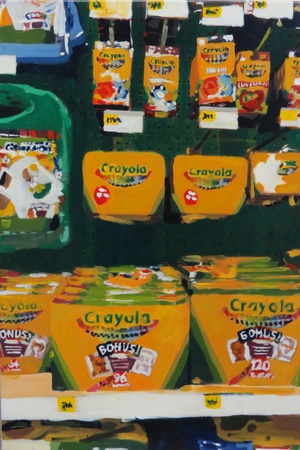
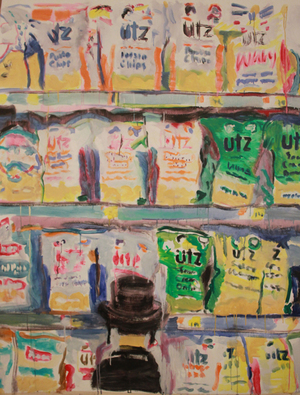
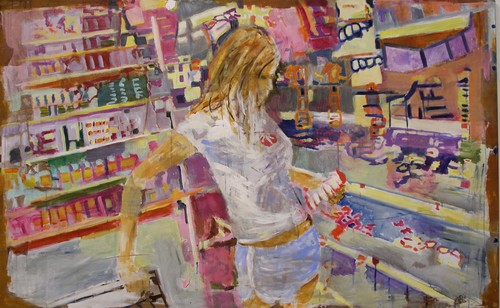
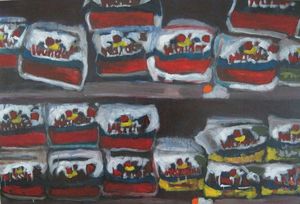
American artist extraordinaire Brendan O’Connell is sometimes referred to as “The Walmart Artist,” but his gifts and vision go way beyond the bread aisle. Still, it’s those aisles of American staples that put him on the map and launched a career of depicting art in the most unlikely of places. Attention Walmart shoppers: you could be the subject of a high-dollar painting!
 

O’Connell earned degrees in both Philosophy and Spanish and after graduating he moved to Paris to teach languages. While there, he taught himself to draw and eventually quit his “day job” to take on art full-time. Meanwhile back in the states, Walmart was experiencing its heyday and rapid expansion. Little did O’Connell know that American commercialism would influence his work and his life in such a dramatic and colorful way.


Long influenced by artist Edward Hopper and his calculated Americana renderings, O’Connell returned home with the goal of sketching a slice of American life in its rarest form, unfiltered, and as he saw it. His first choice was retail outlets and their windows of America’s obsession with mass-marketed merchandise, which naturally led him to Walmart. He was fascinated by it all: the colors, the rows of products, the shoppers, the lights, and the fact that under one giant roof it all unfolded in enormity and excess.


“It’s the most visited interior space on the planet,” he says. “From an artist’s perception, the idea of dressing this environment is exciting.”


So, O’Connell set out across the country and began painting rows of goods and aisles of shoppers even though he’d often get kicked out by store managers. But, after profiles on NPR, in “The New Yorker,” and on “CBS Sunday Morning,” Walmart execs contacted him and told him they liked what he was doing and wanted to make it easier for him to continue doing so. The rest, as they say, is history and if you ask me, artistic genius on such a human level.


He says it’s simply finding beauty or significance in what are often otherwise throw-away moments. O’Connell revels in finding and depicting our place in the realm of consumption as well as society’s fetish with products. I love how he morphs otherwise starkly lit and uninteresting aisles into colorful and whimsical canvas creations. And although the retail giant is loathed by probably as many as it is cherished, O’Connell ‘s hopes his paintings will one day not only be considered a clever and brilliant artistic venture into a mundane environment, but something sentimental as well.


“Someday people may feel nostalgic about something they were terrified of, so what if we elevate the everyday moment into an act of beauty or piece of art?” he asks.


O’Connell’s work has since been elevated in exhibits in New York, Toronto, Shanghai, and a host of other cities. He also has permanent collections at the GA Museum in Athens and the High Museum of Art in Atlanta. He has been commissioned by a number of companies including Walmart. Today O’Connell has built quite a repertoire that includes his signature works, and he is also the founder of Everyartist, a non-profit with the goal of promoting art among children. What better place to do this than in Walmart with a box of Crayola crayons and some colored pencils? Funny how things sometimes come full circle and make you wonder, right?


As for me, the next time I’m in a Walmart I’ll try to picture the aisles through his eyes: eyes of inspiration and imagination. Maybe while you’re doing your back-to-school shopping, you can give it a try too.


Walmart Facts

O’Connell calls Walmarts “whole cities of goods under one roof,” and many are indeed bigger than many towns and cities when you consider sales, profits, and products. Amazing, right? So are these other “fun facts” about Walmart:


Walmart is the largest private or semi-public employer in the world, with more than 2.3 million employees worldwide, which is more than the population of Houston.


In fiscal year 2015, sales were $482 billion, which is more than Iran’s GDP.


If Walmart were a country, it would be at least the 26th largest economy in the world.


The mega-retailer employs 1.5 million people in the U.S. alone.


One of every four dollars Americans spend on groceries is spent at Walmart.


90% of Americans live within 15 minutes of a Walmart.


Walmart averages a profit of $1.8 million an hour.


37 million people shop at Walmart every day, which is more than the population of Canada.


Walmart is bigger than Home Depot, Kroger, Target, Sears, Costco, and K-Mart combined.


Each week, Walmart serves more than 200 million customers at more than 10,400 stores in 27 countries.

Bananas are Walmart’s top selling items.


Walmart accounts for 25 percent of Clorox sales.


If Walmart’s more than 900 million square feet of retail space were spread out over one place, it would take up roughly 34 square miles or about 1.5 times the size of Manhattan.


Walmart parking lots alone take up an area roughly the size of Tampa, Florida.


The most frequent destination typed into GPS device Telenav is Walmart.


Nobody’s Perfect August 3, 2018

Filed under: Uncategorized — carlawordsmithblog @ 7:19 pm


I try to have few regrets in life, but a glaring one I have is not going to visit my niece when she lived in Japan. She lived and worked there for years and married a Japanese man but they now live in the U.S. so I’ve somewhat missed my chance. Fingers crossed I can someday travel with them when they go visit his family.


In the meantime, I’ll remain a bit intrigued by Japanese culture and since I’m also a bit OCD, what better culture to be fascinated with then one that is known for being precise, polite, and proper? Take their food for instance.


In Japan, food is immaculately prepared and packaged because it must not only taste good, it must look good. Think of sushi and how stunning each little roll is and how beautiful it is plated when presented right. So perfect must food be in Japan that there is a $90 million industry devoted to replica food and those “good enough to eat” dishes one sees in a market or restaurant are often actually artificial food. Weird, right, but as a tourist faced with menus you can’t read, eating out can be a challenge in Japan. Through the magic of life-like food samples though, ordering can be as easy as pointing to what you want.


As with anything, there is also a downside. Food products with even the smallest defects are often thrown out. But, in a society not big on being wasteful or careless, this is changing. In recent years, “wakeari” products have gained popularity. Wakeari means “there is a reason” in Japanese and these imperfect food items are now being used “for a reason” rather then tossed. Wakeari can also describe someone who is not perfect, which got me thinking, isn’t perfect overrated?


I’m raising my hand because I just got back from the orthodontist as I’m considering Invisalign. I’ve had perfect teeth (seriously and never had braces) my whole life but in recent years they have started to shift, especially my two front teeth. I’ve become very self-conscious of them and find myself not wanting to smile big. I know, great, but did you know one out of four people in orthodontic treatment are adults? Again, great.


So, after two of my closest friends bit the Invisalign bullet, I thought I’d give it look. Each doctor told me doing so is not purely cosmetic because at the rate I’m going, implants are nearly a guarantee at some point. After two consultations I’m still deciding if it’s something I really want to invest in in search of perfect teeth.


Perfection is not easily attained by any stretch of the matter. Tom Brady lost a Super Bowl this year. Jennifer Aniston has relationship woes. Oprah struggles with her weight. The so-called perfect presidential candidate lost. Not only is it hard to be perfect, it’s impossible. No one is perfect. Okay, maybe Mary Poppins but even she’s not real. Try as you may to be the perfect parent, perfect friend, or perfect worker, you will ultimately fail. You can also try to have the perfect body and face, but at what expense, both figuratively and financially? But Carla, what about all those perfect people we see on TV and on social media? Trust me, they are not perfect either. Case in point:


Make-up, glam squads, and cosmetic surgery can do wonders, but when all is said and done it’s all really not the real you or them. Fake lips and boobs? People know it. Tons of make-up? It’s for sure covering tons of flaws. Instead, why can’t we strive to accept our imperfections and know that even though we are imperfect, we are loved?


The Perfect Storm

Perfectionism is described as a combination of excessively high personal standards and overly harsh self-criticism, both of which can lead to psychological difficulties. Perfectionists are often coveted in the workplace, but truth be told, unrealistic expectations of yourself and others may occasionally lead to success, but may also result in high levels of stress, substance abuse, and self-doubt. Perfection and satisfaction rarely go hand-in-hand. Finding the balance is the key. Yes, work hard, have goals, and strive to be the best, just make sure those goals are tangible, realistic, and constructive.


In his “The Case Against Perfection” article in The Atlantic and subsequent book, Harvard’s Michael Sandel examines genetic engineering. His concern is that being able to “control” nature coupled with our incessant urge to improve our lot in life may ultimately lead to trouble. He specifically names issues like steroids in sports and choosing a baby’s sex along with other enhancements he says “diminish our human dignity.” Along these paths, our notions of good and bad change, as does our idea of perfection. We stop celebrating nature and instead want to mess with it.


If you find yourself striving for perfection, you are not alone, especially if you’re in a younger age group. A recent study by the University of Bath and York St John University analyzed data from more than 40,000 British, Canadian and American university students from 1989 to 2017 and found that the obsession with perfection amongst this age group has risen more 30 per cent over the last 30 years. I’m looking at you Millennials. These young adults are also 33 percent more likely to believe their environment is excessively demanding and that others judge them harshly. Of no coincidence is the fact that these are those who have grown up in the social media age so it should come as no surprise that their imposing of unrealistic standards on those around them and evaluating others critically has increased by 16 per cent.


Scary, right?


Finding the Perfect Balance

As the fabulous movie “Finding Your Feet” asked, “How do you expect to take control of your life when you’re so obsessed with the lives of others? It’s time to step back and say “Yay me, imperfections and all.”


How about we focus more on what’s inside then what’s outside? We’ve all heard the saying that a pretty face can’t hide an ugly heart so why don’t we believe that? How about we strive for progress not perfection? Scruples not scalpels and principles not pretty? News flash: perfect people aren’t real and real people aren’t perfect.


I know, it’s hard though. But think about it, how many of your friends and family do you really and truly consider “perfect?” Probably not a whole lot but my guess is you love them just the same. And you admire and respect them. That perhaps is the key: respect. We all need to do a better job of respecting ourselves while accepting ourselves because once you’ve accepted your flaws, no one can use them against you. Not bullies, not social media sites, not anyone.


Do you have a specific talent or gift that gives you joy and that you enjoy sharing with others? Those are the things that, even though you might not do perfectly, make you perfectly awesome and imperfectly amazing. You can also step back and take a look at your life. What is it made up of that you hoped and prayed for previously? When and what is enough enough and what are you really looking for? If it’s perfection, you are setting yourself up for disappointment.


I know of what I write. My name is Carla and I’m a perfectionist. I want to be the perfect writer and want the perfect teeth again. I also want the perfect house and to be the perfect wife and mother. I’m open to you helping me load the dishwasher but odds are I’ll rearrange the entire thing before pressing that “start” button. At the same time, I’m accepting. I accept that my life isn’t perfect but it’s blessed. I also accept that I’ll never be a size 2 but am currently in the process of losing weight and I love my yoga class. As with possible teeth straightening, I do this all for me and not to be perfect, but to feel good, to feel healthier, and to feel better.  I’m well aware that I am far from perfect and that none of what I do will make me perfect, but they will improve me in all the right ways while making me healthy, balanced, flexible, confident, and centered. As long as I’m not an old lady who is stiff, can’t physically do things, and have dentures, I’ll be happy and satisfied. I might even say, “that’s perfect!”


So let’s all step back and evaluate our expectations and realize that even though we are all flawed…and I mean we’re all flawed…we are still beautiful and worthy. Perfect, right?


The Lips Have It July 28, 2018

Filed under: Uncategorized — carlawordsmithblog @ 7:56 pm

Do you know what today is? Yes, it’s Saturday and yes it’s July 29, but did you know it’s also National Lipstick Day? Funny right, but fun too!


Lipstick is big business so it should come as no surprise that the industry not only endorses but embraces a national day of its product. Lip color is actually the third most popular cosmetic product, behind foundation and mascara, generating nearly $627 million in revenue in the U.S. alone. That’s a lot of mattes and glosses.


If you have any doubts of its popularity, I present none other than Kylie Jenner. According to Forbes magazine, the 20-year-old of Kardashian family fame is on track to dethrone Facebook’s Mark Zuckerberg as the youngest self-made billionaire. Ever. All thanks to a lip kit.


I realize, as does anyone who can live and breathe, that calling Jenner “self-made” is a huge stretch, but considering she launched her Kylie Cosmetics in 2016 and today her net worth is $900 million, credit is due. If she reaches billionaire status in the next two years, and most experts predict that will happen by year’s end, she will indeed wear the “youngest billionaire ever” crown, beating the face of Facebook’s 23 with her 21.


One more interesting tidbit about Kylie: you won’t see any TV or print advertising for her billion dollar brand, which adds even more level of amazing to her amazing meteoric rise. Her products are instead marketed primarily through her and her family’s social media sites…for free. Some industry analysts say the exposure of her products to her 110 million Instagram followers alone is worth $1 million in traditional advertising spending. That’s $1 million she’s keeping right in her pocket.


Okay, but enough about Kylie. Let’s talk lipstick starting with creating a solid and flattering lipstick wardrobe for yourself.


Perhaps most important is matching any lip shade you pick with your skin undertone. Warm skin tones should wear orange-reds, brick reds, peaches, peachy pinks, and corals. Those with cool undertones look best in blue-reds, cranberry, wine, pink reds, and rosy pinks. From there, it’s up to you as to what style of a lip color you prefer.


You might like traditional lipsticks or you may prefer lip glosses. Maybe you like a matte finish and not so much a glossy look. Whatever variety or brand, every woman should have three lip colors in her cosmetics collection: a versatile nude, a classic red, and a nice pink.


My go-to and basic nude lipstick has forever been “Apricot Glaze” Crème Lipstick by Mary Kay but the color was recently discontinued. Can I just say, why do manufacturers do this? Do they enjoy aggravating their loyal customers and see them walk away, which is what I’ve done in search of a nude. Yep, I’ve headed right off my computer and straight into Sephora for the Girl Lip Stylo in “Peacemaker.” Take that MK! Other popular nudes are Tom Ford’s “Sable Smoke,” Mac’s “Love Child,” Chanel’s “Coco,” and Maybelline’s “Almond Rose,” of which more than 25 tubes are sold every hour.


Reds are a whole different ball game. I really don’t like the way I look in a bright red lip and I don’t like the “look at me, look at me” image it evokes. My personal favorite red? Chanel’s shimmery and high-shine Rouge Coco lip gloss in “Amarena” that is shimmery but still subtle. Another fave is Mary Kay’s “Toffee,” which can go red, coral, and even a darker neutral. “Toffee” actually used to be my go-to nude and all-around go-to lip color, but as I’ve gotten older I find it a bit too harsh and not quite as neutral as I’d like…hence the discovery of “Apricot Glaze” and now “Peacemaker.”


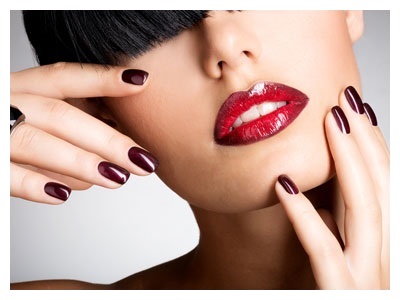
Popular reds are Revlon’s “Fire and Ice,” which actually boasts SPF15, and Chanel’s trademark “Allure.” In general, cool undertones are complimented by blue-based red lipsticks like cranberry and wine, while warm undertoned ladies look best in orange-reds and brick reds. Here’s a good example of both:


Both the above lipsticks are considered “reds,” but the one on the left is a “cool” red while the one on the right is a “warm” red.


Have fun with reds and don’t be afraid to add some drama to your look with them, but despite what many women believe, a bold lip is not always the most attractive the older you get. Younger women can rock a red to no end, but with more mature ladies, sometimes it’s best to just play it safe and play it down.


Pinks are a good way to do this while still adding color. I love MK’s “Dusty Rose” and Revlon’s “Soft Shell Pink” is an enduring darling. Chanel also has some pretty pinks in their Rouge Coco line and Marc Jacob’s “Kiss Kiss Bang Bang” is not only fun to ask for at the cosmetic counter, it’s a great color! On the more berry end of pinks are Avon’s popular “Cherry Jubilee” and Clinique’s “Black Honey,” one tube of which is sold every three minutes in the U.S. With all pinks, pick a more sheer one if you’re fair-skinned and more opaque if you’re darker skinned.


I almost always wear some type of lip product. For running errands I opt for a cream lipstick, going out I go with a gloss, and I always have a lip balm nearby. I actually have lip balms everywhere: in my purse, in my car, at my desk, at work, in my nightstand…everywhere. I cannot stand a dry or bare lip. And, true confession, I also have a few Kylie Cosmetics lip products. After seeing how fabulous the ones that my daughter has were, I caved. I will say her matte liquid lipstick stays on for-ev-er, although it is a bit sticky and drying, but her gloss is equally as fab and not drying. Maybe the little billionaire is actually on to something!
 

As I mentioned above, lip products are big business and many brands are expensive. If you’re looking for an affordable lip gloss, check out both the soft matte lip cream and the lip lustre styles by NYX, found everywhere. They last for hours and the lip lustre is super shiny but moist.


But, how do you make a lipstick last longer after applying it? This used to be a bigger dilemma than it is now due to so many new products boasting “long lasting” and “lip stain” formulas. A true test of this is when you take a drink of something. If your lip color doesn’t show up on the rim of the glass or cup, it’s a keeper. If you have a lip product you adore but it isn’t one that stays on, here are some tricks of the trade you can try.


  • Makeup artist and Chanel brand ambassador Kate Lee recommends using “velvet” lipsticks, which give you a matte look but also have emollients. She also suggests first applying a lip balm and letting it sit for 10 minutes before applying your color of choice.


  • Most experts agree you should apply your lip color straight from the tube or case and only use a brush to blend after application and to define and fill in your lips with a liner in the same shade as your lipstick.


  • You can also try prepping your lips by exfoliating them with a sugar scrub of sugar and Vaseline and also blot away excess lip color after applying.


  • Another trick comes from none other than singer Celine Dion, who swears by dabbing a hint of foundation on her lips before applying color.


Or, you can just keep reapplying like I do, but whatever you do, don’t stress about full-lips or lack thereof. The pressure seems to be that one must have full-lips and if you don’t, get some. To me, whether you’re Kylie Jenner or Jane Doe, fake lips simply look fake. No one ever thinks, “Wow, her injected lips are great!” They more than likely think, “Wow, she got new fake lips.” Ironically, I’ve read that Kylie is swearing off the over-filled and uber-fake lips that she is so known for. I guess you don’t always have to dance with what brung you.


Interestingly enough, a recent study revealed that lip size is insignificant when it comes to perception of attractiveness. What really seems to matter is pigment. This means if you have natural lips with a pretty rosy pigment, they are considered much more attractive than any lips full of fillers of any color. So, unless you’re born with full lips, just accept your God-given ones and work with them.


Finally, and just for fun, here’s a chart of what your lipstick shape reveals about your personality. Which one are you?


I Scream, You Scream July 15, 2018

Filed under: Uncategorized — carlawordsmithblog @ 10:29 pm


Happy National Ice Cream Day! Although I rarely eat it or buy it, what better way to cool off during this long, hot summer then with a big bowl of Butter Pecan or Cookies and Cream? Today there are many versions and flavors of ice cream, but according to the International Dairy Foods Association, that hasn’t always been the case.



The origins of ice cream go waaaaay back and it could be said they are biblical. There are mentions of a B.C. ice cream, with references of King Solomon loving his iced drinks. Still, no specific date or inventor is credited with its discovery. Alexander the Great is known to have enjoyed snow and ice flavored with honey and nectar and during the Roman Empire, Caesar sent workers into the mountains to retrieve snow, which he would later flavor with fruits and juices.


That’s about all we know until more than 1,000 years later, when Marco Polo returned to Italy from the Far East with a recipe that resembled what we call sherbet today. Various countries contend for the actual title of “ice cream inventor,” with England claiming to have done so in the 16th century and France introducing frozen desserts in 1553, but it wasn’t until ice cream was available to the general public in a café in Paris that you could say it went viral in a very primitive kind of way.


The U.S. was a bit slower in its love for and discovery of a bowl of frozen anything.  Ice cream was first advertised in America in the “New York Gazette” in 1777, but the first official account of ice cream stateside came in a letter written in 1744 by a guest of Maryland’s governor. He wasn’t the only statesman to favor the dessert. Inventory records of Mount Vernon revealed two pewter ice cream pots belonging to George Washington and none other than Dolley Madison is known to have served a strawberry version at President Madison’s second inaugural ball.


Ice cream remained an elite confection until around 1800 when insulated ice cream houses were invented. By 1851, the manufacturing revolution changed not only America as a whole, but the ice cream industry as well. Steam power, mechanical refrigeration, the homogenizer, electric powered motors, new freezing processes, and motorized delivery all contributed to bringing ice cream to the masses. Today Americans serve up more than 1.6 billion gallons of Haagen Dazs, Blue Bell, and every brand in between.


The dessert’s growing popularity also led to offshoot enterprises, including the quintessential American soda fountain shop and its quickly popular ice cream soda. Think 1950s and you think soda fountain: cute little counter seats all lined up and white-attired staff waiting to serve you. You don’t get any more American than that.


Still, some protested and their grievances resulted in a dessert concoction that even I can’t resist: the ice cream sundae. When religious leaders complained about congregations partaking in what they called “sinfully rich sodas” on Sundays, ice cream merchants responded by eliminating the carbonated water from the dessert and the name was later changed to “sundae” to remove any connection to the Sabbath. I did not know this!


World War II is also historically rich with ice cream legend. Apparently each branch of the military raced to outdo each other in serving ice cream to the troops. When the war ended, dairy rationing was lifted and America celebrated the victory in many ways, including with ice cream. Maybe that’s where “I scream, you scream” came from!


It didn’t take long for retailers to take note and more and more prepackaged ice cream was sold in supermarkets. Sadly, this commercial renaissance coincided with the slow but steady disappearance of ice cream parlors and soda fountains but ice cream stores could be found on every corner. One of my happiest childhood memories was my mom and dad packing my two sisters and me in the car and heading to Baskin Robbins for our pick of one of their 31 flavors. And despite the bad rap they get from some, who doesn’t remember the memory and the excitement at the mere sound of the neighborhood ice cream truck?


Today we celebrate all things ice cream thanks to President Ronald Reagan, a huge fan of a scoop or two who declared July 15 “National Ice Cream Day.” Thank you Ronnie!


If you are an ice cream lover, there are many ways to celebrate a bowlful, including by visiting the Museum of Ice Cream (yes, there is one!) in San Francisco. So far ice cream has come; that the museum is a hit on Instagram and the U.S. Postal Service just this summer released their “Forever Frozen Treats” stamps series. Not only are the stamps festive and fun to look at, they are the first ever scratch-and-sniff stamps.


So there’s the scoop on ice cream, but what about all the different kinds? What is the difference, you ask, between ice cream, gelato, sorbet, and sherbet? According to realsimple.com, not all frozen treats are created equal. Here’s the scoop on that.


Ice Cream. The USDA requires any frozen treat labeled “ice cream” to contain at least 10 percent milk fat and the product must also get churned during freezing.


Gelato. If you’ve ever been to Italy, you know this stuff is the bomb. The word means “ice cream” in Italian but the two are not the same. Gelato also has a custard base like ice cream, but it contains less milk fat and less churned air, resulting in a denser texture and a softer, glossier look. Gelato is also traditionally served at slightly warmer temperatures.


Sorbet. Containing only fruit and sugar and no dairy, this is what you’ve been served as a palette cleanser during multi-course meals. Sorbet’s intense fruit flavor makes it the perfect refreshing accoutrement.


Sherbet. Sorbet’s creamier cousin, sherbet is basically sorbet with milk, usually buttermilk. It also contains cream, egg whites, and gelatin.


Frozen custard. This is what you’re looking for if you’re looking for creamy. Frozen custard is made just like ice cream but with added egg yolk, resulting in a delectable texture that’s similar to melted ice cream. This stuff is especially popular in the Midwest and South.


Frozen yogurt. Instead of milk or cream, frozen yogurt is just that: yogurt. It is usually more tart and lower in fat than ice cream.


As for calories and fat content, we all know ice cream is loaded with both, but what about the options? In general, ice cream contains at least 10 percent butter fat but often times that content is between 15-25 percent. Italian gelato, on the other hand, contains less than 10 percent fat while most sorbets are naturally fat-free. Don’t let that fool you though, as what they lack in fat they make up with in sugar. They also lack calcium since they’re non-dairy.  Calorie-wise, most sherbets and sorbets have the same number of calories as any “light,” “low-fat,” or “nonfat” ice cream or frozen yogurt.


In a nutshell (and nuts are great on ice cream!), the pros and cons of ice cream and all things ice creamy are there for the taking so make your choice and make it special.


Fashion Forward World Cup July 9, 2018

Filed under: Uncategorized — carlawordsmithblog @ 6:32 pm


Everywhere you look, it’s World Cup mania and it has been since June 14. Rabid fans dress up, get painted up, and offer up some of sports’ greatest…and worst…fashion moments. It’s estimated nearly 3.5 billion people will watch grown men kick a black-and-white ball around for 90 minutes and hope their national team is the ultimate champion of the world’s ultimate sporting event held every four years. Russia is hosting this year’s event, marking the first time it’s held in Eastern Europe. The final is slated for July 15 in Moscow’s Luzhiniki Stadium, sure to be filled with 80,000 screaming fans. Only four teams remain and have a chance to claim the coveted title-France, Belgium, England, and Croatia-but unlike a Super Bowl or NBA champion calling themselves “World Champs,” World Cup winners are truly champs of the world. That’s about all I know.


So, what’s a girl to do who loves sports but doesn’t love the current sport of the moment? Resort to something else she loves and knows: fashion! I recently read an article on World Cup team jerseys and thought, “now there’s a soccer story I can relate to!”


But first, some World Cup background. Consider the following a sort of “World Cup for Dummies.” Then we’ll take a look at World Cup style.


I don’t know a lot about soccer (or football as it is called everywhere but in the U.S.) but I do know Germany won 2014’s World Cup with a 1-0 nail biter over Argentina. The Federation Internationale de Football Association, or FIFA, was founded in 1904, governs the sport, and oversees the World Cup. Qualifying rounds involve more than 200 teams worldwide, with the final 32 national teams, including 31 determined through qualifying competitions and the automatically qualified host team, playing for all the marbles. During the month-long tourney, 64 matches are played in 11 cities and there were some qualifying surprises. It’s also a surprise to not have one Central or South American team in the semifinals.


Lots of “firsts” happened this year, including Iceland and Panama qualifying for the first time since the World Cup began in 1930. And, for the first time since 1938, Germany (you know, the defending champs) didn’t advance past the first round and no African team passed to the second round for the first time since 1982. At least they qualified though, which was not the case for four-time champion Italy (the first time since 1958,) or for Cup stalwarts the Netherlands, Chile, New Zealand, Cameroon, and yes, the United States; marking the first time since 1986 that Uncle Sam didn’t send a team to the World Cup.


REUTERS/Christian Hartmann

To say soccer is huge across the world is putting it mildly. Like crazy huge. But in the U.S., it’s still waiting to be “that” sport, lagging behind our beloved NFL, NBA, MLB, and other competitors. I’ve thought for the longest time, considering how many young kids play on soccer leagues in the U.S., that it would take off but it just hasn’t. Experts say the U.S. has so many other options for kids and that soccer’s global attraction is partly because anyone anywhere can play it with only one piece of equipment: a ball. I’ll never forget seeing a group of young French boys while riding the train from Reims to Paris last month who were playing soccer on a basketball court complete with two hoops. Bingo I thought. There’s the proof. Even though they could have used that one ball to play hoops, they chose soccer. It’s in their blood. And now I can’t imagine how excited those little boys are that their country is in the “final four” of the World Cup.


That being said, a soccer fan I am not. To me, the matches are too long and too boring. Sit for hours to watch your team lose 1-0 is not what I call an exciting afternoon. And the constant drones and chants coming from the crowd hurt my head and make me crazy. Enough already. I guess that’s what you resort to though when there’s not a whole lot to cheer about on the field. And what’s up with the clock? It seems to go backwards and there’s always that random and somewhat mysterious amount of time at what seems like the end of the match. The game clock winds down, match appears to be over, and yet players play on, game goes on, and then suddenly, it’s over. Just like that. Done. You win. I don’t understand it and I don’t understand much of the game other than like hockey, the goal is to score a goal in the net. About all I know is soccer players usually have great legs, Mexico lost but advanced thanks to South Korea, and Spain was eliminated during a somewhat controversial shoot-out against host country Russia. Maybe they need to call Robert Mueller.


But enough of that, let’s talk fashion. World Cup fashion.


What better way to start a fashion discussion than to consider accessories. At the World Cup, the best accessory is the trophy, which is truly a gem.


Designed by Italian artist Silvio Gazzaniga, the 13 pound beauty is made of 18 karat gold and has a stunning malachite base. The design is two human figures holding up the Earth and on the bottom is a plate engraved with the names of all previous winning countries. Since 1974, six nations have won the trophy and by 2038, there won’t be any more room for new engravings. FIFA requires that every World Cup winner receive a gold-plated replica of the trophy. Gold and malachite. What’s not to love?


As for the actual jerseys, the article I mentioned above that caught my eye was by Susan L. Sokolowski of “The Conversation.” Ms. Sokolowski not only writes for various publications and news services, she is also Director & Associate Professor of Sports Product Design at the University of Oregon and spent 20 years working for a major sports manufacturer. When it comes to team jerseys, she knows of what she writes.


First of all she notes that there are many FIFA guidelines teams and designers must adhere to. For instance, all jerseys are required to have sleeves and the sleeves must be free of logos except for event badges. In addition, unless a jersey is striped or checkered, it can’t have more than four colors and all jerseys should avoid looking even the slightest bit like a referee’s or risk being banned.


As for logos and patches, there are strict guidelines for them too. I’m looking at your PGA: please pay attention! Your players are beginning to look like NASCAR drivers and it’s not a good look. FIFA is precise and stern on the size and placement of logos, including the manufacturer’s, as well as players’ names and numbers. You won’t see any UPS or UniQlo logos on these players. Golf clap please.


From there, it’s on to functionality, after all they are athletic wear first and foremost. Teams will labor over cut, fit, fabric, and ventilation of a shirt as well as comfort and fluidity of shorts. Socks must stay up but not be too tight and they of course need to coordinate with the rest of the uniform.


Once rules are followed, it’s up to the manufacturer, its designers, and each country’s national soccer federation to agree on a design. Some countries like Argentina rarely stray from their traditional and practically trademarked blue and white stripe while Brazil customarily wears yellow and green but this year went another route…and went right out of the tourney. Others take more risk and hope to stand out doing so. Case in point this year: Nigeria.


The country’s unconventional and striking lime green shirts with black-and-white sleeves of jagged stripes are hands-down the most popular of this year’s Cup and sold out within hours. The Nike-designed shirts are a hit even if the team is no longer in the tourney, proving a clever design is sometimes all it takes to be a winner.


And speaking of winners, other than Nigeria, here are my winners for “Best Dressed” 2018 World Cup teams:


Spain. If the U.S. isn’t playing I’m rooting for Spain and I rooted for these red with with bands of yellow and navy diamonds running down one side. Ole, ole, ole, ole!


Iceland. They qualified for the first time ever and these cobalt blues with a vertical off-center red-and-white banner stripe  qualify for “best dressed.”


Germany. Although the defending champs didn’t make it past the first round, a round of applause please for these slick white jerseys with embellished with a black and gray graphic print of different sized stripes. The jerseys also boast four stars for the country’s four World Cup titles and are a throwback to the ones the team wore in 1990 when they won the Cup.


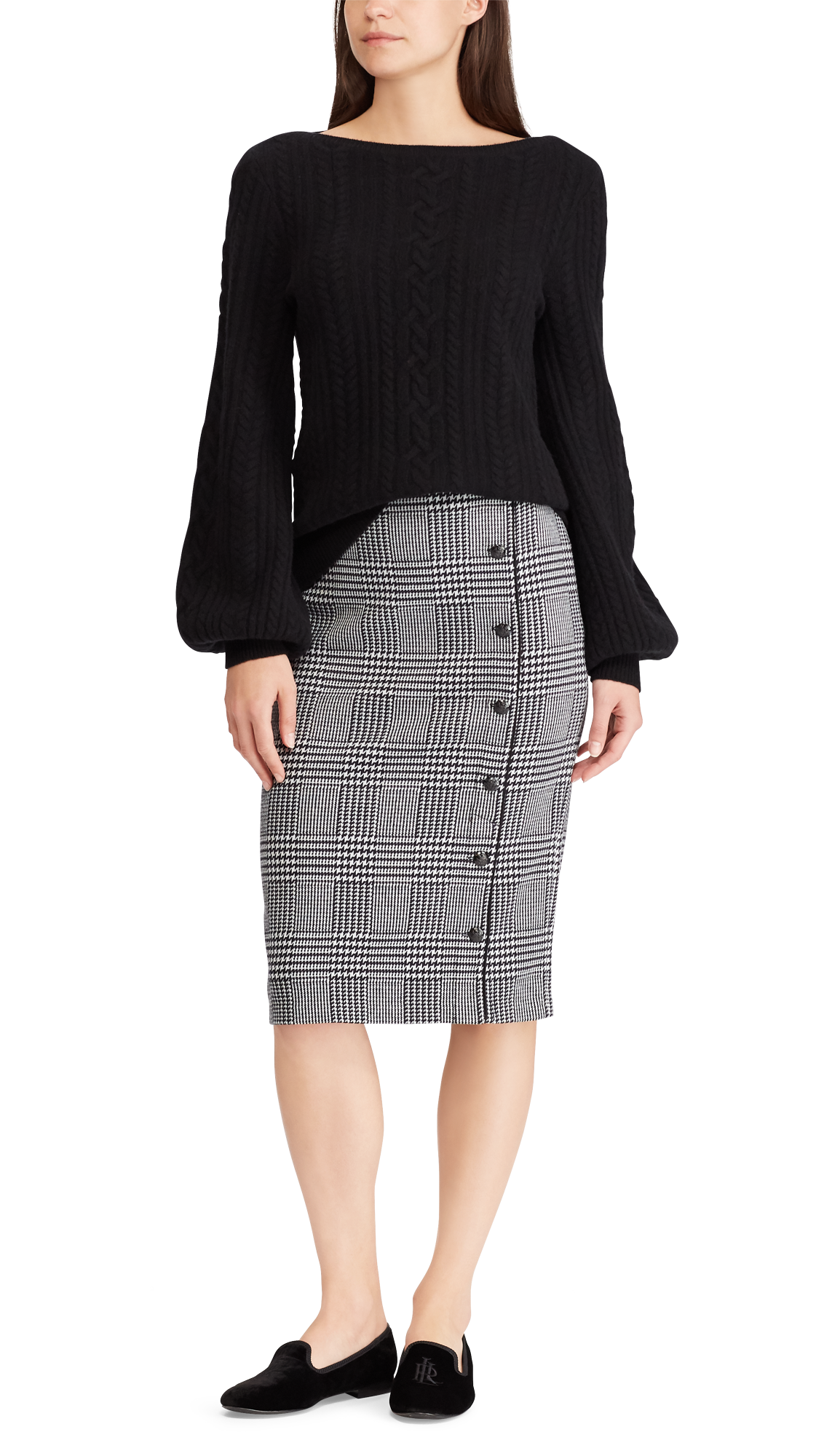
Belgium. It should come as no surprise to anyone who knows me that the argyle-patterned red jerseys of the somewhat surprising semifinalist team from Belgium make my list of best dressed. I die for argyle.


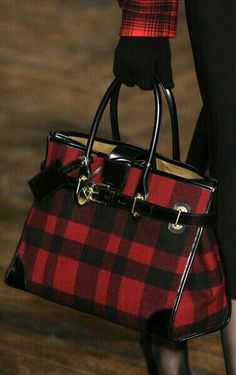
Croatia. I love me a check, plaid, and even checkerboard and I love these jerseys. They’ve been known to rock a red check too and not only did the team send Venezuela and star Lionel Messi home, they also beat fellow best-dressed Iceland and Nigeria as well as home Russia. Check mate!


With Belgium and Croatia still in the hunt, I can’t wait to see what they come out with for their next matches. Who gets your best dressed?


Today’s Headline: The End of an Era July 7, 2018

Filed under: Uncategorized — carlawordsmithblog @ 7:31 pm

It’s the official end of an era and a sad day in my house. The writing’s on the wall, but sadly not on my driveway each day. Effective immediately I am “this” close to not being a daily newspaper subscriber. I know, who cares right? But hang on and know that I have subscribed to my local daily paper for more than 30 years. I love nothing better than reading every section of the paper while I relax in my jammies and drink my coffee. Sometimes I catch up and read several days at a time, but rarely do I not get to them.


Problem is, the paper has become just too damn expensive. My latest invoice reflects an increase in price that put it over the $100 mark…and I only get it Wednesday-Sunday! And try as I may to make headway with their subscription services department, they couldn’t or wouldn’t budge. Seems like they’d rather lose a loyal customer than offer a better deal. I know, I know, the cost of printing and delivering front page headlines continue to increase, but by gouging subscribers, are newspapers not pricing themselves right out of existence?


It’s not good, as the benefits of reading actual newspapers are far and wide. Not only does doing so involve the essential skill of reading; one also learns vocabulary, about other people and places, and so much more. Where else, in one sitting, can you read about what’s happening in your city and the world, politics, religion, sports, the economy, entertainment, business, trade and commerce, home and fashion trends, and of course the comics, horoscopes, letters to the editor, and even all those advertisement flyers? Think iconic news events and headlines, whether they be man landing on the moon, 9/11, or the Cubs winning the world series, and I’d bet the house it’s not a website that comes to mind.


I have loved newspapers for as long as I can remember and would have probably gone the print route for my career instead of the broadcast route had it not been for some college professors who convinced me my future was in TV news. I have no regrets there, but the love of print remained in my veins and still does.


It all began when I was a young girl and my friend Julie and I had a paper route. Yep, two girls rolling, rubber-banding, and delivering morning papers throughout our neighborhood. I can still envision how black our hands would get but how much fun we had pulling wagons behind our bikes filled with newspapers. From there it was a staff writer at the University of Oklahoma’s “Oklahoma Daily,” where I covered sports and editorials. After several years and a professional stint in TV news, I walked away from the news business and jumped to the other side as a publicity and media relations specialist.  Roles were literally reversed as I then pitched stories to newspapers and it was always a part of my job to read the paper every day. I was in heaven scanning the pages looking for and clipping out any and all articles that had anything to do with the industry and places I worked for. I eventually went the freelance route and wrote for various magazines and newspapers. Today I still write for a monthly publication and I read. I read my daily newspaper.


But not no mo. Makes me sad.


But I’m alone.


Newspapers across the country are hurting as more and more Americans get their news digitally. According to journalism.org, the estimated total U.S. daily newspaper circulation in 2017 was 31 million for weekday and 34 million for Sunday, down 11 percent and 10 percent respectively from just one year prior. The Pew Research Center reports weekday circulation for U.S. daily newspapers fell 8 percent in 2016, marking the 28th consecutive year of declines and the lowest weekday circulation since 1945. What would historical archives be without the iconic photo of Harry Truman elatedly holding up the front page that incorrectly called the presidential election in 1948. Somehow Donald Trump doing the same thing regarding Hillary Clinton but on a tablet instead just doesn’t have the same impact.


And yet, digital seems to be the wave of the future if not already the present. Rare is it to talk to a millennial who subscribes to a newspaper, as they get their news on-line. Publications are embracing this as they move to offer more digital material and include free digital access to all paid subscriptions. So popular is digital data that according to the Pew Research Center, “The New York Times,” the nation’s second most popular paper after “USA Today,” added 500,000 digital subscribers in 2016, an increase of nearly 50 percent in just one year.


Still, discouraging trends can be seen in the number of actual daily newspapers in the U.S. In 1970 there were 1,748 dailies but that number was down to 1,286 in 2016. Yes, 1,200 daily papers is still a good number, but the fact that nearly 500 closed their doors is enough to make headlines considering the jobs that were lost and the customers who were abandoned.


Jobs still remain in newspaper industry but are fewer and far between. According to Bureau of Labor numbers, nearly 40,000 people work as reporters, editors, and photographers at daily and weekly publications. This doesn’t account for how many others are employed printing those papers, delivering those papers, and handling everything from customer service and circulation to staff human resources.


Who is hired is changing as drastically as what is covered and what is written. Sought after staff members are now not only investigative minds, skilled writers, and talented photographers, but tech whizzes as well. You can’t have or offer on-line content if you don’t have on-line savvy staff members.


Advertising is still the bread that feeds the beast and last year digital advertising held its own, accounting for 31 percent of newspaper advertising revenue, up from 17 percent in 2011. However, Pew reports double-digit declines in advertising revenue for the industry as a whole, with total ad revenue of $18 billion in 2016, nearly one-third of the $50 billion it was a mere 10 years ago.


In contrast, circulation revenue, the amount of money newspapers earn from subscribers has remained steady at around $11 billion, but it’s simply not enough to make up for advertising losses. Maybe that’s why my personal subscription rate has nearly doubled in just one year. Sadly, the revenue of my household doesn’t see the ROI or benefit of keeping the expense of newspaper subscription a worthwhile line item. Momma has to look after her bottom line too.


I’m not one to read the paper online so I’ll settle in with my Sunday only delivery for now and hope against hope that things change, prices decrease, they miss me and make me a subscription offer I can’t refuse, and I can go back to reading my daily paper. The news probably won’t be good and I won’t hold my breath.


Designing Woman July 6, 2018

Filed under: Uncategorized — carlawordsmithblog @ 1:13 am


That is one of my favorite quotes ever and one I try to live by. I’ve learned this and so much from Courtney Carver’s fabulous “Soulful Simplicity” book in which she describes how “living with less can lead to so much more.” Carver is all about simplifying everything: our homes, our closets, our lives. She’s also behind Project 333, a minimalist fashion challenge that invites participants to dress with 33 items for three months to prove you don’t need all that clothing you have and that you probably wear the same favorites again and again anyway. I’ve yet to challenge myself to this one, but apparently you feel cleansed and complete afterward.


I am all about scaling down where I live though. Just under two years ago my fellow empty nester husband and I scaled way down, moved, and downsized. Our new home is small compared to our previous one and to the majority of those in our neighborhood (I hear the real estate mantra of “never own the biggest house in your neighborhood” repeating in my head) and we love it. It’s not a big home but what’s great, as a neighbor recently told us, is that we use all of it. Yes we do. Another neighbor, who lives in a ginormous house, made us an offer to switch homes because he wants to raise his kids in a “real” home so they have real world expectations. Love his McMansion, but no thank you.


Speaking of McMansions, I recently read something that said their time has run its course and that they are now considered more tacky then trendy.  Even back in the day when we weren’t empty nesters I would often look at big houses and think “We could have one. Why don’t we?” In hindsight we didn’t and don’t because we don’t need one. Funny how “need” often loses to “keep up” with the proverbial Joneses. Family after family I know have large homes but not necessarily large families. Room after room go unused. I don’t get it. But maybe I do.


Instead, I love the philosophy of celebrated designer Ilse Crawford. In a recent Netflix documentary on her (part of the fabulous “Abstract” series), I learned that Crawford stands firm on creating environments where humans feel comfortable, public spaces that make people feel at home, and homes that are habitable and make sense for the people who live in them. Perhaps the key words here being “make sense.”


Crawford is adamant that interior design is not necessarily “a look” or all about showmanship and frivolity as so many consider it to be. She notes that more than 80 percent of our time is spent inside buildings and that how those buildings are designed affect how we feel and how we behave. This is why she puts us at the start of every design process. Her aim is functionality and comfort and believes that how one feels in a space and how that space works are equally important, if not more, than how that space looks. In her mind, task lighting is enormously different than mood lighting and purpose is worlds away from posh.


Highly sought after worldwide, Crawford lives by the design idea that spaces, whether they be homes, offices, or businesses, should soothe and enhance the senses.


So, rather than seeing a space and designing it in all the latest styles and what she personally prefers, she steps back and combines design with living, as detailed in her book “A Frame for Life.” In doing so, Crawford bridges the worlds of interior design, architecture, and product design using her unique philosophy of putting the human being at the center of any and all design plans. Genius.


It all makes sense, right? Yes I could have a big ole house and one decorated by the most popular of designers, but would I feel good in it? Would it feel like home? I’m going with no.


It also makes sense that Crawford has essentially developed a whole new way of looking at interior design. Born and raised in London, she is the daughter of an artist/pianist mother and economist/journalist dad. As she admits, her brain and way of thinking is a combination of both. She sees the art in things but also the reality; interrogates a space’s use but empathizes with who uses it. She worked from a very young age but the first thing she ever bought was a lampshade. Again, logical meets decorative.


Crawford studied history and the history of architecture but would dive into issues of Vogue after pouring over books and assignments. The designer-to-be was set to attend NYU but her mom died and she needed to stay home and help with her four siblings. How people behave differently in different spaces always fascinated her and the drab and dreary hospital halls and rooms that she’d frequent while her mom was ill were the first places she realized her “how does this space match the human needs” idea, leading her to further her studies in behavioral science and anthropology.


From there Crawford hit the ground running, working in an architecture firm, editing “Architecture Journal” and “World of Interior,” successfully launching “Elle Deco,” and later completing a successful stint at Donna Karan until she decided to start her own studio. She’s also head of the Eindhoven Design Academy in Holland, considered by many as the world’s best design school, and says it’s her passion to nurture students to always questions why and how their work improves the reality of life. She has since designed for the likes of New York’s SoHo House, Swarovski, and projects from London to Miami, Las Vegas to Asia. Her projects aren’t reserved for the upmarket though. One of her most acclaimed jobs was none other than redesigning IKEA’s restaurants and cafes.


The project was the perfect opportunity to employ one of her favorite elements:  incorporating the Danish word “hygge,” which means to make the ordinary extraordinary and the normal special. This might mean making rectangular tables oval or using a mix of materials that create texture but also touch the skin and give you memories.


These ideas were also put in place in an airport gate lounge she was asked to redesign, which like many of the hotels she’s worked on, she designed to feel more like a home. In restaurants she’s big on putting the kitchen where it can not only be seen, but heard and smelled.  More than anything, she wants people to feel they belong.


Don’t get me wrong, Crawford’s expertise does not come cheap. All that sensibility comes with a high price and only the fabulous can afford her fabulous talents, but it’s a concept we can all incorporate into our lives and our homes. We can also incorporate another word Crawford casually throws around, “besjala,” which means “to put soul into a place” in Swedish.


I don’t want empty unused rooms and matchy-matchy furnishings in my house. I want soul. I want comfort. In her book “Home Is Where the Heart Is,” Crawford embraces this saying, “The more virtual our world becomes the more we need the physical.” But she doesn’t mean physical as in physically big or impressive, she means the basic human quest for safety, love, respect, and self-fulfillment that expands into and improves our lives and our homes. Yes, it’s the American dream to dream big and dream about a big home and yes, you may have worked really hard to earn it, but do you need it or just want it. If it’s the latter, ask yourself why.


As impressive as she is, equally impressive is that Crawford and her Colombian-born husband live not in a London palace or country estate, but in a compact city loft. Just goes to prove that this uber-famous and high-powered designer practices the practicality she preaches. She’s clearly not only a designing woman, but a wise one.


Duly Noted June 30, 2018

Filed under: Uncategorized — carlawordsmithblog @ 2:52 pm


I was at a store yesterday purchasing something and realized that when a sales clerk gives me my receipt and bag full of goods, I often say “thank you.” But why? Why am I thanking THEM for buying something? They of course say “thank you” back but it got me thinking about giving thanks and specifically those little endangered species items known as thank-you notes.


Are you with me in that they are becoming a lost art and just aren’t used as much as they used to be and as much as they should be? What has happened to a written and mailed (yes, in an envelope with a real stamp) note of thanks to someone? I do still get them every now and then, but it seems like more often than not, I send a birthday, shower, or (gasp) wedding gift and think months later, “did they get it?” I never heard that they did. For all I know they hated the gift!


Truth be told, they more than likely loved the gift (since it was probably on their registration list) but just failed to mail a thank you note. This, my friends, is a major pet peeve of mine. If I’ve taken the time to either personally choose a gift for you or scroll through page after page of gifts you’ve registered for and pick one, you should take the time to thank me. Simple as that, right?


But sadly, in today’s electronic and computerized age, the handwritten thank you note is either considered old-fashioned or too time consuming. Think about it though, the time it takes to write a quick three sentence note, address an envelope, and put a stamp on it takes about the same amount of time that finding someone’s contact info and blasting them an impersonal email or text. Think about this too: who doesn’t love feeling appreciated and finding a sweet note of thanks in their mail along with bills and junk mail? Besides, when was the last time you printed an electronically-sent thank you message? Right, never. But, a sweet note written on fabulous stationery could sit around on your counter or desk for days, even weeks, serving as a gentle reminder that you are appreciated and the note writer is grateful. It’s so much better to be remembered than deleted.


Maybe it’s the actual writing of the notes that keeps people from doing them, which goes hand-in-hand with the demise of cursive writing. But don’t fret! If Jimmy Fallon can do it on his show, you can do it in your home! It’s really not that hard and is simply the right thing to do.


WHERE TO START

So, how do you start? Margaret Shepherd, who wrote “The Art of the Handwritten Note,” says a proper thank-you note should be five things: specific, prompt, succinct, personal, and generous. It helps if you have some nice cards or stationery, but never let a lack of them or lateness in sending prevent you from sending a thank you note. A genuinely written note on spiral notebook paper that arrives months later is better than no note at all.


From there, think about what you want to say so you don’t have to rewrite one and waste paper. Address the note personally and thank the recipient for the gift. Be specific. Proper etiquette dictates you should describe the gift in your note so name it and how you plan to use it or why you love it. Add also maybe a personal note that mentions something specific about your relationship with the recipient. Nothing says “fake” like a “thank you for the gift I love it” thank you note!


WHEN TO SEND

So when should you send a thank you note? First of all, it’s never wrong to send one. In general, you should mail a thank you note any time you receive a gift. Yep, anytime. I personally draw the line with close family members, stressing the close. If siblings and cousins gather for Christmas or if my sisters send me a birthday present (don’t even get me started on birthday cards and presents though!), I generally opt out of sending them thank you notes. If, however, a distant aunt or even grandparent sends our daughter a gift, she absolutely should mail them a thank you note.


According to Southernliving.com, you never really need a reason to send a thank you note, but these are three reasons you should always send one:


Someone had done you a favor. This could be a kind gesture like driving you to the airport or a doctor’s appointment, picking your child up from school, or letting you use your washer and dryer in absence of their broken ones. In my opinion, these notes don’t necessarily have to be mailed, as I’ve appreciated a personally delivered bottle of wine or vase of flowers. Whatever you choose, choose to show you are grateful.


You’ve received a gift. Yes, this includes shower and wedding gifts of course, but it also includes a casserole after surgery or something they bring you from a vacation. Gifts come in all shapes and forms and all should be acknowledged.


Other rules of thumb include mandatory thank you notes for shower and wedding gifts. Notes of appreciation for both baby and wedding shower gifts should be mailed within three weeks of the shower and mailed to everyone who sent a gift, even those not in attendance and those you personally thanked in person at the shower.


Every wedding gift should be acknowledged within three months of the wedding. Early wedding gifts should be acknowledged upon receipt and before the wedding day itself.


It’s a good idea to keep a record of all the gifts you receive for both showers and weddings. Record what the gift was, who gave you the gift, and the date you mail the thank you note. If someone gives you both a wedding shower and wedding gift, you must acknowledge them in individual thank you notes.


TEACH THEM YOUNG

When it comes to kids, it’s important to start them young. Remind them that someone took the time to send them a gift so now they need to take the time to say thanks. Doing so not only helps teach them the gift of gratitude and serves as a way of practicing writing and penmanship, but research shows that children who learn to express gratitude have less envy, materialism, and depression. Doing so also results in better grades and improved relationships.


It’s obvious I’m a stickler for thank you notes. I love stationery, I love writing utensils, I love to write, and I’m a very grateful person on the whole. Since our daughter (now 25-years-old) was old enough to know she received a gift from someone, I had her sit down and write thank you notes to the best of her ability. To this day I often ask her if she sent a thank you note to someone, whether it be for a gift or for the use of their vacation house. Send the note. Say you’re thankful.


The most important things are to make it a habit and make it fun! Bring out fun paper, stickers, markers, and colored pens. Sit down with them and let them go to work, keeping in mind their age and writing abilities. Etiquette guru Emily Post says three-to-five year olds can scribble and maybe draw a picture of the gift, six-to-10 year olds can start doing some actual writing, while older kids and teens are able to take more responsibility and an “owner’s flare.” In all cases, focus on how nice the gift was and why they are doing the note in the first place. If there are many gifts to acknowledge, like say for a birthday party or First Holy Communion, perhaps make a template of words and have the child fill in the blanks.


Sadly a recent survey of 6,000 moms found that only 30 percent have their children acknowledge a gift with a thank-you note. The demise of this tradition is disturbing, as it shows not only a lack of gratitude but a missed opportunity to also show good manners and simple etiquette. Even the busiest of parents should make it a priority to start the habit of repaying kindness with kindness a priority.


If writing a thank-you note is just too much for a child, using a computer software to create an electronic card is okay, just be sure the child does it and that it’s personal. Your goal with all notes of thanks is to acknowledge the gift and to say thanks.


Finally, be sure to practice what you preach. When you sit down to write a thank-you note, make a big deal of it in front of your kids. Talk about how much you appreciate the gift or gesture and that you’re telling the recipient how happy their thoughtfulness made you.


GRATEFULNESS BEGETS HAPPINESS

Even if you’re not in the school of “it’s the right thing to do” group, there are many other great reasons to send a thank you note. My favorite of which is that being grateful actually increases your happiness and improves your mood. Professor Robert Emmons of the University of California, Davis concluded this in a 2008 study and summarized it by saying “gratitude is the forgotten factor in happiness research.” So by writing a thank you note to someone you make them happy and you can increase your own happiness.  It’s a win-win!


Gratitude is indeed good for the brain according to Dr. Christian Jarrett of the “Science of Us,” whose brain-scanning study results suggest gratitude tasks have a self-perpetuating nature in that the more you practice gratitude, the more attuned you are to it and have a feeling of well-being and reduced depression. Imagine how happy newlyweds must feel writing all those thank you notes!


Plus, when you feel good you often do good, which would explain why physical health increases when psychological health increases. Wellnessmama.com sites a 2013 study on the connection between gratitude and physical health that showed those who express gratitude are less likely to experience aches and pains and feel healthier overall. Grateful people tend to take part in healthier activities proving when you’re happier in life you make happier choices.


Handwritten notes are important to any civilized culture and have been the preferred method of communication for centuries. The traditional way of communicating is still one of the best ways to build and foster relationships, especially when coupled with the expression of gratitude.


Lastly, but for many of you perhaps most importantly, sending a handwritten note may help you stand out among the masses. Distinguishing yourself amidst hundreds of applicants and interviewees may just be the winning ticket, even in today’s digital world. In fact, some employers still consider the practice essential and have even been known to hire a person because of receiving a thank-you card. A mailed note can also serve as an indirect way to reach back out to a potential boss and to even reconnect with them long after meeting them. They simply demonstrate good manners, and who doesn’t like and appreciate good manners?


The pros of sending a thank-you note far outweigh the cons and everyone, whether it’s a CEO or grandma, appreciates getting thanks in writing. In the end, the goal is to express gratitude and to send a little bit of joy someone’s way. Doesn’t everyone like to feel appreciated? Don’t you? Write on!


Books Clubs: Read All About Them June 17, 2018

Filed under: Uncategorized — carlawordsmithblog @ 9:18 pm


I can’t remember the last time a couple of movies got me thinking and writing, but the past week or so has proven a goldmine.  I’m not one of those who will go to just any movie and Hollywood in general has me feeling a bit “thanks but no thanks,” but as I wrote about just recently, “Always at the Carlyle” was a delightful little film and this week “Book Club” did the trick. Although the movie is unrealistic in many way and Jane Fonda’s role of an aging sexpot is excruciating to watch at times, the movie itself was way more enjoyable than I expected. In short, it’s about four aging friends going through life’s little peccadilloes as they keep their years long Book Club alive. I won’t go into any details but I will say it made me think about book clubs in general.


I’m in a neighborhood book club and was in one in our former neighborhood. The two are vastly different in that my current one is large, meets at a clubhouse and has a sit down dinner before discussing the book but my former one was much smaller and intimate. I love to read but am not a big crowd person. For me, the smaller the book club, the better and my perfect book club is one in which close friends gather at each other’s houses to discuss a book that they take turns choosing. I’d prefer a quarterly club, but monthly seems to be the norm.


I favor meeting quarterly or maybe every other month only because I’m not one of those who can read a book a month and I also want to read one of the many books I have stacked up and read it just for myself. In any book club, my MO is to look at the list of upcoming books, choose a few but usually not all, and read them at my leisure and on time for the book club meeting. My worst nightmare? A book club that picks the next book at each meeting. Not joining. Not happening.


So yes, I love to read but I don’t want to spend time reading something I have zero interest in when I have that stack of books I’m anxiously waiting to delve into. Doing so just feels too much like an “assignment” and I’m past that. Will I read something I didn’t pick but kinda piques my interest? You bet. I’ve done so many times and have been grateful many times.


What is it about book clubs that makes them so popular? They haven’t always been a thing, but today they are everywhere. It’s estimated more than 5 million Americans belong to one or more book clubs. Most are “anything goes” groups regarding what books are chosen to read but some are more targeted toward specific audiences, authors, and subject matter. In any case, it’s all about the book but some clubs, depending on the size and scope of the group, can even morph into support groups, longtime friendships, and much more. Book clubs are so popular now, there are books on book clubs!


I watched the most wonderful documentary a few months ago that demonstrated this perfectly called “Book Club.” It’s about eight women who started a book club in 1944 and those still living still get together today. They met each other in Washington, D.C. when their husbands were government employees and they wanted to read to feel important and improve their minds. Along the way they had babies and grandbabies, some divorced and remarried, one went back to school and got her Masters, and they all put things on hold during the war. The women couldn’t all afford to buy the same book so only one would purchase each month’s choice and read it to the others. They took turns buying subsequent books and all agree when one said “This book club is the most continuity in my life. The people are more important than the books we read.”


Love it. And, so true.


It is all about the people. And the books. Ironically, as author Gretchen Rubin wrote, reading is really a solitary act but one that society has transformed into a group activity. She quotes journalist Robin Marantz Henig and talks about how by reading, you enter another world and that discussing a book is kinda like gossiping, only your gossiping about fictional characters.


So popular are book clubs right now that a new job title has emerged: Professional Book Group Facilitator. No lie. And they make pretty good money; so good that authors are jumping on board the book group leader bandwagon and supplementing their incomes by leading groups on the very books they wrote. How cool would that be to sit and listen to JoJo Moyes give you personal insights into her books?  Even better, how I’d love to step into Nashville’s Parnassus Books and run into owner and author Ann Patchett, whose recent bestseller was “Commonwealth.”


Which takes me to my current dream: to own a quaint little bookstore on the quaint little town square in the quaint little town I currently live in. I’d host wine and cheese nights, children’s story time, girls nights out, and of course a book club. The club would be, yes, about books and reading and authors, but it would also be about community. In today’s society of strangers, we all need community: the community you live in, the community of readers in your area, the community of joy and pain.


Those are the things I believe at least half of all book club members are really attracted to and why, on any given month, roughly half of my current book club attendees have actually read the book.  You may enjoy reading and discussing Donna Tartt’s “The Goldfinch” and will be amazed by  Yeonmi Park’s “In Order to Live,” but if you don’t like or connect with the people you read and discuss them with, is it really worth your time and does it delight and inspire you?


As the ladies in the “Book Club” movie learned even while reading the “Fifty Shades” series, who you read with is really as important as what you read. It’s just one of the many things you learn at a book club.