Beyond Words

Words, Wit and Wisdom for Today's Style and Decision Makers

Digital Dementia: It’s Affecting Us All March 15, 2014

Filed under: Uncategorized — carlawordsmithblog @ 3:28 pm

3ff81644b5ab7b7c7a99fb8b76eb91ac

Is your toddler already comfortable using your IPhone or IPad?  Do you want him or her to be one of those “technology addicts” you see at every restaurant and possibly suffer serious risks?  If so, you might want to read on.

There’s a new cognitive condition in town and it’s called “Digital Dementia?”  It’s not a joke, it’s not funny and it’s a serious problem, so serious that a recent UCLA study found that 14 percent of young people between the ages of 18 and 39 complained of memory problems.   For those little ones you allow to use your tablet and smart phone the hazards are just as high, if not higher.

A few months ago I was driving to work and listened as a medical professional warned of the risks of what he called “Digital Dementia” of young kids today and even toddlers.  Being a preschool teacher who has seen my three-year-olds swipe away on an IPhone or IPad, I listened intently.  What I heard alarmed me so I began doing research.

992798_523975477668245_798242298_n

The term “Digital Dementia” started in South Korea a few years back.  South Korea is home to one the world’s highest digital-use populations but that use is not all good.  Doctors there started seeing young patients suffering from memory and cognitive problems and disorders more commonly linked to brain injuries.   In short, the overuse of smartphones, computers, and other digital devices is increasing stress and leading to the deterioration of cognitive abilities.  We are on the fast-lane to not only having an elder popular with dementia but a younger one with digital dementia.

Stop and consider the standard impression of dementia and more than likely an elderly person who has trouble remembering things, organizing their thoughts, has a very short attention span, and just generally has trouble just thinking comes to mind.  Those symptoms are exactly what are being diagnosed with Digital Dementia of the young.  Scary, right?

Digital Dementia is officially defined as the deterioration of brain function as the result of the overuse of digital technology, resulting in unbalanced brain development.  Heavy tech users are more likely to overdevelop their left-brains, leaving their right-brains somewhat underdeveloped.

remember

Quick brain lesson:  the left side of the brain is traditionally associated with rational thought, numerical computation and fact finding.  The right side is responsible for more creative skills and emotional thoughts.  If the right brain goes underdeveloped, the long-term result can be an early onset of dementia.  With the age of technology growing younger and younger, so is the age of dementia symptoms.

Dementia2

Dr. Manfred Spitzer, a German neuroscientist and author of the book “Digital Dementia” recently spoke in Austin and warned parents that their young child who can nimbly use their devices isn’t necessarily talented but instead may be en route to trouble with memory and thinking.  Sptizer adds that while computers can be beneficial for adults, they’re poison for kids.

“When you use the computer, you outsource your mental activity” Spitzer said.  “Many children don’t memorize anything because they can Google it,” he added.  “But clicking around can contribute to low attention and impair learning.”

The American Academy of Pediatrics agrees.  Way back in 2011 it recommended no TV use for those under age two and reported that media use has been associated with obesity, sleep issues, aggressive behaviors, and attention issues in both pre-school and school-aged children.

Not only are kids’ brains being affected, so are they bodies and lives in general.  The more time a kids spends on a computer, phone, or in front of the TV is less time he or she is spending exercising and interacting with others…face-to-face.  The results?  Obese kids and young teens with little or no social skills.  Still, the national obsession for all things digital is reaching kids younger and younger.  Consider for a moment that it’s estimated  one in 100 children ages 8-18 are said to be addicted to technology.  Addicted!  Eight-years-old!  That’s second or third grade!

89509111314592979_Ab8z4NpG_b

Just last night a friend of mine with two sons, one in middle school and one in high school, told me about Ask FM, a somewhat new on-line “app” where you anonymously ask and answer questions from anyone anywhere.  Creepy, right?  She demonstrated that some of the questions are just fun and innocent, but she also told me that it’s one of the newest methods of bullying, as it is totally anonymous.  And it’s all done on phones.   It apparently is only for young ones too, as when I asked my college-aged daughter if she used it she said she’d heard of it but that no one she knows is into it.  What just a few years ago may have been a college phenomenon is now in our middle schools.

Another threat is just what your child is watching on-line or on TV.  Amazingly, one research study found that 60 percent of parents don’t supervise their children’s technology usage and that 75 percent of children are allowed technology in their bedrooms.  Yet another study reported that nearly 100 percent of kids surveyed under eight had TV and cable  and 38 percent have the Internet on their TVs.   Have you seen MTV lately or surfed YouTube?  You might want to before giving your 12-year-old a smart phone and unlimited Netflix and ITunes usage.  One more thing to think about:  the U.S. has categorized media violence as a Public Health Risk.  Yes, that TV or computer your child uses could actually be hurting their health!

It’s reported that young people look at their smartphones about 150 times a day.  This may keep them in touch with friends and “followers,” but it’s also been shown to raise their stress levels and increase anxiety.  Aren’t they under enough stress today?

Nearly one-third of children today learn to use a mobile device before they can talk, those two and under spend an average of 15 minutes a day using the devices, and 70 percent of them master the devices by the time they hit grade school.  By the time those same kiddos are nine, they are proficient at both texting and emailing.

Dementia3

Much of this from a survey conducted by the group Common Sense Media.  The study, called “Zero to Eight:  Children’s Media Use in America 2013,” found that 38 percent of children under age two have used mobile devices of all kinds.  Just three years ago that number was 10 percent.  Three years ago!  The survey also found that in 2011, 38 percent of those eight and under had used a phone or tablet.  Today the percentage is the same…for those two and under!

What has happened?  Number one, parents themselves are increasingly turning to smart phones and tablets so they in turn hand them to their kids to keep them busy.  They may think the kids are doing something educational or beneficial, but they are in fact possibly hurting their own children more than they know.

What can you, as a parent do?

  1. Do not allow any media devices in your child’s bedroom.
  2. Do not allow any child under the age of two to play with any type of screen, whether it is your phone, your tablet, or a TV.
  3. Children ages 3-5 should be restricted to one hour per day of technology exposure.
  4. Limit the use of all devices and have “device free zones” in your home.
  5. Spend more time in nature, listening to music, and working on puzzles, which all help improve right brain development.
  6. Make sure your kids memorize things…in their brains.  This could be anything from the ABCs when little to friends’ phone numbers as they grow to favorite quotes or bible verses.
  7. Limit phone and text usage.  Make your children have actual conversations and meet people face-to-face.
  8. Exercise!
  9. Read actual books, magazines, and newspapers…don’t download them on-line.
  10. Stay off your devices more when with your kids.  Be the example!

Dementia5

The concern is so great that Pediatric Occupational Therapist, biologist, speaker and author Cris Rowan recently penned an article on The Huff Post titled “10 Reasons Why Handheld Devices Should Be Banned for Children Under the Age of 12.”   Her reasons should alarm you.

  1.  Rapid brain growth.  Early brain development is determined by environmental stimuli or lack thereof.  Stimulation caused by overexposure to technology has been associated with attention deficit, cognitive delays, impaired learning, increased impulsivity, and the decreased ability to self-regulate…i.e.: increased temper tantrums.
  2. Delayed development.  Technology use restricts movement, which delays development.  One in three children now enters school developmentally delayed, negatively impacting literacy and academic achievement.
  3. Obesity.  Children who are allowed a device in their bedrooms have a 30 percent increased incidence of obesity.  One in three U.S. children is obese and due to its physical ailments, 21st century children may be the first generation of kids who will not outlive their parents.
  4. Sleep deprivation.  A shocking 75 percent of children are allowed technology in the bedrooms and 60 percent of parents don’t supervise their children’s technology usage.  Not surprisingly, 75 percent of children between the ages 9 and 10 are so sleep deprived that their grades are suffering.
  5. Mental illness.  Technology overuse has been shown to be a casual factor in increasing rates of child depression, anxiety, attachment disorder, attention deficit, autism, bipolar disorder, psychosis and problematic child behavior.
  6. Aggression.  Young children are exposed to more and more incidents of physical, emotional, and sexual violence in today’s media.  Not a day goes by that they can’t find it on TV or on their computers.
  7. Digital dementia.  Yep, here it is.  Rowan warns us that “children who can’t pay attention can’t learn.”
  8. Addictions.  Admit it:  you are addicted to your phone.  I know I am.  Well, Rowan notes that as parents attach more to technology they detach from their children.  Your kids are watching you constantly checking your phone and playing Candy Crush.  In turn, they are become attached to devices themselves.  One in 100 children ages 8-18 are said to be addicted to technology.
  9. Radiation emission.  In May of 2011, the World Health Organization classified cell phone and other wireless devices as a category 2B risk for possi ble carcinogens due to radiation emission.  Do you really want your three-year-old constantly exposed to these?
  10. Unsustainable.  How kids today use technogly and grow obsessed with it has basically become unmanageable.

Still not convinced?  Okay, here’s a challenge.  Give your toddler a toy to play with rather than your phone, move that TV out of your child’s room, limit their phone use, and suggest a game of Scrabble or Monopoly.  I’m guessing you’ll quickly discover that they may indeed be addicted to technology.


Friday Funny March 14, 2014

Filed under: Uncategorized — carlawordsmithblog @ 7:01 pm

5a3e264cf12c24903877a2902ea6f2c1


One Historical Store March 13, 2014

Filed under: Uncategorized — carlawordsmithblog @ 12:52 am

“Whoever said money can’t buy happiness simply didn’t know where to shop.”  Bo Derek


As I begin to piece together my blog on spring 2014 fashion I can’t help but think of shopping and when I think of shopping I think of stores.  Famous ones and not so famous ones.  Big stores and small boutiques.  But, when I mention “department store,” what do you think of?  World famous Macy’s?  Tried and true Dillard’s?  High-end Bergdorf’s?  The venerable JC Penney?  What about London’s celebrated Harrod’s, Sweden’s H&M,  or Japan’s Uniqlo?  All good answers, but when it comes to setting the bar and making history in department stores, nothing stands as tall as Selfridges.  Who???  What???


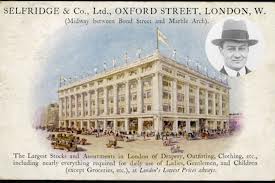
Selfridges


If you’re like me, you may have never heard of the illustrious Selfridges of London.  In my Downton Abbey depression, I’ve discovered  a similar PBS series called “Selfridges.”  It chronicles the life of American retail visionary Harry Gordon Selfridge whose namesake store on London’s toney Oxford Street retains his legacy and takes up 13 acres of space on six floors.  The store boasts nine restaurants and three stories of women’s fashion.  It is a model store and a commercial success story that holds historical significance.  Yet, it’s still doesn’t boast top-of-mind name recognition.  Watching the show and learning this made me curious.


How, can a store that changed British society, liberated women, shattered class divisions, reinvented shopping and brought America’s “can do” approach to stodgy England not be supremely known?  I’m as baffled as anyone.


Consider if you will:

Selfridges boasts Europe’s largest designer shoe department

Selfridges was London’s first ever department store

Selfridges was the first store that allowed shoppers to “browse”

Selfridges was the first store to welcome all classes of Britains inside

Selfridges was the first store to provide a women’s bathroom

Selfridges was the first store to have a biannual sale

Selfridges was the first store to put perfume and cosmetics at the main entrance

Harry Selfridge coined the phrase “only X number of shopping days until Christmas”

Harry Selfridge was the first to use advertising in London


So many “firsts,” right?  Then why doesn’t it rank right up there with Macy’s and Harrod’s?  As one historian said, America doesn’t care because the store is in London and Britain doesn’t care because he was an American.  It still, is an amazing story.

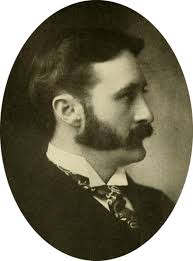
 Selfridge Harry


Harry Gordon Selfridge is a true American maverick and a genuine rags-to-riches self-made man.  Before he took his American dream across the Atlantic and shook up British society, he was an only child born in 1856 into poverty in rural Wisconsin and raised by a single mom.   His young life was full of hardships and adversity and you could say his childhood shaped his destiny.  He coined the phrase “Life is what you make it” and definitely lived it out.  Harry was extremely close to his mom and was very protective of her.  His respect for women would one day influence his business acumen greatly.


Poor but ambitious, Harry moved to Chicago in 1879 and went to work for Marshall Field.  In the popular Windy City store he started out as a stock room boy but nurtured his retail talents and slowly worked his way up.  He valued Field’s famous “the customer is always right” slogan and his bright ideas in advertising and design lead to him being named the store’s general manager.


He stayed on for nearly 20 years but always had the dream of opening his own store.  Harry had previously travelled to London and loved it.  London in the early 1900s was the center of the financial, manufacturing, and fashion worlds.  But, as Paris was building its “cathedrals of shopping,” London still didn’t have any department stores.  Harry spotted a nitch and vowed to provide just what the city was missing.


Interestingly enough, he chose Oxford Street on which to build his grand store.   At the time, what is today one of the world’s busiest shopping streets was nothing more than undesirable backwater.   Being the visionary that he was however, Harry noticed that directly across from his chosen piece of property was the new underground train station Bond Street.  Bingo!


Public transportation was changing all of Britain.  It allowed people from outside of London to come into the city and it also allowed women to travel more freely and independently.  This, was ultimately important and amazing forecasting.


While the neo-classical building was being built, Harry started advertising what it would hold inside…something unheard of in London retail at the time.  He promoted the coming store as somewhere that it will be a pleasure to shop in, where everyone was welcome, and where browsing was allowed.  Again, ultimately important and amazing forecasting.


You see, in the early 1900s England was a “nation of shopkeepers” as Napoleon himself said.  Retail therapy consisted only of small shops where browsing was frowned upon and where heavy pressure to purchase something was the norm.  Even Harry Selfridge himself was once accosted for “just looking.”  This undoubtedly reinforced his determination to build a store where browsing is okay, giving Londoners the “freedom to shop.” He knew what the customers wanted and he was going to give it to them in style.


 Selfridges old


March 1909 saw opening day for Selfridges and it’s estimated that one in four Londoners visited it and they loved what they saw!  Inside, they were treated to a shopping environment unlike any they had ever seen.  There were fresh flowers everywhere, musicians were playing live music and products were out of their glass cases, beautifully presented, and available to touch!  Wow!  This was astonishing!  Inside were also a hair salon, restaurants, art galleries, and a concierge desk where you could book train or theatre tickets.  In a very short time, Selfridges became not only the shopping center of choice, but the social center as well.  Shopping was now an adventure!


It  also became a past-time for women…the very women who previously weren’t allowed to go out without an escort.  Department stores soon provided new and respectable destinations ladies from all walks of life and Harry Selfridge was the first in line to cater to them.  In fact, his store was the first London store to provide a women’s bathroom.  Unreal, right?


About this time the women’s suffragette movement was picking up steam, and being the supporter of women that he was, Harry Selfridge backed them by advertising in their newspapers and flying their flag above his store.  He also stocked numerous items in the movement’s colors of green, white and purple.


Was this a calculated attempt to attract a customer base or was it a fitting homage to the mother he loved so much?  Maybe a little of both, but genius nonetheless.  Women flocked to his store and being Edwardian times, those women had numerous items of clothing for a single outfit and pre-made clothes had not been conceptualized…yet.  Selfridges was more than happy to provide both the fabric and the seamstresses to make anything they desired.  Again, genius.


At the same time he was selling his distinctly American ideals to England, he took on its greatest divide of all: the class system.  Declaring famously that his store was “open to all,” Selfridges was the first in Britain where every class of shopper shopped together.  As his competitors balked at the idea, Harry stuck to his growing up poor appreciation of everyone and it paid off…lavishly.


“The boss says ‘go,’ the leader says ‘let’s go.”  Harry Gordon Selfridge


Selfridge’s egalitarian approach extended to his shop staff.  At the time, shop workers were treated much like house staff members, worked long and hard hours in poor working conditions, had no rights, lived under strict rules, and lived in dorms on-site.   At Selfridges, instead of living on-site workers  received higher pay but much was expected of them.  Harry demanded a new brand of customer service and instilled in them the Marshall Field creed, bringing Midwestern style personal service to proper and provincial London.  Treat the customer right, he preached, and they will want to buy something.  In short, he single-handedly transformed working in retail and started a new code of employment practice throughout  Britain.


Almost inevitably though, opening day hype dwindled so Harry began staging elaborate publicity events, which at the time were considered beyond tasteless.  He miraculously made them respectable, and in 1909 he brought in the first plane to fly over the English Channel and placed it right in the store’s center.  This created a museum like frenzy and Selfridges never looked back.


Harry’s creativeness continued in the 1910s as Selfridges opened the first ever “Bargain Basement” of its kind and later held the first ever biannual sale, now a worldwide retail tradition.  Thank you Harry Selfridge!


It’s truly amazing how many of Harry Selfridge’s original ideas have inspired modern retail.  Think about it:  today stores everywhere use his advertising techniques to encourage purchases and then there’s the little thing that in 1911 Harry Selfridge created.  Today we know it as the ground floor beauty and cosmetics department.  At the time, make-up was worn but wasn’t respectable.  In stores it was often hidden away but by cleverly bringing perfume and make-up together right at the main entrance, Harry set the template for every department store worldwide.


Even WWI didn’t deter profits and by the end of it, Harry had doubled the size of his store.  Now, he was ready for the explosion of senses and style known as the 1920s.


Called the “era of youth,” the ‘20s were when young people came into their own.  They listened and danced to new music and wore innovative clothes.  Harry Selfridge embraced it all.  He starting stocking shorter and more light-weight dresses and introduced the concept of “ready to wear” clothing.  It literally, flew off the racks.  Today’s Selfridges still markets itself as young and fashionable and dedicates more retail space than anywhere in London to youth culture and trendy couture.  Harry would be proud.


About this time Harry’s wife Rosalie died, which was also about the time that London’s notorious nightclub scene began to heat up.  Harry loved the night life and is considered the first retailer to become a celebrity himself.  Again, this did nothing but help his store, where he would parade his celebrate friends in front of the buying and gawking public.


Selfridges window


Yet something else Harry Selfridge innovated was using storefront windows as marketing tools.   Long before Bergdorf’s knew what a window display was, Selfridges was putting to use its giant 21 plate-glass windows lining Oxford Street in the best of promotional ways.  Its windows became dream-like stories.  Now, the store was not only selling product, it was selling a lifestyle.


Selfridges also hosted the first ever demonstration of television and had nine elevators – unheard of at the time in British stores – with female operators – also unheard of!  For many customers, it was the first time they had ever seen or been in an elevator.  Today you can find one of the elevators in The Museum of London.


All of this impressed many but Harry’s racy style also put him at odds with Britain’s more conservative ruling class, who considered him a “vulgar American.”   But, nothing deterred Harry and he spent lavishly trying to prove himself a true gentleman.  He floated the store on the stock market in 1926 and made a fortune.  This small-town American was proud but desperate to break into the British upper class.  He spared no expense and started using the store’s profits for personal use.  Sadly for him, his efforts were for not.  You see, money in America could give one status and class, but not in Britain.


The last years of Harry’s life were unfortunately not some of his finest.  He started running with The Dolly Sisters, the most famous cabaret and film stars in the world.  The group got into gambling and gaming debts mounted.  Harry bankrolled huge losses and charged them to his store.  He is said to have lost up to $200 million in today’s currency.


To make matters worse, effects of America’s Great Depression were being felt overseas and other stores began copying his techniques so his competitive advantage was lost.  By 1939 the store was in debt and the next year its Board of Directors demoted and ultimately dismissed him.  Harry Selfridge would still travel to the store every day and just stare at it from the street.  He was by then a broken and broke man who had to count pennies to board a bus home.  In 1943 he was arrested for being a vagrant and in 1947 he died penniless.


He also never met his son’s four children or wife.  He had wanted his son to marry into British society, but instead married a woman who worked at his dad’s store; something and someone Harry never accepted.  Harry Selfridge may have been modern and progressive in business, but when it came to family he was as snobbish as the “Earl of Oxford” he considered himself to be.


Selfridges has since changed ownership several times and during WWII its deep basements were used for secure communications between Churchill and Roosevelt.  It was taken over in 1965 by the Sears Group but in 2003 the chain was acquired by Canada’s Galen Weston, putting it back in private hands.  The billionaire retail family has returned it to its glory and is enjoying record profits.  The flagship Oxford Street store is busier than ever and a chain of stores can be found throughout the UK.


It’s nice to know an American dream alive and well in the heart of London.


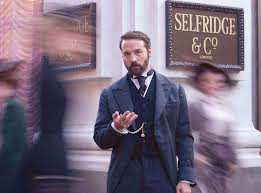
Selfridge TV

If this interests you, check out the PBS show “Mr. Selfridge” starring Golden Globe and Emmy winner Jeremy Piven.  It airs on Masterpiece Theatre at 8 CST on Sundays.


Think About It Thursday March 6, 2014

Filed under: Uncategorized — carlawordsmithblog @ 11:00 pm

995408_486591331414889_1525420536_n


Ashes to Ashes March 5, 2014

Filed under: Uncategorized — carlawordsmithblog @ 10:43 pm

Ash Wednesday


By the sweat of your brow you will eat your food until you return to the ground, since from it you were taken; for dust you are and to dust you will return.”  Genesis 3:19


David Bowie may have sung it, but today Catholics around the world are living it.  Ash Wednesday.  It’s today, but what is it and why?  Whether you received your ashes and wonder why or whether you saw someone with ashes on their forehead and wonder why, this blog is for you!


It helps to understand that Ash Wednesday begins the season of Lent, which is 40 days of quiet and reflection leading up to Easter Sunday.  We remember what lies ahead on Good Friday, the Passion of Christ, and what it means for us and to us.  We try to slow down and listen to God.   Jesus suffered more than any of us can ever imagine on that fateful day, so we take this time to “suffer” in the way of sacrifice and loss.


Yes, we “give up things” like sodas, coffee, alcohol, TV…whatever we choose, but we also focus on Jesus’ own words regarding the three main disciplines of Lent:  giving alms (charity), praying, and fasting.   Jesus also instructs us to do all of these without seeking recognition and we are reminded that we don’t wear the ashes to proclaim our holiness to others but to acknowledge that we are a community of sinners in need of repentance and renewal.  We can give up things, but we should also do things…do good things.


During Lent we are also asked to devote more time to personal prayer and to apologize and ask for forgiveness form others and from God.   We are not perfect and we confess our imperfections as we wait for the joy and cleansing of Easter Sunday.


The first clear evidence of Ash Wednesday was around the year 960 and there is also much biblical scripture supporting today’s practices.  In fact, when receiving ashes a person is told “turn away from sin and be faithful to the gospel.”  The gospel is scripture.


But why the ashes?   Ashes are ancient symbols of repentance, ashes remind us of our mortality and the “ashes to ashes” bible verse, and lastly being marked with a cross symbol on our forehead reminds us that we belong to Christ and we ask Him to develop in us a spirit of humility and sacrifice, much like He did for us.


When we receive ashes on our foreheads, we remember who we are. We remember that we are creatures of the earth (“remember that you are dust”), we remember that we are mortal beings (“and to dust you will return”), and we remember that we are members of the body of Christ.


I have a Lenten book of daily meditations that I have had for years and really love.  My bookmark in it reads:

Fast from judging others, feast on Christ dwelling in them

Fast from differences, feast on unity

Fast from thoughts of illness, feast on the healing power of God

Fast from words that pollute, feast on words that purify

Fast from discontent, feast on gratitude

Fast from anger, feast on patience

Fast form pessimism, feast on optimism

Fast from worry, feast on God’s promises

Fast from complaining, feast on appreciation


The prayer handed out today at our services also spoke to me.  It reads:

Forty Days – A Prayer for Lent

Forty days alone, a wilderness of thought, tempting and inviting thoughts that could so easily have distracted you from your task, your mission, your vision.  Yet you emerged stronger and more attuned to all that had to be done despite a time constraint that to our eyes would have seemed hopeless.  We too live in stressful times.  Demands are made of our time that leave so little for the important things of life.  We are easily distracted in the wilderness of our lives by every call to go this way or that.  We listen to the voices of the world and ignore the one who endured all this and so much more and emerged triumphant that we might not have to suffer so.  Forgive us Father when we get distracted from our task.  Forgive us those times when we try to be all things to all men and fail to be anything to anyone.  Amen.


It’s that last line that really got me:  trying to be all things to all yet ultimately failing to be really anything.  Don’t we all do this sometimes?  Many of us are people pleasers, workaholics, perfectionists, multi-taskers, whatever you want to call it.  Maybe we all just need to slow down and look inward, not so much outward and remember that the only person you should try to impress is God.


Finally, I’ve seen the following list of things to give up floating around the internet during the past week and I really like it.  I hope you do too.


20 Things to Give Up for Lent

  • Guilt
  • Fear
  • The need to please everyone
  • Envy
  • Impatience
  • Sense of entitlement
  • Bitterness and Resentment
  • Blame
  • Gossip and Negativity
  • Comparison
  • Fear of failure
  • Feelings of unworthiness
  • Doubt
  • Self-pity
  • Excuses
  • Pride
  • Worry


Such great ideas for things to fast from during Lent, and every day.


Tuesday’s Tip: The Fattest of All Tuesdays March 4, 2014

Filed under: Uncategorized — carlawordsmithblog @ 9:30 pm

NO lantern


Happy Mardi Gras everyone!  Is everyone wearing their purple, green, and gold and celebrating today?  What exactly are you celebrating though?!


In short, we celebrate Mardi Gras because tomorrow, Ash Wednesday, begins Lent.  Mardi Gras means “Fat Tuesday” in French and came about from the ancient custom of parading a fat ox through Paris the day before Ash Wednesday.  The ox was a reminder that eating meat is not allowed during Lent, which runs from Ash Wednesday through Easter Sunday.   People must have loved their meat because they reveled in a big way!


Major merriments are today still held as those Frenchmen brought the custom to the U.S. with them.  Mardi Gras parades are taking place today throughout the world, but in the U.S. the modern incarnation of the holiday is said to have started in Mobile, Alabama in 1830.  Today New Orleans is most traditionally known as the Mardi Gras capital of the world with its parades, parties, and other popular customs that often include the throwing of beads, the drinking of cocktails, and the eating of King Cakes.


Mardi Gras is always 47 days before Easter, but why the purple, green and gold?  Purple is said to stand for justice, green represents faith, and gold stands for power.   I’ve been to New Orleans many times but  never during  Mardi Gras and I don’t think I ever want.  A wild and crazy city the other 364 days of the year, I can’t even imagine the madcap rowdiness of it all.  I do love the beads though and I love a good parade.   Party on my friends and save some cake for me!


And The Winner Is…

Filed under: Uncategorized — carlawordsmithblog @ 5:07 am

Let me put this out there right away:  Hollywood annoys me.  But, allow me to admit that I look forward to watching the Academy Awards almost every year.  There was a day when I loved going to the movies.  Then, everything turned political and I turned away.  The Oscars however, are a night to enjoy some fashion and some fun.  Here then is my take on last night’s Academy Awards:


The winners

Olivia Wilde and Jason Sudeikis.  Are they not so adorable?  Loved her black dress (and baby bump) with the splash of white in the back and I loved his dark blue suit, although against her black dress I might have preferred traditional black.


Wilde


Jennifer Lawrence in red Dior.  She is an official movie star now and just so darn likable…falls and all.  Her styled pixie hair was perfection and I loved her “party in the back” necklace.  I even liked the “so last year” peplum accents on her hips.


-jennifer-lawrence-lu

Lupita NYong’o in custom “Nairobi Blue” Prada.  I didn’t love the hairband but I love her class and grace.  She is here to stay.


Matthew McConaughey and wife Camilla.  In a word:  perfection.  I actually really, really liked his white jacketed tux and I loved the pale pink of her one-shoulder only caped gown.  Her hair was also flawless.  I wasn’t a fan of his beloved mom’s look though and strongly suggest she (and her son!) stay out of the tanning booth!   What I loved most about him though was his mention of God in his acceptance speech.  Rarely do you hear that from any actor and the fact that he did so winning the year’s biggest prize was so inspiring and impressive.

matthew-mcconaughey-camila-alves-matching-couple-on-oscars-2014-red-carpet


Others I liked:

Jared Leto.  Pretty and handsome at the same time and he’s not too proud to admit he adores and loves his momma!  His red satin tie was clever and his acceptance speech heart-warming.


Bette Midler looked and sounded fabulous!  I loved both dresses she wore:  the subtly striped illusion gown during her performance of the classic “Wind Beneath My Wings” and the Reem Akra red carpet dress that she admitted was done by Akra herself when  “came to my house and made it in my size.”  Gotta love a woman who isn’t a size 0.


Emma Watson.  I loved her classic yet edgy black gown with subtle sparkle.  She is one of very few attendees who can pull that look off and she did so impeccably.  It stands right up there with her “pants in the back” Golden Globes dress.  I love her ability to take fashion risks yet stay classy.


Kate Hudson knows how to wear a dress better than anyone and last night’s Atelier Versace number was no exception.  I don’t know who does her make-up (Almay?) but it is always gorgeous.  One question:  was she in a movie last year?!


Sally Field looked radiant in her age-appropriate black sequined gown but what I love most about her is that her face matches her neck and her age!  She.  Looks.  Great!


I thought 84-year-old June Squibb looked wonderful in emerald green.  She is an inspiration to us all.


Pink not only nailed “Somewhere Over the Rainbow” but didn’t she look stunning in that red glittery ball gown that would so have matched Dorothy’s shoes?  I love Pink and am so happy she came and she delivered.  You go girl!


And last but certainly not least, what more can be said about Charlize Theron?  She might be dating pinhead Sean Penn but her white Dior gown was to die for.  I’m obsessed with the pleating on the bottom, the illusion overlay, the “no see” straps, and the necklace she chose to enhance it all.  I also LOVE her short hair.  My vote for “best dressed” goes to either her or Jennifer Lawrence.

charlize_theron_2014_academy_wards_oscars_19h7kgs-19h7kho


Losers

I didn’t hate Amy Adams’ timeless blue Gucci but I hated her hair!  She has such gorgeous and full, long locks and I just don’t understand why she (or her stylist) would choose to put them up so tightly!  I love Amy and  I was hoping she’d really bring it but she went a little too safe and a lot too boring.

Amy-Adams-Olivia-Wilde-Oscars_ms_030214_copy


I know it was a hit with many but I found Julia Roberts’ black lace number a miss.  I thought it was a little to 70’s promish and the here but not there lace around the arms was distracting.  I especially hated the décolletage lace inset.


julia-roberts-oscars-2014-red-carpet


Although Angelina Jolie always looks beautiful and is truly one of the most naturally gorgeous human beings, I found her beaded Elie Saab dress ill-fitting and a tad matronly.

brad-pitt-angelina-jolie-lg

I am not a big fan of nude dresses on the red carpet so I didn’t really care for those of Cate Blanchett or Jessica Biel.  I can’t for the life of me figure out why I never think Biel looks gorgeous even though I think she should.  Mystery of all mysteries.


The “Wolf of Wall Street’s” Margot Robbie wore one of my favorite award season gowns when she showed up in that amazing white Gucci at the Golden Globes, but I did not like her dark hair and black dress AT ALL at the Oscars.


Whoopi Goldberg.  Hmmmm.   I can’t decide if she was mocking Julia Robert’s gown of a similar style from the Golden Globes or if she just wanted to look bad and why is she so grumpy and why was she even there?  Of all the stars who could have introduced the “Wizard of Oz” and Judy Garland tribute, why in the world did they pick her?


Goldie Hawn and Liza Minnelli:  please stop with the nips, tucks, fillers and whatever you are doing.  You’re old and we all know it.  Embrace it!


Will someone please tell  E! hostess with the mostest Giuliana Rancic to please eat?!


The Vote is Still Out

I didn’t love but I didn’t hate Jennifer Garner’s silver “flapper” dress or Sandra Bullock’s blue Alexander McQueen but I really, really like both actresses a lot so I can’t put them in the “losers” column either!

sandra-bullock-gravitates-to-the-oscars-2014-red-carpet


I found Ann Hathaway’s Gucci black halter dress with crystal embroidery a bit much for a non-nominee but I did kinda like it!


Hot Trends

Statement necklaces

Up-dos

Pixie cuts

Non-traditional-colored tuxedos

The red clutch that Kelly Ripa, Bette Midler and Anna Kendrick all carried!


Show Highlights

I thought Ellen DeGeneres was fabulous!  She kept the show moving, kept it light, and was so darn funny!  I absolutely loved the pizza delivery and the selfie of all selfies.  I thought it was both brave and spot on when she mentioned most of the actors in attendance had never been to college and that Jared Leto was the “prettiest” one there.


I was thrilled that “20 Feet from Stardom” won the documentary award as it was such a fabulous film.


As for the rest of the movies, eh, I really didn’t care what won.  It just seemed like nearly every nominated “big” movie was so dog-gone depressing!  Lighten up Hollywood and thank goodness for Ellen…and the fashion!


See you next year.


Sunday Scripture March 2, 2014

Filed under: Uncategorized — carlawordsmithblog @ 9:25 pm

What, me worry?!


 Pastoral Dreamer

“Don’t be anxious about tomorrow.  God will take care of your tomorrow. Live one day at a time.”  Matthew 6:34


Today’s Gospel reading in mass was Matthew 6:24-34, which basically instructs us not to worry about tomorrow or earthly things.  In other words, just chill.


I am not good at doing that.  I am very nostalgic so I hold on to memories from yesterday, last month, years past.  I can also hold on way too tightly to past hurts and feelings of resentment.  I can be slow to forgive and quick to shut down.  On the flipside, I’m also a major planner of tomorrow and all the tomorrows that follow.  I don’t like to just “let things happen.”  I’ve always joked that, other than perhaps writing, the other thing I’m really good at is worrying.  Hi, my name is Carla and I’m a worry wart.  I worry about everything.  I even worry about how much I worry.


I’m also not big on the whole “let go and let God” thing.  Yes, I totally believe our lives are in God’s hands and that we are to release them to Him, but I also strongly believe we are to be the hands of God and do His work.  Waiting for Him to take care of everything is a bit too “la la living” to me.  God helps those who help themselves, right?


So, when I hear the likes of “let it go” or “live in the moment,” I have a hard time doing so.  Alcoholics Anonymous is as famous for its “one day at a time” mantra as it is for its use of the Serenity Prayer but that is so hard for me to do.  How can I just focus on today when so much happened last Thursday and next Tuesday is going to be crazy?!


This morning Deacon Pete had the answer as he read and spoke about not worrying about so much and instead live today as if it were your last.  Make it memorable.  You don’t have to forget about yesterday or tomorrow, but take the time to enjoy today.  Do something special.  Do nothing.  Do what makes you happy and whole.


Oh, okay, I get it now!  I can continue to plan next week while still living for today.  Yippee and Amen!


But what about not worrying about my clothes and what to wear?  Okay, I’m still working on that one!


“Lord, help me to realize how brief my time on earth will be.  My whole lifetime is but a moment to you and all my busy rushing ends in nothing.”  Ps. 39


Matthew 6:24-34

No one can be the slave of two masters: he will  either hate the first and love the second, or be attached to the first and despise the second. You cannot be the slave both of God and of money.


That is why I am telling you not to worry about your life  and what you are to eat, nor about your body and what you are to wear.  Surely life is more than food, and the body more than clothing.


Look at the birds in the sky. They do not sow or reap or gather into barns; yet your heavenly Father feeds them. Are you not worth much more than they are?


Can any of you, however much you worry, add one single cubit to your span of life?


And why worry about clothing? Think of the flowers growing in the fields; they never have to work or spin yet I assure you that not even Solomon in all his royal robes was clothed like one of these.


Now if that is how God clothes the wild flowers growing in the field which are there today and thrown into the furnace tomorrow, will he not much more look after you, you who have so little faith?


So do not worry; do not say, “What are we to eat? What are we to drink? What are we to wear?”


It is the Gentiles who set their hearts on all these things. Your heavenly Father knows you need them all.


Set your hearts on his kingdom first, and on God’s saving justice, and all these other things will be given you as well.


So do not worry about tomorrow: tomorrow will take care of itself.


Friday Funny February 28, 2014

Filed under: Uncategorized — carlawordsmithblog @ 8:36 pm

Happy Friday everyone!

Not funny when you're next


Wednesday’s Words of Wit & Wisdom February 27, 2014

Filed under: Uncategorized — carlawordsmithblog @ 12:24 am

seeds


When you respect others, others will respect you.

When you make time for others, others will make time for you.

When you neglect someone, you too will be neglected.

When you are rude to someone, they will probably be rude to you.

If you are kind to others, others will probably be kind to you.

When you try to understand others, they will try to understand you.

If you apologize earnestly, you will be forgiven.

If you listen, others will listen to you.

If you appreciate others, you will be appreciated.

Always remember you reap what you sow and you get what you give.

To be loved, be lovable.