
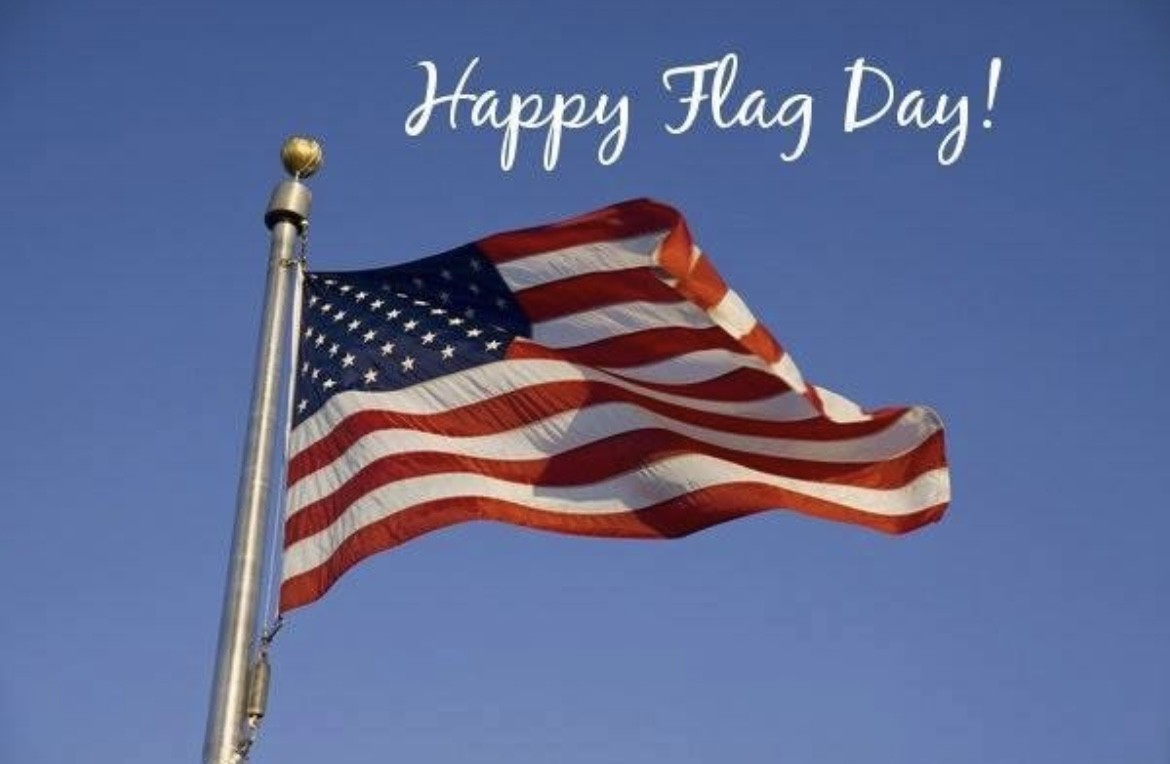
Happy “Flag Day” everyone! Did you even know today, June 14, is Flag Day…every year? What are we really celebrating anyway? Seems we’re all very familiar with the Fourth of July, traditionally celebrated as America’s birthday, but a whole day just to celebrate our nation’s flag? That, my friends, is a whole different story.
Our country has one flag and one flag only that unifies us and we should never forget that. Just a simple visit with any foreigner visiting the country, as we are seeing with the current influx of World Cup fans, and you’ll discover how amazed and impressed they are to see American flags proudly hanging everywhere. No other symbol in the world stands for freedom, liberty, and the sacrifices people have made for those values like the American flag and it should be honored and respected. So much so that it has a whole day to celebrate it!
The flag of the United States is not one design but a living document, officially changed 27 times as the nation grew. It has a long history and here is how the National Flag Foundation documents the evolution of the Stars and Stripes.
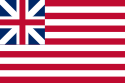 The first flag to represent the united colonies was not the Stars and Stripes at all. The Continental Colors, often called the Grand Union Flag carried the 13 red and white stripes we still know, but in place of stars its canton held the British Union flag. It captured the colonies’ position at the time: united in resistance, not yet declaring full separation.
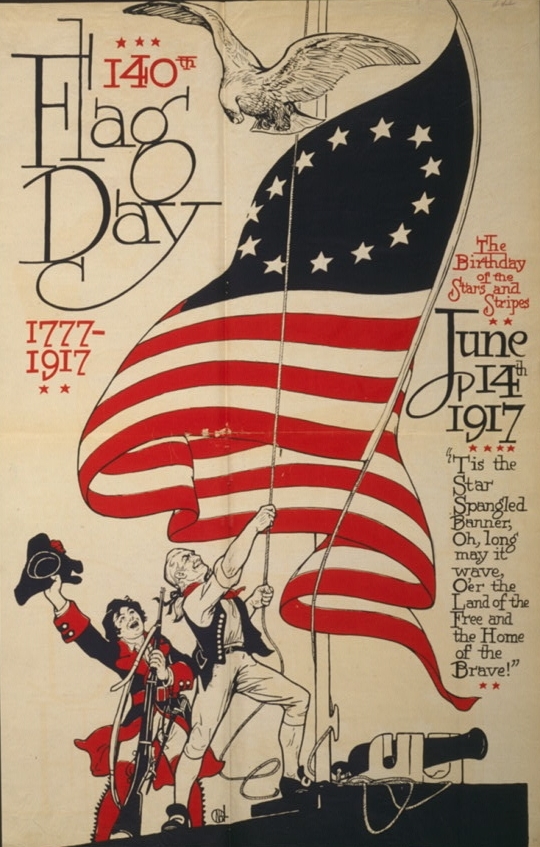 On June 14, 1777, the Continental Congress passed the Flag Resolution: “Resolved, that the flag of the United States be 13 stripes, alternate red and white; that the union be thirteen stars, white in a blue field, representing a new constellation.” The date of the resolution is why we celebrate Flag Day today on June 14.
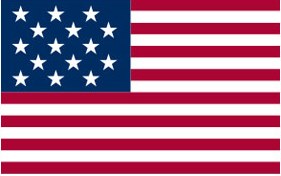 It didn’t last long however and when Vermont and Kentucky joined the union, Congress updated the flag the only way that seemed fair: a star and a stripe for each new state. The 1795 flag carried 15 of each, and it is the single most famous version of the flag ever made. It was a 15-star, 15-stripe garrison flag that flew over Fort McHenry in September 1814 and moved Francis Scott Key to write “The Star-Spangled Banner.”
But the arithmetic had a problem. The nation kept growing, and a flag that added a stripe per state would eventually look like pinstripes.
The Flag Act of 1818 settled the design logic that still governs the flag today, returning the stripes permanently to 13 in honor of the original colonies and adding one star for each new state. New stars are added on the Fourth of July following a state’s admission. From then on, the stripes told the story of the founding and the stars told the story of the growth.
Change was not over however, as through the 19th century the star field changed constantly as the map filled in, and there was still no official arrangement. It took an executive order by President Taft in 1912 to standardize the flag’s proportions and the orderly rows of stars for the 48-star flag, which then served through two World Wars and 47 years, the record at the time.
Alaska’s statehood brought a 49-star flag on July 4, 1959. It lasted exactly one year, the shortest-serving star count of the modern era, because Hawaii was right behind. On July 4, 1960, the 50-star flag was raised for the first time.
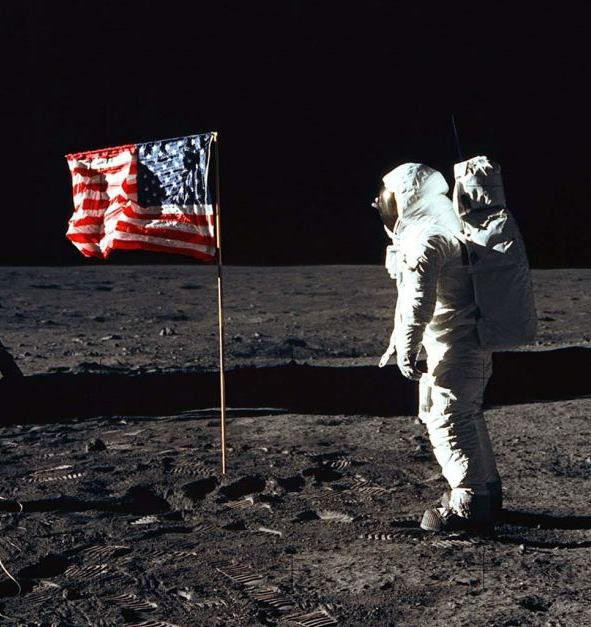 The 50-star flag has now flown for more than six decades, far longer than any earlier version. Every previous design was a snapshot of a growing country; this one has become the fixed image of America, was carried to the Moon, planted at the poles, folded into 13 ceremonial triangles at military funerals, and raised over every statehouse each morning.
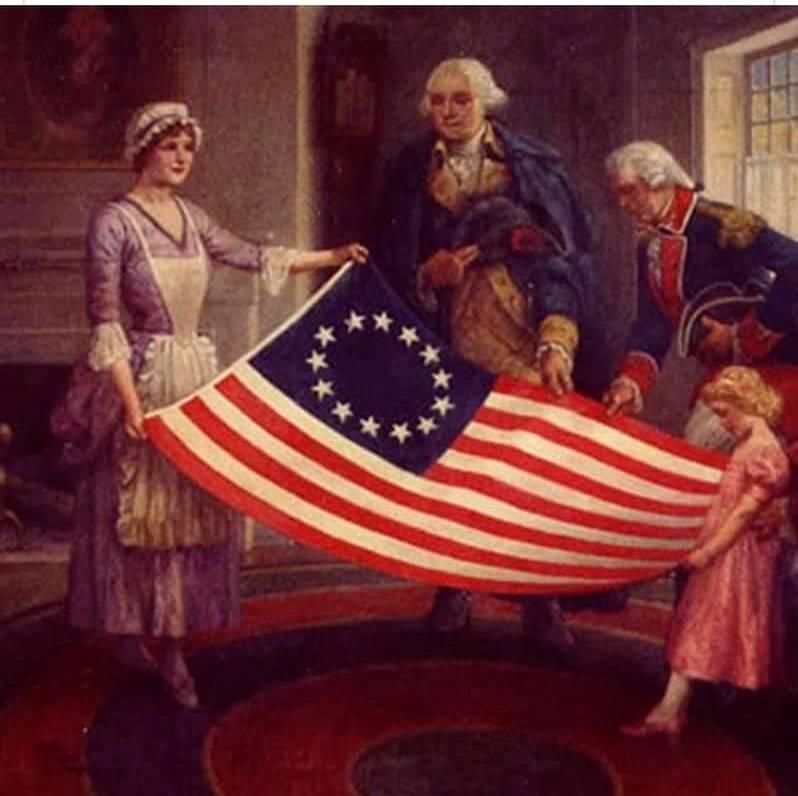 Most of us are familiar with Betsy Ross as she is widely considered to have made the first American flag. The flag’s 13 alternating red and white stripes and a blue field with 13 five-pointed stars arranged in a circle was attributed to Ross, who is popularly believed to have sewn this first flag in 1776. This claim however, is based on legend rather than definitive historical evidence.
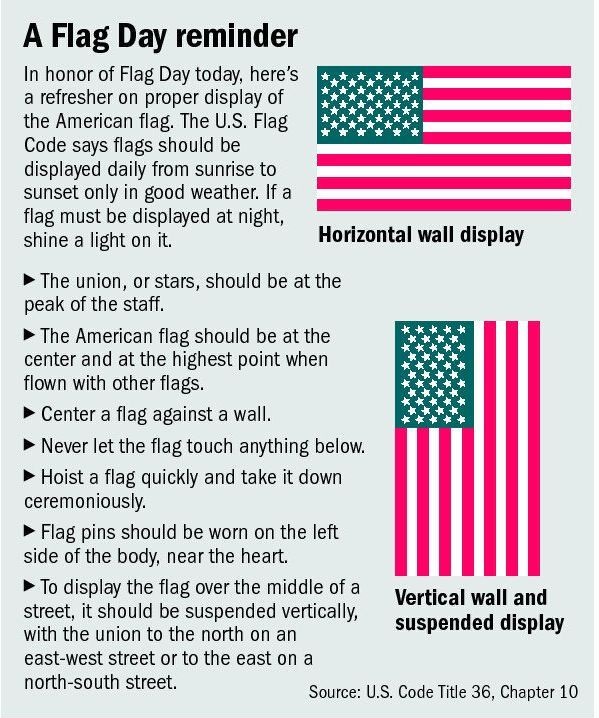 Giving its history and all it represents, respect and honor for our flag is earned. The U.S. Flag Code, which formalizes and unifies the traditional ways in which we give respect to our nation’s flag, contains specific instructions on flying and caring for a flag. They include:
- The flag should never be dipped to any person or thing. It is flown upside down only as a distress signal.
- The flag should not be used as a drapery, for covering a speaker’s desk or platform, for draping a platform, or for any decoration in general. Bunting of blue, white and red stripes is available for these purposes. The blue stripe of the bunting should be on the top.
- The flag should never have placed on it or attached to it any mark, insignia, letter, word, number, figure, or drawing of any kind.
- The flag should be cleaned and mended when necessary.
- When a flag is so worn, it is no longer fit to serve as a symbol of our country and should be destroyed by burning in a dignified manner.
Note: Most American Legion Posts regularly conduct a dignified flag burning ceremony, often on Flag Day. Many Cub Scout packs and Boy and Girl Scouts troop sometimes also retire flags appropriately. Contact your local American Legion Hall or scout troop to inquire about the availability of this service.
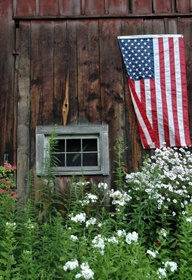 Displaying the Flag Outdoors
- When the flag is displayed from a staff (pole) or projecting from a window, balcony, or building, the union (stars area) should be at the top of the staff unless the flag is at half-staff.
- When displaying the flag against a wall whether vertically or horizontally, the flag’s union should be at the top, to the flag’s own right and the observer’s left.
- When the flag is displayed over a street, it should be hung vertically, with the union to the north or east.
- When flown with flags of states, communities, or societies on separate flag poles that are of the same height and in a straight line, the flag of the United States is always placed in the position of honor – to its own right. The other flags may be smaller but none may be larger. No other flag ever should be placed above the American flag.
- When flown with the national banner of other countries, each flag must be displayed from a separate pole of the same height and flag should be the same size.
Raising and Lowering the Flag
- When the flag is lowered, no part of it should touch the ground or any other object and it should be received by waiting hands and arms. To store the flag, it should be folded neatly and ceremoniously.
- When flown with flags of states or communities, the U.S. flag is always the first flag raised and the last one lowered. When flown with flags of other countries, all flags should be raised and lowered simultaneously.
- The U.S. flag should be raised briskly and lowered slowly and ceremoniously. Ordinarily it should be displayed only between sunrise and sunset and should be illuminated if displayed at night. As it is hoisted and lowered, the flag is saluted. The salute is held until the flag is unsnapped from the halyard or through the last note of music, whichever is the longest.
The Salute
- To salute our flag, all persons come to attention. Those in uniform give the appropriate formal salute while citizens not in uniform place their right hand over their heart. Head covers should be removed and held over left shoulder with hand over the heart.
The Flag in Mourning
- The flag is to be flown at half-staff in mourning upon presidential or gubernatorial order.
- To place the flag at half-staff, hoist it to the peak for an instant and lower it to a position half way between the top and bottom of the staff. The flag is to be raised again to the peak for a moment before it is lowered.
- When used to cover a casket, the flag should be placed with the union at the head and over the left shoulder. It should not be lowered into the grave.
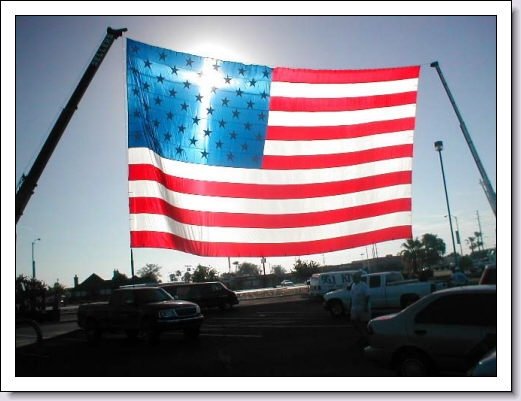 So, you want to buy and fly an American flag? Sadly, most American flags are made overseas, with only a few companies producing them in the USA. These companies emphasize quality and support for American jobs by ensuring their flags are made entirely in the United States. When you are looking for a quality American flag to proudly display your heritage and belief in this great country, make sure you are looking specifically for American flags made in the USA. It’s a simple Google to find one.
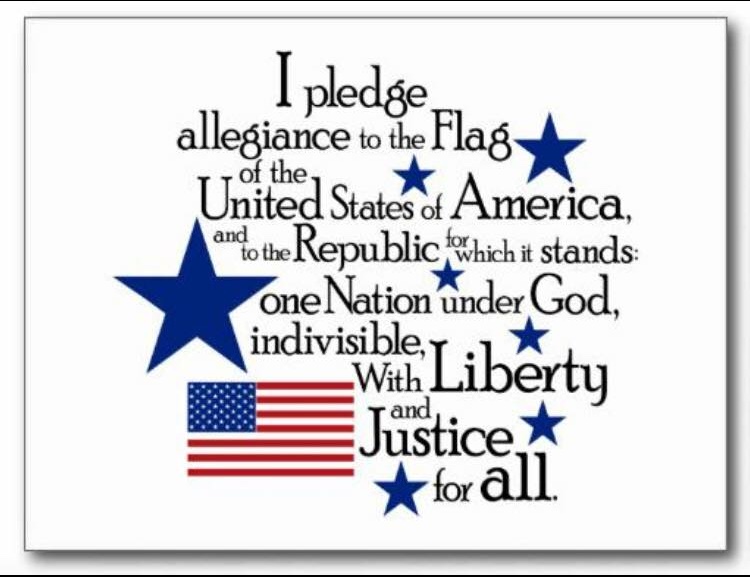 Pledging allegiance
“I pledge allegiance, to the flag of the United States of America…” We know it by heart but do we know the origin of this allegiance to our flag? It appropriately all started in a school.
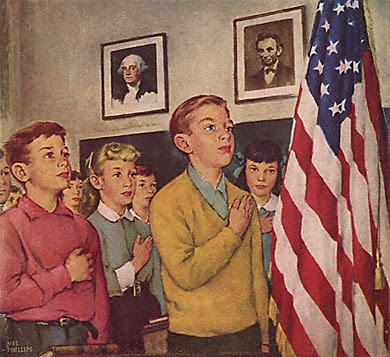 On September 8, 1892, the Boston based “The Youth’s Companion” magazine published a few words for students to repeat on Columbus Day of that year. Written by Francis Bellamy, the words were reprinted on thousands of leaflets and sent to public schools across the country. On October 12, 1892, the Quadricentennial of Columbus’ arrival, more than 12 million children recited this “pledge of allegiance,” beginning a required school-day ritual. It was not until 1942 however, that Congress officially recognized the Pledge of Allegiance. Today, 45 states have laws requiring public schools to recite the Pledge of Allegiance, while five states—Arizona, Hawaii, Nebraska, Wyoming, and Vermont—do not have such laws. However, Nebraska has a State School Board policy that requires the Pledge to be recited, even if not mandated by law.
In June of 1954 an amendment was made to add the words “under God” by President Dwight D. Eisenhower, who said “In this way we are reaffirming the transcendence of religious faith in America’s heritage and future; in this way we shall constantly strengthen those spiritual weapons which forever will be our country’s most powerful resource in peace and war.” Amen!
The Pledge of Allegiance should be rendered by standing at attention, facing the flag, and saluting.
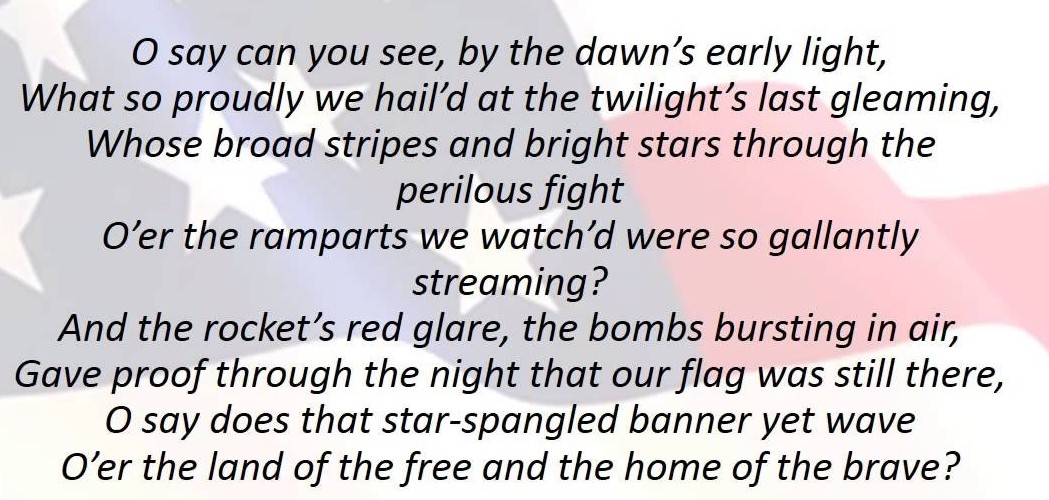
And the flag was still there
It’s sadly reported that today more than half of Americans aren’t familiar with the words to our National Anthem and about 38 percent of American teens don’t know the actual name of the anthem is “The Star-Spangled Banner.” So, maybe now’s a good of time as ever to revisit just where all those unfamiliar words came from and how they relate to our flag.
In short, Georgetown lawyer Francis Scott Key wrote the poem “Defense of Fort McHenry,” which was later put to the tune of John Stafford Smith’s song “The Anacreontic Song” and retitled “The Star- Spangled Banner.” The song slowly spread throughout the United States, gaining acceptance by citizens and the military alike until finally, in 1931, President Herbert Hoover declared the song to be the official National Anthem of the United States.
It all goes back to the War of 1812 and Britain’s attempts to regulate American shipping and other activities. At the star-shaped Fort McHenry in Baltimore and during heated battles between the two countries, Commander Major George Armistead asked for a flag so big that “the British would have no trouble seeing it from a distance.”
One subsequent night, young Key was on board a ship in the harbor watching the British bombardment of the Fort, which lasted through the night. Key believed the U.S. would win the war if the flag could be seen above the Fort at daybreak. The flag was indeed still flying when the sun rose, inspiring Key to write his famous words.
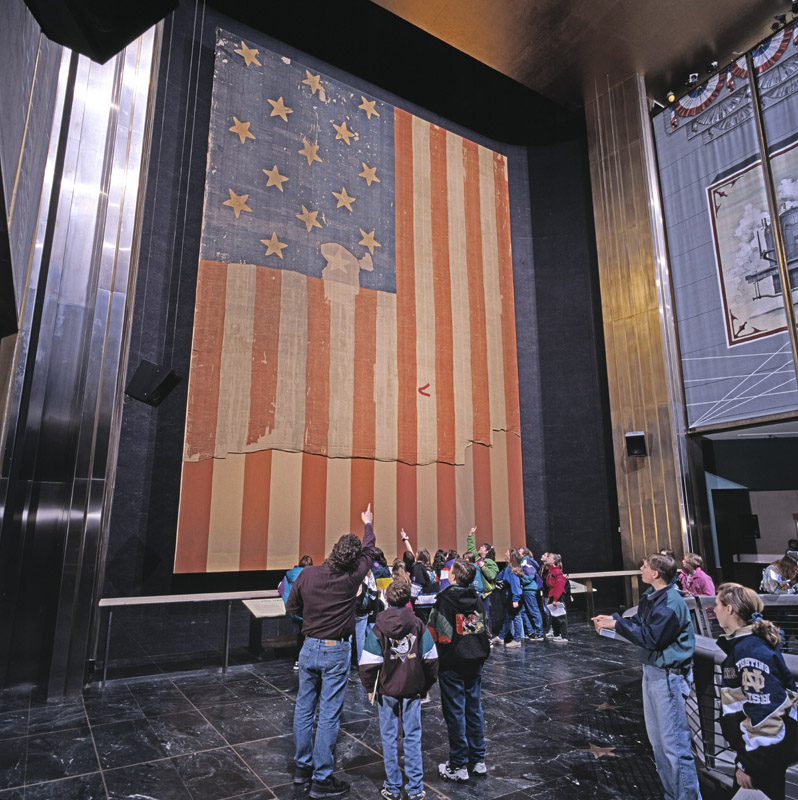 That very flag went on view for the first time on January 1, 1876 at the Old State House in Philadelphia for our nation’s Centennial celebration. It now resides in the Smithsonian Museum of American History Washington, D.C. An opaque curtain shields the now fragile flag from light and dust. The flag is exposed for viewing for a few moments once every hour during museum hours.
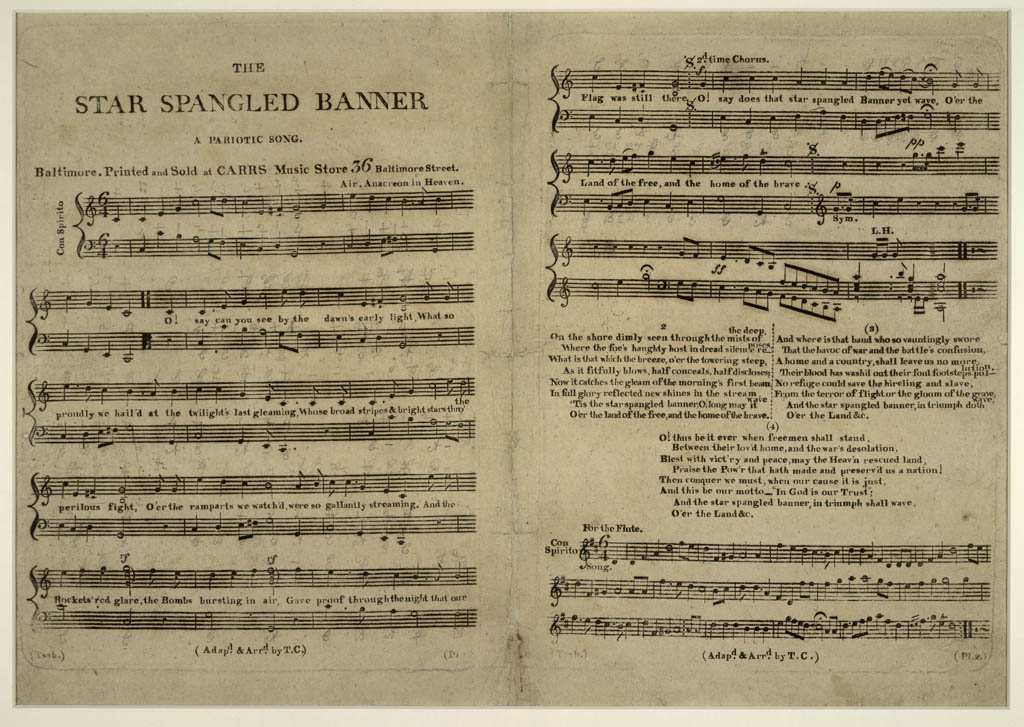 The actual copy that Key wrote in his hotel on September 14, 1814 remained in the Nicholson family for 93 years but was sold to Henry Walters of Baltimore. In 1934, it was bought at auction in New York from the Walters estate by the Walters Art Gallery of Baltimore for $26,400. The Walters Gallery sold the manuscript in 1953 to the Maryland Historical Society for the same price. Another copy that Key wrote is in the Library of Congress.
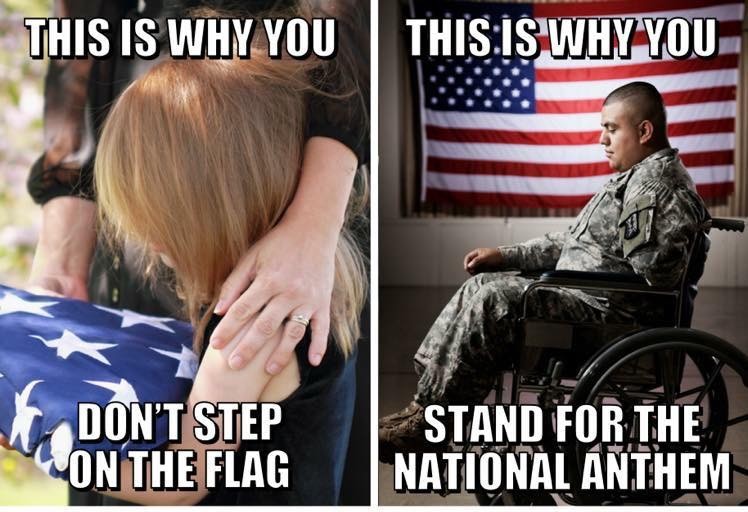 To this day, hearing it played or sung, especially by large respectful crowds, is enough to give chills. I’m not a big soccer fan, but seeing our entire U.S.A. World Cup team hold their hands over their hearts during a recent singing of it before a match made me one!
When the National Anthem is played or sung, citizens should stand at attention and salute at the first note and hold the salute through the last note. Not being respectful of its playing by not standing or putting one’s hand over their heart is not only a general sign of disrespect but in my opinion, an indication you don’t deserve that same respect.
Also disrespectful, although not illegal, is the burning of an American flag. It gives me the “icks” just thinking of it.
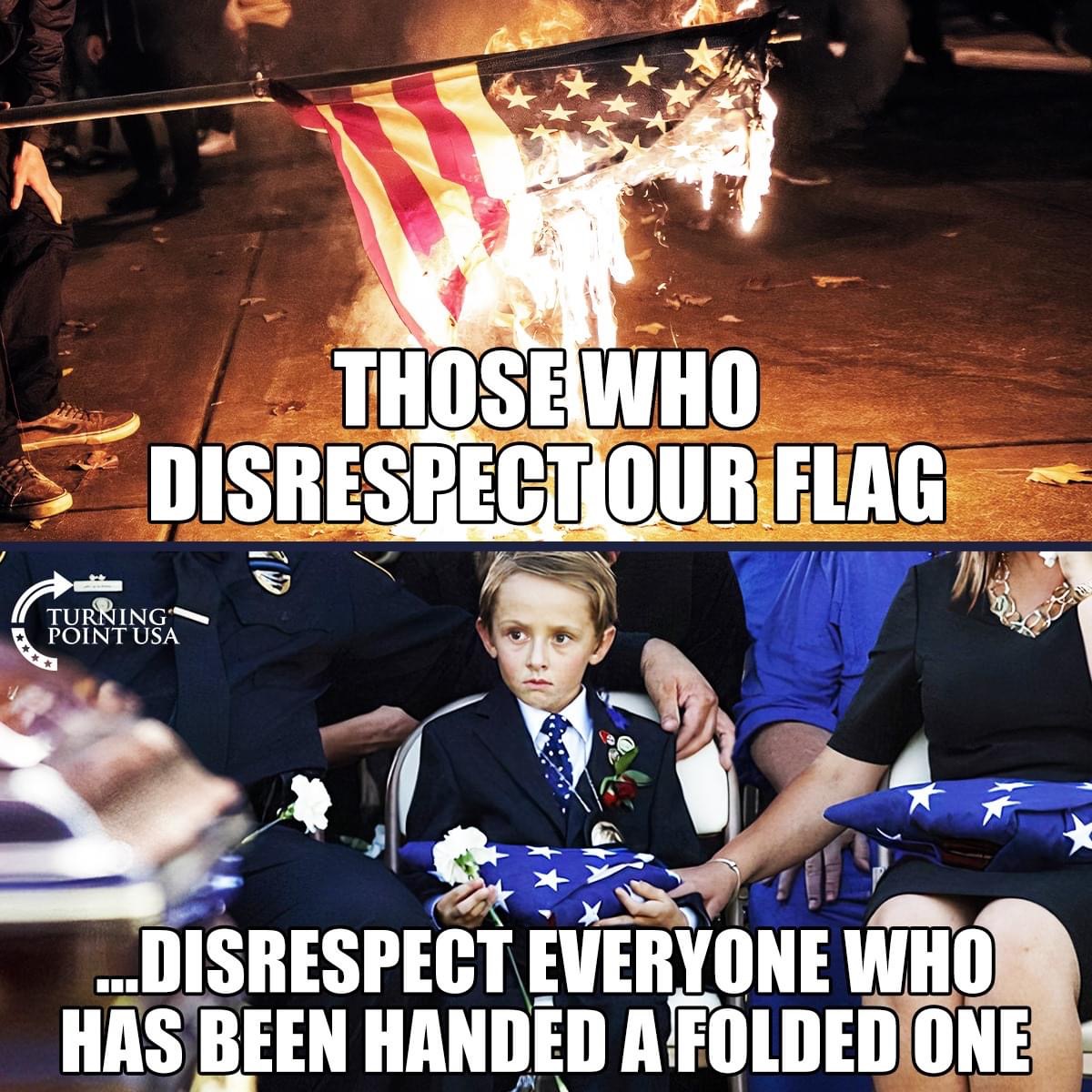 Burning the U.S. flag is considered a form of protected speech under the First Amendment, as established by the Supreme Court in the 1989 case Texas v. Johnson. This ruling allows individuals to express political views through flag burning, despite it being a controversial act. Flag burning remains a potent symbol of political expression in the United States, yet it continues to evoke strong emotions and debates about the balance between free speech and respect for national symbols. For me, it’s a big no.
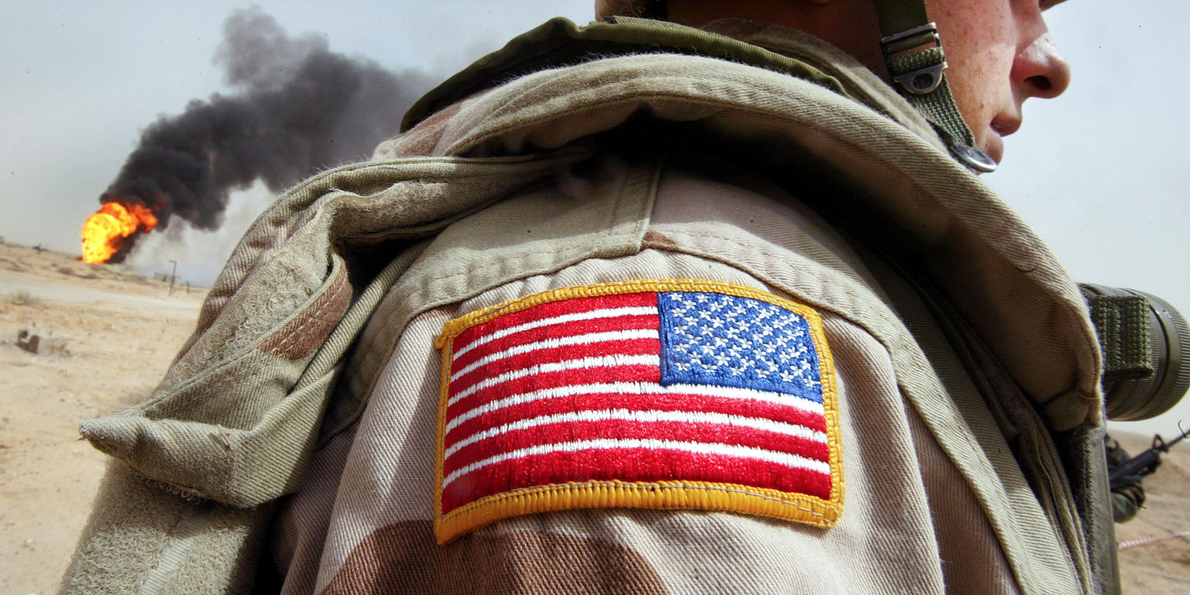 That’s a good question!
Q: Why is the flag patch “backwards” on military uniforms?
A: According to the Department of Defense website, when authorized for application to a proper uniform, the American flag patch is to be worn so the star field faces forward, or to the flag’s own right. When worn in this manner, the flag is facing to the observer’s right and gives the effect of the flag flying in the breeze as the wearer moves forward.
Q: What exactly is a “rampart” mentioned in our national anthem?
A: The definition of a rampart is “the defensive wall of a castle or city.” In the instance of “The Star Spangled Banner,” most believe Francis Scott Key was talking about the walls surrounding Fort McHenry.
Q: What’s the difference between “half-staff” and “half-mast?”
A: Half-mast refers to flags flown on ships, where flags are typically flown from masts, while half-staff is the term used for flags on land. Both terms indicate that a flag is lowered as a sign of mourning or respect.
So, there you have it, everything you’ve wanted or maybe not wanted to know about Old Glory. And how glorious it is! Fly it. Respect it. Love it.
Discover more from Beyond Words
Subscribe to get the latest posts sent to your email.


Thank you, Carla, for this very educational and informative history and description of our flag. Also, the background of the Star Spangled Banner and the Pledge of Allegiance, some of which I did not know. Providing the protocol for the flag, when singing The National Anthem, and reciting the Pledge of Allegiance is very welcome. So many people do not stand, remove their hats or salute. If they’ve never been taught, they don’t know what to do.
Again, thank you for the excellent research! This should be required reading in schools.